
When the Sun sends out a massive burst of radiation or charged particles, it doesn’t just light up the auroras—it can knock out satellites, scramble GPS signals, and even blackout power grids on Earth. This is space weather resilience, the ability of spacecraft, ground systems, and communication networks to withstand or recover from solar storms and radiation events. Also known as space climate hardening, it’s not optional anymore. With thousands of satellites in orbit and our daily lives tied to space-based tech, ignoring space weather is like ignoring weather forecasts before a hurricane.
Building space weather resilience means planning for more than just one type of threat. It includes radiation hardening, the process of designing electronics to survive high-energy particles that can fry circuits. It also involves space weather forecasting, using data from satellites like DSCOVR and ACE to predict solar flares and coronal mass ejections hours or days in advance. These forecasts let operators put satellites into safe mode, delay launches, or reroute aircraft flying polar routes. Without this early warning, a single solar storm could take down dozens of Starlink satellites or disable critical military and scientific instruments.
It’s not just about the hardware. Resilience also means smarter operations. Satellites now use real-time radiation monitors to adjust their sensors or shut down non-essential systems during storms. Ground stations automatically switch to backup frequencies when ionospheric disturbances mess with radio signals. Even astronauts on the ISS rely on storm alerts to stay inside shielded areas. The same tech that protects satellites also helps keep GPS accurate during solar events—something we take for granted when navigating, banking, or tracking shipments.
You’ll find articles here that break down how NASA and private companies are building better shielding, using new materials like gallium nitride to resist radiation, and designing satellites that can self-diagnose and recover from space weather damage. You’ll also see how lunar missions are testing new ways to predict solar storms before they hit Earth, and how companies are using AI to spot early signs of dangerous solar activity. These aren’t theoretical ideas—they’re live systems already in use on the ISS, in GPS constellations, and on Mars-bound probes.
Space weather isn’t going away. The Sun’s activity is rising toward its next peak, and with more satellites launching every month, the stakes are higher than ever. What you’ll read here isn’t just science—it’s the practical, real-world work keeping our connected world running when the Sun decides to throw a tantrum.
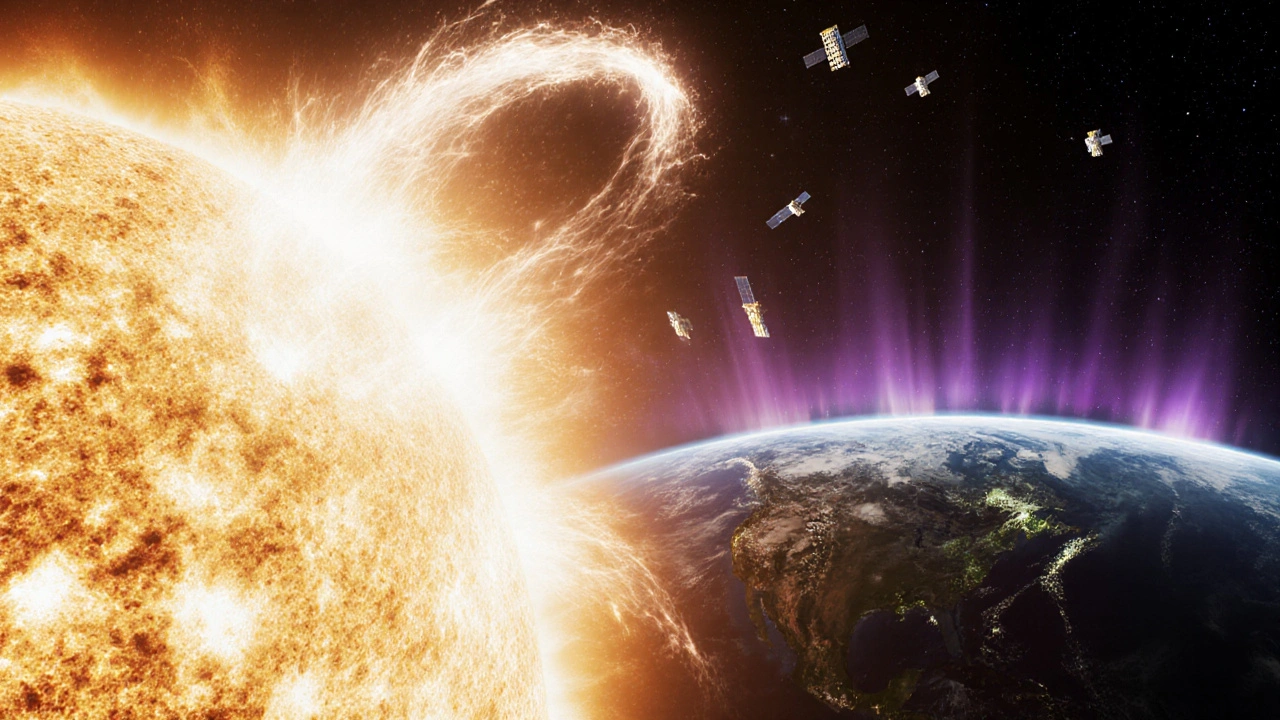
Learn how space systems are designed to survive solar storms, from radiation-hardened satellites to real-time forecasting systems. Understand the real risks to GPS, power grids, and communications-and how we're building resilience before the next major event.
Learn More