
When you think of a spacecraft that’s flown more missions than any other in history, you’re thinking of the Soyuz spacecraft, a Russian crewed spacecraft first launched in 1967 and still flying today. Also known as Soyuz capsule, it’s the only vehicle that’s consistently taken humans to the International Space Station since the Space Shuttle retired. It’s not flashy. It doesn’t land like a rocket. But it’s dependable — and that’s why NASA and other space agencies still rely on it.
The Soyuz isn’t just a capsule. It’s a three-part system: the orbital module for living space, the descent module for re-entry, and the service module with engines and life support. This design hasn’t changed much because it works. Astronauts have used it to reach the ISS for over two decades. Even now, when SpaceX’s Crew Dragon flies, Soyuz still carries Russian cosmonauts — and sometimes American astronauts — to orbit. It’s the bridge between eras. The International Space Station, a habitable satellite orbiting Earth since 1998. Also known as ISS, it can’t function without regular crew rotations, and Soyuz is the backup and the baseline for all of them.
What makes Soyuz special isn’t its speed or tech specs — it’s its track record. Over 140 missions. Dozens of astronauts saved by its emergency escape system. It’s flown to Mir, to the ISS, and even carried tourists to space. It’s the reason Russia still has a seat at the table in human spaceflight. And while newer ships come and go, Soyuz keeps flying because it’s been tested in every kind of failure — and still comes home.
You’ll find posts here about how it connects to life support systems on the ISS, how it docks with space stations, and why its simple design outlasts flashier alternatives. You’ll see how it compares to other crewed capsules, how it’s used in emergency scenarios, and why it’s still the go-to ride for astronauts when things go wrong. These aren’t just technical specs — they’re stories of reliability in a field where one mistake can cost lives.
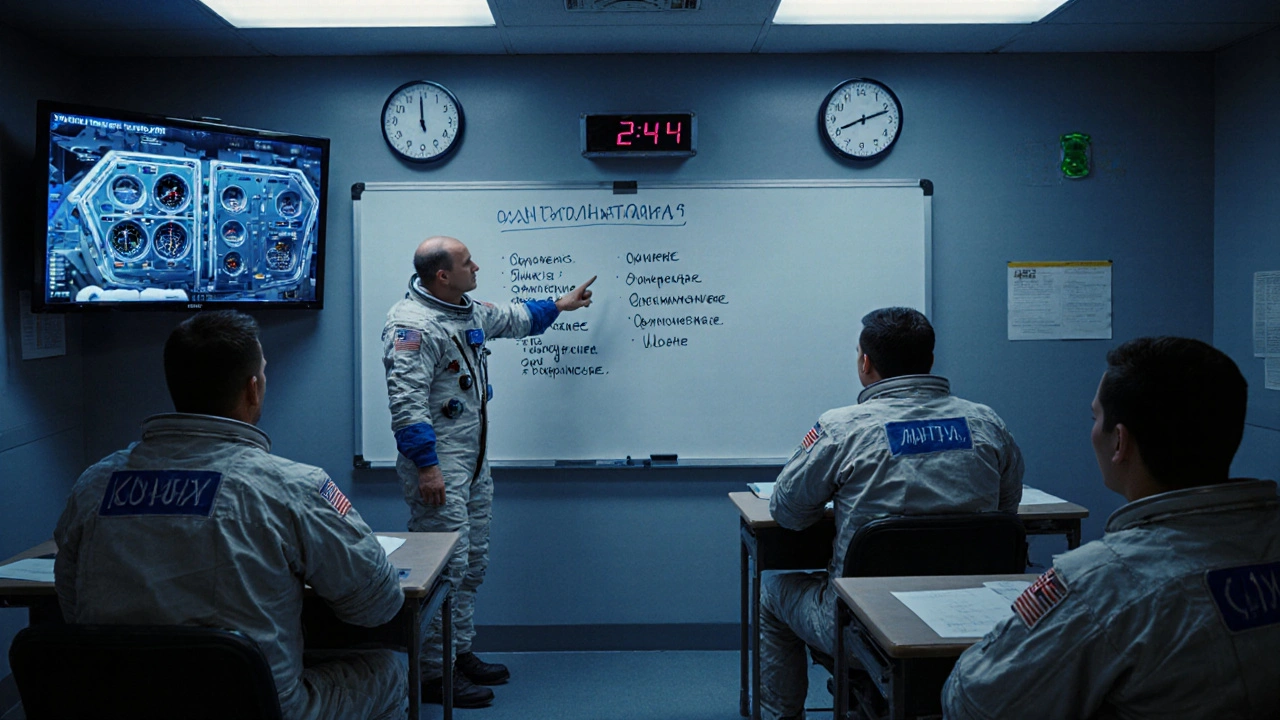
Russian language training is mandatory for all non-Russian astronauts heading to the ISS. Learn why survival, not just communication, depends on mastering technical Russian for emergencies, docking, and life support systems.
Learn More