
When we talk about satellite protection, the methods and technologies used to defend orbiting spacecraft from physical, environmental, and cyber threats. Also known as spacecraft hardening, it's the unseen armor that keeps your GPS, weather forecasts, and internet from going dark. It’s not just about avoiding collisions—it’s about surviving a crowded, hostile orbit.
Every year, thousands of pieces of space debris, human-made objects in orbit that no longer serve a purpose, from old rocket stages to broken satellite parts zoom around Earth at 17,000 mph. A paint chip the size of a fingernail can crack a solar panel. NASA tracks over 30,000 pieces larger than a softball, and millions more too small to track. orbital collision, a high-speed impact between two objects in space, often causing cascading debris isn’t science fiction—it’s a real risk. The Kessler Syndrome, where one collision triggers a chain reaction of destruction, could make entire orbits unusable for decades.
But debris isn’t the only threat. radiation hardening, the process of designing electronics to withstand high-energy particles in space is critical. Satellites in high orbits get blasted by solar flares and cosmic rays. Without it, microchips fry, sensors glitch, and missions fail. Then there’s cyber risk—hackers targeting ground stations or jamming signals. Modern satellites now include encrypted links, intrusion detection, and self-healing software. Protection isn’t just adding armor—it’s building resilience into every layer.
What you’ll find in this collection are real-world solutions: how engineers shield satellites from micrometeoroids, how constellations like Starlink avoid collisions using AI-driven maneuvering, and why new materials like carbon-fiber composites and radiation-resistant ceramics are changing the game. You’ll see how NASA and private companies are testing active debris removal, how satellite operators use collision avoidance algorithms, and what happens when a $100 million satellite gets hit by a speck of paint. These aren’t theoretical ideas—they’re the tools keeping our space infrastructure alive today.
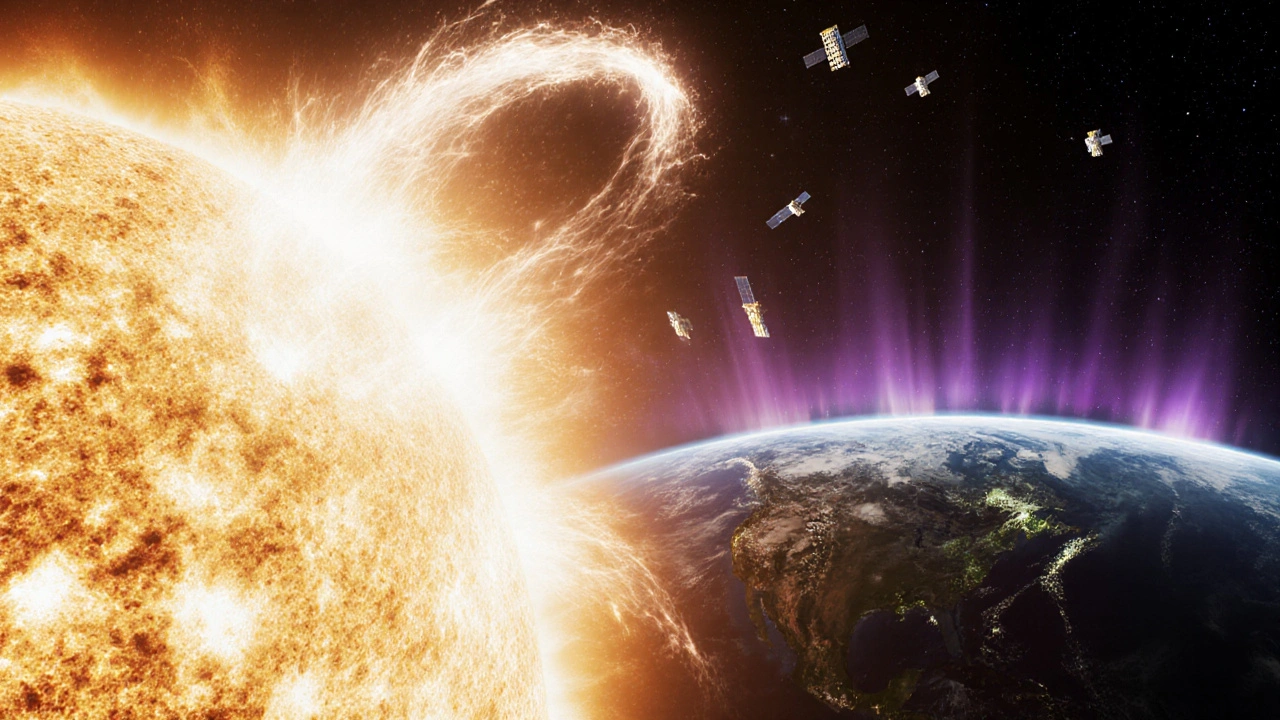
Learn how space systems are designed to survive solar storms, from radiation-hardened satellites to real-time forecasting systems. Understand the real risks to GPS, power grids, and communications-and how we're building resilience before the next major event.
Learn More