
When you think of satellites, you might picture one lonely orb circling Earth—but today, it’s rarely just one. satellite formation, the organized deployment of multiple satellites into coordinated orbits to function as a single system. Also known as satellite constellation, it’s the backbone of modern global communication, weather tracking, and even real-time Earth monitoring. This isn’t science fiction—it’s how Starlink delivers internet to your rural cabin, how military forces track movements, and how scientists measure climate change from space.
Satellite formation doesn’t just mean launching a bunch of satellites at once. It’s about precision. Each satellite must be placed in the right orbit, at the right speed, and at the right distance from its neighbors. Too close, and they risk collision. Too far, and coverage gaps appear. That’s why teams use LEO satellites, satellites orbiting low above Earth, typically under 2,000 kilometers, offering low latency and high-speed data—they’re easier to manage in large numbers and respond faster than older, higher-orbit models. These formations often include dozens to thousands of units, all communicating with each other and ground stations in a tightly choreographed dance.
What makes this possible? Advanced software, real-time tracking, and automated collision avoidance. Companies like SpaceX and OneWeb don’t just launch satellites—they manage fleets. Each one adjusts its position slightly over time to maintain spacing, using small electric thrusters. This isn’t a one-time setup; it’s continuous maintenance. And when one satellite fails, another is already waiting in the wings to take its place. This resilience is why satellite formation is replacing old single-satellite systems that could leave entire regions offline if one device broke.
It’s not just about internet. Satellite formation powers emergency response networks, tracks ship movements across oceans, monitors crop health from space, and even helps predict wildfires by detecting heat signatures across vast areas. The satellite networks, interconnected groups of satellites working as a unified system to provide continuous global coverage you’re using right now—whether you realize it or not—are the result of years of engineering focused on coordination, not just launch.
What you’ll find below are real, detailed breakdowns of how these systems are built, tested, and operated. From the physics of orbital deployment to the legal and technical challenges of managing thousands of objects in space, the posts here cut through the hype. You’ll see how companies like SpaceX and Rocket Lab make this look easy—and why it’s anything but. Whether you’re curious about how your phone gets internet in the middle of nowhere, or how satellites avoid crashing into each other, the answers are here—no jargon, no fluff, just how it actually works.
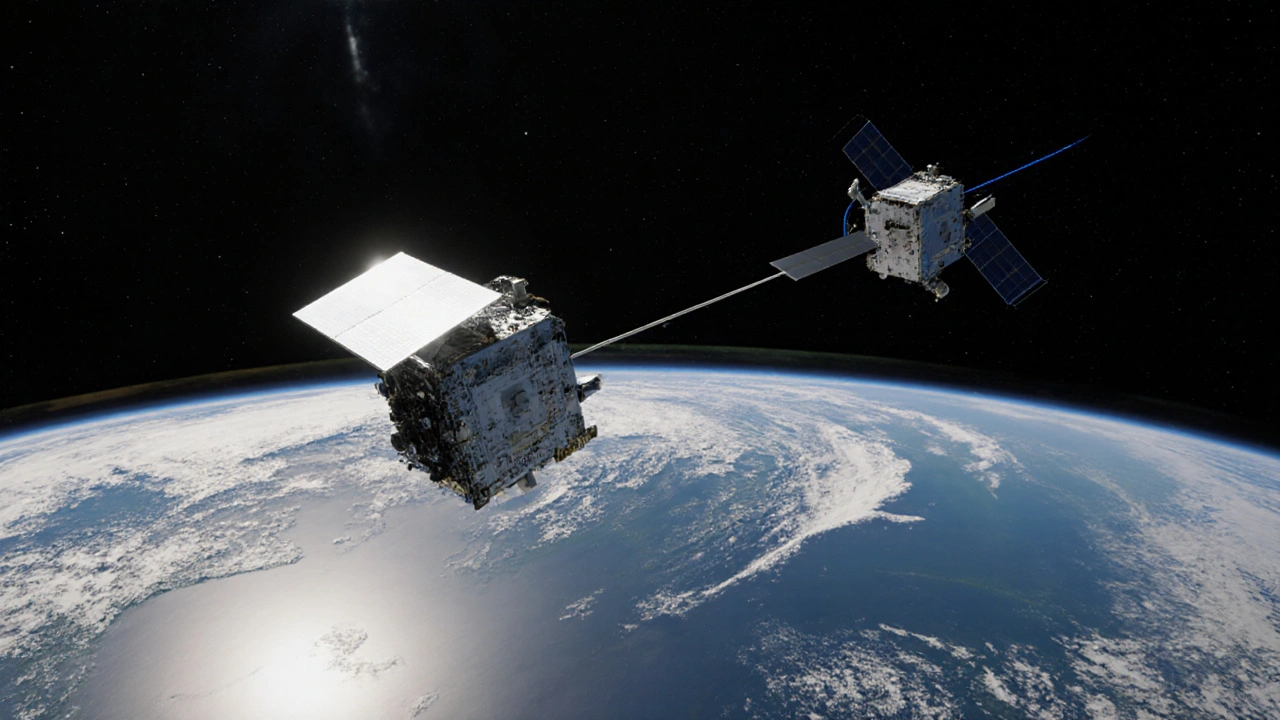
Formation flying satellites use precise relative navigation and control to act as a single instrument in space, enabling missions impossible for single spacecraft. Learn how they work, what goes wrong, and why they’re the future of space science.
Learn More