
When you think about Russian language training, the structured learning of Russian for professional or operational use, especially in aerospace and international science contexts. Also known as space Russian, it's not just about grammar or vocabulary—it's a critical skill for anyone working on the International Space Station. NASA astronauts, ESA engineers, and even private space company teams spend months learning Russian because every crew member on the ISS must be able to communicate in it. The station’s Russian segment, which includes life support systems, docking ports, and emergency controls, operates entirely in Russian. If something goes wrong at 250 miles up, you don’t want to be guessing what a button does because you didn’t learn the right words.
Russian language training isn’t just for astronauts. Ground controllers at Mission Control in Houston and Moscow need to talk to each other in real time, and miscommunication can cost hours—or worse. The International Space Station, a joint orbital laboratory operated by NASA, Roscosmos, ESA, JAXA, and CSA relies on seamless coordination between teams. That means engineers in Italy, pilots in Japan, and scientists in Canada all need to understand basic Russian commands like «открой» (open), «закрой» (close), or «авария» (emergency). Even the cosmonaut language skills, the specialized Russian proficiency required for operating Russian spacecraft systems and communicating with ground teams are tested before launch. It’s not optional. It’s built into training programs alongside zero-G simulations and survival drills.
Why does this matter now? Because future missions to the Moon and Mars will need even tighter international cooperation. Russia’s Soyuz rockets still carry astronauts to the ISS, and Russia’s Zvezda module remains the heart of the station’s life support. Even as new partners join—like India and the UAE—the Russian language remains a backbone of space operations. You don’t need to become fluent like a native speaker, but you do need to know how to read checklists, follow emergency procedures, and respond to commands under pressure. That’s what real Russian language training delivers: clarity, speed, and safety in the most unforgiving environment on Earth—or above it.
Below, you’ll find real stories and technical breakdowns from people who’ve lived this—how they learned Russian mid-career, why it saved their mission, and how the same systems that keep astronauts alive also depend on clear communication. Whether you’re training to be an astronaut, working in space tech, or just curious about how the world works up there, these posts show you what’s really at stake.
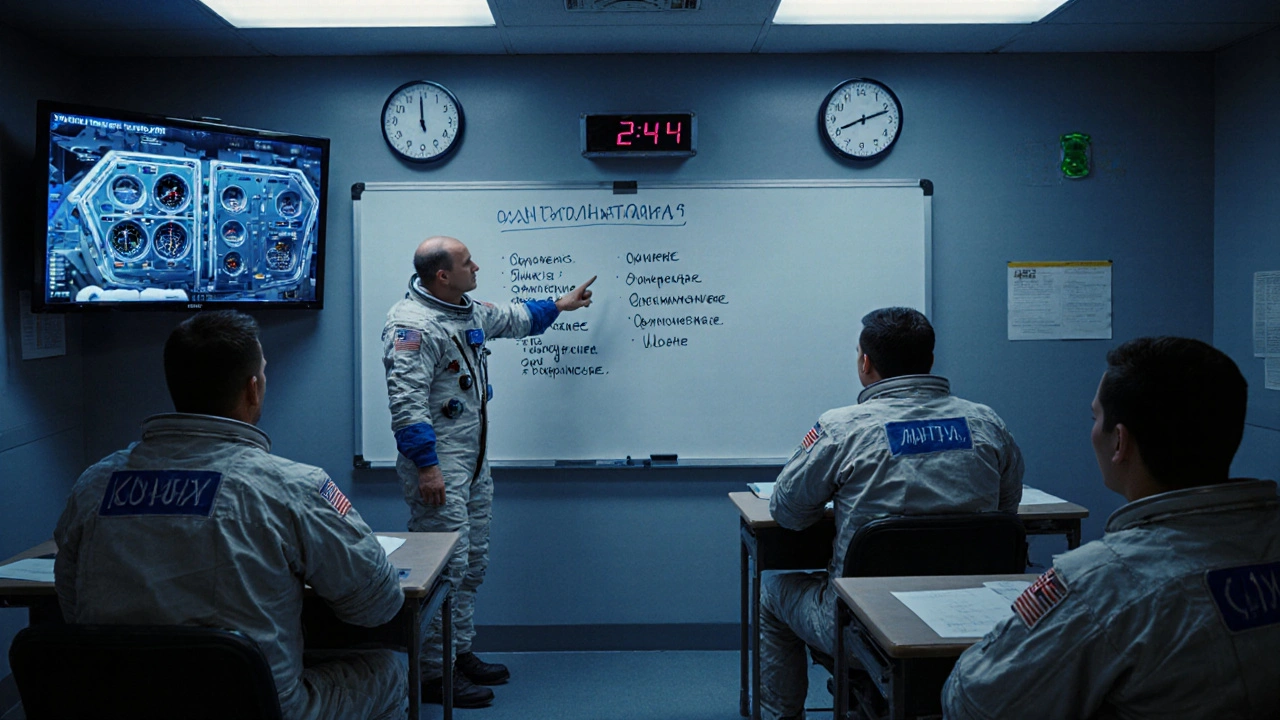
Russian language training is mandatory for all non-Russian astronauts heading to the ISS. Learn why survival, not just communication, depends on mastering technical Russian for emergencies, docking, and life support systems.
Learn More