
When your satellite sends data back to Earth, or an astronaut talks to Mission Control, public key, a cryptographic system that uses two mathematically linked keys—one public, one private—to secure communication without sharing secrets. Also known as asymmetric encryption, it’s the reason your spacecraft’s commands don’t get hijacked by someone on the ground. Unlike old-school passwords or shared codes, public key doesn’t need a secure channel to exchange secrets. One key locks the data, the other unlocks it—and only the right person holds the unlock key. This is how NASA, SpaceX, and private satellite operators keep their signals safe from jamming, spoofing, and cyberattacks.
Public key cryptography is everywhere in space tech. It’s in the firmware that tells a satellite when to fire its thrusters, in the digital signatures that verify a rover’s commands came from Earth and not a hacker, and even in blockchain-based logs tracking fuel use or sensor data on the International Space Station. It’s also why public key is critical for space communications, the encrypted links between ground stations, satellites, and deep space probes that carry scientific data and crew instructions. Without it, a rogue actor could fake a command to deorbit a satellite or steal sensitive imagery. Companies like Rocket Lab and Starlink use public key systems to authenticate each device on their network, ensuring only authorized hardware can connect. Even cybersecurity, the practice of protecting digital systems from attack, especially in high-stakes environments like space missions in orbit, relies on public key infrastructure to prevent man-in-the-middle attacks.
It’s not just about keeping secrets. Public key enables trust in systems where no one can physically check the hardware. On a lunar lander, you can’t send someone to swap out a corrupted chip. So instead, every software update is signed with a private key, and the lander checks it with the matching public key before installing. If the signature doesn’t match, the update gets rejected. That’s how missions stay safe over millions of miles. You’ll find this same logic in encryption, the process of converting readable data into unreadable code to prevent unauthorized access used in lunar base networks, Mars rover telemetry, and even in the blockchain ledgers tracking supply shipments to orbit. These aren’t theoretical ideas—they’re in use today, protecting billions in hardware and human lives.
What you’ll find in the posts below are real-world examples of how public key systems are applied—not just in theory, but in rockets, satellites, and space software. From how Differential GPS uses digital signatures to prevent spoofing, to how SpaceX secures its Starlink user terminals, to how blockchain-based mission logs rely on public key for verification—you’ll see the hidden layer of security keeping space operations running. No fluff. Just how it works, why it matters, and what happens when it fails.
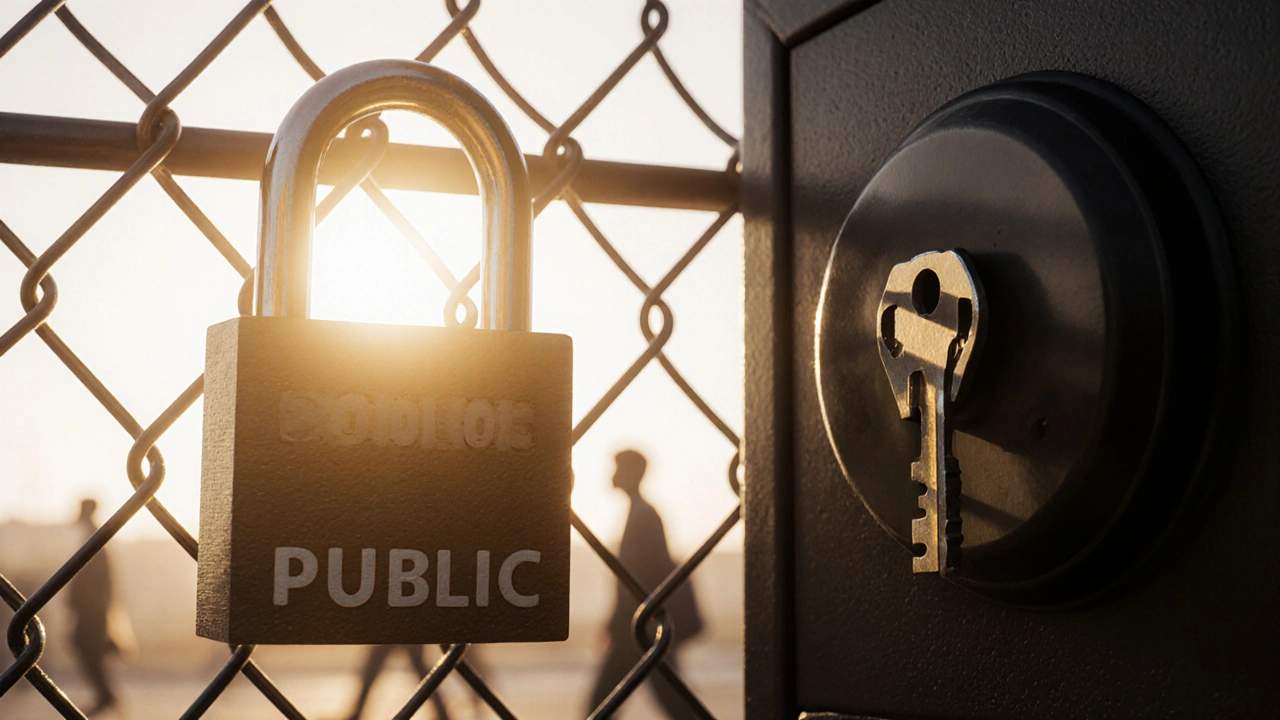
Private and public keys enable secure communication online by using math-based encryption. One key locks data, the other unlocks it-no sharing needed. Learn how they protect your emails, bank logs, and crypto wallets.
Learn More