
When you think of Mars exploration, the Perseverance rover, NASA's six-wheeled robotic geologist sent to Mars in 2021 to search for signs of ancient microbial life. Also known as Mars 2020, it’s the most advanced rover ever sent to another planet. It didn’t just roll onto the surface—it landed using a sky crane, drilled into rocks no one’s ever touched, and even turned Martian air into oxygen. This isn’t just a science experiment. It’s a step toward bringing Mars rocks back to Earth.
The Jezero Crater, a 45-kilometer-wide ancient river delta on Mars where the Perseverance rover landed was chosen because it once held water. Rivers flowed here billions of years ago, and if life ever existed on Mars, this is where you’d look. Since landing, the rover has found sedimentary rocks with organic molecules, signs that the environment could have supported life. It’s not proof—but it’s the closest we’ve come. Meanwhile, the Mars sample return, a multi-mission effort to bring Perseverance’s collected rock cores back to Earth by the early 2030s is already in motion. A future lander, a fetch rover, and a Mars ascent vehicle will work together to get these samples home. No one’s ever brought rocks from Mars before. This is history in the making.
Perseverance isn’t just about rocks. It carries a tiny helicopter named Ingenuity, the first aircraft to fly on another planet. It proved powered flight is possible in Mars’ thin air—and now we know how to do it again. The rover also has a microphone, letting us hear the wind and its own drills on Mars for the first time. Its instruments, like PIXL and SHERLOC, analyze minerals at a microscopic level, searching for patterns only biology could create. And it’s not done yet. It’s still rolling, still collecting, still testing new tech for future astronauts.
What you’ll find in these posts isn’t just a list of rover updates. It’s the science behind how we explore Mars—how we build machines that last years in freezing dust storms, how we extract oxygen from thin air, how we prepare for human missions by testing everything first with robots. You’ll see how Perseverance’s work connects to water recycling on the ISS, how space weather affects its electronics, and how future lunar landing pads use the same soil-sintering tech being tested on Mars. This isn’t just about one rover. It’s about how we’re learning to live beyond Earth.
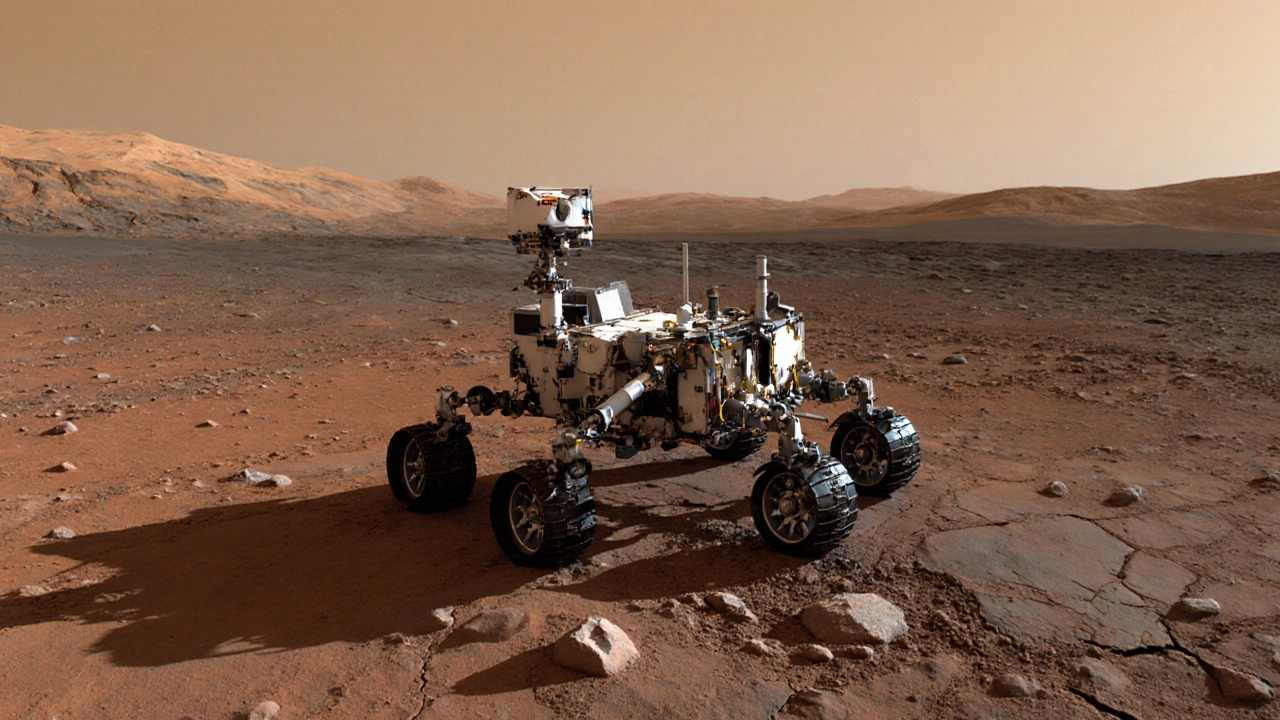
Curiosity and Perseverance are NASA's most advanced Mars rovers, each with distinct missions. Curiosity proved Mars once had habitable conditions. Perseverance now searches for signs of ancient life and collects samples for return to Earth.
Learn More