
When we talk about nuclear power on Mars, a reliable, high-output energy system that doesn’t depend on sunlight or weather. Also known as space nuclear power, it’s the only technology that can keep habitats warm, water extractors running, and rovers moving during the planet’s long, dusty nights and global storms. Solar panels won’t cut it—Mars gets less than half the sunlight Earth does, and dust storms can block the sun for weeks. Without nuclear, any human base there would go dark, cold, and dead.
That’s why NASA’s Kilopower reactor, a small, scalable fission system designed for lunar and Martian use. Also known as KRUSTY, it’s been tested on Earth and can run for over a decade on just a few kilograms of uranium-235. Unlike solar, it doesn’t need batteries or fuel cells to store energy. It just runs, day and night. Private companies like Lockheed Martin and Westinghouse are building similar systems, aiming to land a 10-kilowatt reactor on Mars before 2030. These aren’t just for lights—they’re for melting ice, running air recyclers, and powering 3D printers that build tools from Martian soil.
And it’s not just about energy—it’s about survival. In-situ resource utilization, the process of using local materials like water ice and regolith to make fuel, oxygen, and building blocks. Also known as ISRU, it’s the backbone of any long-term Mars mission. But ISRU needs heat. Lots of it. Nuclear reactors can melt ice to extract water, bake regolith into bricks for landing pads, and even produce methane fuel from the thin CO2 atmosphere. Without nuclear, you’d need to haul all that fuel from Earth—impossible at current launch costs.
Some people worry about radiation, but the reactors are designed to stay shielded until they’re safely deployed. Once running, the radiation risk to astronauts is lower than what they’d get from cosmic rays during the trip to Mars. And unlike chemical batteries or fuel cells, nuclear doesn’t degrade over time. It’s built for decades, not months.
What you’ll find in the posts below isn’t theory—it’s hardware. Real designs. Real tests. Real missions being planned right now. From the heat pipes cooling space sensors to the materials science that lets reactors survive launch vibrations, every piece connects. This isn’t about dreaming of Mars. It’s about building the power that makes living there possible.
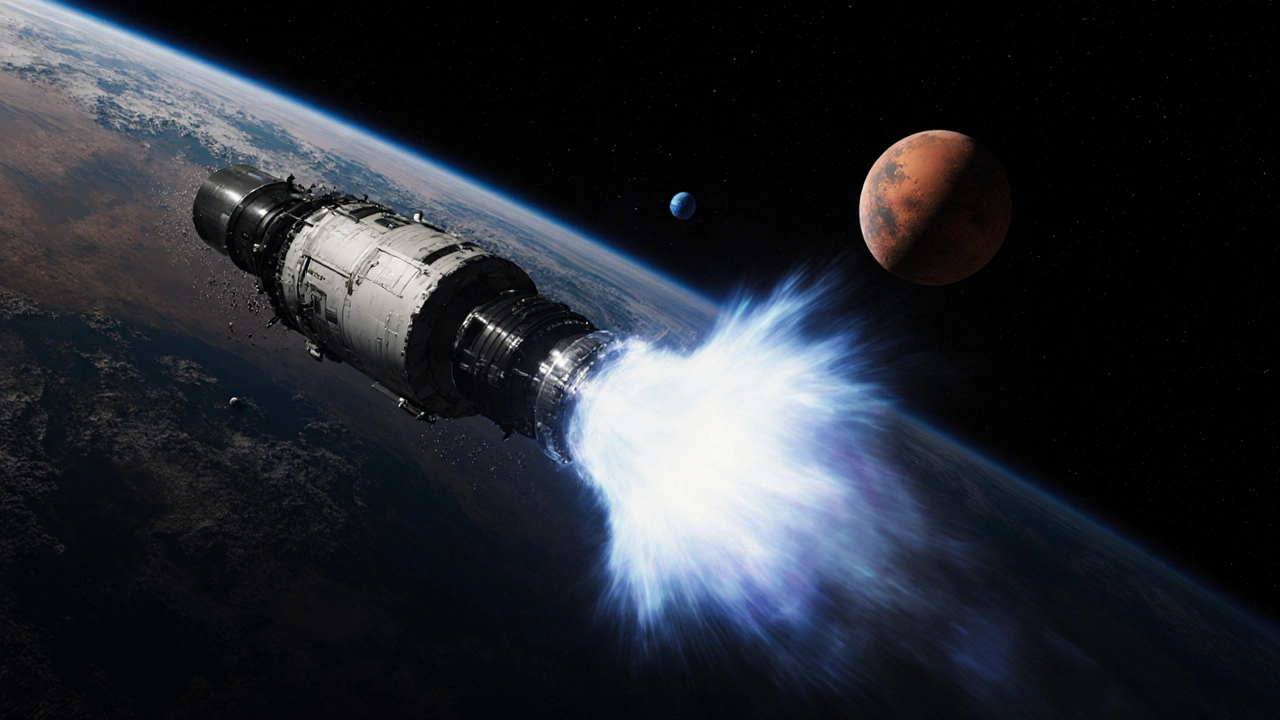
NASA's Human Mars Mission Architecture outlines how to transport astronauts to Mars and keep them alive on the surface using nuclear power, split-mission logistics, and advanced landing systems - all tested first on the Moon.
Learn More