
When you think of space missions, you might picture rockets, zero-gravity flips, or Mars rovers—but one of the most important skills astronauts need isn’t technical at all. It’s Russian, the primary language used for communication aboard the International Space Station alongside English. Also known as cosmonaut language, Russian is required training for every NASA astronaut heading to the ISS, not as a cultural perk, but as a safety necessity. The ISS is a joint project between NASA and Roscosmos, and every system, switch, alarm, and procedure has labels and instructions in both languages. If something goes wrong at 3:00 a.m. UTC, and the American crew member can’t understand the Russian alarm, lives are at risk. That’s why NASA doesn’t just offer Russian classes—it demands them.
It’s not just about reading labels. Astronauts need to speak Russian fluently enough to hold real-time conversations during spacewalks, docking procedures, and emergency drills. They learn phrases like "Пора выходить" (It’s time to go out) for EVAs and "Система не отвечает" (System not responding) for troubleshooting. Russian-speaking cosmonauts train in English too, so communication is two-way. This isn’t just diplomacy—it’s engineering. The Soyuz spacecraft, which has been the only ride to the ISS for years, runs entirely on Russian interfaces. Even with new commercial vehicles like SpaceX’s Crew Dragon, astronauts still need to know how to operate Russian systems in case of backup scenarios. The International Space Station, a permanently crewed orbital laboratory built and operated by 15 nations doesn’t have a single control panel that ignores Russian. And the Russian space program, the successor to the Soviet space effort and still a key player in human spaceflight controls critical life support, propulsion, and docking systems that NASA astronauts must understand.
Some people think this is outdated—why not just use English? But space doesn’t care about politics or convenience. When the U.S. shuttles retired in 2011, NASA had no choice but to rely on Soyuz. That meant every astronaut, from mission commanders to engineers, had to pass Russian language exams just to get assigned to a flight. Even today, with more private spacecraft flying, the Russian systems remain on board. You don’t replace a life support module just because the political climate changes. The astronaut language training, a structured, multi-year program that includes immersion, technical vocabulary, and simulated emergency drills is one of the toughest parts of astronaut prep—harder than some flight simulators. And it’s not just for NASA. ESA, JAXA, and CSA astronauts all go through it too. This isn’t about learning a foreign language—it’s about learning how to stay alive in orbit.
What you’ll find in this collection are real stories from astronauts who cracked the language, breakdowns of the exact phrases they use in space, and how this training shapes the future of international missions—whether heading to the Moon or Mars. This isn’t just about words. It’s about trust, survival, and what happens when two nations have to work together, 250 miles above Earth, with no room for error.
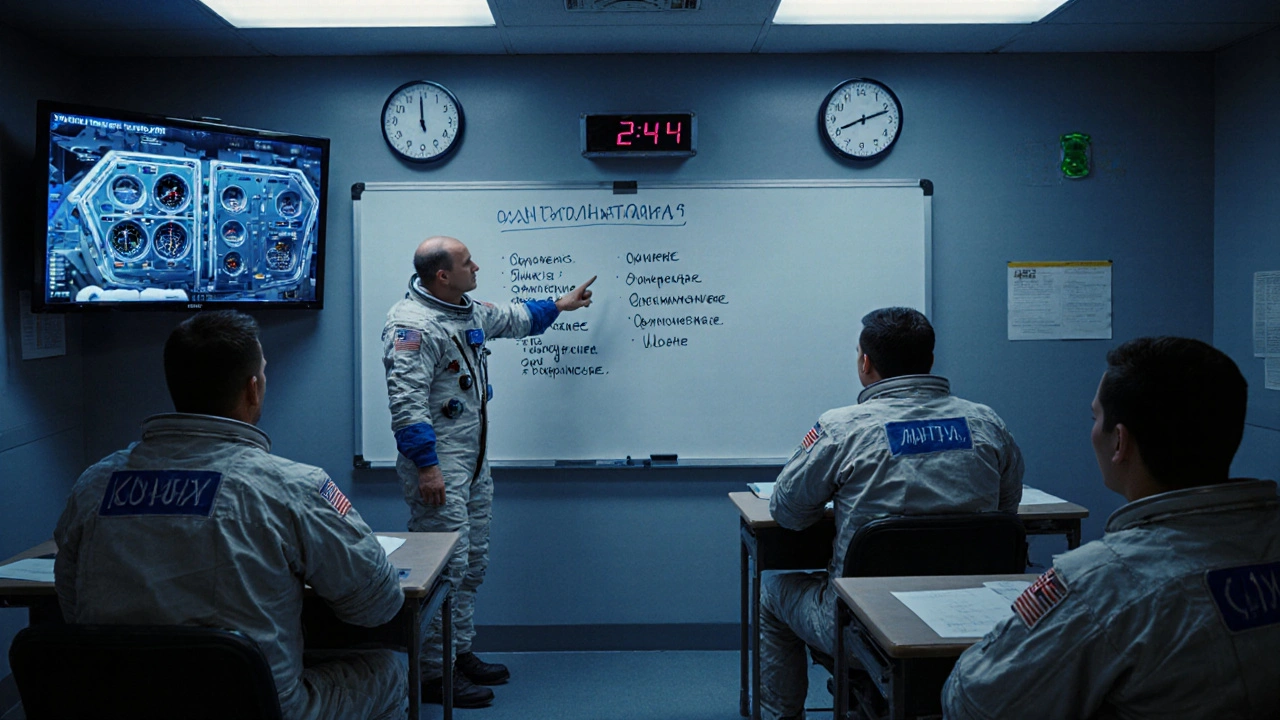
Russian language training is mandatory for all non-Russian astronauts heading to the ISS. Learn why survival, not just communication, depends on mastering technical Russian for emergencies, docking, and life support systems.
Learn More