
When you think of NASA Mars missions, human and robotic efforts to explore the Red Planet, including rovers, orbiters, and planned crewed landings. Also known as Mars exploration, it’s not just about planting a flag—it’s about building the foundation for humans to live there. These missions have turned Mars from a distant dot into a place we understand in detail: its soil, its storms, its frozen water, and even how dust clings to solar panels. This isn’t science fiction anymore. It’s engineering, chemistry, and physics working together on a planetary scale.
Behind every Mars rover is a chain of technologies that had to be invented first. Mars surface operations, how robots and eventually humans will move, power themselves, and survive on Mars depend on nuclear batteries, dust-resistant solar cells, and automated navigation that works without GPS. Then there’s Mars water recovery, systems that recycle every drop of moisture—from sweat to urine—into drinkable water, just like on the ISS. These aren’t lab experiments. They’re the same systems being tested right now for future crews. And when we talk about getting people to Mars, you can’t ignore Mars transportation, the rockets, fuel depots, and landing systems that will carry astronauts across 140 million miles and bring them home. SpaceX’s Starship, NASA’s nuclear-powered descent vehicles, and orbital fuel stations aren’t drawings—they’re under construction.
What you’ll find below isn’t just a list of articles. It’s the real engineering behind the headlines. You’ll read about how water is recycled for Mars trips, how rockets are being designed to land heavier payloads, and why materials behave differently in microgravity when they’re being made for space. There’s no fluff here—just the tools, tests, and breakthroughs that are turning Mars from a destination into a possibility.
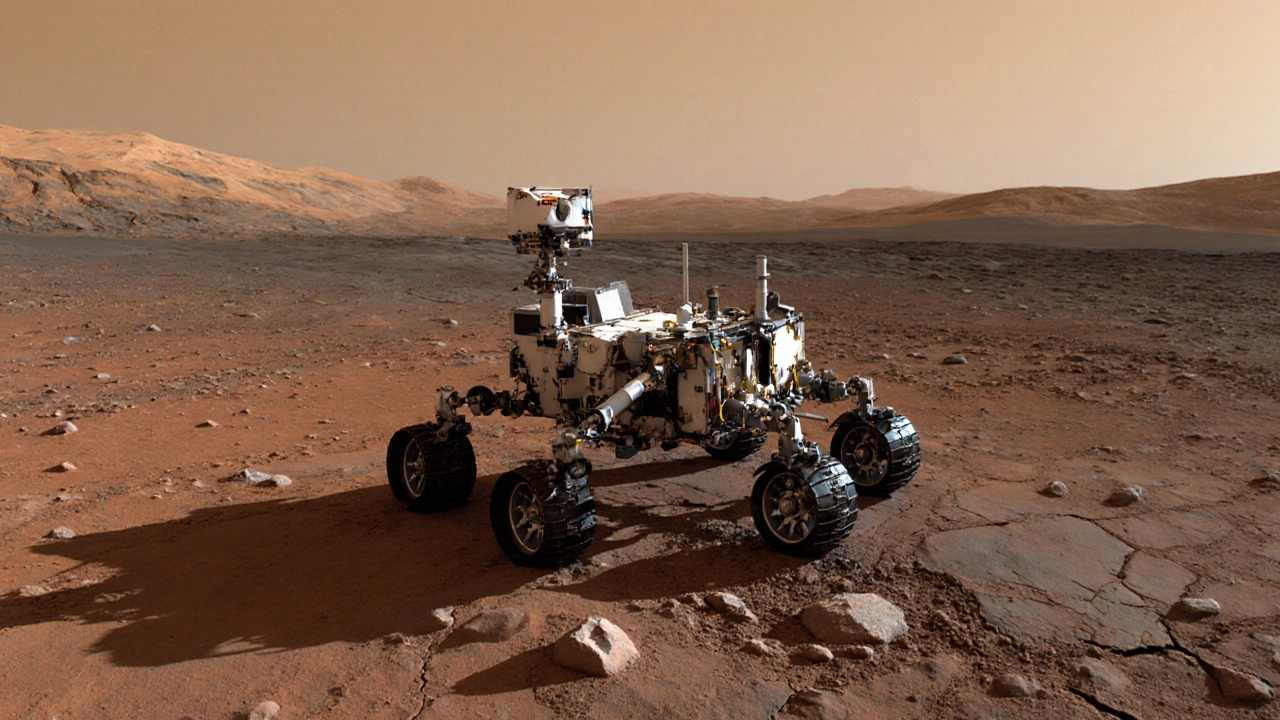
Curiosity and Perseverance are NASA's most advanced Mars rovers, each with distinct missions. Curiosity proved Mars once had habitable conditions. Perseverance now searches for signs of ancient life and collects samples for return to Earth.
Learn More