
When we talk about Mars transportation, the system of vehicles, infrastructure, and logistics needed to move people and cargo between Earth and Mars. It's not just a rocket launch—it's a full cycle of landing, living, refueling, and returning. Most people think of SpaceX's Starship as the answer, but that’s just one piece. Real Mars transportation requires in-situ resource utilization, the process of using materials found on Mars to make fuel, water, and building supplies. Without it, every trip would need to carry everything from Earth, making it too expensive and risky to repeat. NASA and private companies are already testing how to pull water from Martian soil and turn it into rocket fuel using electrolysis and the Sabatier process. That’s not science fiction—it’s the only way we’ll ever build a lasting presence there.
Reusable rockets, vehicles designed to launch, land, and fly again without major rebuilding, are the backbone of this system. Falcon 9 proved that reusability cuts costs on Earth. Now, Starship is being built to do the same on Mars—landing on red dust, refueling with local methane, and flying back to orbit. But rockets alone won’t cut it. You need safe landing zones. That’s where lunar landing pads, hardened surfaces created by melting regolith to prevent dust explosions during touchdown. While developed for the Moon, the same tech is being adapted for Mars, where rocket exhaust can kick up enough dust to blind solar panels and clog machinery. Without these pads, every landing risks destroying the very base you’re trying to build. And don’t forget the return trip. A Mars mission isn’t complete until the crew comes home. That means storing fuel on the surface for months, keeping it from freezing in the cold, and launching it precisely from a planet with thin atmosphere. No one’s done it yet. But the pieces are all being tested right now—in labs, in analog sites on Earth, and in simulations.
What you’ll find in this collection isn’t just speculation. These are real projects: the drills that pull water from Martian dirt, the heat shields that survive reentry at 15,000 mph, the navigation systems that guide landers through dust storms. You’ll see how SpaceX, NASA, and others are solving the toughest problems—not with magic, but with materials science, robotics, and smart engineering. This isn’t about dreaming of Mars. It’s about building the tools to get there—and come back.
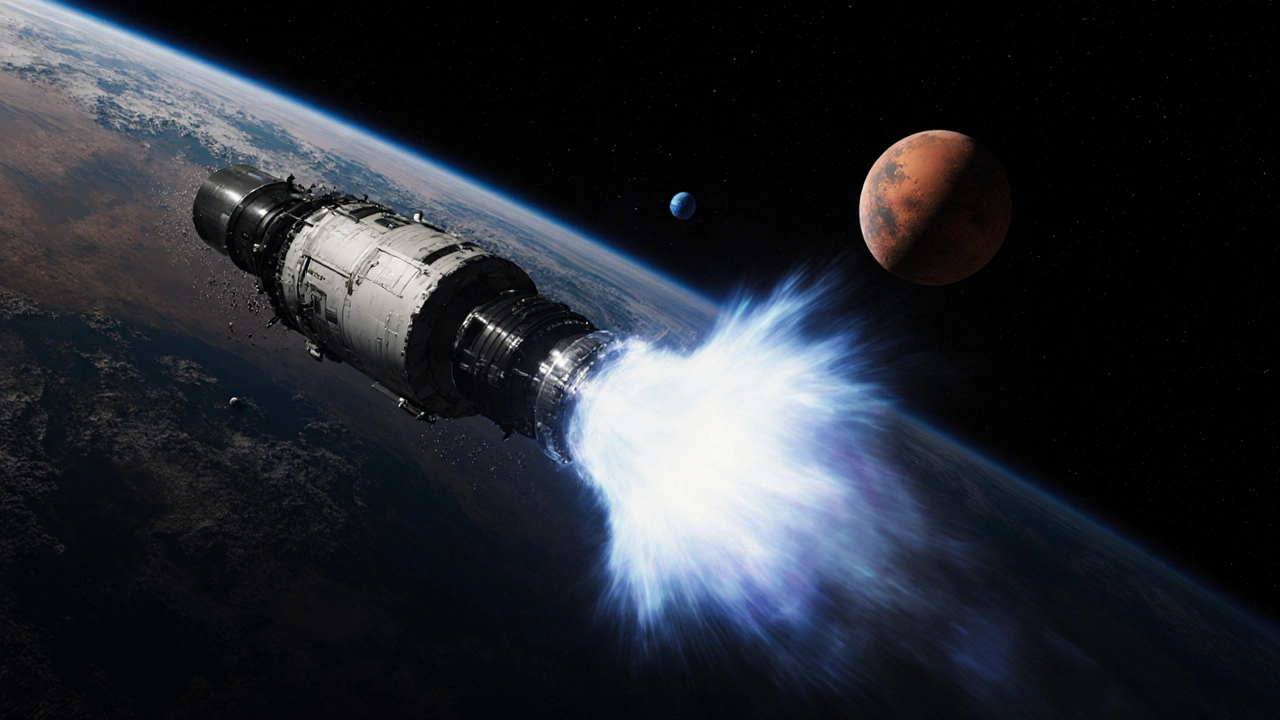
NASA's Human Mars Mission Architecture outlines how to transport astronauts to Mars and keep them alive on the surface using nuclear power, split-mission logistics, and advanced landing systems - all tested first on the Moon.
Learn More