
When we talk about Mars surface operations, the coordinated activities robots and humans perform on the Martian surface to explore, survive, and eventually settle. Also known as Martian surface missions, it's not just about driving rovers—it's about making the planet work for us. This isn’t science fiction. Every day, machines like NASA’s Perseverance and China’s Zhurong are already doing things like drilling into rock, testing oxygen generators, and mapping radiation levels—all to prepare for human arrival.
Mars surface operations rely on three big things: Martian regolith, the fine, iron-rich dust and soil covering the planet’s surface, in-situ resource utilization, the process of using local materials instead of hauling everything from Earth, and Mars rover missions, autonomous or remotely controlled vehicles designed to explore and gather data. You can’t just land a habitat and turn on the lights. You need to melt ice from the soil, turn CO2 into oxygen, and build shields from dust to protect against radiation. That’s what ISRU is for. And it’s why landing pads made from sintered regolith—like the ones being tested for the Moon—are now being designed for Mars too.
Every Mars surface operation has to fight dust storms that can last months, temperatures that drop below -100°F, and communication delays of up to 22 minutes. That’s why rovers don’t wait for instructions—they make decisions on their own. They use AI to pick safe paths, avoid rocks, and even choose which rocks to sample. And when astronauts finally arrive, they won’t be walking around in bulky suits for fun. Their suits will be designed for mobility, and their bases will be built underground or inside lava tubes to cut radiation exposure. The same materials science that lets Falcon 9 boosters fly 20 times is now being used to make heat-resistant tools that won’t crack in Mars’ cold.
What you’ll find in the posts below are real, working solutions—not theories. From how water is pulled from Martian soil using microwaves, to how robots communicate in teams, to the exact tools that will let humans live off the land on Mars. This isn’t about what might happen. It’s about what’s already being built, tested, and planned for the next decade.
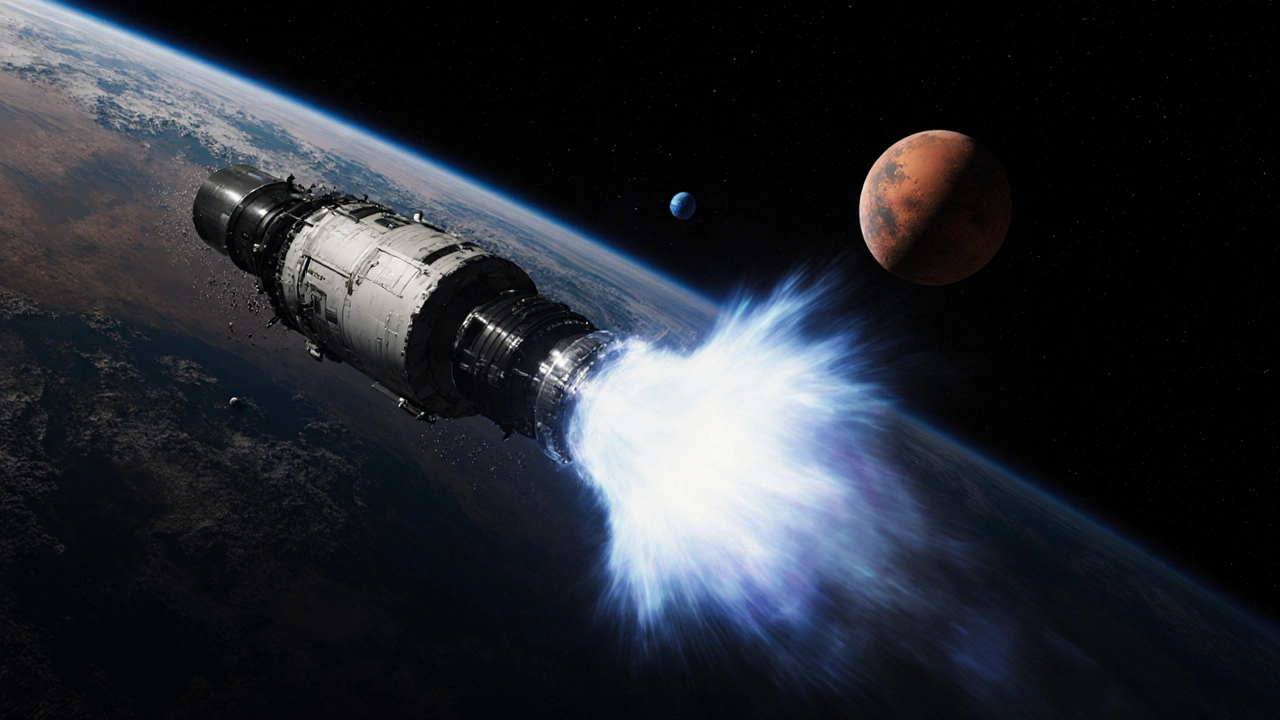
NASA's Human Mars Mission Architecture outlines how to transport astronauts to Mars and keep them alive on the surface using nuclear power, split-mission logistics, and advanced landing systems - all tested first on the Moon.
Learn More