
When you think of the International Space Station, a permanently crewed orbital laboratory that’s been flying since 1998. It’s not just a big metal tube in space—it’s a fully functional, 24/7 operating facility that needs constant attention to stay alive. Every hour, systems are checking, adjusting, and repairing themselves. No one’s home to flip a switch if something goes wrong. That’s where ISS operations, the coordinated effort of engineers, astronauts, and ground teams keeping the station running come in. These aren’t just routines—they’re life-or-death processes that turn science fiction into daily reality.
Behind the scenes, space life support, the systems that recycle air, water, and waste to keep astronauts alive works like a perfect machine. The ISS doesn’t carry months of water—it makes it. Sweat, urine, even moisture from breath gets cleaned and turned back into drinking water at 98% efficiency. Air isn’t just pumped in—it’s scrubbed of carbon dioxide and replenished with oxygen from electrolysis. And it all has to work flawlessly, because if one pump fails, you’re not just inconvenienced—you’re in danger. Then there’s ground station networks, the global web of antennas and satellites that keep the ISS connected to Earth. Without NASA’s TDRSS satellites and tracking stations from Alaska to Australia, astronauts couldn’t talk to mission control, send science data, or even stream video home. These aren’t extras—they’re the nervous system of the station.
And it’s not just about survival. The real magic happens in the lab. microgravity research, the study of how materials, fluids, and biology behave without Earth’s pull turns the ISS into the world’s most unique laboratory. Crystals grow cleaner here. Fibers form with fewer defects. Even human bones and muscles react differently—giving us clues to treat osteoporosis and muscle loss on Earth. Every experiment is scheduled, monitored, and adjusted by teams on the ground, who coordinate with astronauts who are juggling repairs, exercise, and science all in one day. This isn’t a static outpost—it’s a dynamic, living operation that runs on precision, teamwork, and a whole lot of backup plans.
What you’ll find below isn’t just a list of articles—it’s a look under the hood. From how humidity is controlled to stop condensation from frying electronics, to how laser comms are replacing old radio links, these posts break down the real systems that keep the ISS flying. You’ll see how astronauts live, how science gets done, and why every beep and blink on that station matters more than you think.
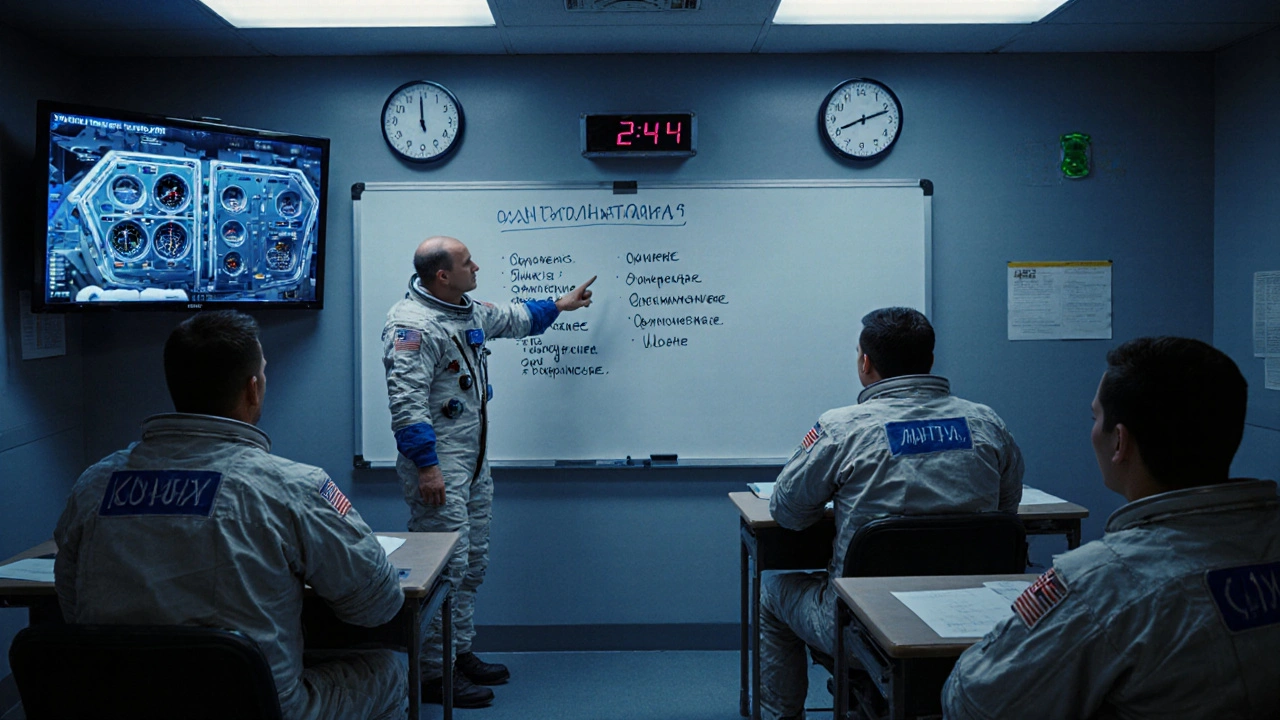
Russian language training is mandatory for all non-Russian astronauts heading to the ISS. Learn why survival, not just communication, depends on mastering technical Russian for emergencies, docking, and life support systems.
Learn More