
When you think of living in space, you might picture floating around in a suit. But what keeps astronauts breathing, drinking, and staying healthy? That’s the job of the ISS life support, a complex, closed-loop system that recycles air, water, and waste to sustain human life in orbit. Also known as space life support, it’s not just a backup—it’s the only thing standing between astronauts and vacuum. Without it, the International Space Station would be a death trap.
The system doesn’t just bring air and water from Earth—it rebuilds them. Every drop of sweat, urine, and even moisture from breath gets pulled out of the cabin air and turned into clean drinking water. The ISS water system, a closed-loop recycling unit that recovers up to 98% of water. Also known as water recovery in space, it’s the reason future Mars missions can’t carry enough water for three years. The air? It’s just as smart. Oxygen is made by splitting water molecules, while carbon dioxide is pulled out using special filters and chemically converted back into oxygen. It’s like having a tiny, high-tech forest inside a metal tube.
And it’s not just about survival. These systems are constantly monitored. Sensors track oxygen levels, humidity, and trace contaminants in real time. If something goes wrong—say, a filter clogs or a pump fails—astronauts have to fix it themselves, often while floating. That’s why Russian language training matters: critical alarms and control panels on the Russian side of the station are labeled in Russian. One mistake, and the air you’re breathing could turn toxic.
What you won’t see are the backups. Redundant pumps, spare filters, and emergency oxygen tanks are hidden behind panels, ready to kick in if the main system fails. NASA and its partners test every component on Earth in simulated space conditions. The goal? Zero failures. Because in space, there’s no 911.
And it’s getting smarter. New systems are being tested that use plants to help clean air, or AI to predict when a filter will clog before it happens. The ISS air recycling, a critical part of life support that turns exhaled CO2 back into breathable oxygen. Also known as atmosphere regeneration, it’s the reason astronauts can stay for months instead of days isn’t just a gadget—it’s the blueprint for living on Mars.
What you’ll find in the articles below are deep dives into how these systems actually work—the pumps, the filters, the chemistry, and the human stories behind keeping them running. You’ll see how water recovery on the ISS is the same tech that’ll keep crews alive on the Moon. You’ll learn why even a small leak can be a crisis. And you’ll understand why every drop, every breath, and every sensor reading matters more up there than it ever does down here.
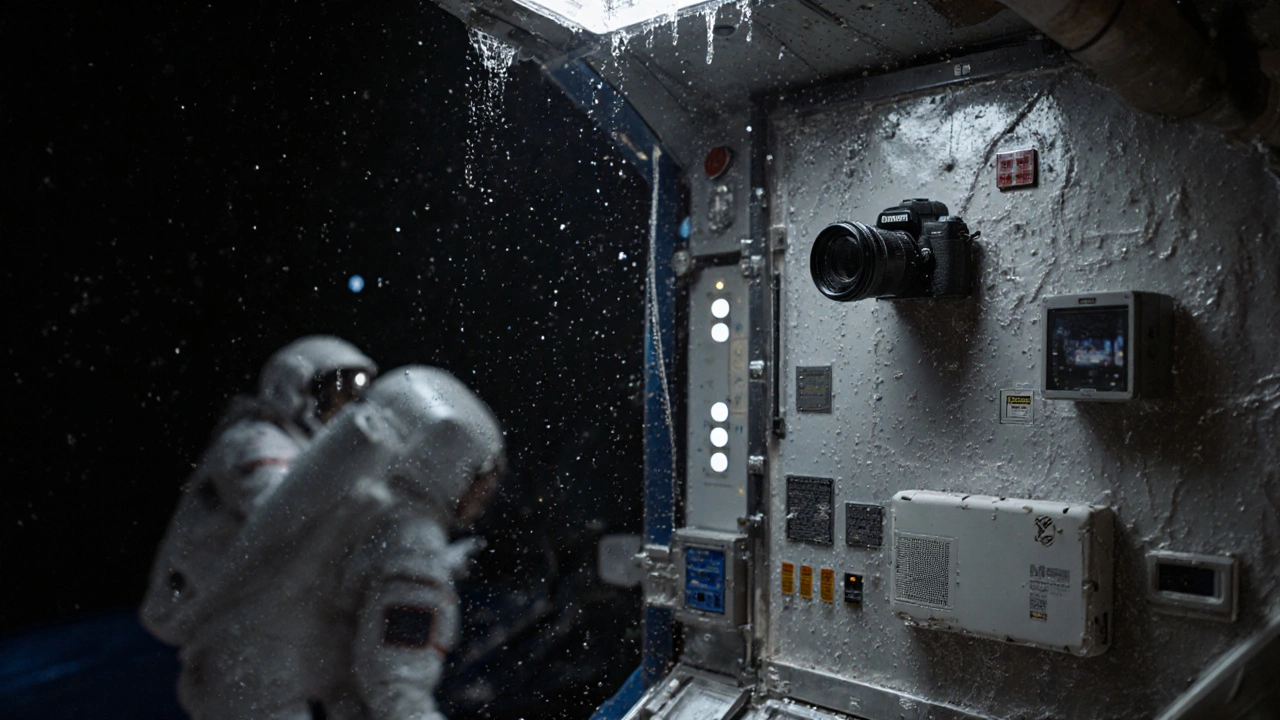
Spacecraft humidity control keeps astronauts safe by preventing condensation, protecting electronics, and recycling sweat into drinking water. Learn how NASA and private companies are making life support systems smarter and more efficient.
Learn More