
When we talk about a Human Mars mission, a crewed expedition to send humans to the surface of Mars for exploration and potential settlement. It’s not just about rockets—it’s about surviving a 6-9 month journey, living in extreme conditions, and coming back without losing your mind or your body. NASA, SpaceX, and other agencies aren’t just planning to fly by Mars. They’re building systems to land, stay, and eventually live there. And that means solving problems we’ve never faced at this scale: radiation shielding, food production, and how to dig water out of Martian dirt.
One of the biggest challenges? Mars water extraction, the process of pulling usable water from frozen soil or ice deposits beneath the planet’s surface. Without water, you can’t drink, grow food, or make oxygen and rocket fuel. That’s why missions like Artemis are testing tech on the Moon first—because if you can melt ice on the Moon using microwaves, you can do the same on Mars. And if you can make fuel from Martian ice, you don’t have to bring it all from Earth. That’s the whole game: use what’s already there. Then there’s Mars habitat, a pressurized, shielded living structure designed to protect astronauts from radiation, dust storms, and freezing temperatures. Think underground lava tubes or buried domes lined with regolith. These aren’t sci-fi ideas—they’re being tested in labs right now, with 3D-printed structures made from simulated Martian soil. And it’s not just about shelter. You need systems that never fail. A broken air filter on Earth? Annoying. On Mars? Deadly. That’s why every piece of hardware has to be built with extreme reliability—like the materials in reusable rockets that fly 20 times without falling apart.
The Human Mars mission isn’t just a single launch. It’s a chain of firsts: the first time humans leave low-Earth orbit in decades, the first time we land on another planet with life support already waiting, the first time we try to make a home that doesn’t rely on Earth for every spare part. The posts below show you exactly how we’re getting there—from drilling for water to building landing pads that don’t kick up deadly dust, from training astronauts underwater to designing software that keeps robots alive when communication delays hit 20 minutes. This isn’t about flags and footprints. It’s about making Mars a place where people can actually live.
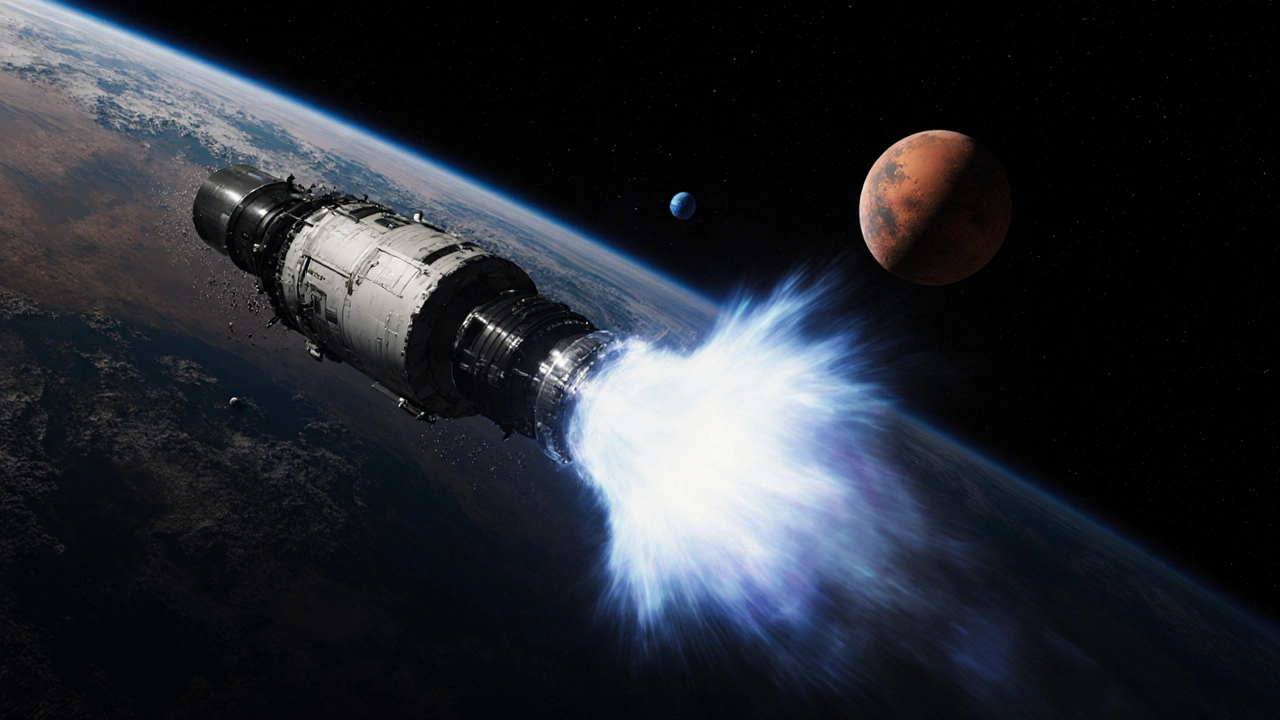
NASA's Human Mars Mission Architecture outlines how to transport astronauts to Mars and keep them alive on the surface using nuclear power, split-mission logistics, and advanced landing systems - all tested first on the Moon.
Learn More