
When your spacecraft is millions of miles from Earth, encryption, the process of scrambling data so only authorized systems can read it. Also known as cryptography, it’s the invisible shield that keeps commands, images, and telemetry safe from hackers, hostile actors, and even cosmic interference. Without it, a satellite could be hijacked, a Mars rover could receive fake instructions, or a GPS signal could be spoofed—turning navigation into a deadly game of chance.
Modern space systems don’t just use basic encryption—they rely on quantum-resistant algorithms, next-generation math designed to survive attacks from future quantum computers, secure key exchange protocols, methods that let two distant systems agree on a secret code without ever sending the code itself, and even blockchain-inspired structures, used in some satellite networks to verify data integrity across thousands of nodes. These aren’t theoretical ideas. NASA’s Artemis missions, Starlink’s ground-to-satellite links, and military GPS systems all depend on layered encryption to function. Even commercial space startups like Rocket Lab and Astra build encryption into their telemetry streams from day one.
It’s not just about keeping secrets. Encryption ensures trust. If a rover sends back a photo of a rock on Mars, scientists need to know it’s real—not a fake signal injected by someone on Earth. If a satellite adjusts its orbit, the command must be authenticated. That’s why encryption isn’t just a feature—it’s the foundation of every successful mission. And as more private companies launch constellations, and lunar bases start transmitting data, the stakes keep rising. The next big threat won’t come from a solar flare—it’ll come from a clever hacker exploiting a weak key.
Below, you’ll find real-world examples of how encryption shows up in space tech—from how GPS signals stay secure to how blockchain-like structures help satellites verify each other’s data. These aren’t abstract concepts. They’re the quiet, critical systems that keep our connection to space alive.
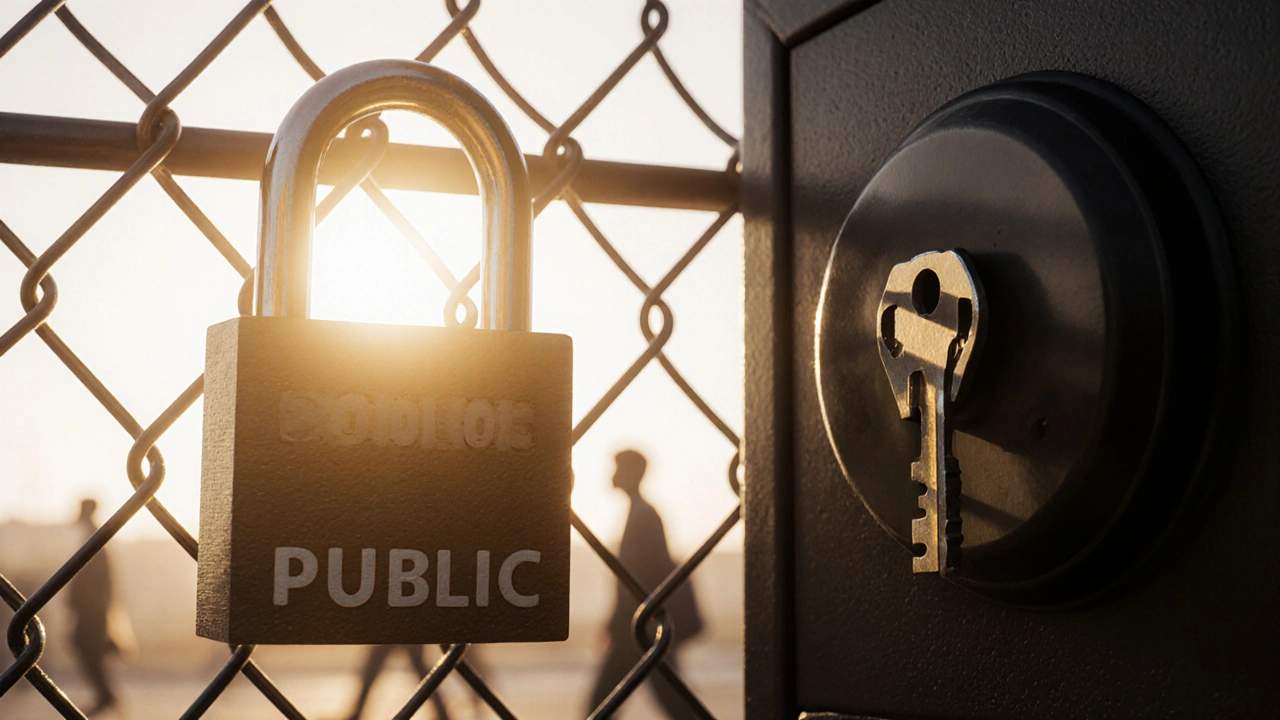
Private and public keys enable secure communication online by using math-based encryption. One key locks data, the other unlocks it-no sharing needed. Learn how they protect your emails, bank logs, and crypto wallets.
Learn More