
When Curiosity rover, a car-sized robotic laboratory sent by NASA to explore Mars. It's also known as the Mars Science Laboratory, and it didn’t just drive across the surface—it became the most advanced geologist ever sent to another planet. Launched in 2011 and landing in Gale Crater in 2012, Curiosity wasn’t built to take pictures or wave at cameras. It was built to answer one question: Did Mars ever have the right conditions to support life?
It found the answer, and then some. Curiosity drilled into rocks that were once wet, analyzed soil that contained organic molecules, and measured radiation levels that tell us how dangerous a human trip to Mars could be. It didn’t just confirm ancient rivers—it showed us the chemistry of those rivers, the minerals they left behind, and how long the water likely lasted. This isn’t speculation. It’s data from instruments like SAM (Sample Analysis at Mars) and ChemCam, which zap rocks with lasers and sniff the gases released. These tools turned a rover into a mobile chemistry lab, something no Mars mission had ever done before.
And it didn’t stop there. Curiosity’s wheels tracked seasonal changes in methane levels, a gas that on Earth is often linked to life. It watched dust storms roll across the horizon, measured how the Martian sky changes color, and even recorded the sound of wind. All of this happened while surviving far longer than its planned two-year mission. Today, it’s still climbing Mount Sharp, inch by inch, sending back data that shapes every future mission to Mars—from the Perseverance rover to the planned human landings.
Behind Curiosity is a whole ecosystem of engineering: its nuclear battery, its self-driving navigation, its ability to communicate through orbiters like Mars Reconnaissance Orbiter. These aren’t just gadgets—they’re the foundation of how we now think about robotic exploration. Before Curiosity, Mars missions were about landing and surviving. After Curiosity, they’re about asking deeper questions, collecting complex samples, and preparing for humans.
What you’ll find in this collection are articles that connect directly to Curiosity’s legacy. You’ll read about how its findings influenced water recycling systems for Mars missions, how its radiation data changed how we design spacecraft shielding, and how its success pushed NASA toward using nuclear power on the surface. You’ll see how rover technology evolved from simple rovers like Sojourner to the complex, AI-assisted machines we’re building now. And you’ll understand why Curiosity isn’t just a robot—it’s the reason we believe Mars can one day be more than a red dot in the sky.
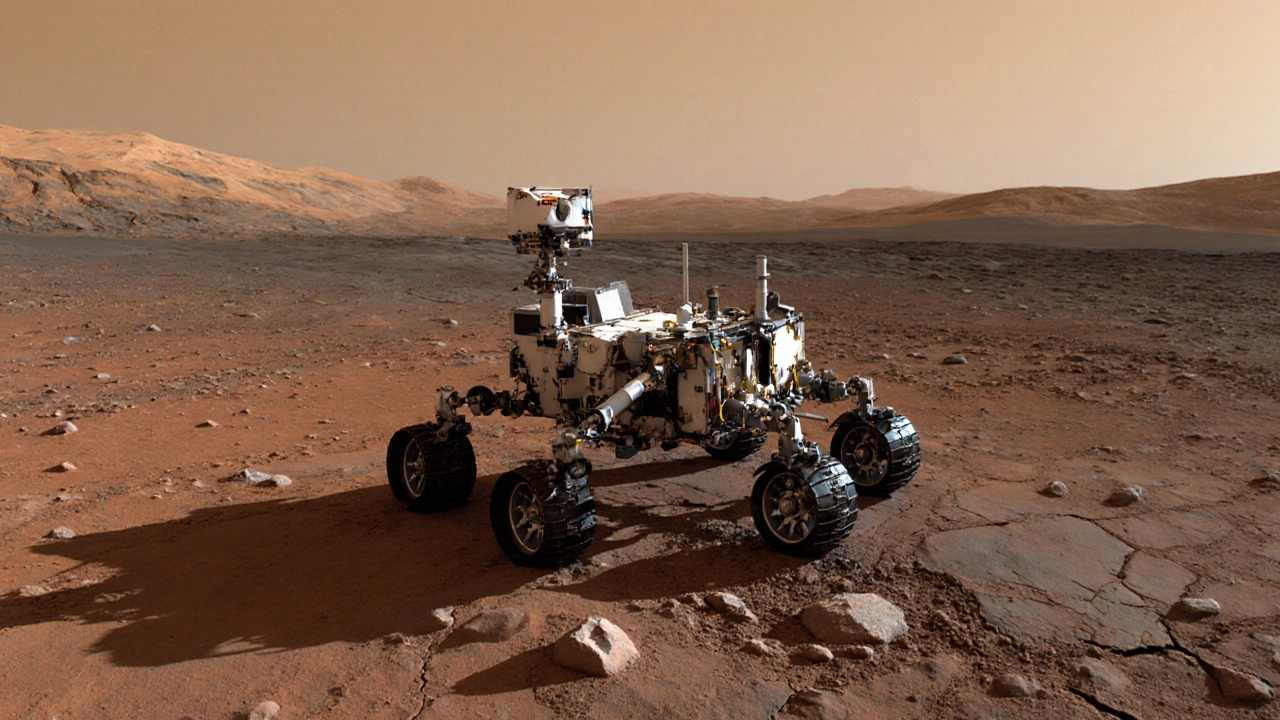
Curiosity and Perseverance are NASA's most advanced Mars rovers, each with distinct missions. Curiosity proved Mars once had habitable conditions. Perseverance now searches for signs of ancient life and collects samples for return to Earth.
Learn More