
When you think of space, you picture rockets, astronauts, and distant planets—but behind every signal, every command, every data stream from orbit, there’s cryptography, the science of securing information through mathematical techniques. Also known as secure communication engineering, it’s what stops hackers from hijacking satellites, spoofing GPS, or tampering with Mars rover commands. Without it, space tech wouldn’t just be vulnerable—it would be useless.
Cryptography isn’t just about locking data. It’s what lets your phone use Differential GPS, a system that boosts location accuracy by comparing signals from ground stations without letting someone fake your position. It’s why blockchain, a distributed ledger that uses cryptographic hashes to verify transactions can track Bitcoin mining rewards without a central bank. And it’s the reason NASA and SpaceX can trust their rocket telemetry—even when signals travel 250 million miles to Mars. This isn’t theory. It’s daily reality in space operations.
Modern space systems rely on cryptography at every level. Satellite internet providers like Starlink encrypt user traffic to prevent eavesdropping. Lunar landing systems use digital signatures to confirm commands come from mission control, not a rogue signal. Even the Merkle tree, a cryptographic structure that lets blockchains verify thousands of transactions with a single hash is used in space software to validate firmware updates without downloading the whole codebase. These aren’t separate ideas—they’re layers of the same system: secure, verifiable, and resilient.
You’ll find cryptography hiding in plain sight across the posts below. It’s in how GPS signals are protected from jamming, how blockchain structures keep lunar mission logs tamper-proof, and how satellite communications stay private against ground-based interference. Some posts dive into the math behind it. Others show how it’s applied in real missions—from SpaceX’s launch telemetry to NASA’s deep-space probes. You won’t find fluff here. Just the real, working tools that keep space connected, safe, and trustworthy.
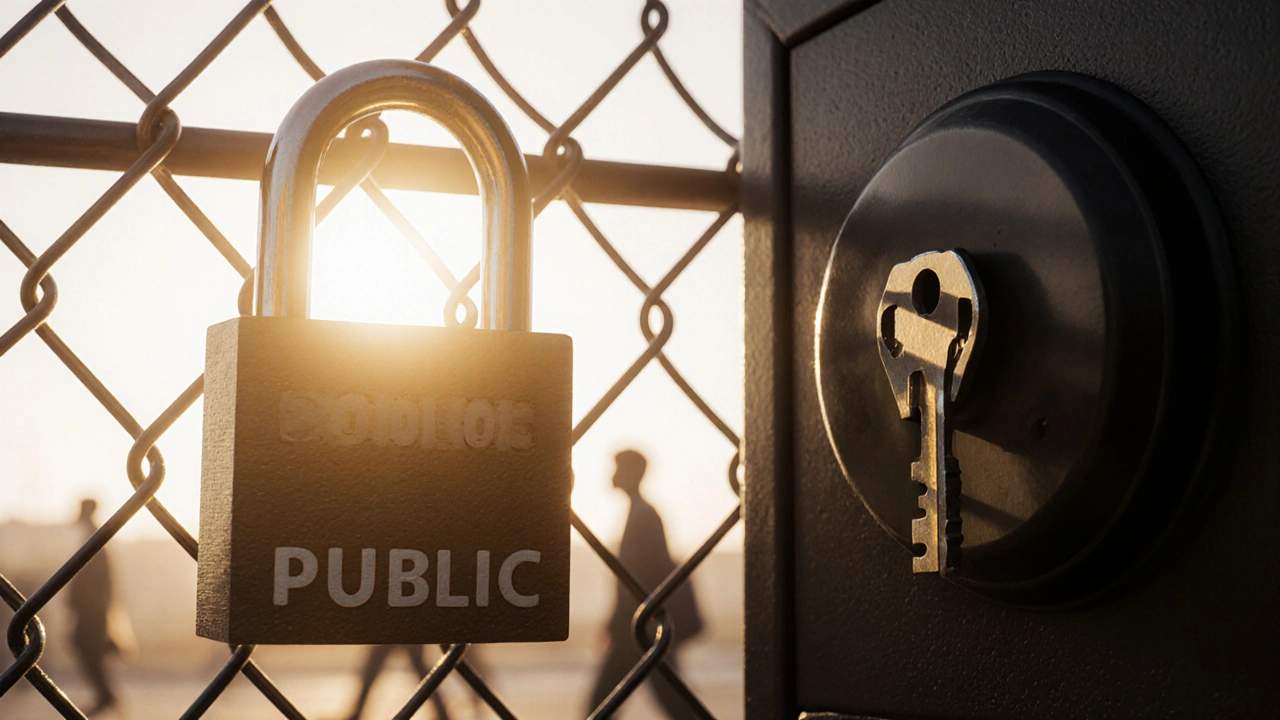
Private and public keys enable secure communication online by using math-based encryption. One key locks data, the other unlocks it-no sharing needed. Learn how they protect your emails, bank logs, and crypto wallets.
Learn More