
When you hold cryptocurrency, you’re not storing cash—you’re holding access to a digital ledger protected by crypto security, the system of encryption, authentication, and access control that keeps digital assets safe from theft and tampering. Also known as blockchain security, it’s what stops hackers from stealing your Bitcoin, Ethereum, or any other token. Unlike a bank account, there’s no customer service to call if you lose your key. If someone else gets access to your private key, the secret code that lets you spend or transfer your cryptocurrency. Also known as secret key, it is the only thing that proves you own your crypto, they own your funds. No recovery. No reset. No second chances.
This is why public key, the address others use to send you crypto, derived from your private key but impossible to reverse-engineer. Also known as wallet address, it’s like your mailbox—you can give it out freely matters. Your public key is like your email address: safe to share. Your private key is like the password to that email—never share it. These two work together through encryption, the mathematical process that locks and unlocks data using key pairs, ensuring only the right person can access or sign transactions. Also known as asymmetric cryptography, it’s the backbone of every secure digital interaction. Digital signatures, built on this system, prove you authorized a transaction without revealing your private key. That’s how your wallet confirms you’re the real owner—without ever exposing your secret.
Most crypto theft doesn’t come from breaking the math. It comes from human error: weak passwords, phishing sites, unsecured devices, or storing keys online. The best crypto security isn’t fancy—it’s disciplined. Use hardware wallets. Never type your private key into a website. Double-check addresses before sending. Update your software. These aren’t suggestions—they’re survival rules. The posts below show you exactly how these systems work, from the math behind key pairs to real-world mistakes that cost people millions. Whether you’re holding your first Bitcoin or managing a portfolio, understanding crypto security isn’t optional. It’s the difference between owning your assets and losing them forever.
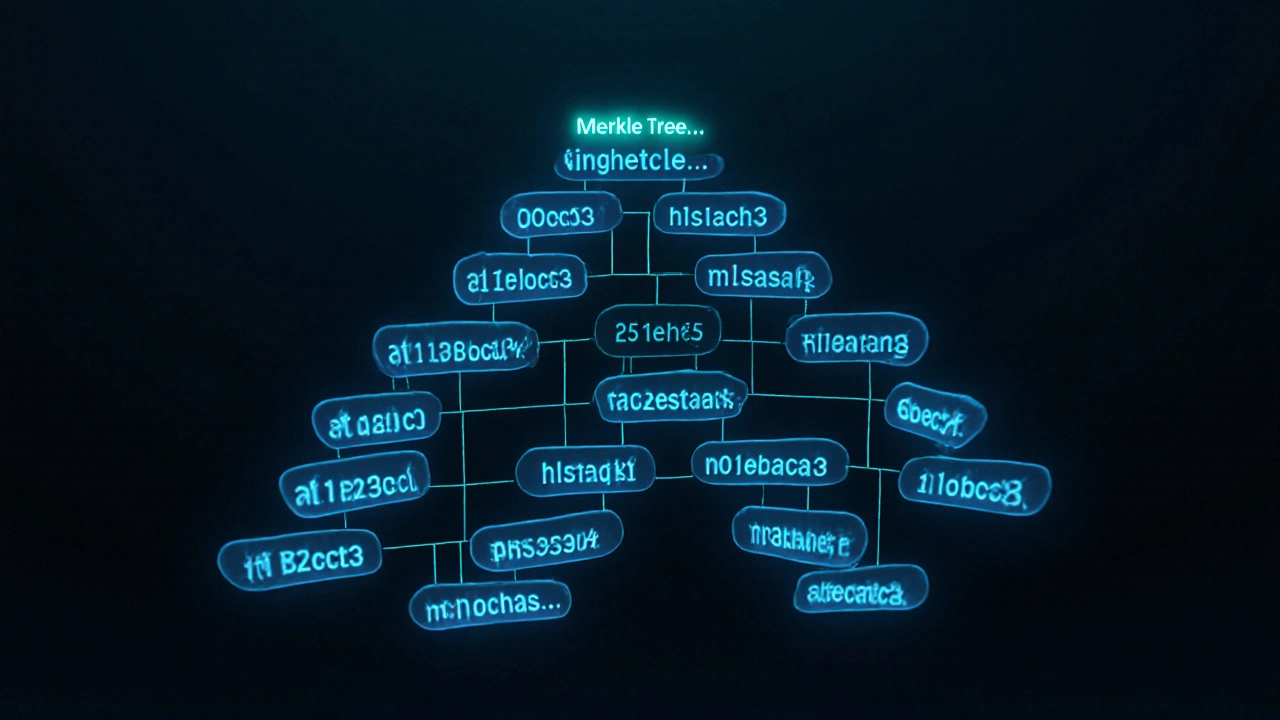
A Merkle tree is a cryptographic structure that lets blockchains verify thousands of transactions instantly using just one hash. It’s the reason your phone wallet can check your balance without downloading the whole blockchain.
Learn More