
When you’re floating in space, water doesn’t drip—it clings. condensation prevention, the process of stopping moisture from forming on cold surfaces in low-gravity environments. It’s not just about comfort—it’s a matter of survival. On the International Space Station, a single droplet of condensation can short-circuit a vital system, grow mold in sealed modules, or blur the lenses of scientific instruments. Without active control, humidity builds up from breathing, sweat, and even the water recycling system itself. NASA doesn’t wait for problems to happen—they design systems to stop condensation before it starts.
microgravity, the near-weightless environment of orbit where fluids behave unpredictably makes condensation worse. On Earth, warm air rises, carrying moisture away. In space, that doesn’t happen. Moisture hangs in the air like fog, settling evenly on every surface. That’s why the ISS water system, a closed-loop system that recycles urine and sweat into drinking water at 98% efficiency has to be paired with powerful air circulation and temperature controls. Fans pull humid air over cold plates, where moisture freezes or collects, then gets drained back into the recycling loop. These aren’t simple dehumidifiers—they’re precision-engineered thermal control systems that work 24/7, even during solar storms that disrupt power.
Condensation prevention isn’t just about keeping the station dry—it’s about enabling everything else. If sensors get fogged, experiments fail. If wiring corrodes, life support fails. That’s why every cable, panel, and vent on the ISS is designed with materials that resist moisture buildup. Even the astronauts’ suits have built-in moisture-wicking layers. For future missions to Mars, where humidity control will be even harder due to longer durations and limited resupply, these systems are being upgraded. New materials, AI-driven humidity sensors, and passive condensation traps are now being tested in labs on Earth and aboard the station.
What you’ll find in this collection are real-world examples of how engineers solve invisible problems in space. From how they keep cameras clear during spacewalks to how they prevent ice from forming inside oxygen tanks, every article here shows the quiet, critical work behind keeping humans alive and machines running in one of the harshest environments imaginable. This isn’t theory—it’s what keeps the lights on up there.
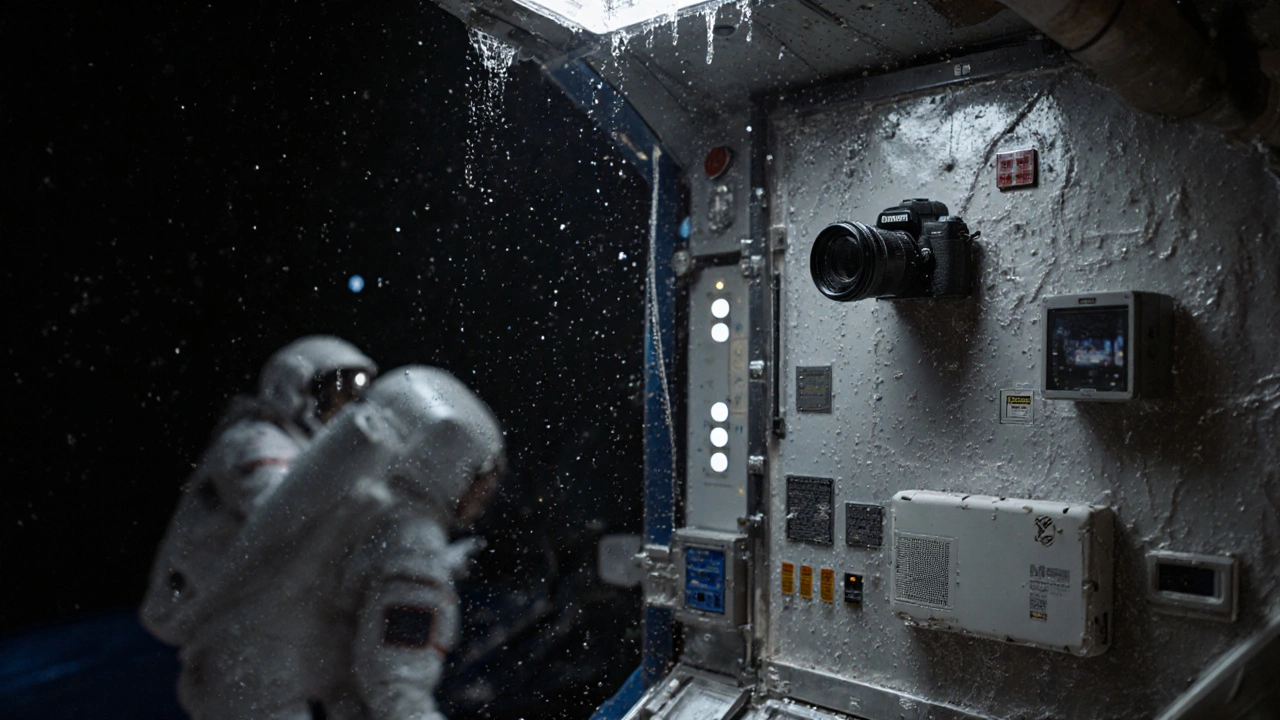
Spacecraft humidity control keeps astronauts safe by preventing condensation, protecting electronics, and recycling sweat into drinking water. Learn how NASA and private companies are making life support systems smarter and more efficient.
Learn More