
When you hear blockchain technology, a distributed digital ledger that records transactions across many computers so that any involved record cannot be altered retroactively. It's not just for crypto—it's the backbone of how public key encryption keeps your data safe, how Bitcoin stays scarce by design, and why space agencies trust it for secure mission logs. Think of it as a digital notebook everyone can see but no one can erase.
Every Bitcoin block reward—3.125 BTC as of 2025—is only possible because blockchain technology verifies each transaction without a central bank. That same math that secures your crypto wallet also protects satellite commands and astronaut communications. The cryptography behind private and public keys? That’s blockchain’s quiet partner. It doesn’t just track money—it locks down identity, validates software updates on Mars rovers, and even helps track the origin of materials used in reusable rockets. You don’t need to be a coder to use it, but you do need to understand it’s not magic—it’s math, repetition, and trust built into code.
What’s surprising is how often blockchain shows up in space tech without being named. When a Falcon 9 booster lands, its flight data is timestamped and stored in ways that mirror blockchain principles. Lunar landing pads built from Moon dust? Their construction logs could one day live on a blockchain to prove they’re safe for astronauts. Even the way satellites talk to each other in formation flying uses similar trust mechanisms. This isn’t sci-fi—it’s happening now, quietly, in the background of missions you read about.
Below, you’ll find real breakdowns of how blockchain connects to Bitcoin mining, digital signatures, and the encryption that keeps space systems secure. No hype. No fluff. Just how it works—and why it matters more than you think.
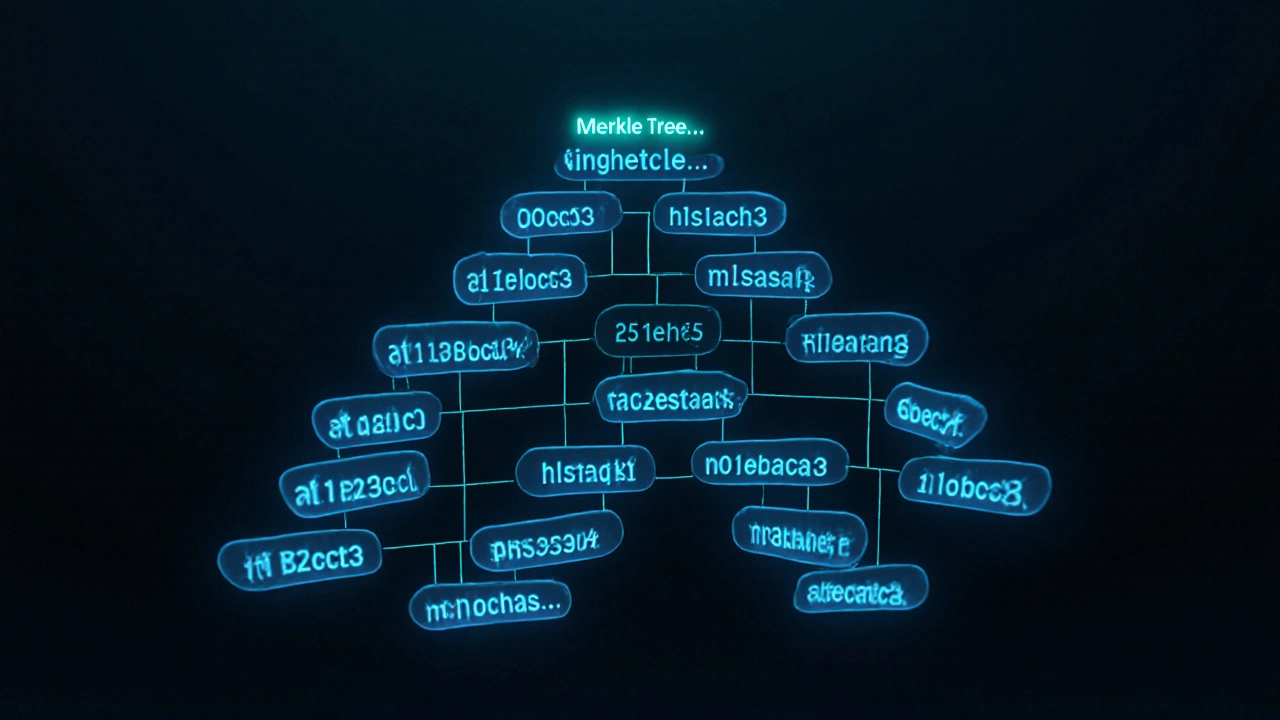
A Merkle tree is a cryptographic structure that lets blockchains verify thousands of transactions instantly using just one hash. It’s the reason your phone wallet can check your balance without downloading the whole blockchain.
Learn More