
When you hear bitcoin halving, a scheduled event that cuts the reward for mining new bitcoins in half. It's a core feature of Bitcoin's code, designed to control how fast new coins enter circulation. Think of it like a faucet slowly turning off — every 210,000 blocks, or roughly every four years, miners get half as many bitcoins for securing the network. This isn't a glitch or a policy change. It's programmed into the blockchain itself, and it’s happened four times so far: in 2012, 2016, 2020, and 2024. Each time, it reshaped how people view Bitcoin’s value and scarcity.
The blockchain, the public ledger that records every bitcoin transaction relies on miners to verify and bundle transactions. In return, they’re paid with new bitcoins — but that payout shrinks with every halving. Right now, miners get 3.125 BTC per block. After the next halving, it’ll drop to 1.5625 BTC. That’s not just a number — it’s a direct hit to mining profits. Many smaller miners can’t survive without the reward boost, which means the network gets tougher, more centralized, and more efficient over time. This ties directly to mining rewards, the incentive system that keeps the Bitcoin network running. Without those rewards, there’s no reason for people to spend electricity and hardware to maintain the system.
Why does this matter to you if you’re not a miner? Because bitcoin supply, the total number of bitcoins that will ever exist — capped at 21 million is fixed. Halvings make Bitcoin deflationary by design. Unlike dollars, which central banks can print endlessly, Bitcoin becomes harder to obtain over time. That scarcity is what draws investors, especially during times of inflation or economic uncertainty. Historical data shows that price surges often follow halvings — not because the event itself causes them, but because it changes expectations. People anticipate reduced supply and increased demand, and markets react ahead of time.
There’s no guarantee the price will go up after the next halving. Past performance doesn’t predict future results. But what’s clear is that this event forces the entire crypto ecosystem to adapt. Exchanges adjust liquidity, wallets update their analytics, and traders restructure their strategies around the timeline. Even companies like SpaceX or Rocket Lab, which use blockchain for secure record-keeping, pay attention — because Bitcoin’s economic model is now a real-world case study in decentralized value.
What you’ll find in the posts below aren’t just news updates about the next halving date. You’ll get clear explanations of how mining works, how blockchain technology makes this possible, and why mining rewards are more than just payments — they’re the engine of a global financial experiment. Whether you’re holding bitcoin, curious about crypto, or just trying to understand why this event keeps making headlines, the articles here cut through the noise and show you exactly what’s happening — and why it matters.
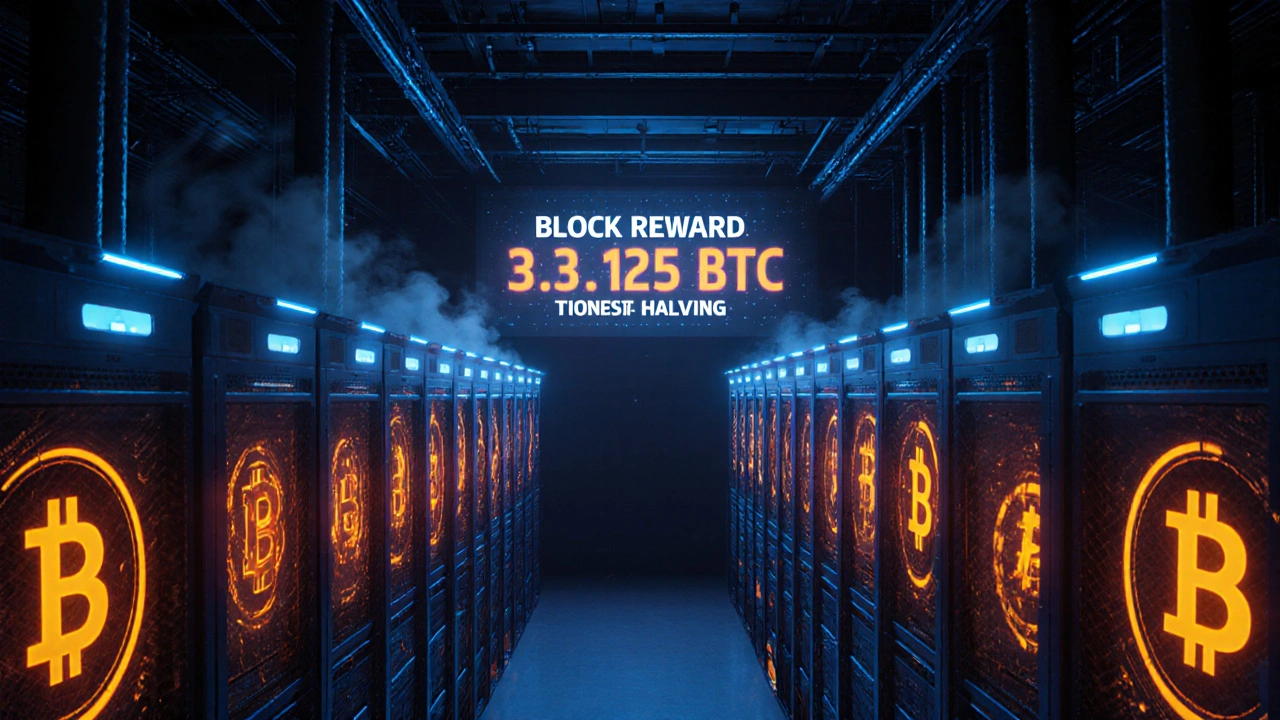
The block reward is how new Bitcoin is created and miners are paid. It halves every four years, making Bitcoin scarce. As of 2025, it's 3.125 BTC per block. This system ensures Bitcoin's supply is predictable and limited.
Learn More