
When you send bitcoin, a decentralized digital currency that runs on a public ledger called the blockchain. Also known as cryptocurrency, it doesn’t need banks, governments, or middlemen to verify transactions—just math and network consensus. That’s possible because of the blockchain, a chain of digital blocks that store transaction data in a way that’s nearly impossible to alter. Every time someone sends bitcoin, that transaction gets bundled with others into a block. That block is then linked to the one before it using a cryptographic hash. Change one letter in one block? Every block after it breaks. That’s how the system stays secure without a central authority.
Behind the scenes, the bitcoin blockchain, a distributed, public ledger maintained by thousands of computers worldwide relies on two core tools: private and public keys, a math-based pair that lets you prove ownership of your bitcoin without revealing your secret. Your public key is like your bank account number—everyone can see it. Your private key is the password that lets you spend from that account. If you lose it, your coins are gone forever. And to make sure millions of transactions can be checked fast, the blockchain uses Merkle trees, a structure that turns thousands of transactions into a single hash, so your phone wallet doesn’t need to download the whole chain to verify your balance.
This isn’t just about money. The same tech that powers bitcoin is used in satellite data logging, secure spacecraft software, and even space mission contracts where trust between parties must be guaranteed without intermediaries. The blockchain’s ability to prove authenticity, track history, and prevent tampering makes it useful wherever you need to answer: Who did what, when, and can it be proven?
What you’ll find here are clear, no-fluff explanations of how these pieces fit together—the math behind keys, how Merkle trees save bandwidth, why blockchain is different from a regular database, and how real-world systems like SpaceX’s launch contracts or NASA’s data systems borrow from these same ideas. No hype. No jargon. Just the facts that let you understand what’s really going on under the hood.
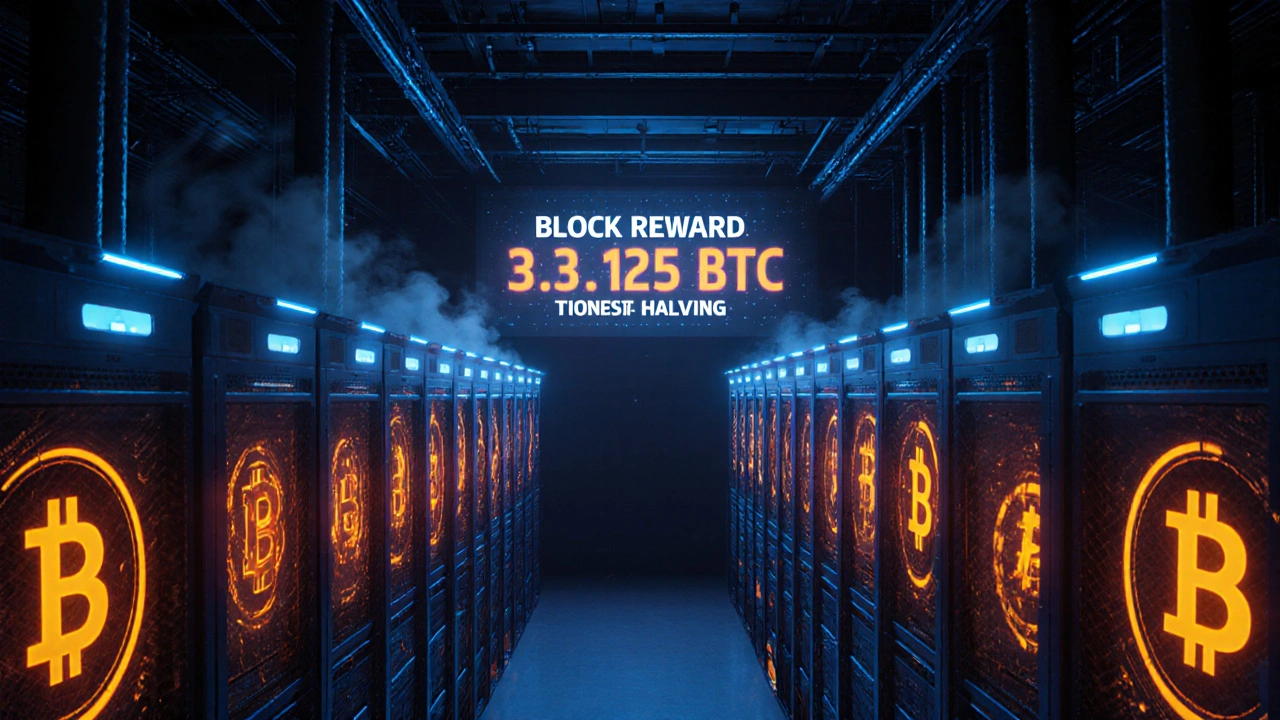
The block reward is how new Bitcoin is created and miners are paid. It halves every four years, making Bitcoin scarce. As of 2025, it's 3.125 BTC per block. This system ensures Bitcoin's supply is predictable and limited.
Learn More