
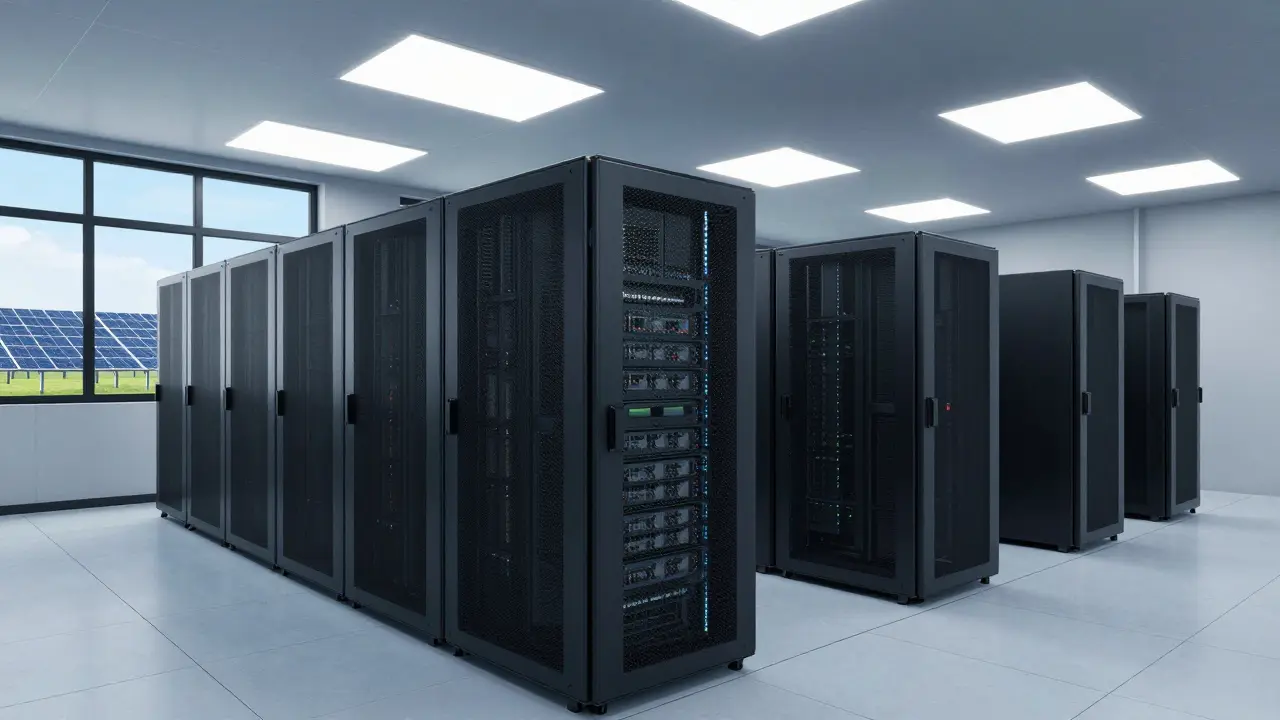
The internet runs on electricity, but blockchain networks burn through it differently than most services you know. There was a time when discussions around cryptocurrency focused entirely on price charts and mining profitability. Today, the conversation has shifted. Investors and regulators alike want to see how this technology survives without destroying the planet they operate in. If you run a validator node or manage blockchain infrastructure, you face a dual challenge: you need maximum performance for consensus while keeping your carbon footprint low. This isn't just about ethics anymore; it is becoming a matter of compliance and economic survival.
You cannot simply plug a server into any old wall socket and expect a sustainable operation. Modern blockchains demand precise timing, massive storage capacity, and rock-solid uptime. When a validator misses a block due to network jitter or power flickers, rewards vanish instantly. This creates a unique tension where high-performance hardware often equals high energy consumption. Finding the right balance requires understanding exactly what validator nodes need and how to feed them power responsibly.
Understanding Validator Node Requirements
Validator Nodes act as the digital referees of a blockchain network. They verify transactions, help reach consensus agreements, and ensure only valid data gets added to the permanent ledger record.Before worrying about solar panels or wind turbines, you must understand the machine you are trying to power. In Proof of Stake (PoS) systems, validators perform specific duties. They don't mine puzzles like older Bitcoin setups, but they still need constant connectivity and processing power. If a validator node fails to sign a block at the exact moment required, the network penalizes the operator. This means downtime isn't just an inconvenience; it is a financial loss.
Different chains have different appetites. For instance, Solana relies on extreme speed, validating blocks in milliseconds. This demands rapid data propagation across the globe. On the other hand, Ethereum validators handle state growth that eventually consumes terabytes of data. Each protocol dictates specific hardware needs. You might find that a setup perfect for one chain leaves another vulnerable. Understanding these nuances is the first step toward building a truly efficient system.
Why Public Cloud Platforms Struggle
Many people instinctively turn to the cloud when building new infrastructure. Amazon Web Services, Google Cloud, and similar hyperscale platforms offer convenience. However, they were designed for websites, streaming, and enterprise software, not for running the backbone of decentralized networks. When you place a validator node in a public cloud, you share resources with strangers. Other tenants on the same physical server can spike your latency or consume shared bandwidth. This phenomenon is known as "noisy neighbor" interference.
| Feature | Public Cloud Infrastructure | Dedicated Bare Metal |
|---|---|---|
| Resource Contention | High (Shared CPU/Memory) | None (Exclusive Access) |
| Predictability | Burst Credits Throttled | Fixed Performance Cap |
| Storage Type | Solid State Drives (Variable Speed) | True NVMe (Consistent Speed) |
| Latency | Volatile (Network Hops) | Stable (Direct Fiber) |
| Security Control | Hypervisor Shared Risks | Single Tenant Isolation |
If consensus mechanisms demand millisecond precision, the variable overhead of virtualization becomes impossible to ignore. Hypervisors-the software layers that create virtual machines-consume CPU cycles before your validator even starts its work. In a race against seconds, every cycle counts. Furthermore, monthly billing costs on cloud platforms can triple unexpectedly during network spikes. When state data grows into terabytes, shared cloud environments simply become incompatible with serious validation workloads.
The Bare Metal Advantage
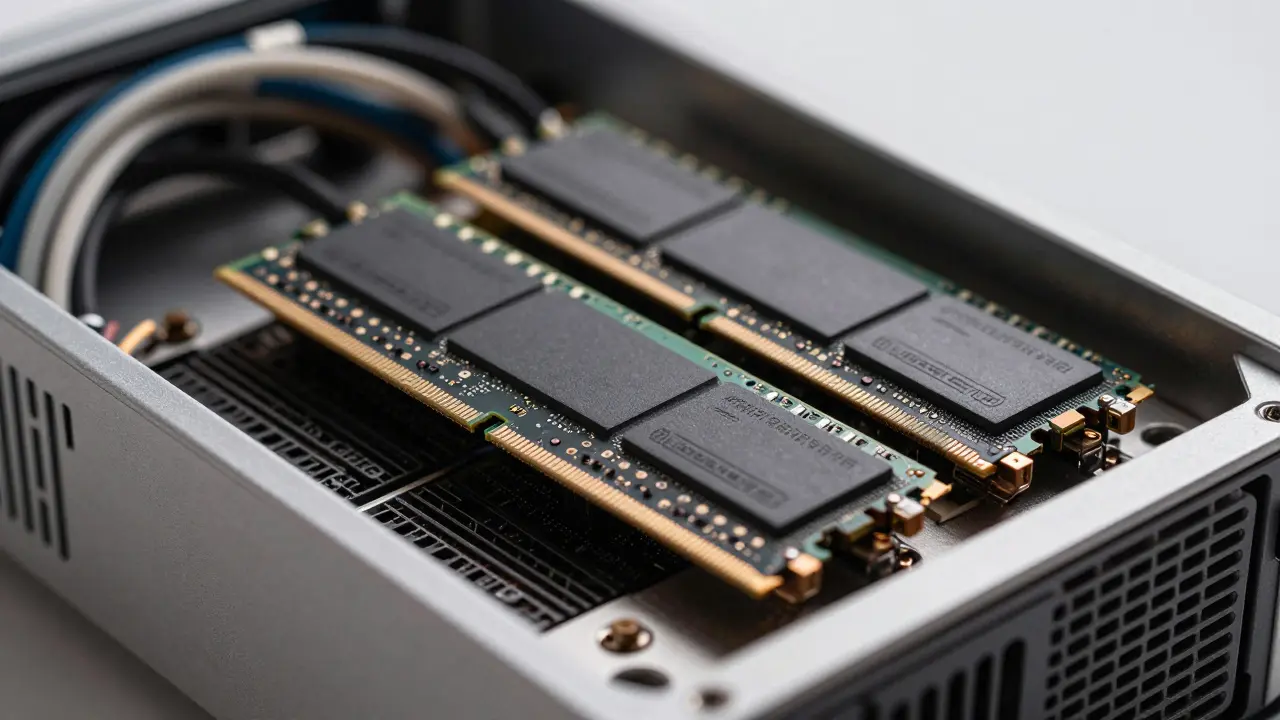
Bare Metal Servers provide single-tenant hardware hosted in professionally managed data centers. This infrastructure ensures exclusive access to CPU cycles, memory bandwidth, and storage without hypervisor interference.This shift away from the public cloud leads us to bare metal solutions. These are physical servers dedicated solely to your node. There is no sharing. Memory bandwidth remains constant, and there is no limit on IOPS (Input/Output Operations Per Second) throttling. In bare metal environments, distributed storage architectures like Ceph ensure validator nodes maintain chain data integrity under heavy load.
Polkadot team members specifically recommend using single-tenant hardware with ECC memory (Error Correction Code) to prevent memory bottlenecks. True NVMe storage replaces slower HDDs and shared SSDs, ensuring read/write speeds never dip below what the consensus mechanism expects. By owning or leasing this hardware directly, you eliminate resource contention. You gain fixed pricing and scalability that grows alongside your chain state rather than fighting against artificial cloud limits.
Integrating Renewable Energy
Sustainable Data Centers utilize renewable power sources to minimize environmental impact. Facilities are equipped with verified energy procurement documentation, carbon offset programs, and transparent sourcing metrics.Achieving high performance does not require burning fossil fuels. In fact, the modern approach treats energy sourcing as a competitive advantage. Blockchain networks that prove their sustainability gain better adoption rates and investor confidence. Regulators are paying close attention to transparency in energy procurement. Running a validator powered by dirty coal puts you at risk of non-compliance in certain jurisdictions.
The goal is to host these nodes in facilities that prioritize 100% renewable energy. Look for certifications like LEED Platinum or RECs (Renewable Energy Certificates). Many top-tier providers now operate facilities backed by local solar farms or wind contracts. When selecting a host, ask for proof. Transparency has become a key differentiator. You want documentation showing exactly where the electrons powering your server came from. This is not just marketing fluff; it ensures that your contribution to the blockchain ecosystem is genuinely sustainable.

Choosing the Right Facility
Not all servers are created equal, and neither are the buildings that house them. Serious validators typically choose Tier III or Tier IV data centers. These classifications define the level of redundancy. A Tier III facility allows maintenance to be performed without ever taking systems offline. It features redundant power paths, cooling systems, and multi-homed transit connections.
Geographic location matters just as much as the building rating. Latency optimization is essential. If your validator peers are primarily located in Europe, placing your server in Asia increases communication delay, risking missed blocks. Conversely, for globally distributed networks, multi-region deployments maintain strong connectivity regardless of where peers sit. Always test configurations in non-production environments first. Deploy testnet validators on your chosen bare metal setup to tune networking settings before moving live mainnet operations.
Ensuring Operational Uptime
Reliability is the currency of trust. Professional validator service providers, such as Stakin or W3coins, demonstrate how to operate at this scale. They operate nodes across leading networks including Chromia, Cosmos, and Solana. Their ability to consistently deliver 99.5% or higher uptime highlights what professional management looks like. Slashing guarantees protect your capital if the infrastructure provider fails, though self-hosting offers more control.
To achieve 24/7/365 operations, you need more than robust hardware. You need comprehensive monitoring. Redundant internet connections prevent a single fiber cut from disconnecting you. On-site technicians mean immediate response times if hardware components fail. The transition to sustainable data centers reflects a convergence of technical necessity and environmental responsibility. The solution lies in purpose-built, professionally managed data centers utilizing renewable energy sources, dedicated hardware infrastructure, and optimized network connectivity.
Summary of Key Considerations
- Always prefer bare metal over public cloud for critical consensus roles.
- Select data centers with proven renewable energy credentials.
- Ensure hardware includes ECC RAM and true NVMe storage.
- Locate servers close to peer clusters to minimize latency.
- Verify Service Level Agreements promise at least 99.5% uptime.
Can I run a validator node on a home server?
While possible for hobbyist projects, home setups lack the power redundancy and stable fiber internet required for production mainnet validators. A single power outage or ISP interruption can result in significant penalties or slashed funds.
How do I verify a data center is truly green?
Ask for direct evidence of renewable energy purchases, such as Power Purchase Agreements (PPAs) or on-site generation logs. Third-party audits and recognized certification labels like LEED are also strong indicators of genuine sustainability efforts.
Is bare metal hosting more expensive than the cloud?
Bare metal often has a higher upfront cost but provides predictable pricing without surprise bursts fees. Over the long term, avoiding performance throttling and wasted cloud credits often makes dedicated hardware more cost-efficient for high-throughput workloads.
What happens if my validator goes offline?
Consequences depend on the specific network protocol. Most Proof of Stake chains slash a portion of staked tokens or reduce future rewards significantly. Continuous availability is vital to maintaining profit margins and network standing.
Does renewable energy impact server performance?
No. The source of the electricity does not affect voltage stability or processing speed. A well-designed sustainable data center delivers the same electrical quality and reliability as traditional grid-powered facilities.
9 Responses
I am glad someone finally explained why bare metal is necessary for serious validation.
Honestly I find the push for bare metal a bit misguided. You assume everyone can afford a dedicated server. Small validators get crushed by upfront costs immediately. Public cloud offers better scaling for growing projects initially. Not every project needs enterprise grade redundancy right away. The environmental argument is often used to gatekeep entry. People claim cloud is inefficient due to virtualization overhead. Modern hypervisors are much better than what people remember from five years ago. Why demonize AWS when their own carbon reduction goals are aggressive. Focusing on Tier IV datacenters ignores the reality of emerging markets. Most chains are actually hosted in regions with dirty grids. Moving to a specific green location adds massive latency penalties. Network stability matters more than where the electrons come from. We need to stop obsessing over the supply chain of electricity. Just build the tech and figure out the power grid later if needed. This article feels like a sales pitch for specific hosting providers.
Nice post! Just wanted to mention the distinction between PoS and PoW was spot on. :)
Oh my gosh did anyone else read that part about slashing 😱. It totally scares me that missing a block means losing money instantly. I thought running a node was just about being online and chill. Now I realize there is so much financial risk involved in this. Imagine setting up everything perfectly and then getting penalized for a blip. The pressure seems absolutely insane for individual operators. I saw a comment saying home servers work for hobbyists though. But honestly risking your savings on a home internet connection sounds terrifying. What happens if your local power company decides to cut the cable. Then you lose thousands in seconds without any backup plan. We really need professional teams managing these things safely. It makes me appreciate the people running proper infrastructure so much more. Plus the idea of green energy is great but safety comes first. I do not want to save the planet if my investment goes into the toilet. I wonder if there are insurance options for validator downtime somewhere. The technical debt sounds overwhelming for beginners trying to start today. Hopefully someone has figured out insurance options for validator downtime already.
Sounds nice but who pays for the solar panels in the end.
Everyone has a point here regarding cost versus performance. I think balance is key between performance and ethics in this industry. We all want green tech but reliability keeps the network secure. Maybe a hybrid model works best for different stages of growth. It is important we listen to both sides of the debate openly.
I think home servers are risky like mentioned above. Big thanks for the breakdown! 👍 I feel a lot clearer now about the hardware choices needed. It helps to see the risks laid out plainly for us beginners.
Great article on the infrastructure requirements. We need to focus on long term viability rather than quick shortcuts. Many people overlook the hardware specifics like ECC RAM which is crucial for error correction in high uptime environments. You also see latency issues when relying on public clouds because of shared networks. Dedicated setups offer the predictability we simply cannot get from virtualized instances. Consistency is king when dealing with consensus mechanisms.
Technology is just a mirror of our values. If we value speed over planet we burn out eventually. Sustainability is the new metric of success in crypto. We must reflect on our choices before it becomes regulation. I hope the industry listens before it is too late.