

You’ve shipped the goods. The buyer has received them. But your cash is stuck in a 60-day payment term while you’re trying to pay your own suppliers next week. This liquidity gap kills small businesses faster than bad sales do. Traditional supply chain financing helps, but it’s often slow, paper-heavy, and locked behind high credit barriers for smaller vendors. Enter blockchain-enabled supply chain finance. It promises to fix this by putting invoices on a shared ledger, letting banks or investors see exactly what they’re funding, and triggering payments automatically via code.
But does it actually work? Or is it just buzzword soup? As of late 2026, the landscape is messy. We have real pilots from major banks, some working stablecoin models, and plenty of hype that hasn’t translated into universal adoption. Here’s the no-nonsense breakdown of how blockchain changes invoice financing, where it shines, and where it still trips over its own feet.
The Core Problem: Trust and Visibility
In traditional reverse factoring (also called supplier finance), a big buyer approves an invoice, and a bank pays the supplier early at a discount. The bank then collects from the buyer later. Sounds simple, right? The problem is visibility. Banks need to be sure the invoice is real, not already financed elsewhere, and tied to actual delivered goods. They spend days reconciling emails, PDFs, and ERP screenshots.
Blockchain solves the visibility piece by creating a single source of truth. When a purchase order, invoice, and delivery confirmation are recorded on a permissioned ledger, every authorized party sees the same status simultaneously. No more "did you get my email?" games. This reduces the risk of duplicate financing-where a sneaky supplier tries to borrow against the same invoice from two different lenders.
For example, India Trade Connect’s Finacle platform uses unique digital identifiers for invoices stored on-chain. Their proof-of-concept showed inland letter-of-credit cycles dropping from 8-9 days to 2-3 days. That’s not magic; it’s just removing manual reconciliation steps.
How It Actually Works: Step-by-Step
Let’s walk through a typical transaction using a platform like we.trade or Marco Polo. Forget public crypto chaos; these are private, permissioned networks where only known participants join.
- Onboarding: The buyer, supplier, and financier (bank or fintech) get cryptographic identities. Access is role-based. A logistics provider might see shipment data but not pricing.
- Data Entry: The buyer submits a purchase order. The supplier uploads an invoice. Logistics providers add shipping and inspection data. Crucially, sensitive commercial terms often stay off-chain, with only hashes or metadata recorded publicly.
- Smart Contract Matching: Code automatically checks if the purchase order, invoice, and delivery evidence match. If they do, the invoice status flips to "approved."
- Financing Request: The supplier clicks "request early payment." The smart contract verifies the buyer’s creditworthiness (pre-approved limits) and offers a discount rate.
- Funding & Settlement: The financier sends funds to the supplier. On newer platforms like Isle Finance, this might happen via stablecoins from a liquidity pool, settling same-day. The smart contract records the debt.
- Maturity: At the original due date, the buyer pays the financier. The smart contract releases any collateral or updates the ledger state.
This isn't theoretical. In 2019, UniCredit and KBC completed a we.trade transaction involving steel companies Gruppo ASA and Steelforce. While that specific deal didn't involve external financing, it proved the workflow could execute complex multi-party trades in days instead of weeks.
Who Benefits? Not Just the Big Guys
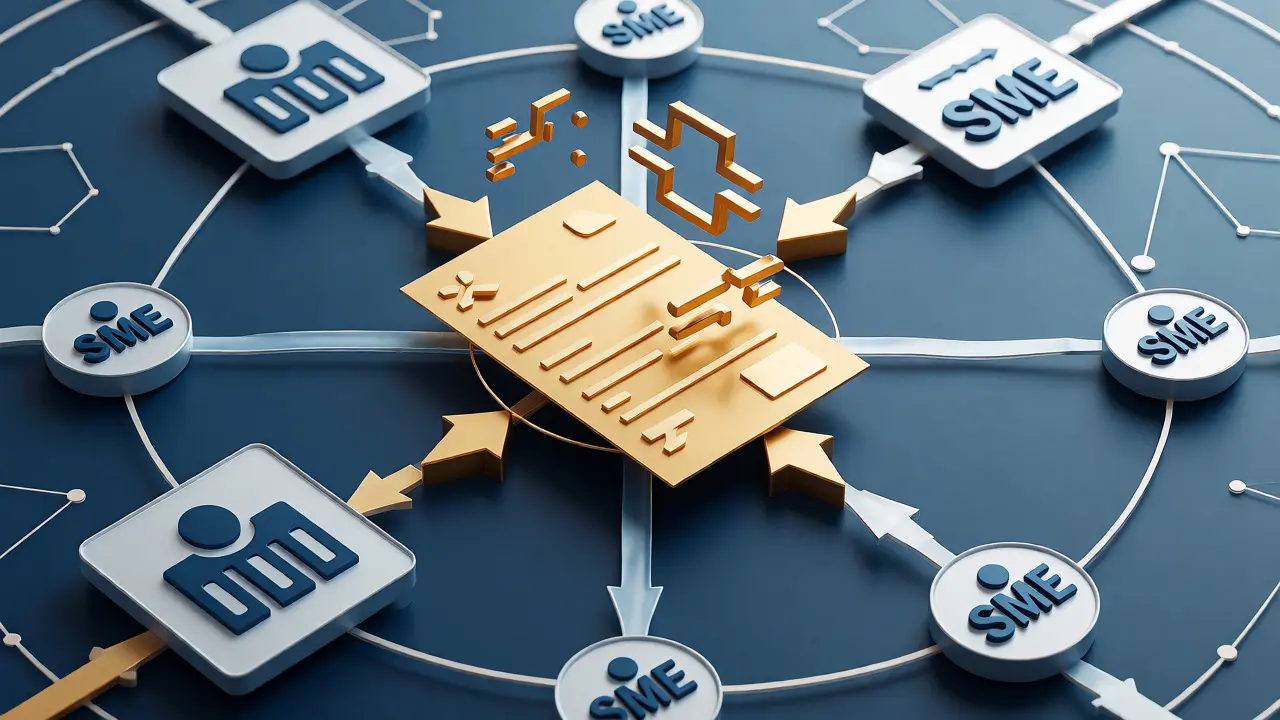
You might think blockchain SCF only helps massive corporations. Wrong. Its biggest win is unlocking capital for Tier 2 and Tier 3 suppliers-those small SMEs buried deep in the supply chain who lack strong balance sheets but hold valid receivables from creditworthy buyers.
A 2022 academic study found platforms operated by Ant Financial, Tencent Cloud, and Hyperchain allowed focal enterprises to issue digital invoices backed by real accounts receivable. These digital tokens could be split or circulated down the chain. So, a tiny component maker can borrow against an invoice owed by Toyota, even if Toyota doesn't directly know the component maker exists. The credit rating flows down the chain because the blockchain proves the obligation is real.
Compare this to traditional methods:
| Feature | Traditional Reverse Factoring | Blockchain SCF |
|---|---|---|
| Invoice Verification | Manual document review, email trails | Automated three-way match via smart contracts |
| Duplicate Financing Risk | High; relies on lender diligence | Low; unique on-chain IDs prevent double-spending |
| Settlement Speed | Days to weeks | Same-day to near-real-time (with stablecoins) |
| Access for Small Suppliers | Limited; high onboarding costs | Better; lower friction via shared ledger access |
| Data Privacy | High; documents kept private | Variable; requires careful off-chain design |
The Stablecoin Twist: Faster Cash, New Risks
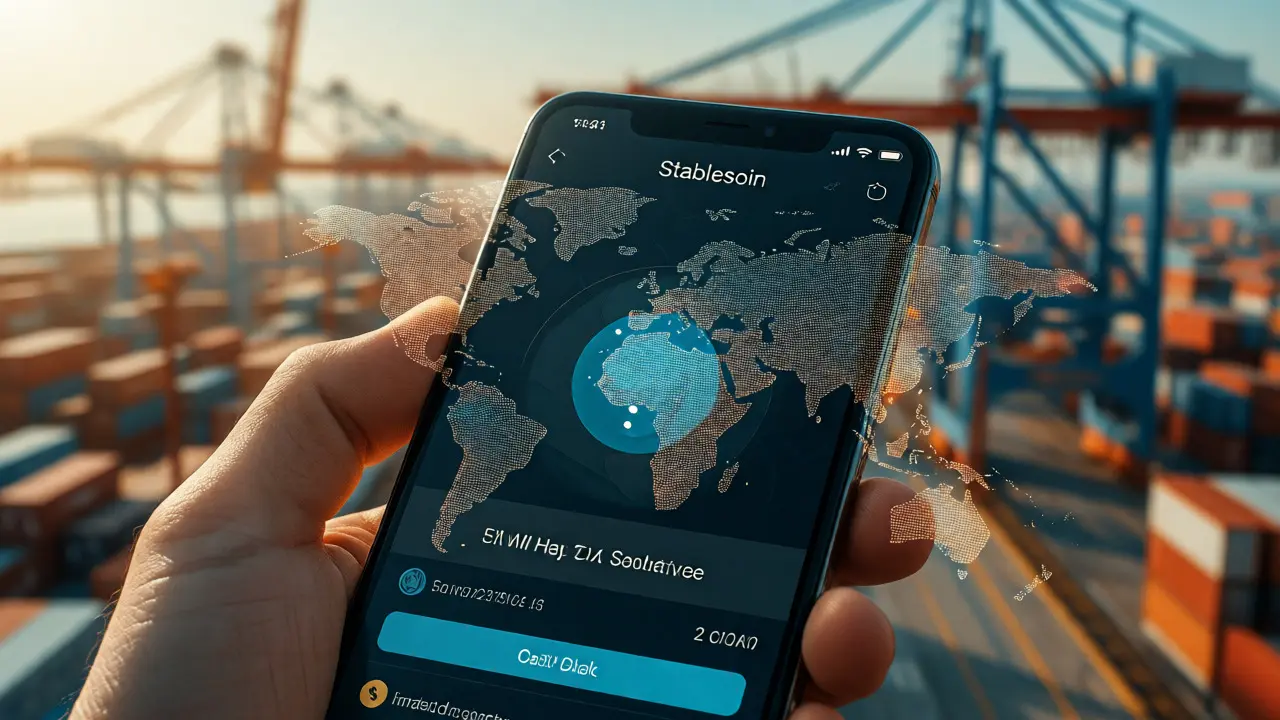
Most early blockchain SCF used traditional bank money moving through legacy rails. That defeats part of the purpose-speed. Newer models, like Isle Finance’s integration with Hedera Hashgraph, use stablecoins (digital dollars pegged 1:1) for settlement.
Here’s why this matters: If a supplier in Vietnam needs cash today, waiting for a SWIFT transfer to clear takes time. Receiving USDC or another stablecoin in their wallet happens instantly. Isle Enterprise underwrites the buyer once, then extends liquidity to all suppliers beneath that buyer without separate onboarding. This "long-tail" approach serves thousands of small vendors efficiently.
But don’t ignore the risks. You’re now exposed to stablecoin de-pegging events, custody issues, and regulatory uncertainty. Is a stablecoin payment legally final in your jurisdiction? Does it trigger tax events differently than a wire transfer? These questions aren't fully answered yet, especially across borders.
Legal Reality Check: An Invoice Isn't a Bill of Lading
Here’s a trap many tech enthusiasts fall into: assuming putting a hash on a blockchain makes a document legally enforceable everywhere. It doesn’t.
The International Chamber of Commerce (ICC) distinguishes between evidentiary documents (invoices, packing lists) and transferable instruments (bills of lading, promissory notes). An invoice proves a debt exists; it doesn’t inherently transfer rights just by possession. Under the UNCITRAL Model Law on Electronic Transferable Records, an electronic record must be under exclusive control and protected for integrity. Blockchain helps prove integrity, but it doesn’t override local contract law.
If the underlying goods were defective, or the signatory lacked authority, the dispute remains regardless of what the ledger says. Smart contracts automate execution, not adjudication. You still need lawyers when things go wrong.
Pitfalls and Practical Implementation
If you’re considering this for your business, start small. Don’t try to digitize your entire global supply chain overnight.
- Garbage In, Garbage Out: Blockchain ensures data wasn’t tampered with *after* entry. It doesn’t verify the input was true. If a warehouse worker scans a box labeled "gold" that’s actually empty lead, the blockchain immutably records a lie. Oracles and IoT sensors help, but they’re vulnerable too.
- Privacy Conflicts: EU GDPR gives people the "right to be forgotten." Blockchains are immutable. How do you reconcile deleting personal data from an unchangeable ledger? Most solutions store PII off-chain and keep only hashes on-chain, but this adds complexity.
- Interoperability Silos: There is no single "blockchain standard." Your buyer might use Hyperledger Fabric, your bank uses Corda, and your logistics partner uses Ethereum. Getting these systems to talk requires expensive middleware or bridges.
- Governance: Who fixes a bug in the smart contract? Who arbitrates disputes? Without clear governance rules agreed upon by all parties, technical failures become legal nightmares.
The World Economic Forum estimated distributed-ledger adoption could add $1 trillion to trade capacity by 2028. That’s a potential upside, not a guaranteed outcome. Success depends less on the technology itself and more on cooperation among competitors, accurate physical-world data, and legal clarity.
Final Verdict: Promising, But Conditional
Blockchain isn’t replacing traditional banking tomorrow. For a single company dealing with one reliable bank, a conventional API-driven database is cheaper and easier to manage. Blockchain shines when multiple independent organizations need a common, tamper-evident record, especially in cross-border scenarios where trust is scarce and reconciliation is costly.
The future is likely hybrid: permissioned ledgers for provenance, conventional fiat or regulated tokenized deposits for settlement, and off-chain storage for confidential contracts. Keep an eye on projects like BIS Project Agorá, which aims to link central bank digital currencies with commercial bank tokens for wholesale settlement. If that succeeds, cross-border invoice financing could become as seamless as sending an email.
Does blockchain eliminate fraud in supply chain financing?
No, it reduces specific types of fraud. It prevents duplicate financing (submitting the same invoice twice) and document tampering after recording. However, it cannot detect fraud at the point of entry, such as fake deliveries or false data entered by corrupt employees. This is known as the "oracle problem."
Is blockchain supply chain finance suitable for small businesses?
Yes, potentially more so than large firms. Small suppliers often struggle to get financing because banks don't know them. Blockchain allows their invoices to inherit the credit rating of large buyers, making them eligible for financing they couldn't access alone. Platforms like Isle Finance specifically target this "long tail" of suppliers.
What is the difference between a public and permissioned blockchain in this context?
Public blockchains (like Bitcoin) are open to anyone. Permissioned blockchains (like Hyperledger Fabric) restrict access to approved participants. Supply chain finance almost exclusively uses permissioned ledgers to protect commercial confidentiality, ensure compliance with KYC/AML laws, and maintain higher transaction throughput.
Can I legally enforce a smart contract in court?
It depends on your jurisdiction. Generally, the underlying legal agreement between parties is what courts enforce, not the code itself. Smart contracts automate performance based on conditions, but if the code contains a bug or the real-world event triggers incorrectly, legal recourse relies on traditional contract law, not the blockchain's immutability.
Are stablecoins safe for receiving invoice payments?
They offer speed and lower fees but carry unique risks. These include regulatory changes, potential de-pegging from the fiat currency, and custody vulnerabilities. Businesses should assess their risk tolerance and ensure the stablecoin issuer is compliant with relevant financial regulations before accepting them as settlement.