
Imagine trying to take a photo of a cold, dark cloud in deep space. To your eyes, it’s invisible. But if you could see heat-specifically the faint glow of dust colder than ice-you’d see stars being born right before your eyes. This is the realm of submillimeter and terahertz radiation, a slice of the electromagnetic spectrum that sits between microwaves and infrared light. It’s where the universe reveals its coldest secrets: star formation, planetary atmospheres, and the cosmic microwave background.
But here’s the catch: Earth’s atmosphere blocks most of this radiation. Water vapor acts like a wall, absorbing these specific wavelengths before they reach ground-based telescopes. That’s why scientists have had to launch rockets, balloons, and satellites into the sky, or fly planes at stratospheric heights, just to get a clear look. If you’re curious about how we detect these signals, what tools we use, and which missions matter, this guide breaks down the hardware and history of submillimeter and terahertz space science.
What Exactly Are Submillimeter and Terahertz Waves?
Before diving into the instruments, let’s clarify the terminology. The terms "submillimeter" and "terahertz" are often used interchangeably, but they refer to slightly different parts of the same spectral window.
- Submillimeter: Refers to wavelengths shorter than one millimeter (typically 0.1 mm to 1 mm). In frequency terms, this is roughly 300 GHz to 3 THz.
- Terahertz: Refers to frequencies around 0.1 to 10 THz. This corresponds to wavelengths from 3 mm down to 30 micrometers.
This band is critical because many molecules, like water and carbon monoxide, rotate and emit energy at these frequencies. Cold interstellar dust also glows brightest here. Unlike visible light, which shows us hot, bright stars, submillimeter and terahertz waves show us the cold, dense material that makes up those stars.
The Engineering Challenge: Why You Can’t Just Use a Regular Telescope
Detecting these faint signals is incredibly hard. First, the sources are cold. Second, the detector itself emits heat. If your telescope isn’t colder than the object you’re observing, the telescope’s own glow drowns out the signal. This forces engineers to build cryogenic instruments.
Most submillimeter detectors need to be cooled to near absolute zero-often below 4 Kelvin (-269°C). This requires liquid helium or complex mechanical coolers. Additionally, because the signals are so weak, any vibration or thermal fluctuation can ruin the data. This is why space platforms are preferred: they offer a stable, vacuum environment with no atmospheric interference.
Herschel Space Observatory: The Gold Standard
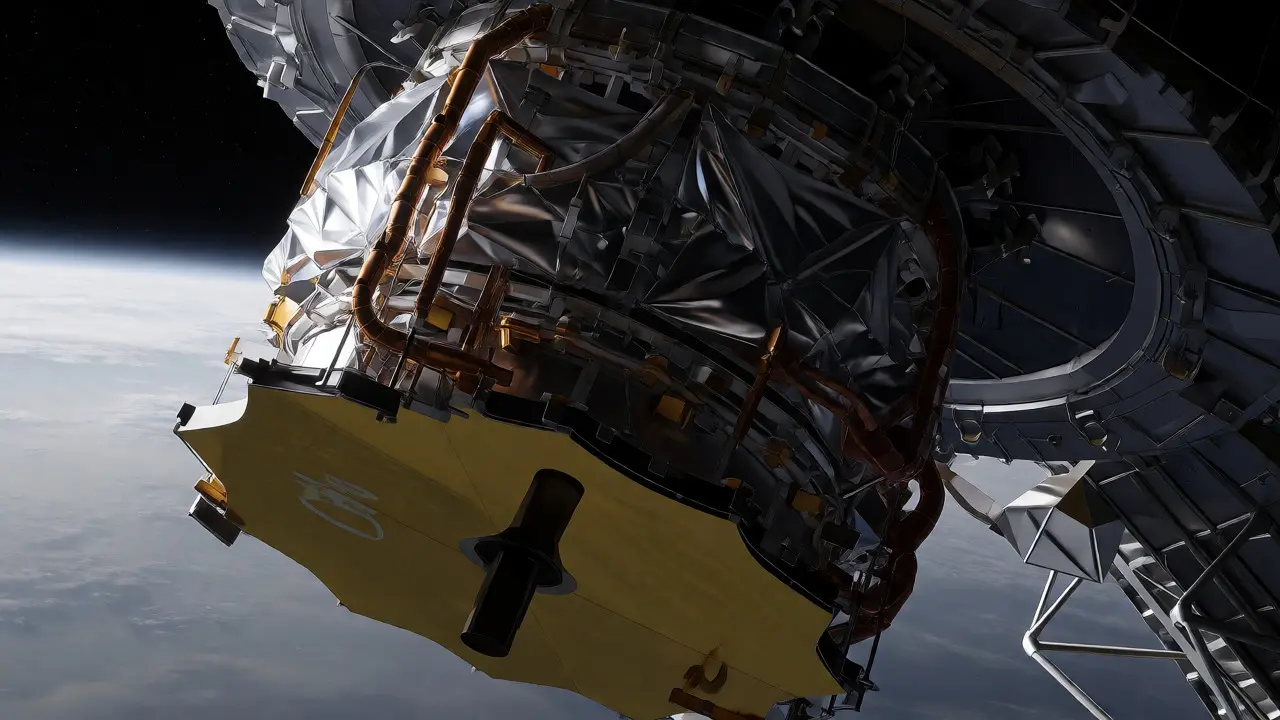
If there is one mission that defined this field, it’s the European Space Agency’s Herschel Space Observatory. Launched in 2009, Herschel was the largest far-infrared telescope ever sent to space. It carried a 3.5-meter mirror and three distinct instruments, each designed for a specific job.
| Instrument | Type | Wavelength Range | Primary Function |
|---|---|---|---|
| HIFI | Heterodyne Spectrometer | 157-625 μm | Ultra-high resolution spectroscopy of molecular lines |
| PACS | Bolometer Array | 55-210 μm | Imaging photometry and integral-field spectroscopy |
| SPIRE | Bolometer Array | 194-671 μm | Broadband continuum imaging and Fourier-transform spectroscopy |
Herschel’s legacy is huge. It mapped cold dust across the Milky Way and studied galaxies billions of light-years away. However, it relied on liquid helium for cooling. Once the helium ran out in 2013, the observatory shut down. This highlights a major limitation: finite cryogen lifetimes limit mission duration.
ALMA: The Ground-Based Powerhouse
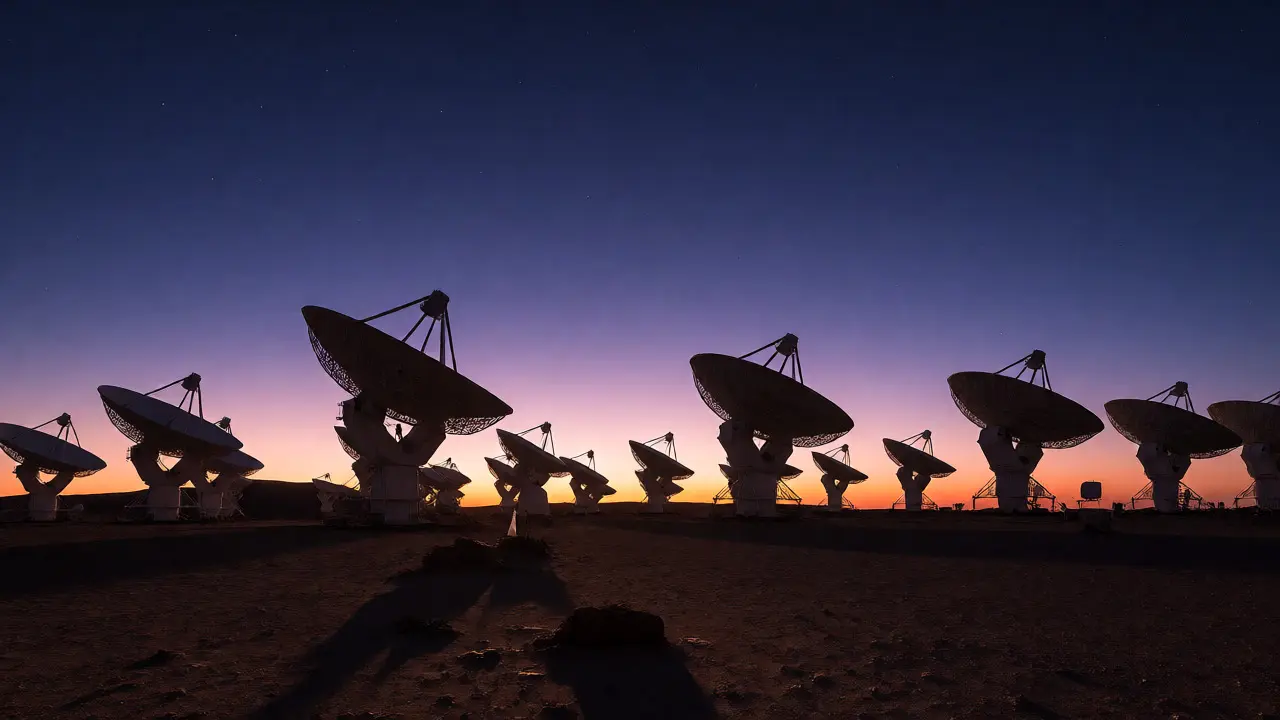
You might wonder, "If space is better, why do we still use ground telescopes?" Enter the Atacama Large Millimeter/submillimeter Array (ALMA) in Chile. Located at 5,000 meters altitude, ALMA is an interferometer made of 66 antennas. It doesn’t go to space, but it gets close enough to the edge of the atmosphere to see through the "windows" where water vapor absorption is lower.
ALMA covers 35-950 GHz. While it lacks the full spectral coverage of Herschel, it offers something space telescopes can’t easily match: incredible angular resolution. By combining signals from antennas spread over 16 kilometers, ALMA can zoom in on details as small as a coin seen from miles away. It uses superconducting mixers called SIS junctions to detect signals with minimal noise. For detailed studies of protoplanetary disks and star-forming cores, ALMA is unmatched.
Airborne and Balloon Missions: The Middle Ground
Between the ground and orbit lie airborne and balloon observatories. These platforms fly above most of the atmospheric water vapor but don’t require the massive cost of a satellite launch.
SOFIA (Stratospheric Observatory for Infrared Astronomy) was a Boeing 747SP fitted with a 2.5-meter telescope. It flew at 45,000 feet, allowing researchers to swap out instruments and upgrade technology mid-mission. SOFIA ended operations in 2022, but it proved the value of flexible, recoverable assets.
More recently, GUSTO (Galactic/Extragalactic ULDB Spectroscopic Terahertz Observatory) launched from Antarctica in late 2023. GUSTO rode a super-pressure balloon around the South Pole for nearly two months. Its goal? To map the life cycle of interstellar gas by detecting emission lines from carbon, nitrogen, and oxygen. Balloons offer long-duration flights at high altitudes without the complexity of orbital mechanics.
Detector Technologies: How We Actually See the Light
The heart of any submillimeter instrument is its detector. There are two main approaches, each with trade-offs.
Bolometers
Bolometers measure total power. They absorb incoming radiation, which heats up a tiny sensor. The change in temperature changes the electrical resistance, which we measure. Bolometers are great for taking pictures (imaging) because they can cover wide areas and broad wavelength ranges. However, they lack fine spectral detail. You know *how much* energy arrived, but not exactly *which* molecule emitted it.
Heterodyne Receivers
Heterodyne receivers mix the incoming signal with a local oscillator to create a lower-frequency signal that electronics can process. This allows for extremely high spectral resolution. You can distinguish between two spectral lines that are very close together. This is crucial for studying molecular clouds and chemical composition. The downside? Heterodynes typically view a single point in the sky at a time, making them slow for large surveys.
The Future: Origins Space Telescope and LiteBIRD
What’s next? NASA’s concept for the Origins Space Telescope aims to succeed Herschel. It would feature a 9-meter segmented mirror, passively cooled to 4 K. It promises sensitivity ten times better than Herschel, allowing us to study the first galaxies and the origins of water in the universe.
Meanwhile, Japan’s LiteBIRD mission focuses on the Cosmic Microwave Background (CMB). Using thousands of Transition-Edge Sensors (TES), LiteBIRD will search for primordial gravitational waves. These ripples in spacetime, predicted by inflation theory, leave a specific polarization pattern in the CMB that is only visible in the submillimeter range.
Key Takeaways for Researchers and Enthusiasts
- No Single Winner: Herschel offered breadth; ALMA offers resolution; balloons offer flexibility. Choose the tool based on your scientific question.
- Cooling is Critical: Without cryogenics, the telescope’s own heat blinds it. Mechanical coolers are replacing liquid helium for longer missions.
- Atmosphere Matters: Ground-based observations are limited to "windows" of transparency. Space and stratospheric platforms provide continuous access.
- Data Complexity: Working with this data requires understanding radiative transfer, molecular spectroscopy, and calibration techniques like color corrections and baseline removal.
Why can't we observe submillimeter waves from sea level?
Earth's atmosphere contains water vapor, which strongly absorbs submillimeter and terahertz radiation. At sea level, this absorption is so severe that almost all of this part of the spectrum is blocked. High-altitude sites like the Atacama Desert or airborne/space platforms place the telescope above most of the water vapor, allowing the radiation to reach the detectors.
What is the difference between a bolometer and a heterodyne receiver?
A bolometer measures the total intensity of incoming radiation across a broad band of wavelengths, making it ideal for imaging and mapping large structures. A heterodyne receiver mixes the incoming signal with a local oscillator to achieve extremely high spectral resolution, allowing it to distinguish narrow molecular lines. Bolometers are faster for surveys; heterodynes are better for detailed chemical analysis.
How long did the Herschel Space Observatory operate?
Herschel operated from its launch in May 2009 until April 2013. Its lifespan was determined by the supply of liquid helium needed to cool its detectors to near absolute zero. Once the helium evaporated, the instruments warmed up and could no longer detect the faint cold signals they were designed for.
Is ALMA considered a submillimeter instrument?
Yes, partially. ALMA observes frequencies from 35 GHz to 950 GHz. The higher bands (above ~300 GHz) fall into the submillimeter range. However, ALMA is limited by the atmosphere, meaning it can only observe certain submillimeter frequencies during dry weather conditions at its high-altitude site in Chile.
What are Transition-Edge Sensors (TES)?
Transition-Edge Sensors are highly sensitive bolometers made from superconducting materials. They operate at the precise temperature where the material transitions from a normal conductor to a superconductor. At this point, their electrical resistance changes drastically with even tiny amounts of absorbed heat, allowing for extremely low-noise detection of faint cosmic signals.