
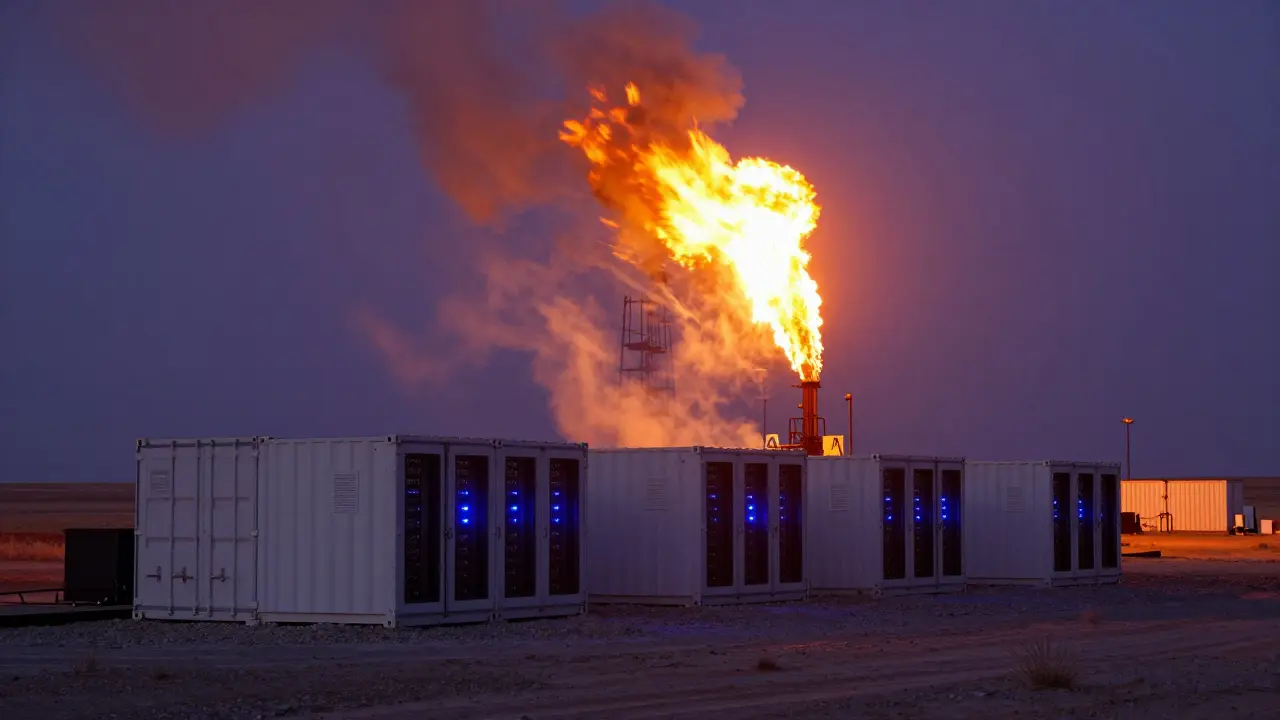
Imagine a remote oil well in North Dakota. The ground is shaking, but not from the drill-it’s from the roar of a massive flame stack burning off natural gas that has nowhere to go. For decades, this was just a safety necessity, a lost revenue stream for producers, and a significant source of greenhouse gases. Now, picture a row of shipping containers sitting right next to that flare stack. Inside, thousands of computers are humming, solving complex math problems to secure the Bitcoin network. This isn’t science fiction; it is the reality of stranded energy monetization through Bitcoin mining.
We often hear about the environmental cost of cryptocurrency. But there is a quieter revolution happening where miners are acting as emergency customers for wasted power. By moving to where the energy is-whether it is excess wind power or gas that would otherwise be burned-miners are turning liabilities into assets. Here is how this dynamic works, why it matters for the climate, and what it means for the future of both industries.
What Is Stranded Energy?
To understand the solution, we first need to define the problem. Stranded energy refers to electricity or fuel resources that are produced in locations or under conditions where there is no economically viable way to move that energy to traditional consumers. It ends up being wasted through curtailment, venting, or flaring.
In the oil and gas sector, this usually appears as associated natural gas at remote wells. If there is no pipeline nearby to carry the gas to market, producers face a choice: shut down the oil production (which costs money) or burn the gas off in a flare stack (which wastes resources and pollutes). In the renewable energy sector, stranded energy happens when wind turbines spin or solar panels shine during times of low demand or grid congestion. The grid operators then have to tell these plants to stop generating, effectively throwing away clean electricity because they cannot store or transport it fast enough.
Historically, this energy had zero value. Today, thanks to the unique flexibility of Bitcoin mining, it has a price tag.
The Mechanics of Digital Flare Mitigation
How do you mine Bitcoin in the middle of nowhere? You don't need high-speed fiber optics; you need power and internet connectivity. Companies like Crusoe Energy and EZ Blockchain have developed modular systems designed specifically for this environment.
The process typically involves three main components:
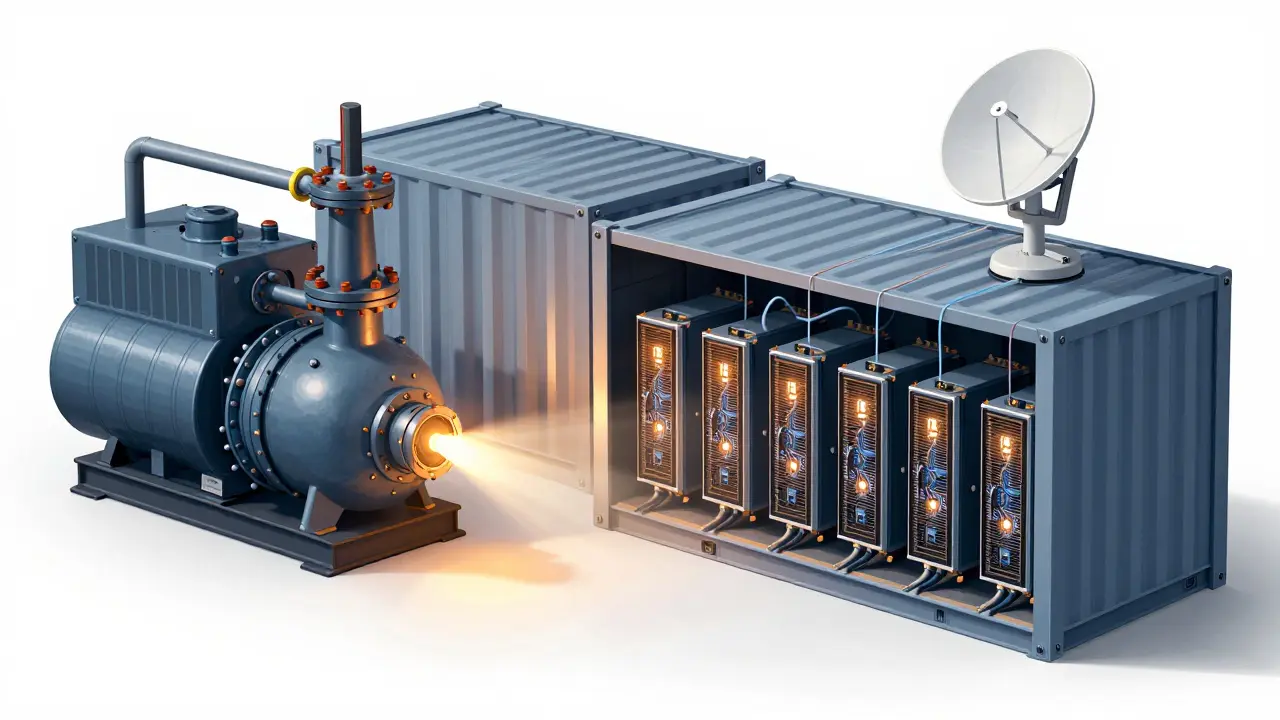
- Gas Capture: Instead of letting the gas escape into the open air or burn inefficiently in a flare, pipes route the methane-rich gas to an on-site generator.
- Power Generation: High-efficiency generators convert the chemical energy of the gas into electricity. According to data from INNIO and Crusoe, controlled combustion in these engines can achieve methane destruction rates of nearly 99.89%, compared to roughly 93% efficiency in open flares.
- Mining Hardware: The electricity powers ASIC (application-specific integrated circuit) miners housed in mobile containers. These units connect to mining pools via satellite, cellular, or microwave links, allowing them to contribute hash rate to the global network without local broadband infrastructure.
This setup is known as Digital Flare Mitigation. It transforms a regulatory headache into a revenue-generating asset. Producers who previously paid to manage flaring now get paid-or at least offset their costs-by selling the energy to miners.
Environmental Impact: More Than Just Hype?
Critics argue that Bitcoin mining consumes too much energy. Supporters counter that it makes stranded energy viable. Who is right? The answer lies in the specific context of methane emissions.
Methane is a potent greenhouse gas, with more than 80 times the warming power of carbon dioxide over a 20-year timeframe. When gas is vented directly into the atmosphere, it causes immediate radiative forcing. Even when flared, incomplete combustion releases unburned methane. By routing this gas through a generator to power Bitcoin miners, we ensure complete combustion, converting methane into CO2 and water vapor. While CO2 is still a greenhouse gas, the net reduction in short-term warming potential is significant.
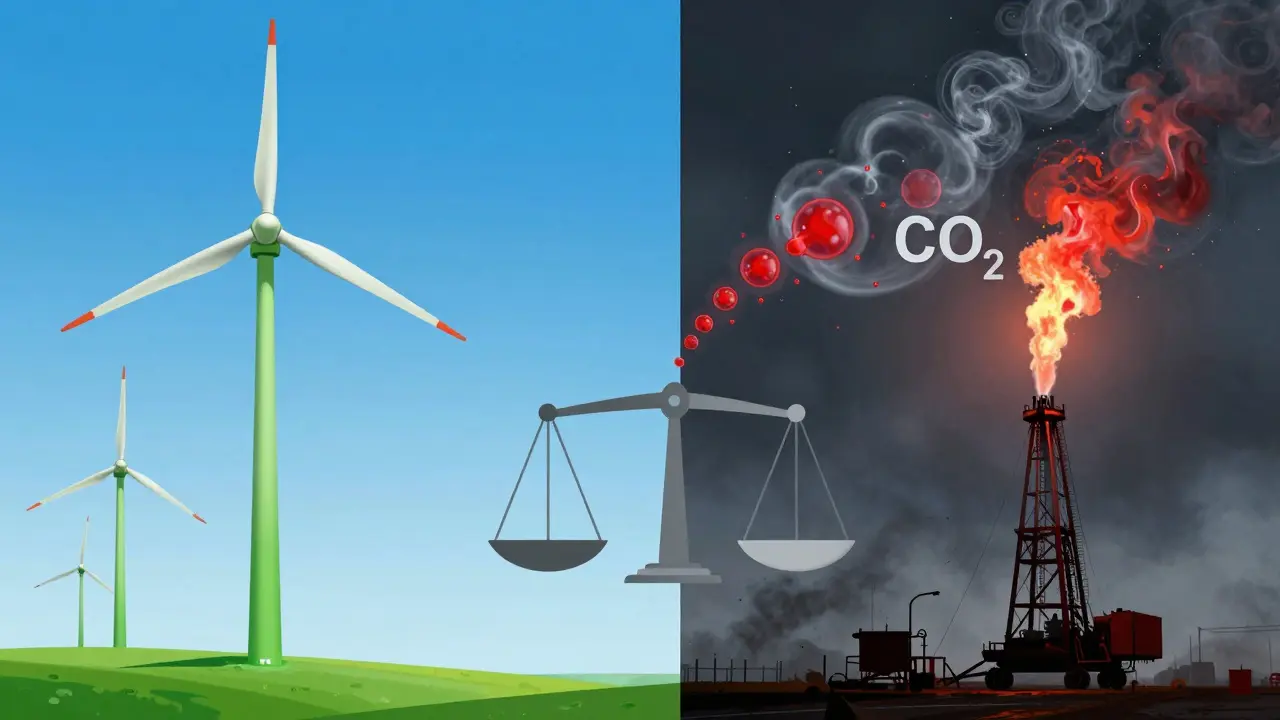
A detailed analysis by Arcane Research (now part of K33) published in September 2022 provided compelling metrics. They calculated that per $1,000 of capital deployed, Bitcoin mining connected to stranded gas reduces approximately 6.32 metric tons of CO2-equivalent emissions annually. Compare that to about 1.3 tons for new wind projects and 0.98 tons for solar projects when evaluated on marginal emission reduction per unit of capital. This doesn't mean mining replaces renewables; rather, it highlights that targeted methane abatement via mining can achieve a higher emissions payoff per dollar in specific contexts of high flaring.
Renewables and Grid Flexibility
The story isn't just about fossil fuels. Bitcoin mining is also becoming a key player in stabilizing renewable energy grids. Wind and solar are intermittent. When the wind blows hard at night, demand might be low, leading to curtailment. Bitcoin miners can act as a flexible, interruptible load. They can ramp up consumption instantly when surplus power is available and shut down just as quickly when the grid needs that electricity elsewhere.
Companies like CleanSpark, Lancium, and TeraWulf operate sites that co-locate with renewables or use demand response strategies. By absorbing surplus power, miners prevent curtailment and improve the economics of renewable projects. This creates a symbiotic relationship: the miner gets cheap or even negative-cost energy, and the grid operator avoids wasting clean electrons. As researcher Daniel Batten notes, this approach helps tackle renewable bottlenecks by monetizing stranded power and reducing interconnection delays.
| Technology / Method | CO2e Reduced per $1,000 Invested (Annual) | Primary Mechanism |
|---|---|---|
| Bitcoin Mining (Stranded Gas) | 6.32 tons | Methane capture & efficient combustion |
| New Wind Projects | 1.30 tons | Displacing grid electricity |
| New Solar Projects | 0.98 tons | Displacing grid electricity |
Economic Drivers and Regulatory Landscape
Why are producers willing to let miners onto their land? Economics. Feedstock energy costs for stranded gas are near zero or even negative. The producer is already bearing the cost of flaring or facing penalties for emissions compliance. Any revenue generated from using that gas is incremental profit.
Regulators are catching on. In Texas, House Bill 591 (analyzed in April 2023) proposed exemptions from severance tax for gas consumed on-site in operations like mobile data centers, provided the gas would otherwise have been lawfully vented or flared. This legislative move signals a shift in perspective: lawmakers see cryptocurrency mining not just as a tech trend, but as a tool for mitigating flaring and improving field returns. Similarly, legal discussions in Oklahoma highlight the evolving property rights negotiations between surface owners and mineral estates, showing that this niche is mature enough to require formal legal treatment.
Challenges and Risks
It is not all smooth sailing. The viability of stranded-energy mining depends heavily on consistency. If flare flows fluctuate wildly or gas composition varies, generators can struggle, leading to downtime. HashrateIndex notes that inconsistent volumes can make mining uneconomic. Furthermore, Bitcoin’s price volatility affects profitability. If the price of Bitcoin drops significantly, the revenue may no longer cover the operational costs of maintaining remote equipment.
There is also the issue of maintenance. Remote locations mean that if a generator fails, technicians may take days to arrive. Companies must invest in robust monitoring and redundant systems to keep hash rates stable. Additionally, public sentiment remains polarized. While some view this as a climate solution, others argue that expanding mining workloads exacerbates overall energy consumption, regardless of the source.
The Future Outlook
As of mid-2025, there are nearly two dozen documented deployments across the United States using Bitcoin mining to capture flared gas or integrate with renewables. This number is small compared to the total mining industry, but it is growing. With increasing institutionalization, better measurement frameworks for emissions verification, and continued pressure to reduce methane leaks, stranded energy mining is poised to become a standard practice in remote energy sectors. It represents a pragmatic intersection of finance, technology, and environmental stewardship, proving that sometimes the best way to save the planet is to put a price on its waste.
What is stranded energy in the context of Bitcoin mining?
Stranded energy refers to electricity or fuel resources, such as flared natural gas or curtailed renewable power, that cannot be economically transported to traditional markets. Bitcoin mining monetizes this energy by consuming it on-site, turning a waste product into a revenue stream.
How does Bitcoin mining reduce methane emissions?
By capturing gas that would otherwise be vented or inefficiently flared, miners route it through high-efficiency generators. This ensures complete combustion, destroying nearly 99.9% of methane molecules and converting them into less potent CO2, thereby significantly reducing short-term radiative forcing.
Is Bitcoin mining with stranded gas more effective than building new renewables?
In terms of emission reduction per dollar invested, yes. Arcane Research found that mining with stranded gas reduces 6.32 tons of CO2e per $1,000 invested, compared to 1.3 tons for wind and 0.98 tons for solar. However, this applies specifically to methane abatement contexts, not as a replacement for all renewable development.
Who are the major companies involved in digital flare mitigation?
Key players include Crusoe Energy, EZ Blockchain, CleanSpark, Lancium, and TeraWulf. These companies deploy modular mining units at oil fields and renewable sites to capture and utilize stranded energy.
What are the risks of mining with stranded energy?
Risks include inconsistent gas or power supply leading to generator inefficiency, high maintenance costs due to remote locations, and Bitcoin price volatility which can impact profitability. Regulatory uncertainty and public perception challenges also remain factors.