

Imagine waking up to find your crypto wallet has grown while you slept. You've been staking your tokens, and those rewards are rolling in. It feels like free money, but the tax man sees it differently. If you're operating in the U.S., the staking rewards taxation is not a suggestion-it's a requirement. The core problem most investors face is the "invisible" nature of these rewards; because they often accumulate automatically, many forget they are taxable until audit season arrives.
Quick Summary: The Essentials
- Staking rewards are taxed as ordinary income the moment you have "dominion and control" over them.
- The value is based on the Fair Market Value (FMV) at the time of receipt.
- Selling those rewards later triggers a second tax event: capital gains or losses.
- IRS Revenue Ruling 2023-14 is the definitive guide for how these assets are treated.
When Exactly Are Rewards Taxed?
The biggest question for any staker is: "When do I actually owe the money?" The Internal Revenue Service (IRS) uses a concept called "dominion and control." Essentially, if you can sell, transfer, or spend the tokens, you've received them for tax purposes.
For those staking Ethereum (ETH), this was a huge point of confusion during the transition to Proof-of-Stake. The ruling clarifies that rewards are taxable once they are unlocked and available to the user. Whether you use a third-party exchange or run your own validator node, the rule remains the same: access equals a taxable event.
Calculating Your Taxable Income
You can't just report the total value of your rewards at the end of the year. You have to look at the Fair Market Value (FMV) on the specific day each reward hit your wallet.
Let's say you get 0.2 ETH every month. If ETH is $2,000 in January, that's $400 of income. If it drops to $1,500 in February, that's $300 of income. You must track every single one of these dates. This FMV isn't just for your income tax; it becomes your cost basis for the future. If you don't keep these records, you'll likely overpay in taxes because you won't be able to prove what the tokens were worth when you first got them.

The Two-Tier Tax Trap
Many people believe they are being double-taxed on staking, but it's actually a two-step process. First, you pay ordinary income tax on the reward. Second, you pay capital gains tax on the growth.
| Event | Tax Type | Calculated On... |
|---|---|---|
| Receiving the Reward | Ordinary Income | FMV at time of receipt |
| Selling/Swapping Reward | Capital Gains/Loss | Difference between receipt FMV and sale price |
For example, if you receive $1,000 worth of tokens (taxed as income) and they grow to $1,500 before you sell them, you only pay capital gains tax on that $500 increase. If the value drops to $800, you can actually report a $200 capital loss, which can help offset other gains.
Tax Rates and Holding Periods
The amount you pay depends heavily on how long you hold the rewards. Ordinary income tax rates are based on your tax bracket, ranging from 10% to 37%. However, if you hold your rewards for more than a year before selling, you qualify for long-term capital gains rates, which are typically much lower than short-term rates.
If you're a business owner earning rewards as part of a professional operation, you can report this on Schedule C. This is a huge advantage because it allows you to write off business expenses-like hardware for your validator or software subscriptions-that a casual investor cannot.
How to Report This on Your Tax Return
Filling out your forms can be a nightmare if you're doing it manually. Here is the standard path for most individual taxpayers:
- Form 1040 Schedule 1: This is where you list your staking rewards as "Digital assets received as ordinary income not reported elsewhere."
- Form 8949: If you sold or swapped any rewards, you list each transaction here. You'll need the date acquired (receipt date) and the cost basis (FMV at receipt).
- Schedule D: The totals from Form 8949 flow here to determine your final capital gains or losses for the year.
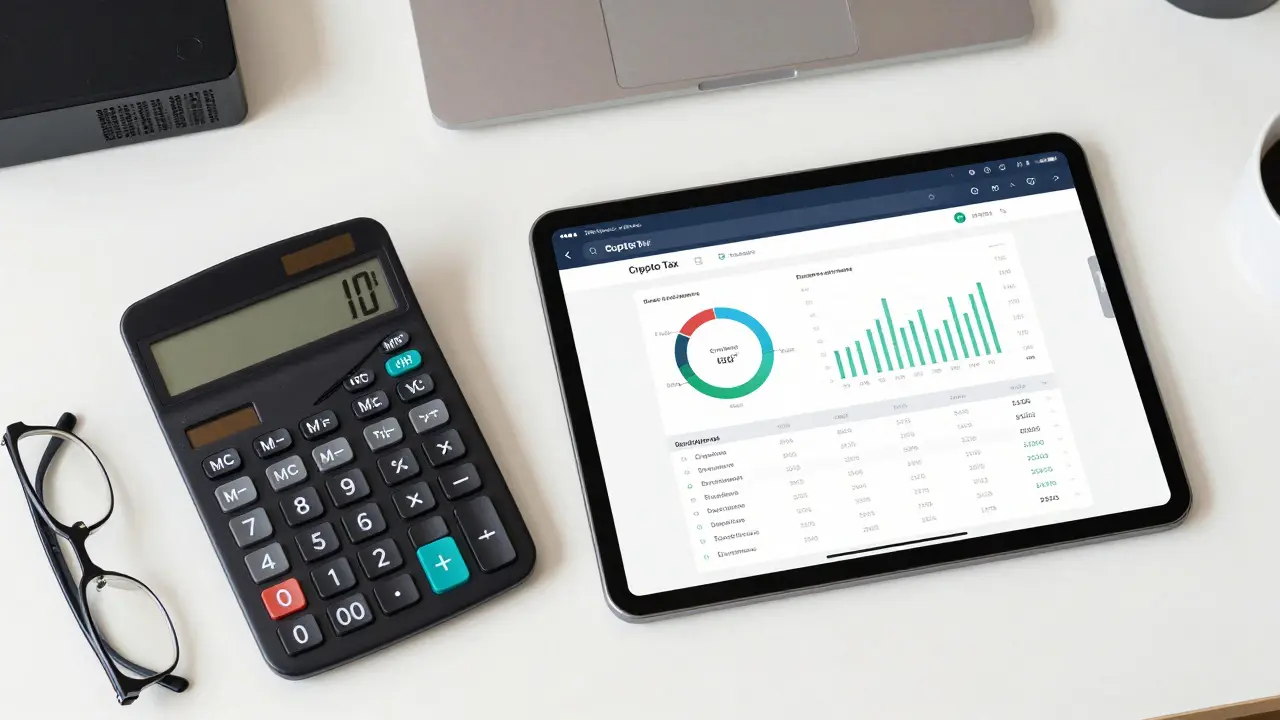
To avoid the headache, many people use CoinTracking or similar crypto tax software. These tools plug into your exchange APIs and automatically pull historical pricing data to calculate the FMV for every single reward payment, saving you dozens of hours of spreadsheet work.
Common Pitfalls to Avoid
The biggest mistake is ignoring rewards entirely. Many stakers think that because they didn't "cash out" to USD, the rewards aren't taxable. That is a myth. The IRS considers the receipt of the token itself as income.
Another error is using the value of the token at the end of the year instead of the value on the day it was received. This can lead to massive inaccuracies, especially in a volatile market. Finally, be careful with liquid staking. While the IRS ruling 2023-14 generally applies to all staking, the nuances of liquid staking derivatives (tokens that represent your stake) can be complex and might require a professional eye to ensure you aren't misreporting a swap as a reward.
Do I pay tax on staking rewards if I don't sell them?
Yes. According to IRS Revenue Ruling 2023-14, staking rewards are taxable as ordinary income in the year you acquire "dominion and control" (the ability to move or sell the tokens), regardless of whether you sell them for cash.
What happens if my staking rewards lose value after I receive them?
You still pay ordinary income tax on the value they had the moment you received them. However, if you later sell them for less than that original value, you can claim a capital loss, which may reduce your overall taxable income.
Is the tax treatment different for liquid staking?
The IRS guidance generally applies to both liquid and illiquid staking. However, because liquid staking often involves swapping one token for another (like ETH for stETH), you may trigger additional capital gains events that don't exist in traditional staking.
Which IRS form do I use for staking income?
Most individuals report the income on Schedule 1 of Form 1040. If those rewards are later sold, the transaction is reported on Form 8949 and then summarized on Schedule D.
Can I deduct the costs of running a validator?
If you are operating as a business, you can potentially deduct necessary expenses on Schedule C. Casual investors generally cannot deduct these costs from their ordinary income tax.
10 Responses
tax man always wins lol
Imagine actually thinking the IRS would let you keep a single cent of your magic internet money without a cut. It is absolutely pathetic how some people are shocked by basic tax laws. Maybe if you spent less time staring at candles and more time reading the actual tax code, you would not be so confused. But sure, let's all pretend that decentralization means you're exempt from the laws of the land you live in.
I've been using Koinly for a few years now and it's a total lifesaver!! Honestly, tryin to do this with excel is a recipe for a headache lol. Just make sure you connect your wallets correctly or you might miss some of those tiny distributions that add up over time. Its way easier then doing it by hand and definitely helps with the stress during april!
That's a really helpful tip about the software tools! 🚀 I think many beginners feel overwhelmed by the forms, so simplifying the process is key. Keep it up! 😊
The utter naivety displayed by the average retail investor is simply staggering, as they fail to grasp that the state will always find a way to monetize their theoretical gains, regardless of whether the asset has actually been liquidated into a spendable currency... it is almost comical how they cling to the hope of a loophole in a system designed specifically to close them!!!
Wait, what?! You mean I've been accumulating rewards for two years and I might owe the government a fortune right now?! I am literally shaking! I thought since I never moved the ETH to an exchange it didn't count as income! This is an absolute nightmare scenario! I need to find a CPA immediately before I end up in crypto-jail!
Deep breaths, it's gonna be okay. Just take it one step at a time and get your records sorted. Most people figure it out eventually and the software mentioned above really does take the edge off.
Basically just a huge wash trade of tax liabilities if the market dumps before the filing date. Pure volatility play.
You can totally handle this!!! Just stay organized!!! Use a spreadsheet if you have to, but don't let the fear stop you from earning those rewards!!! You got this!!!
This text is quite satisfactory. I appreciate the clarity of the explanation. It is a very good guide.