
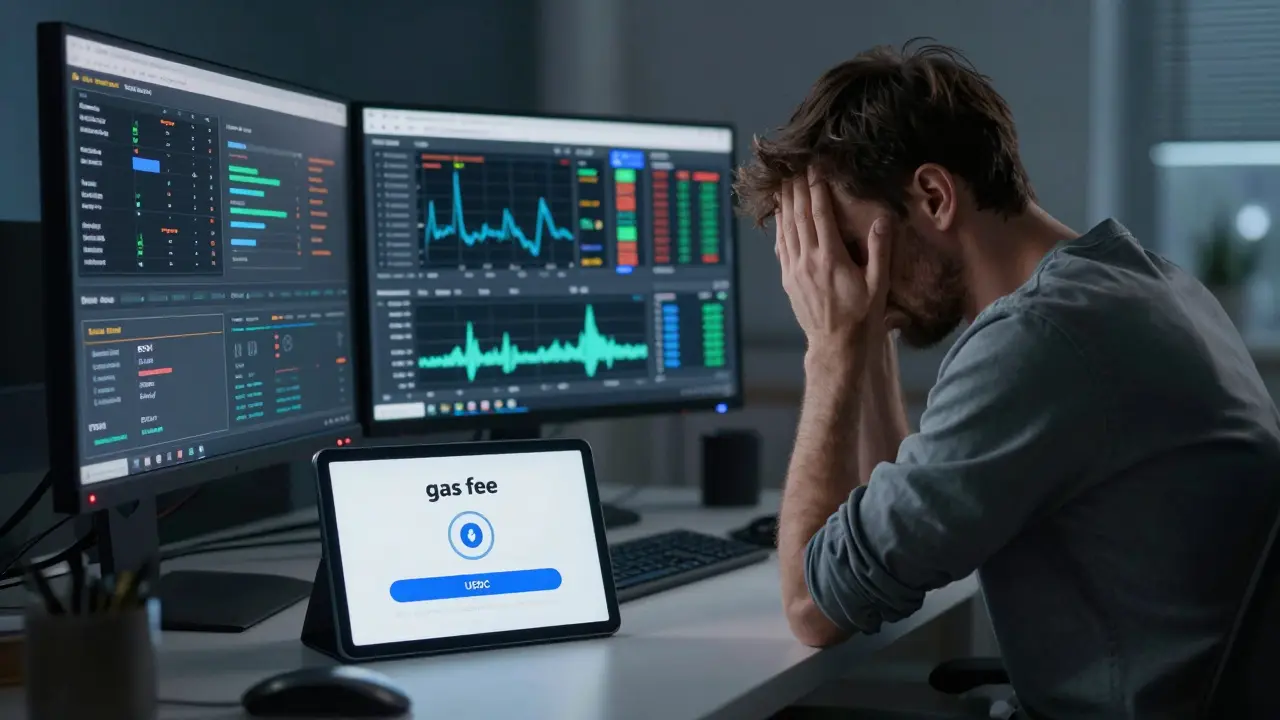
Imagine sending money across borders without ever needing to buy Bitcoin or Ethereum just to cover the network fee. That is exactly what Stablecoin Gas Payments are an emerging blockchain solution allowing users to pay network transaction fees using stable assets instead of volatile native tokens offer you today. For years, the biggest headache for anyone trying to use crypto wasn’t the price volatility-it was the friction of managing multiple wallets. You had your stablecoins for value, but you needed a separate stash of ETH to pay for the computational work, known as "gas," required to move those stablecoins.
In 2026, that complexity is vanishing. New infrastructure layers now let you pay fees directly in USDC, USDT, or even fiat currency via card. This shift isn't just a minor convenience; it fundamentally changes how individuals and enterprises interact with blockchain networks. It removes the barrier of entry for non-technical users and simplifies accounting for businesses. Let’s break down how this technology works, who is building it, and why it matters for your wallet.
The Problem with Traditional Gas Fees
To understand why stablecoin gas payments are such a big deal, we first need to look at the old way things worked. On networks like Ethereum, which accounts for roughly 65% of USDC circulation according to recent data, every action costs energy. The network calls this cost "gas." Traditionally, you must pay this gas in the network's native token-for Ethereum, that means ETH.
This creates a clumsy user experience. If you want to send $100 worth of USDC to a friend, you can’t just send the USDC. You also need to have some ETH in your wallet to pay the fee. If you don’t have ETH, you have to go through a painful process:
- Buy ETH on a centralized exchange (like Coinbase or Binance).
- Wait for the withdrawal to clear.
- Transfer the ETH to your self-custodial wallet.
- Finally, execute your USDC transfer.
Each step adds time, fees, and confusion. Worse, if the price of ETH drops while you’re holding it just to pay fees, you lose value. This friction was identified by major players like Visa as a critical barrier to mainstream adoption. Users shouldn’t need to be financial traders just to send a payment.
How Stablecoin Gas Payments Work
The technical magic behind this shift relies on a standard called ERC-4337, a smart contract account abstraction specification. In simple terms, ERC-4337 allows wallets to act more like traditional bank accounts rather than simple cryptographic keys. It introduces a concept called "paymasters."
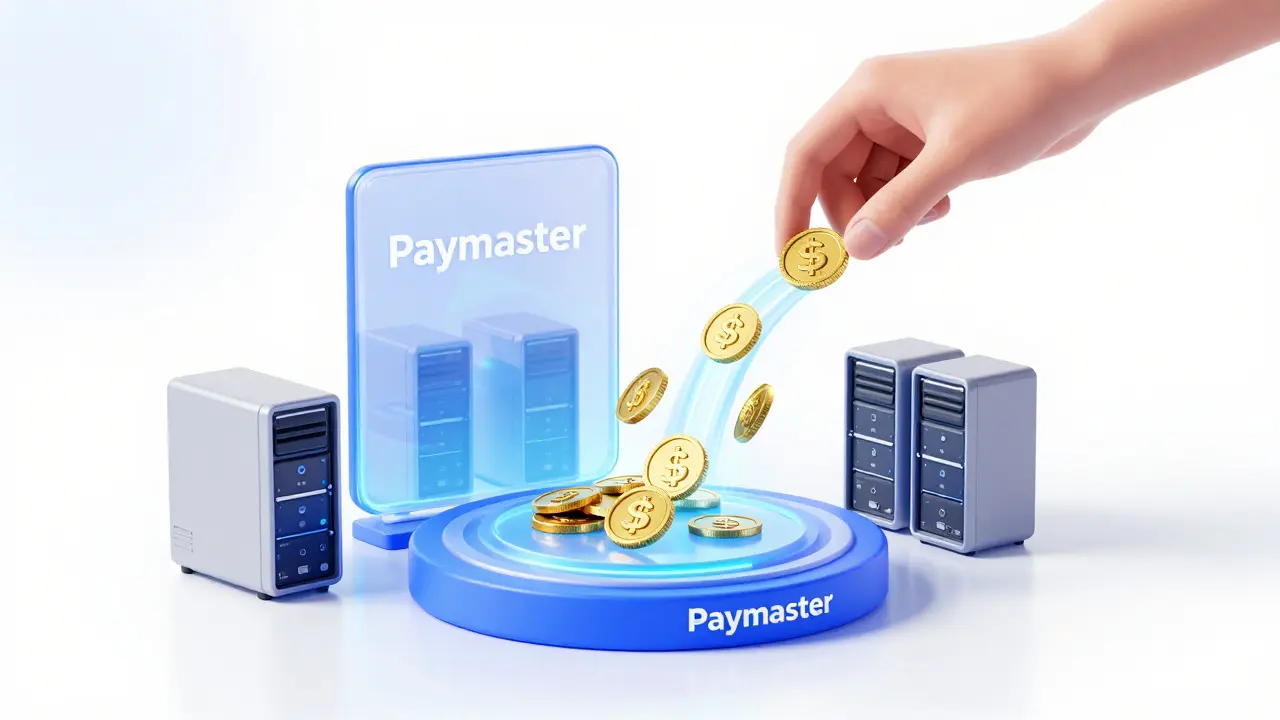
A paymaster is essentially a middleman smart contract. Here is the workflow when you use a stablecoin gas payment system:
- You initiate a transaction (e.g., sending USDC) from your wallet.
- Instead of asking for ETH, your wallet asks for USDC.
- The paymaster contract steps in. It receives your USDC payment.
- Behind the scenes, the paymaster converts that USDC into the native token (ETH) needed by the network.
- The paymaster pays the gas fee to the blockchain validators.
- Your original transaction completes seamlessly.
You never see the conversion happen. You never hold the volatile native token. To you, it looks like you paid a small fee in the same currency you were sending. This abstraction layer decouples the fee payer from the specific mechanics of the blockchain, creating a much smoother experience.
Key Players Driving Adoption in 2026
Several major companies are rolling out these solutions right now. Understanding who is behind the tech helps you choose the right tools for your needs.
Circle, the issuer of USDC, launched the Circle Paymaster in 2026. This permissionless product allows users to pay gas fees directly in USDC on Arbitrum and Base networks. Circle’s approach is developer-friendly; it doesn’t require a special console account, meaning any app built on these Layer 2 networks can integrate it easily. If you are using a wallet that supports ERC-4337 smart contract accounts, you might already have access to this feature.
Visa has taken an even bolder step by exploring direct fiat integration. Their research shows a path where users can pay blockchain gas fees using their Visa credit or debit cards. Imagine buying a coffee with crypto, but paying the tiny network fee with your existing bank balance. Visa’s implementation uses the same ERC-4337 paymaster logic but replaces the stablecoin step with a traditional card authorization flow. This removes the need to hold *any* cryptocurrency, making blockchain accessible to people who haven’t bought a single coin yet.
Another key player is Tempo, an infrastructure provider focusing on enterprise stability. Tempo allows fees to be paid in any supported stablecoin, including custom-issued tokens and tokenized deposits. Their protocol handles the internal conversion transparently. They partner with major names like MetaMask, Frax, and Bridge. For businesses, Tempo’s approach offers "accounting simplicity"-fees become clean, auditable line items denominated in the same units as the payments themselves, eliminating foreign exchange headaches.
| Provider | Payment Method | Supported Networks | Best For |
|---|---|---|---|
| Circle Paymaster | USDC | Arbitrum, Base | Crypto-native users wanting seamless USDC transactions |
| Visa Integration | Fiat (Card) | Ethereum L2s (via partners) | Mainstream consumers avoiding crypto custody entirely |
| Tempo | Any Stablecoin/Tokenized Deposit | Multiple (via MetaMask, etc.) | Enterprises requiring audit trails and regulatory clarity |
The "Stablecoin Sandwich": Understanding Total Costs
While paying gas in stablecoins feels cheaper because you aren’t dealing with volatile ETH prices, it is important to understand the full cost structure. FXC Intel describes this as the "stablecoin sandwich" model. The gas fee is just one layer.
When you make a cross-border payment, you might encounter several fees stacked together:
- Gas Fees: The raw cost to process the transaction on the blockchain.
- Ramp Fees: Charges from services converting your fiat currency into stablecoins.
- Off-Ramp Fees: Costs when converting stablecoins back to fiat for the recipient.
- Liquidity Provider Fees: Small charges for accessing deep pools of funds.
However, even with these layers, stablecoin rails often beat traditional banking. According to Helius, stablecoin transaction fees can be less than $0.01 plus ramp fees. Compare that to traditional payment rails, which often charge 6-10% in fees plus foreign exchange spreads. For a $1,000 transfer, traditional banks might take $60-$100. A stablecoin rail might cost you $2-$5 total. The savings are significant, especially for high-volume merchants.

Why Enterprises Are Adopting This Tech
You might wonder why a regular person should care about enterprise adoption. The answer lies in reliability and regulation. As big companies adopt stablecoin gas payments, the infrastructure becomes more robust, secure, and compliant.
For businesses, holding volatile native tokens like ETH for operational expenses is a nightmare for accounting. Prices swing wildly, making budgeting difficult. With stablecoin gas payments, fees are predictable. If a transaction costs 0.01 USDC, it always costs 0.01 USDC. This predictability simplifies compliance reporting and financial audits.
Furthermore, removing the need for users to manage native tokens reduces support tickets. Customer service teams no longer have to explain why a user’s transaction failed because they didn’t have enough ETH in their wallet. This leads to higher user retention and smoother operations for apps built on blockchain.
Getting Started with Stablecoin Gas Payments
If you want to try this yourself, here is what you need to do in 2026:
- Check Your Wallet: Ensure your wallet supports ERC-4337 smart contract accounts. Many modern wallets like MetaMask have integrated these features or support them through plugins.
- Choose a Network: Currently, Circle Paymaster is available on Arbitrum and Base. These are Layer 2 networks built on Ethereum, offering faster speeds and lower base costs than the main Ethereum chain.
- Fund with Stablecoins: Load your wallet with USDC. You do not need to buy ETH.
- Initiate Transaction: When you send funds, look for options that allow fee payment in USDC. Some interfaces will automatically detect this capability.
As the technology matures, expect more networks to join. The goal is a future where you never think about "gas" at all-you just send money, and the fee is handled invisibly in the background.
Do I still need Ethereum (ETH) to use stablecoin gas payments?
No. The entire point of stablecoin gas payments is to eliminate the need to hold volatile native tokens like ETH. The paymaster contracts handle the conversion behind the scenes, allowing you to pay fees entirely in stablecoins like USDC or even fiat currency.
Are stablecoin gas payments cheaper than traditional bank transfers?
Yes, significantly. While there are multiple fee layers (ramps, gas, off-ramps), the total cost for cross-border stablecoin transfers is often under 1%, compared to 6-10% for traditional wire transfers and credit card networks. However, domestic instant payments may sometimes compete closely depending on local banking regulations.
Which wallets support ERC-4337 and stablecoin gas payments?
Major wallets like MetaMask are integrating support for ERC-4337 smart contract accounts. Additionally, infrastructure providers like Tempo partner with various wallet ecosystems. Check your wallet’s settings or developer documentation to see if "Account Abstraction" or "Paymaster" support is enabled.
Is it safe to use paymasters for my transactions?
Paymasters are smart contracts, so they carry the same security risks as any other DeFi protocol. However, reputable providers like Circle and Visa undergo rigorous audits. Always ensure you are interacting with verified, well-known paymaster addresses and avoid unknown third-party services.
Can I pay gas fees with my credit card directly?
Yes, through initiatives like Visa’s ERC-4337 integration. This allows you to authorize a gas fee payment via your existing card details without holding any cryptocurrency. This feature is still rolling out and may depend on your region and bank’s policies.