
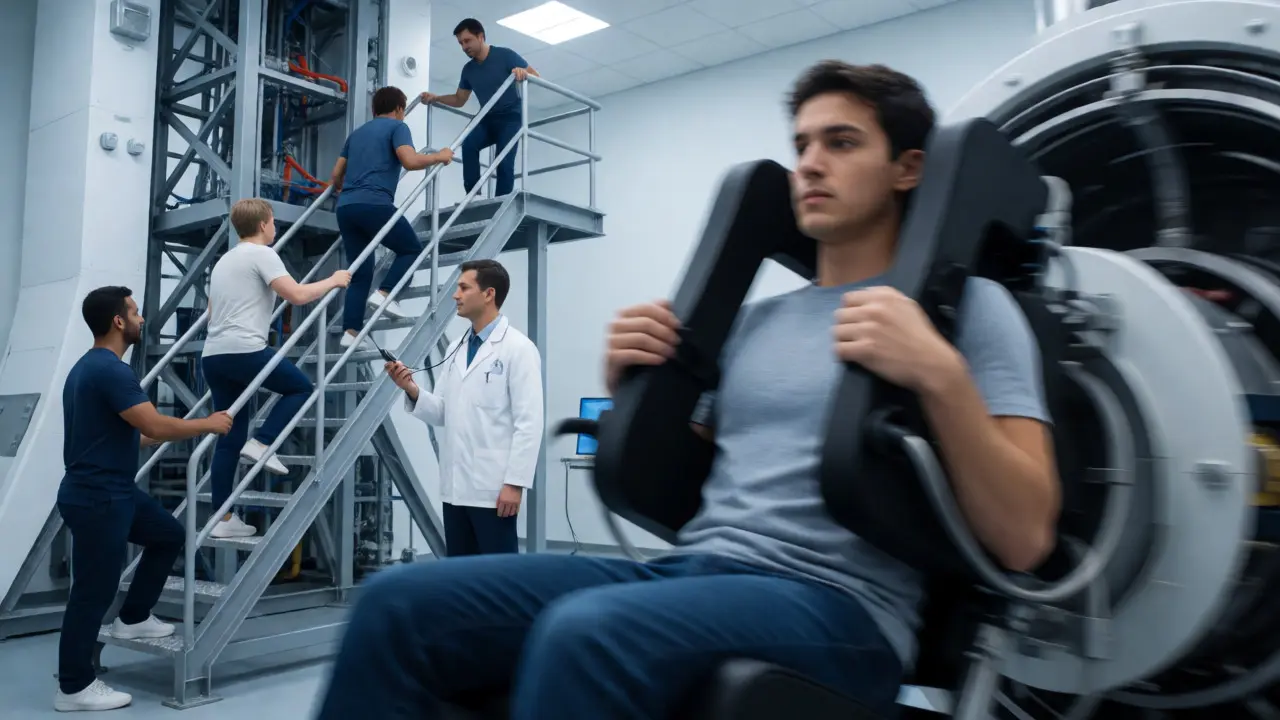
You just bought a ticket to space. Maybe it’s a quick hop on Blue Origin's New Shepard, or perhaps you’re aiming for the big leagues with SpaceX’s Crew Dragon. But before you can float in zero-g and look down at Earth, you have to survive the training. And let’s be honest, "training" sounds intimidating when you’re used to office chairs, not centrifuges.
The good news? You don’t need to be an astronaut. The bad news? It’s not exactly a vacation either. Whether you’re spending two days or seven months preparing, the path from signing the contract to sitting in that capsule is structured, intense, and surprisingly specific. Here is what actually happens between orientation and launch day.
Key Takeaways
- Duration varies wildly: Suborbital flights (Blue Origin, Virgin Galactic) require 2-7 days of training, while orbital missions (SpaceX, Axiom) demand 6-7 months.
- Physical hurdles are real: Expect to climb stairs fast, tolerate up to 5.5 g-forces, and handle brief periods of disorientation.
- Safety is paramount: Even autonomous vehicles require you to know how to escape if things go wrong.
- Self-prep helps: Many passengers augment official training with personal conditioning and simulation practice.
The Short Course: Blue Origin’s Two-Day Sprint
If you’re flying with Blue Origin, your life changes dramatically over 48 hours. The company adheres strictly to FAA regulations, which mandate a minimum of 14 hours of instruction. That doesn’t mean you’re idle for the rest of the time; it means those 14 hours are packed tight.
Think of it as a crash course in survival. You aren’t learning to fly the rocket-New Shepard does that autonomously. You are learning how to be a passenger who doesn’t panic. The curriculum covers nominal procedures (what happens when everything goes right) and off-nominal scenarios (what happens when alarms start blaring).
| Requirement | Standard | Why It Matters |
|---|---|---|
| Tower Climb | 7 flights of stairs in under 90 seconds | Emergency egress from the launch tower |
| Harness Operation | Fasten/unfasten 5-point harness in 15 seconds | Rapid entry/exit during emergencies |
| G-Force Tolerance | Up to 5.5 g for short bursts | Reentry deceleration loads |
| Seated Duration | 40-90 minutes without bathroom access | Mission duration plus pre/post checks |
You’ll spend time in a capsule trainer, practicing ingress and egress until muscle memory takes over. Why so much repetition? Because in an emergency, adrenaline makes fine motor skills vanish. If you’ve practiced buckling your harness fifty times, your hands will do it automatically even if your brain is screaming.
The Week-Long Immersion: Virgin Galactic’s Approach
Virgin Galactic takes a different tack. Their philosophy, led by Chief Astronaut Instructor Beth Moses, is "space for everyone." This means their training is less about passing a test and more about optimizing the experience. It’s designed to be non-selective, accommodating various ages and physical capabilities, provided you meet basic medical standards.
Your itinerary typically involves arriving at Spaceport America in New Mexico about five nights before launch. This isn’t just classroom work; it’s a hospitality package. You’ll attend sessions on mission profiles, safety drills, and cabin movement. But here’s the twist: you might also get optional access to external facilities like the NASTAR Center in Pennsylvania for centrifuge training. While not always mandatory, these sessions help you understand what high-G forces feel like before you actually hit them.
The vibe is supportive rather than punitive. Instructors focus on helping you enjoy the few minutes of weightlessness. You’ll learn how to unstrap, float, and take photos without accidentally knocking out your neighbor. It’s choreography for chaos.
The Marathon: SpaceX and Orbital Missions
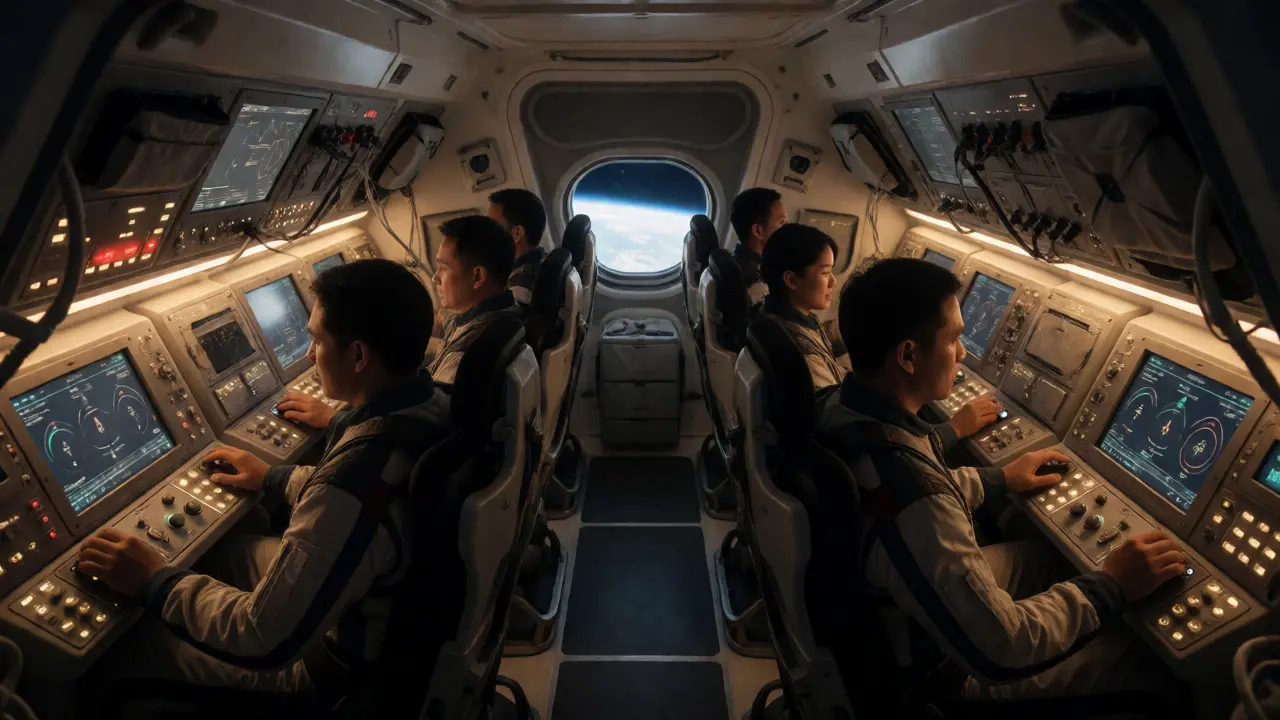
Orbital flights are a different beast entirely. When Jared Isaacman launched the all-civilian Inspiration4 mission, his crew trained for six to seven months. Compare that to Blue Origin’s two days, and the difference becomes stark. Why? Because orbital missions involve complex systems, longer durations, and higher stakes.
The training architecture mirrors NASA’s professional pipelines but compresses the timeline. Crew members undergo extensive simulator work, including continuous 30-hour sessions in a Crew Dragon simulator. They practice every phase: launch, orbit, reentry, and splashdown. They also tackle team-building exercises, like hiking Mount Rainier, to build resilience and communication skills under stress.
Medical screening is rigorous. Unlike suborbital tourists, orbital candidates face stricter cardiovascular checks. Heart conditions remain a common disqualifier. Once cleared, you dive into technical literacy. You need to understand life-support systems enough to intervene if automation fails. It’s not pilot school, but it’s close enough to make you sweat.
The ISS Factor: Axiom Space and NASA Integration
If your destination is the International Space Station (ISS), via providers like Axiom Space, the training expands further. These missions often require NASA-approved curricula. Private astronauts train at Johnson Space Center’s Space Vehicle Mockup Facility, learning station systems alongside professional crews.
This isn’t just about riding along. You might conduct experiments, manage payloads, or coordinate with international partners. The duration can stretch to six months or more, depending on mission complexity. The goal is to ensure you can operate within the delicate ecosystem of the ISS without endangering the station or its permanent residents.

Common Pitfalls and How to Avoid Them
Most people underestimate the psychological toll. It’s not just the G-forces; it’s the confinement, the noise, and the sheer speed of events. One reported strategy from a recent New Shepard passenger was building a home simulator using a reclining chair and audio callouts. They practiced camera angles and breathing techniques for weeks.
Another tip? Hydrate properly. Motion sickness is a real risk during parabolic flights or initial G-load exposure. Practicing stress-reduction methods, like physiological sighing, can keep your heart rate manageable during countdown sequences.
What Happens on Flight Day?
All that training culminates in one morning. For Blue Origin, you arrive at the West Texas site hours early. Medical checks, suit-up, and the final walk to the pad. You climb the stairs, strap in, and wait. The countdown is quiet compared to the chaos you practiced, but the vibration of the engines reminds you why the training mattered.
For Virgin Galactic, it’s similar but with a carrier aircraft lift-off. For SpaceX, it’s a full NASA-style timeline with extensive communication checks. In all cases, the moment you reach microgravity, the training fades into instinct. You unstrap, you float, and you look out the window. The fear vanishes, replaced by awe. Then, eight minutes later, you’re back on Earth, wondering if you can book another seat.
How long is the training for a suborbital flight?
For Blue Origin, it is approximately 14 hours spread over two days immediately before launch. Virgin Galactic’s program is more immersive, typically lasting about one week, including arrival, medical checks, and optional external training sessions.
Do I need to be physically fit to go to space?
Yes, but the bar is lower than for professional astronauts. You must be able to climb seven flights of stairs in under 90 seconds, tolerate up to 5.5 g-forces briefly, and sit strapped in for up to 90 minutes. Serious heart conditions are usually disqualifying.
Is the training pass/fail?
Virgin Galactic describes its program as non-selective and focused on readiness rather than testing. However, you must demonstrate competence in safety drills, such as fastening your harness quickly and following emergency instructions. Failing to grasp basic safety concepts could ground you.
Can I bring guests during my training?
Virgin Galactic allows up to three guests per passenger to stay at their campus for five nights. They follow a parallel discovery and education itinerary, allowing them to experience the spaceport atmosphere while you train.
What happens if I fail a medical check?
If you fail a pre-flight medical evaluation, you may be deferred or disqualified depending on the severity of the issue. Providers generally offer rescheduling options if the condition is temporary, but permanent disqualifications usually result in refunds or credit toward future missions, subject to contract terms.
14 Responses
theyre hiding the real g force numbers i bet its way higher than 5.5 and nobody talks about the radiation exposure during those 7 months of orbital prep
also why does blue origin need you to climb stairs if the capsule is autonomous makes no sense unless theyre testing your obedience
this breakdown is actually pretty solid for once usually these articles gloss over the medical screening part which is where most people get tripped up especially with heart stuff
It is absolutely ridiculous that we are normalizing this...
People spending hundreds of thousands of dollars just to sit in a tube for ten minutes while risking their lives for a photo op? It is selfish.
The environmental impact alone should disqualify it from being considered a "tourist" activity at all.
And don't get me started on the physical requirements; climbing stairs in under ninety seconds is not a survival skill, it is a fitness test disguised as safety protocol.
I think it is interesting how the training duration scales so dramatically based on the mission profile because really when you look at the Inspiration4 crew they were essentially undergoing professional astronaut compression training whereas the suborbital folks are basically getting a crash course in panic management
it shows that the barrier to entry isn't money anymore it's time and physical tolerance which honestly feels like a more equitable filter even if the price tag still keeps it exclusive
Your analysis lacks depth regarding the psychological conditioning aspects which are critical for mission success.
Actually, the article fails to mention that the 'training' is largely theatrical. The simulators are rigged. The instructors are paid actors. You aren't learning to survive; you're learning to perform survival for the cameras. The real risk is the ego death upon return, not the G-forces.
sarcastic take but not entirely wrong lol the idea that buckling a harness 50 times prepares you for actual chaos is funny considering you probably won't have fine motor skills anyway
omg yes!! the stair climbing thing scared me too until i realized i can do it in like 60 sec now after doing pilates consistently
definitely dont skip the cardio prep guys it helps with the g forces way more then you think
also hydration is key i got super nauseous last time i flew commercial so im terrified of space sickness
Technically incorrect on the Blue Origin timeline. FAA regulations require 14 hours, but Blue Origin often extends this to ensure passenger comfort, pushing closer to 24-36 hours in practice depending on group dynamics. Also, the 5.5g figure is peak deceleration, not sustained load, which is a crucial distinction for anyone with pre-existing spinal issues.
i appreciate the focus on the non-selective nature of virgin galactics approach it seems much less intimidating for older passengers who might be worried about failing a test rather than just learning the ropes
Haha, "choreography for chaos" is a great phrase!
But seriously, the difference between 2 days and 7 months is insane. Imagine quitting your job for 7 months just to float around for a few days. The ROI must be purely spiritual or scientific curiosity.
Good read though, very informative for those of us dreaming but stuck on Earth!
glad to see someone highlighting the self-prep aspect like the home simulator trick that sounds smart and accessible for people who cant afford extra centrifuge sessions
This is exactly what I've been saying!!! The government needs to step in and regulate these private companies better!!!!
We don't know what happens to our data when we sign these contracts!!!
What if the "medical checks" are just excuses to screen out certain genetic profiles???
It's suspicious!!! Very suspicious!!!
Why is Beth Moses the face of Virgin Galactic training??? Who vetted her???
interesting point about the psychological toll i wonder if there are long term studies on the mental health effects of returning from orbit specifically regarding re-entry anxiety or depersonalization