
You’ve seen the videos. You know the price tags. But before you sign up for a ticket to the edge of space, there is one question that matters more than the view from the window: will you come back alive? As of mid-2026, no paying passenger has died on a commercial spaceflight. That sounds like a perfect record, but it’s a small sample size. The reality is that space tourism carries risks far higher than skydiving or climbing Mount Everest, and understanding those numbers is the only way to make an informed choice.
The Regulatory Reality: It’s On You
If you think the government has certified your rocket as safe, you’re mistaken. Under the current framework managed by the Federal Aviation Administration (FAA), the primary goal is protecting people on the ground, not passengers in the air. This means operators like Blue Origin, Virgin Galactic, and SpaceX largely self-regulate when it comes to human safety.
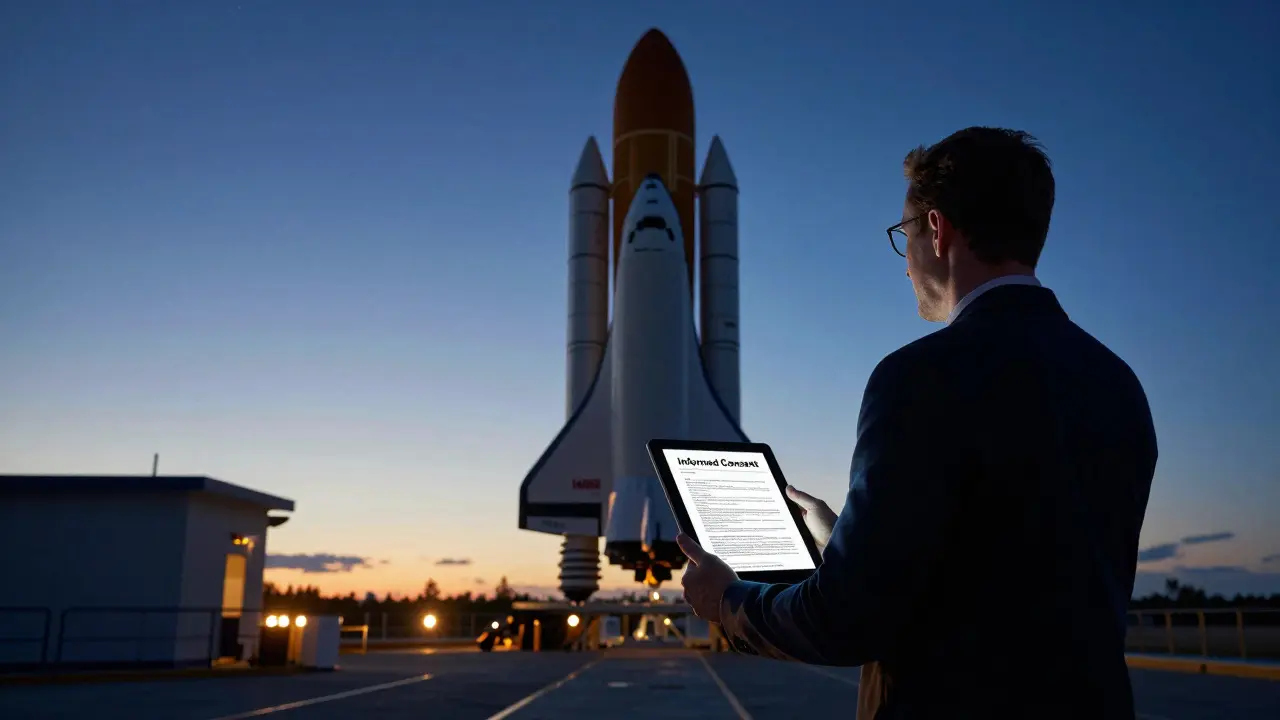
Instead of a "safe" stamp, you get a document called informed consent. By signing it, you acknowledge that the U.S. government has not certified the vehicle as safe for humans. You are admitting that both known and unknown hazards exist during launch and reentry. Operators must show you the safety history of their vehicles, but they aren’t legally required to meet a specific fatality percentage limit for tourists. It is a system built on transparency rather than strict certification, leaving the final judgment call squarely in your hands.
Understanding the Numbers: How Dangerous Is It?
To put the danger into perspective, we need to look at probability. For NASA missions, vehicles like SpaceX’s Crew Dragon must prove a loss-of-crew risk of no more than 1 in 270 (about 0.37%). This is considered roughly three times safer than the Space Shuttle, which had a historical failure rate of about 1 in 90.
For commercial tourists, the benchmarks are different. Industry experts suggest that early orbital and suborbital flights might have fatality rates below 2% per mission. Compare that to skydiving, which has a fatality rate of approximately 0.000004%, or climbing Mount Everest, where the risk hovers around 3.29%. While 2% sounds high, it is comparable to other extreme adventure sports. However, the goal for the industry is to drive this number down toward fractions of a percent as technology matures.
| Activity / Vehicle | Estimated Fatality Rate | Risk Context |
|---|---|---|
| Skydiving | 0.000004% | Highly regulated, mature safety systems |
| Commercial Suborbital Flight | < 2% (Target) | Early adoption phase, variable vehicle types |
| NASA Commercial Crew (Crew Dragon) | ~0.37% (1 in 270) | Strict regulatory benchmark for crewed missions |
| Mount Everest Ascent | ~3.29% | Extreme environmental conditions, human error |
Vehicle Architecture: Capsules vs. Spaceplanes
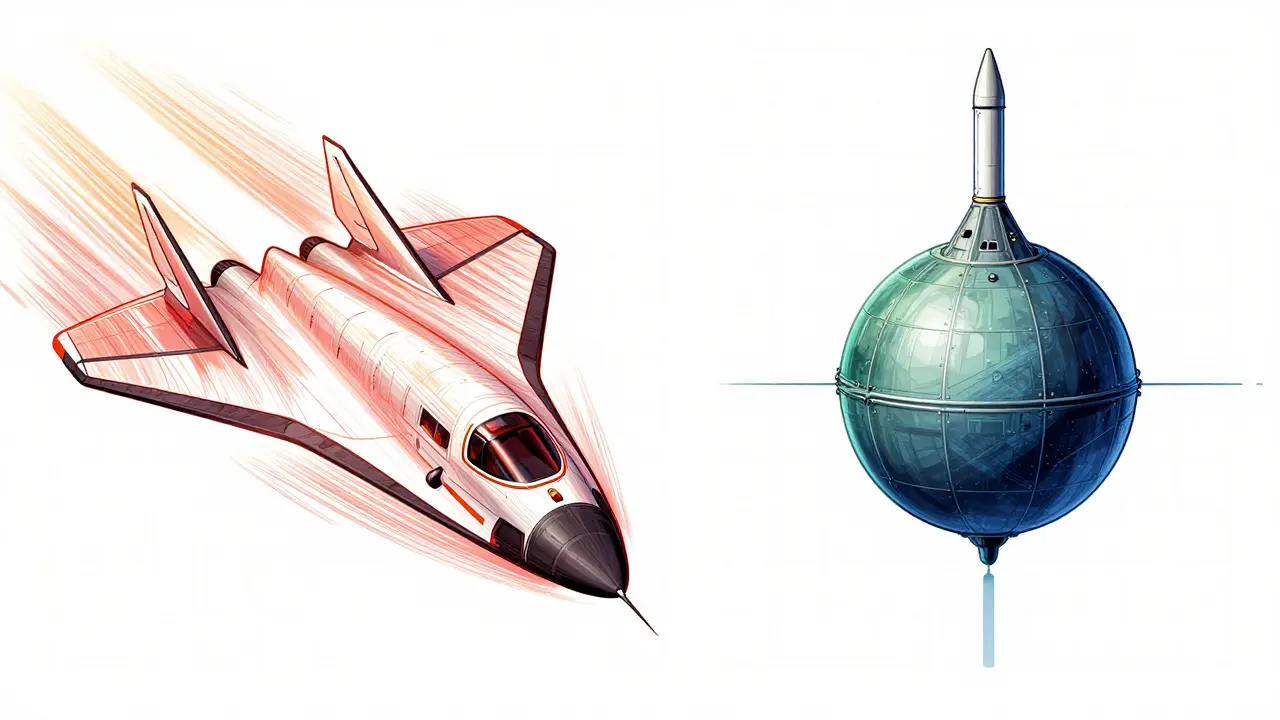
Not all rockets are created equal, and the type of vehicle you fly in significantly impacts your risk profile. Experts like Tommaso Sgobba from the International Association for the Advancement of Space Safety argue that winged spaceplanes, such as Virgin Galactic’s design, may be inherently more dangerous than capsule-based systems like Blue Origin’s New Shepard or SpaceX’s Crew Dragon.
Why? Winged vehicles must survive complex aerodynamic regimes over a wider range of speeds and altitudes. They often rely on pilot-in-the-loop operations, meaning human reaction time plays a critical role in emergencies. Capsules, on the other hand, follow simpler ballistic trajectories. They benefit from robust abort systems that can separate the passenger cabin from the failing rocket stage quickly. This simplicity reduces catastrophic failure probabilities by measurable factors, making capsules generally viewed as the safer bet for novice travelers.
Physical Hazards Beyond the Rocket
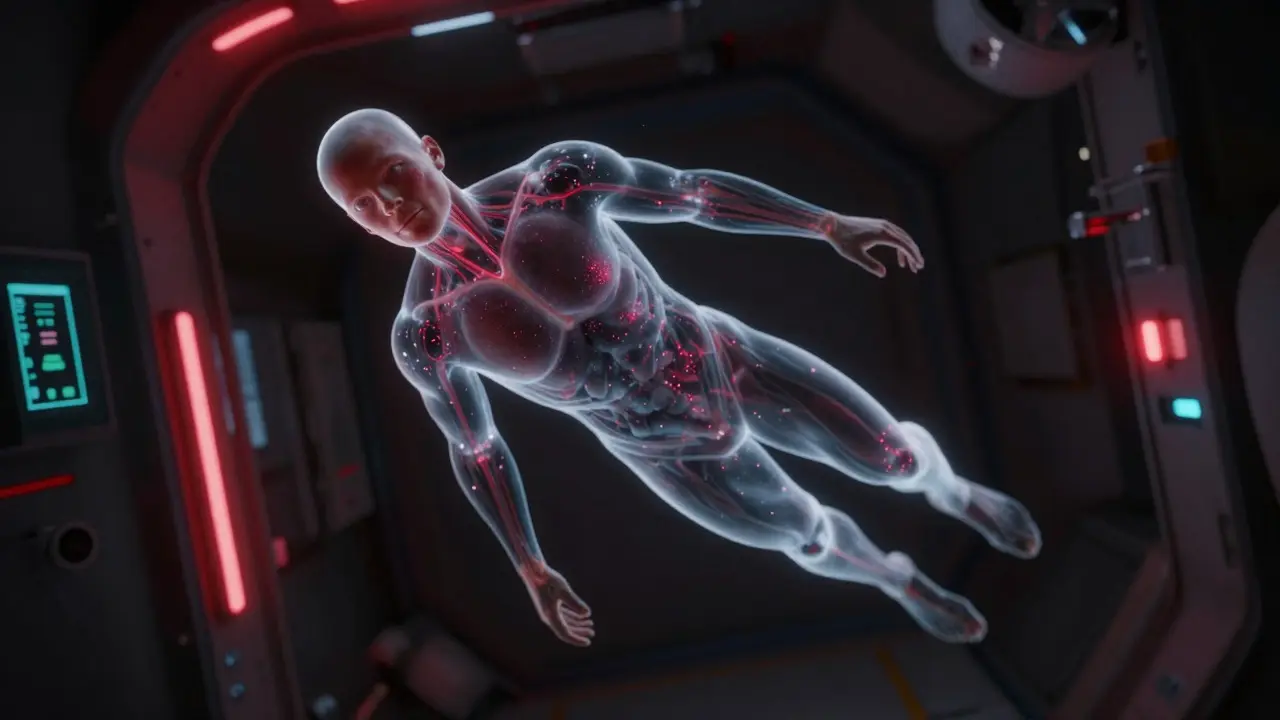
Even if the rocket lands safely, your body faces immediate challenges. The most common issue is motion sickness. More than 50% of people experiencing microgravity for the first time suffer from space adaptation syndrome, which includes nausea, vomiting, and disorientation. It’s not just uncomfortable; severe cases can lead to dehydration and reduced decision-making ability.
Then there is radiation. In low Earth orbit, cosmic rays-high-energy particles like fully ionized iron nuclei-bombard the hull. While short suborbital flights minimize exposure, longer stays require significant shielding. NASA estimates that effective protection against Galactic Cosmic Rays would need meters of regolith or hydrogen-rich material, which is impractical for current tourist vehicles. This means passengers absorb doses that exceed terrestrial annual limits, posing long-term carcinogenic risks that are difficult to quantify for individual travelers.
Microgravity also takes a toll. Even brief exposures can cause fluid shifts in the body, leading to facial swelling and vision changes. For missions lasting more than 30 days, bone density loss becomes a measurable concern, requiring rigorous post-flight rehabilitation.
Human Factors and Psychological Stress
Historical data shows that approximately 80% of aerospace accidents are attributable to human factors, including pilot error, procedural violations, and maintenance mistakes. This statistic is crucial for risk assessment. It implies that hardware reliability alone isn’t enough. Your safety depends heavily on automation, rigorous training, and clear operating procedures.
Psychological stress is another hidden hazard. Confinement, isolation, and the awareness of being in a high-risk environment contribute to anxiety and depression symptoms. Studies on analog astronaut populations show that mental health degradation can indirectly increase accident probabilities, especially on voyages longer than seven days. For short suborbital hops, this is less of a concern, but it remains a factor in overall mission success.
Insurance and Market Signals
One of the best indicators of safety isn’t what the company says, but what insurers say. Insurance companies act as a market filter. If casualty probabilities remain above certain thresholds-such as more than 1×10⁻³ per flight-premiums become prohibitively expensive. This financial pressure forces operators to improve safety standards voluntarily. Currently, the willingness of major insurers to underwrite these missions suggests that while risks are high, they are manageable within the bounds of adventure tourism.
Future Outlook: Moving Toward Certification
The current "learning period" won’t last forever. Regulators and experts are pushing for a transition from informed consent to mandatory vehicle certification, similar to aviation. This would involve independent bodies validating safety using quantitative reliability goals, such as demonstrating catastrophic failure probabilities below 1×10⁻⁴ per mission. As the industry matures, we can expect standardized medical screening, mandatory personal safety equipment like emergency breathing apparatus, and stricter ALARP (As Low As Reasonably Practicable) principles to be enforced.
Is space tourism safer than skydiving?
No. Skydiving has a fatality rate of approximately 0.000004%, while early estimates for space tourism place the risk below 2% per mission. Space tourism is currently comparable to extreme adventure sports like climbing Mount Everest, not mainstream recreational activities.
Does the FAA certify space tourist vehicles as safe?
No. The FAA focuses on protecting the public on the ground. Passengers must sign an informed consent form acknowledging that the government has not certified the vehicle as safe for humans. Safety is largely left to operator self-regulation and market forces.
Which is safer: a capsule or a spaceplane?
Capsules, such as Blue Origin’s New Shepard or SpaceX’s Crew Dragon, are generally considered safer. They follow simpler ballistic trajectories and have robust abort systems. Winged spaceplanes face more complex aerodynamic challenges and often rely more on pilot intervention, increasing potential failure points.
What are the main physical risks for space tourists?
The primary physical risks include motion sickness (affecting over 50% of first-time flyers), exposure to cosmic radiation, and the physiological effects of microgravity such as fluid shifts and potential bone density loss on longer missions.
How does insurance affect space tourism safety?
Insurance companies act as a market filter. If risk levels are too high, premiums become unaffordable, forcing operators to improve safety standards to attract coverage. This financial incentive helps drive voluntary safety improvements beyond regulatory requirements.
9 Responses
Oh my gosh! This is such a fascinating read!! I mean, who would have thought that the FAA basically just shrugs and says 'good luck' to these billionaires?! It’s absolutely wild that we are signing away our lives for a view from space! The part about motion sickness really hit home though... imagine throwing up in zero gravity? That sounds like a nightmare scenario! And the radiation exposure?! My brain hurts just thinking about it! We need stricter regulations ASAP!! Who wants to be a guinea pig for Jeff Bezos’ ego??
the risk is not merely physical but existential. when one signs informed consent they are acknowledging the fragility of human endeavor against the void. the numbers are cold but the philosophy is warm. we seek the stars despite the danger because safety is an illusion anyway.
typical american deregulation nonsense. let the corporations run wild while the rest of us pay the price in insurance premiums or worse. the elites think they are above the law but physics does not care about your net worth. capsules are safer obviously but even then it is a coin toss with death. pathetic that we accept this as progress.
lol yeah right like any of you could afford it anyway. its all hype man. the tech is cool i guess but dont act like you are experts on aerospace engineering. new shepard is fine i think. stop whining about risks if you never gonna go. rich people problems fr.
one must consider the psychological toll of confinement. the isolation is profound. the mind fractures under pressure more easily than the hull. perhaps the real risk is not death but the loss of self in the silence of the cosmos.
listen up. if you are smart you stick to skydiving. the stats don't lie. 2% fatality rate is absurd for a vacation. the industry is lying to you with their 'adventure' branding. it is gambling with your life. wait for certification. do not be foolish. your family deserves better than a coroner's report.
I totally get the hesitation! It’s scary stuff! But hey, every great adventure has risks, right? Just make sure you know your limits! Don’t let fear hold you back from experiencing something magical! Stay safe out there everyone! Love the detailed breakdown though! Super helpful!
Actually, the aerodynamic instability of winged vehicles during re-entry is significantly higher due to the Mach number transitions. You’re overlooking the critical delta-V requirements for abort scenarios. Capsules utilize ballistic trajectories which simplify the control authority needed during high-dynamic-pressure regimes. It’s basic orbital mechanics, really. Stop letting emotion dictate your risk assessment models.
they want you to think it is safe so you buy tickets. the government knows it is deadly but they need the money. watch what happens when the first billionaire dies. then they will blame the pilot. classic coverup. stay grounded.