
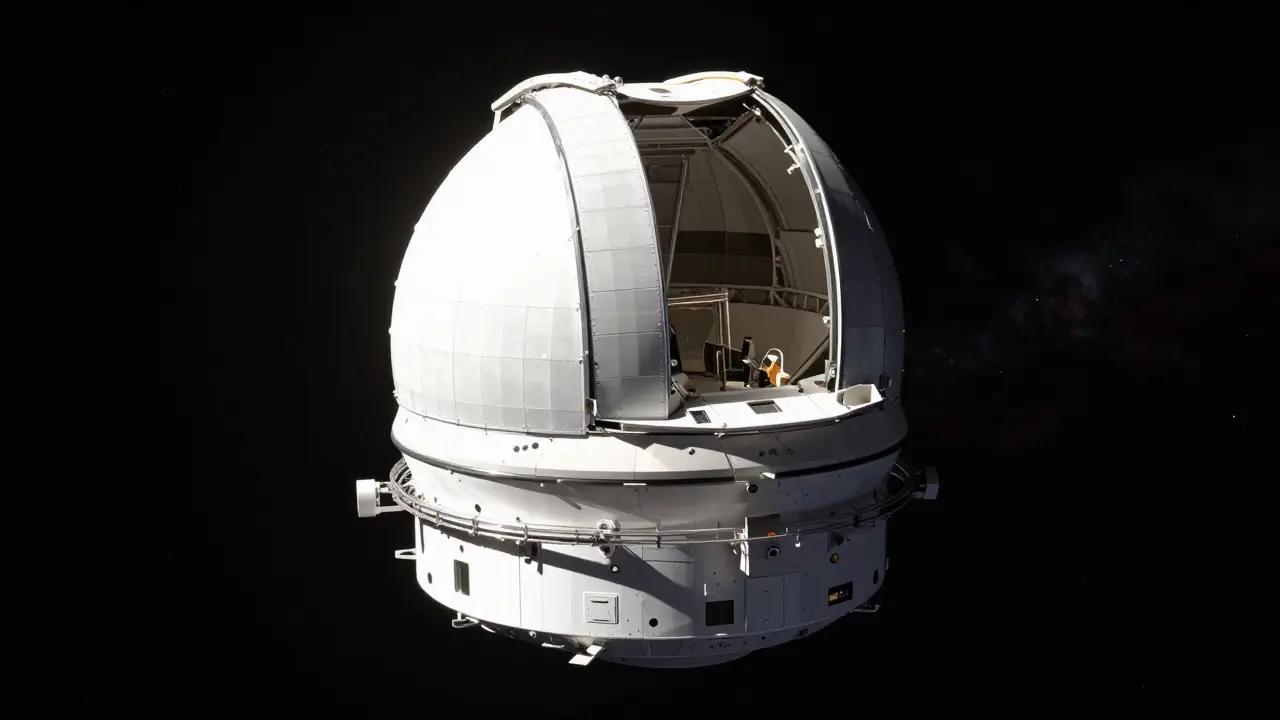
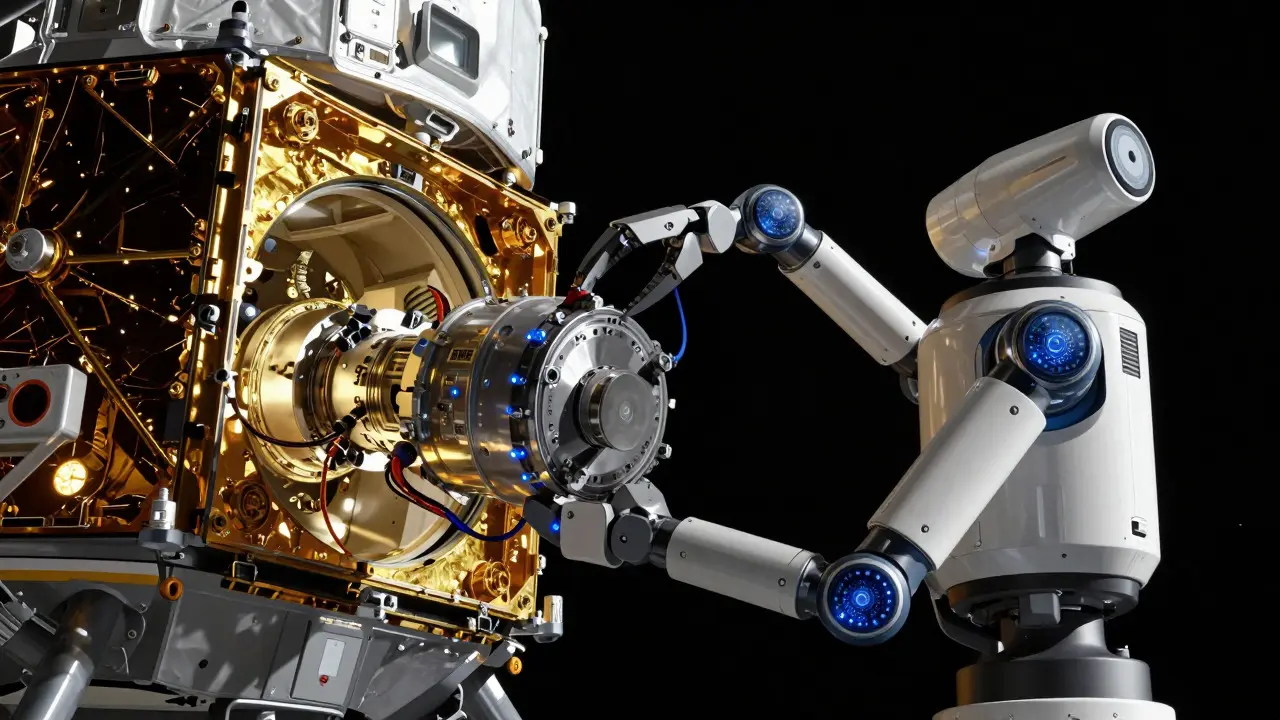
Imagine a space telescope that doesn't just die when a part breaks. Instead, a robot flies out, swaps the broken piece, refuels the tank, and leaves it ready for another decade of discovery. This is no longer science fiction; it is the core promise behind modern space telescope servicing roadmaps. For decades, flagship observatories like Hubble proved that if you design for repair, you get more science per dollar. Now, as we look toward the next generation of giant telescopes, engineers are betting everything on making these machines modular and robotically serviceable from day one.
The shift is driven by a simple reality: big telescopes are expensive to build, even harder to replace, and often face environments where human astronauts can’t easily reach them. The solution? Designing observatories that act less like single-use rockets and more like cars with replaceable parts. If a sensor fails, you swap it. If fuel runs low, you top it up. This approach turns a 10-year mission into a 30-year platform, fundamentally changing how we think about long-term astronomy.
Key Takeaways
- Modular design allows specific components (like instruments or batteries) to be replaced without scrapping the whole telescope.
- Robotic servicing is becoming essential for telescopes at Lagrange points, where human spacewalks are too risky or impossible.
- The Habitable Worlds Observatory (HWO) is the current flagship case study, designed with a budget of ~$11 billion specifically to support robotic upgrades.
- Servicing adds upfront complexity but significantly increases the lifecycle value and scientific return of an observatory.
From Hubble’s Lessons to Modern Standards
You can’t talk about servicing roadmaps without mentioning the Hubble Space Telescope (HST). Launched in 1990, Hubble was flawed right out of the box due to a mirror defect. But because NASA had built it with Orbital Replaceable Units (ORUs), astronauts could fly up five times between 1993 and 2009 to fix it. They installed corrective optics, swapped gyroscopes, and added new cameras. That flexibility turned a potential failure into the most successful observatory in history, operating for over 30 years.
This experience taught engineers a crucial lesson: design for servicing from the start. Today, guidelines from NASA’s Advanced Telescope and Observatory (ATO) Capability Roadmap codify these lessons. They call for standard kinematic mounts, blind-mate connectors, and external access panels. Why? Because if you wait until launch to figure out how to fix something, you’re already too late. The goal is to make every critical component accessible, whether by a human hand or a robotic arm.
The Rise of Robotic Servicing
Hubble worked because it was in Low Earth Orbit (LEO), close enough for the Space Shuttle to reach. But the next generation of telescopes will live much further away, often at the Sun-Earth L2 point, about 1.5 million kilometers from Earth. Sending humans there is currently impractical. So, the roadmap shifts from human EVA (extravehicular activity) to autonomous robotics.
Missions like Orbital Express (launched in 2007) paved the way. It demonstrated that a small servicer spacecraft could autonomously rendezvous with a client satellite, dock, transfer propellant, and replace equipment without human intervention. This technology is now TRL 9-proven and operational. For future deep-space telescopes, this means a dedicated robotic “mechanic” can perform tasks like:
- Precision docking using fiducial markers and high-accuracy sensors.
- Manipulating heavy instrument modules with dexterous robotic arms.
- Refueling tanks through standardized ports.
- Inspecting surfaces for micrometeoroid damage.
These robots don’t just fix things; they enable upgrades. Imagine swapping a 10-year-old camera for a brand-new infrared detector while the telescope remains in orbit. That’s the power of a serviceable architecture.
Habitable Worlds Observatory: The Blueprint for the Future
As of 2026, the Habitable Worlds Observatory (HWO) is the central focus of these roadmaps. Designed to be a 6-8 meter off-axis telescope, HWO isn’t just another camera in space; it’s a testbed for sustainable space operations. With a projected cost of around $11 billion, NASA is engineering it from inception to be fully serviceable.
Unlike the James Webb Space Telescope (JWST), which has no designed-in servicing interfaces and lives at L2, HWO mandates robotic accessibility. Its design includes a segmented primary mirror and a deployable secondary structure, all housed in a modular bus. The plan is to keep non-serviceable components alive for 25 years, but extend the total mission life far beyond that by replacing instruments and refueling every 5-10 years. This “augmentable” approach means HWO can evolve alongside astronomical technology, ensuring it stays relevant for decades.
| Telescope | Location | Servicing Strategy | Lifetime Potential |
|---|---|---|---|
| Hubble (HST) | Low Earth Orbit | Human EVA (Shuttle missions) | 30+ years (extended via 5 missions) |
| James Webb (JWST) | Sun-Earth L2 | None (non-serviceable) | ~10-15 years (fuel-limited) |
| Habitable Worlds (HWO) | Sun-Earth L2 / Earth-Moon Lagrange | Robotic (autonomous servicers) | 30+ years (modular upgrades) |
Technical Challenges and Trade-offs
It sounds great, but building a serviceable telescope isn’t free. Adding modular interfaces, extra structural reinforcement, and robotic docking ports increases mass and integration complexity. A 2025 NASA technical note argues that while this raises initial costs, it lowers the effective cost per science result over time. If you have to launch a whole new $10 billion telescope every 15 years, that’s unsustainable. If you can upgrade the existing one, you save billions.
However, there are risks. As of 2026, the HWO servicing concept is still at Concept Maturity Level (CML) 2, meaning it’s proof-of-concept stage. Detailed definitions of what exactly will be serviced, how often, and by which robots are still being refined. Engineers must balance reconfigurability with structural stability. Too many moving parts can introduce new failure modes. Thermal control becomes trickier when modules are swapped in vacuum. And coordinating a robotic choreography-avoiding collisions, planning trajectories, and syncing with science operations-requires advanced ground software and highly trained teams.
The Broader Ecosystem: ISAM and Commercial Spillover
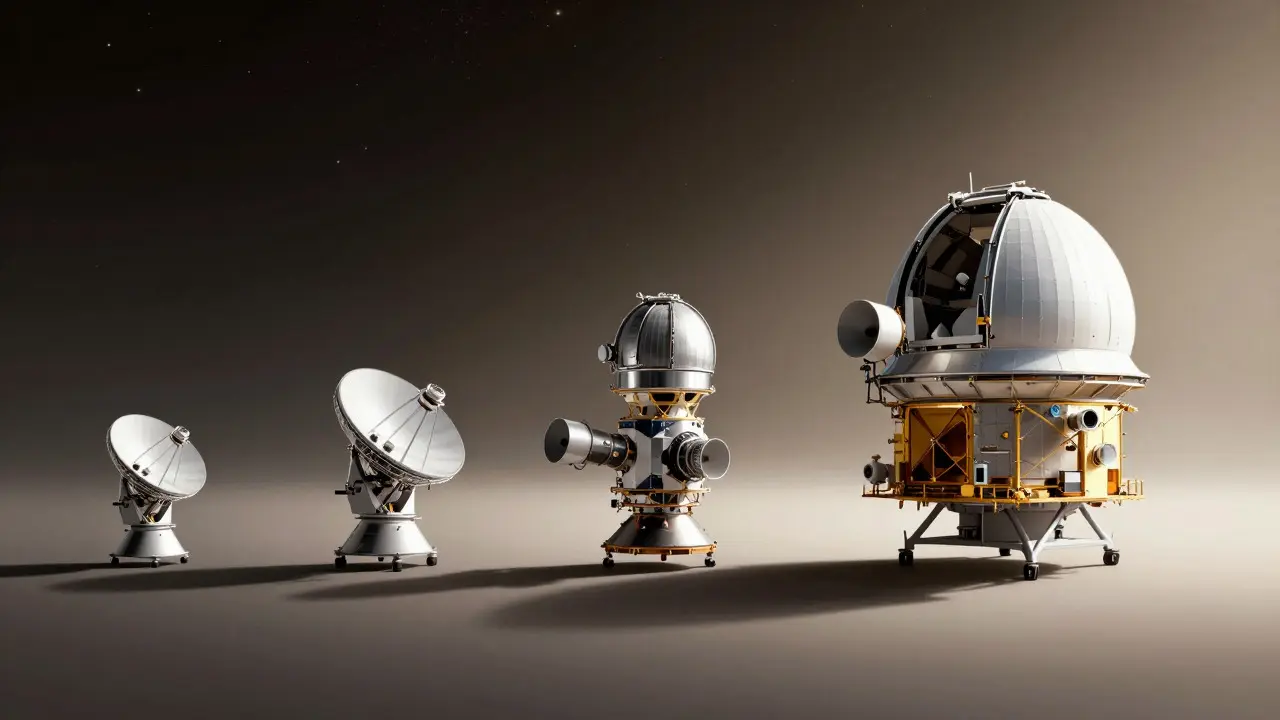
These roadmaps don’t exist in a vacuum. They are part of NASA’s In-Space Servicing, Assembly, and Manufacturing (ISAM) program. The same technologies used to service telescopes-precision navigation, robotic arms, propellant transfer-are being developed for commercial satellites. This creates a positive feedback loop. Commercial investment in on-orbit servicing makes the tech cheaper and more reliable for science missions. Conversely, the high standards required for a precision telescope push commercial tech to higher levels of accuracy.
International interest is growing too. Chinese research on modular deep-space spacecraft suggests similar ambitions for ultra-large telescopes at Lagrange points. This competitive landscape drives innovation. If multiple agencies pursue large, long-life telescopes, the shared infrastructure for servicing becomes a strategic asset. We may see a future where servicing systems are shared across astrophysics, Earth science, and exploration missions, improving economies of scale.
Practical Implementation Guidelines
If you’re involved in designing or funding such systems, here are the key takeaways from current roadmaps:
- Start Early: Integrate servicing requirements in Phase A design. Retrofitting is almost impossible.
- Standardize Interfaces: Use universal docking fixtures and electrical connectors so different servicers can work on the same telescope.
- Document Everything: Create clear Interface Control Documents (ICDs). Robots need precise data on torque limits, alignment tolerances, and cable routing.
- Plan for Obsolescence: Assume that today’s best camera will be outdated in 10 years. Design bays that allow easy replacement.
- Invest in Simulation: The learning curve for robotic servicing is steep. Extensive simulation and procedure development are mandatory before flight.
The bottom line? Modular and robotic upgrades aren’t just nice-to-have features anymore. They are central pillars of sustainable observatory architectures for the 2030s and 2040s. By treating telescopes as platforms rather than products, we ensure that our eyes on the universe stay open for generations, not just decades.
What is the main difference between Hubble and the Habitable Worlds Observatory regarding servicing?
Hubble was serviced by human astronauts during Space Shuttle missions in Low Earth Orbit. The Habitable Worlds Observatory (HWO) is designed for robotic servicing, likely at a Lagrange point, because sending humans there is currently too difficult. HWO uses automated servicers to swap modules and refuel.
Why is modularity important for deep-space telescopes?
Deep-space telescopes are hard to reach and expensive to replace. Modularity allows specific failed or outdated components (like cameras or batteries) to be replaced without scrapping the entire observatory. This extends the mission life and keeps the telescope scientifically relevant as technology improves.
Can robots really perform complex repairs in space?
Yes, technology readiness levels (TRL) for autonomous rendezvous, docking, and propellant transfer have reached TRL 9 (proven in operation). Missions like Orbital Express demonstrated these capabilities. Current roadmaps focus on refining dexterity for handling heavy scientific instruments.
Does adding servicing capability increase the cost of a telescope?
It increases initial mass and integration complexity, which raises upfront costs. However, lifecycle analyses suggest it reduces the long-term cost per science result by avoiding the need to launch entirely new observatories for each generation of instruments.
What is the current status of the HWO servicing roadmap?
As of 2026, the HWO servicing architecture is at Concept Maturity Level (CML) 2. While the decision to make it serviceable is confirmed, detailed specifications for which components will be serviced and by which robots are still under active study and refinement.
11 Responses
ok so the part about swapping out cameras while the telescope is still up there actually makes sense to me. i always thought we just launched a new one every time but that would be insane with the cost involved. it feels like we are finally treating space hardware like real infrastructure instead of disposable rockets. if we can do this for HWO then maybe the next gen instruments wont be stuck in the dark waiting for a whole new mission to get approved.
the philosophy here is interesting because it shifts the paradigm from product to platform. we have been building telescopes like they are consumables which is a waste of potential when you consider the longevity of the science questions we are trying to answer. if a mirror survives 50 years why should the camera die at year 10 just because the technology improved? this approach acknowledges that our understanding of the universe evolves faster than our launch capabilities.
oh great, more robots to worry about getting stuck in a vacuum. i bet the first robotic arm to try and swap a battery will jam and we’ll be left with a billion dollar paperweight floating around L2. love the optimism though, really top tier engineering confidence.
i think the risk is manageable if you look at the Orbital Express data. they did it autonomously back in 2007 which was basically pre-smartphone era tech for these kinds of maneuvers. the sensors and AI we have now are way more capable so the idea of a robot docking and refueling isn't as wild as it sounds. it’s just a matter of refining the software logic for the specific telescope geometry.
One must not overlook the sheer audacity required to send an autonomous machine to perform delicate surgery on a multi-billion dollar instrument located 1.5 million kilometers away. The margin for error is essentially non-existent, yet the potential return on investment is astronomical. It is a bold strategic pivot that demands rigorous scrutiny of the Concept Maturity Level before any further funding is allocated.
It’s... nice that they’re thinking ahead, I suppose; though, one has to wonder if they’ve truly considered the long-term implications; or perhaps, they haven’t, which is typical; isn’t it?
just wanted to say the breakdown of the Hubble vs JWST comparison table was super helpful. it made the difference in strategy clear without needing to read too much fine print. thanks for keeping it accessible.
You clearly lack a fundamental understanding of orbital mechanics and the true cost of integration complexity. The notion that a robot can simply 'swap' a component ignores the thermal shock and vibration risks that will shatter the precision optics within months. This is a fantasy sold to the public by engineers who wish to avoid the hard truth that deep space observatories are inherently temporary artifacts of our current technological infancy.
I agree with the point about thermal control being tricky. Swapping modules in vacuum means dealing with extreme temperature swings that aren't present during ground testing. It's a valid concern that needs more simulation work before we trust a robot with it.
They are definitely hiding something; don’t you think?? Probably another conspiracy to keep us from seeing the truth; or maybe they just want to sell us more stuff; but either way; stay awake!!
The entire premise is flawed! You cannot have a serviceable telescope at L2 because the radiation belt will fry the servicer before it even docks. We should just scrap the whole idea and build bigger mirrors on Earth where we can actually walk up to them and fix the lens cap. Space is for tourists, not for serious astronomy!