
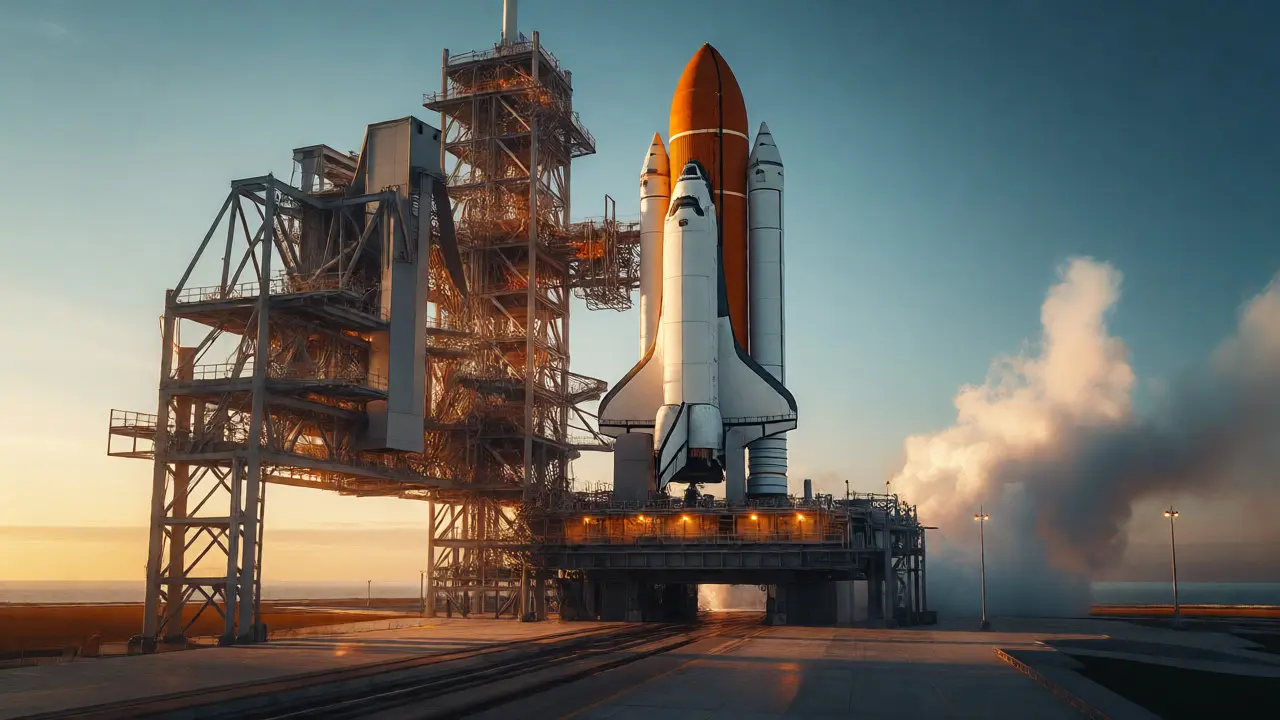
Imagine building a plane that flies to space, comes back, gets inspected by thousands of technicians for months, and then does it all over again. That was the promise of the Space Shuttle, or formally the Space Transportation System (STS). It wasn't just a rocket; it was a winged aircraft that landed on a runway. For thirty years, from 1981 to 2011, this massive machine defined human spaceflight. But here is the twist: while it proved we could reuse parts of a launch system, it also taught us that reusability doesn't automatically mean cheap or easy.
If you are curious about how this engineering marvel worked, why it failed twice with catastrophic results, and what modern companies like SpaceX learned from its mistakes, you are in the right place. We will look at the hard numbers, the design compromises, and the cultural errors that turned a triumph into a cautionary tale.
The Origin Story: From Apollo Dreams to Budget Reality
After the Moon landings, NASA had big dreams. In 1969, they proposed a massive program that included a fully reusable spaceplane and a new lunar base. The price tag? Astronomical. President Richard Nixon looked at the budget and said no. He wanted something cheaper. So, in January 1972, he directed NASA to build a system that could fly often but cost less than a fully reusable vehicle would have.
This decision shaped everything. Instead of a single-stage-to-orbit vehicle that flew back like an airplane, engineers settled on a compromise. They kept the orbiter reusable. They made the solid rocket boosters recoverable. But the giant external tank? That got thrown away every time. This "partially reusable" design was meant to save money on development, but as we will see, it created huge headaches later.
Anatomy of the Beast: How the Stack Worked
To understand the Shuttle’s design, you have to visualize the stack. It stood 184 feet tall-about the height of a 20-story building. At liftoff, it weighed 4.5 million pounds. That is heavier than many naval destroyers.
The stack had three main parts:
- The Orbiter Vehicle (OV): The part that looked like a plane. It carried the crew and payload. It had three powerful engines on its tail.
- Solid Rocket Boosters (SRBs): Two massive white cylinders on the sides. They provided most of the thrust for the first two minutes. After burning out, they parachuted into the ocean, were fished out, and refurbished.
- External Tank (ET): The big orange cylinder in the middle. It held the fuel for the orbiter’s engines. Unlike the other parts, this one burned up in the atmosphere after separation.
The orbiter itself was 122 feet long with a 78-foot wingspan. Its payload bay was huge-60 feet long and 15 feet wide. This allowed astronauts to carry large satellites, lab modules, and even pieces of the International Space Station. No capsule before or since has had that kind of cargo capacity.
The Engineering Challenge: Heat and Fragility
Here is the biggest problem with coming back from space: heat. When you hit the atmosphere at 17,500 miles per hour, friction turns air into plasma. Temperatures spike above 3,000 degrees Fahrenheit. Aluminum melts at around 1,200 degrees. So, how did the aluminum shuttle survive?
NASA developed a complex Thermal Protection System (TPS). Think of it as a ceramic skin. The bottom of the orbiter, which faced the hottest temperatures, was covered in black silica tiles. These tiles could withstand up to 2,300 degrees Fahrenheit. The top and sides, which got cooler, used white tiles rated for 1,200 degrees. The nose and wing edges, where heating was most intense, used Reinforced Carbon-Carbon (RCC), which could handle over 2,700 degrees.
| Material Type | Location on Orbiter | Max Temperature Rating | Key Characteristic |
|---|---|---|---|
| Black Silica Tiles | Underside, Fuselage Bottom | ~2,300°F | Extremely light, fragile, requires careful inspection |
| White Silica Tiles | Upper Fuselage, Wings | ~1,200°F | Reflective, lighter weight than metal alternatives |
| Reinforced Carbon-Carbon (RCC) | Nose Cap, Wing Leading Edges | >2,700°F | Dense, expensive, critical for structural integrity |
| Flexible Blankets | Areas below 750°F | ~750°F | Used in cooler zones, easier to install than tiles |
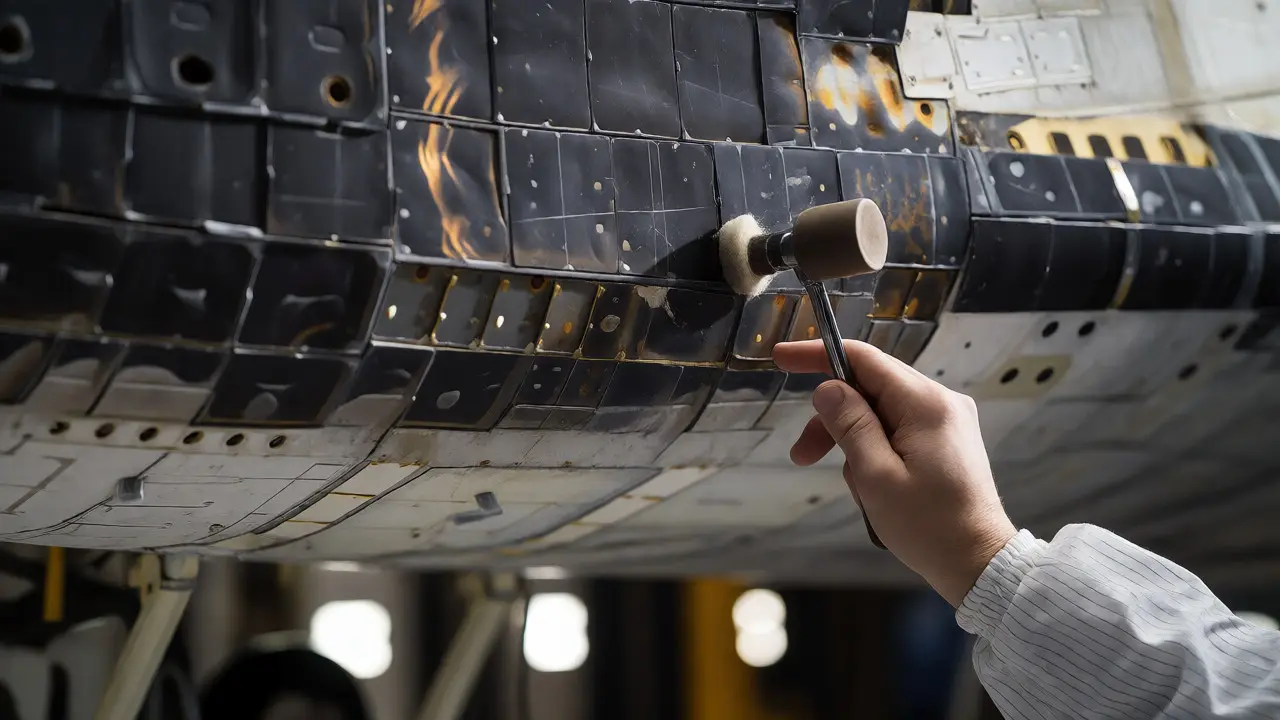
The catch? These tiles were incredibly fragile. During early testing, 13% of them failed quality checks. If a tile cracked or fell off during flight, hot gas could seep behind it and melt the aluminum structure underneath. This fragility became a major source of anxiety and maintenance work.
Flight History: Triumphs and Tragedies
The first orbiter, Columbia, launched on April 12, 1981. It was piloted by John Young and Bob Crippen. The mission, STS-1, went flawlessly. Columbia returned to Earth and landed like a glider. It was a historic moment. Just seven months later, Columbia flew again, becoming the first spacecraft ever reused for orbital flight.
Over its lifetime, the fleet flew 135 missions. More than 800 astronauts rode along. They deployed the Hubble Space Telescope, repaired satellites, and built the International Space Station. But the record includes two disasters.
In 1986, Challenger exploded 73 seconds after liftoff. The cause? A rubber O-ring seal in the right solid rocket booster failed because of cold weather. Hot gas leaked out, weakened the joint, and the booster broke apart. Seven crew members died.
In 2003, Columbia disintegrated during reentry. A piece of foam insulation from the external tank had broken off during launch and punched a hole in the left wing’s leading edge. As the orbiter heated up during descent, superheated air entered the wing through the hole, melting the internal structure. Again, seven lives were lost.
The Economic Myth: Why It Wasn't Cheap
The original pitch for the Shuttle was simple: if we reuse the hardware, space access becomes cheap, like flying on an airline. The idea was rapid turnaround. You land the orbiter, check it out, refuel it, and send it up again in weeks.
Reality was different. Each landing required an exhaustive inspection. Technicians had to tap every single tile to make sure it wasn't cracked. They checked the engines, the brakes, the hydraulics, and the avionics. A single mission could take months to prepare for the next flight. The cost per pound to orbit ended up being much higher than projected, sometimes exceeding $50,000 per pound, whereas expendable rockets like the Titan IV were cheaper per launch.
Why did this happen? Because the design was too complex. The fragile tiles, the need to refurbish the solid boosters, and the labor-intensive engine checks ate up the savings from reusing the hull. The National Academies pointed out that NASA had projected an unrealistically high launch rate. To achieve low costs, they needed to fly 60+ times a year. They never managed more than nine flights in a single year.
Cultural Lessons: Normalization of Deviance
The technical failures of Challenger and Columbia were rooted in organizational culture. Sociologist Diane Vaughan coined the term "normalization of deviance" to describe what happened at NASA. Engineers noticed anomalies-like the O-ring erosion on Challenger or foam strikes on Columbia. But because previous flights had survived these issues, managers began to treat them as acceptable risks rather than warning signs.
On the night before the Challenger launch, engineers from Morton Thiokol, the contractor who built the boosters, warned that the cold temperature might freeze the O-rings. Management asked them to prove their concern. The engineers couldn't provide absolute proof that it would fail, so management decided to launch. They treated the absence of evidence of failure as evidence of safety. It was a fatal logic error.
The Columbia board found similar patterns. Foam had struck shuttles before without causing disaster. So, when it happened again, the team assumed it was just cosmetic damage. They didn't prioritize getting better images of the wing. By the time they realized the extent of the damage, it was too late.
Legacy and Modern Comparisons
The Space Shuttle retired in 2011. Today, its orbiters sit in museums across the United States. But its influence on modern spaceflight is undeniable. Companies like SpaceX studied the Shuttle’s mistakes closely.
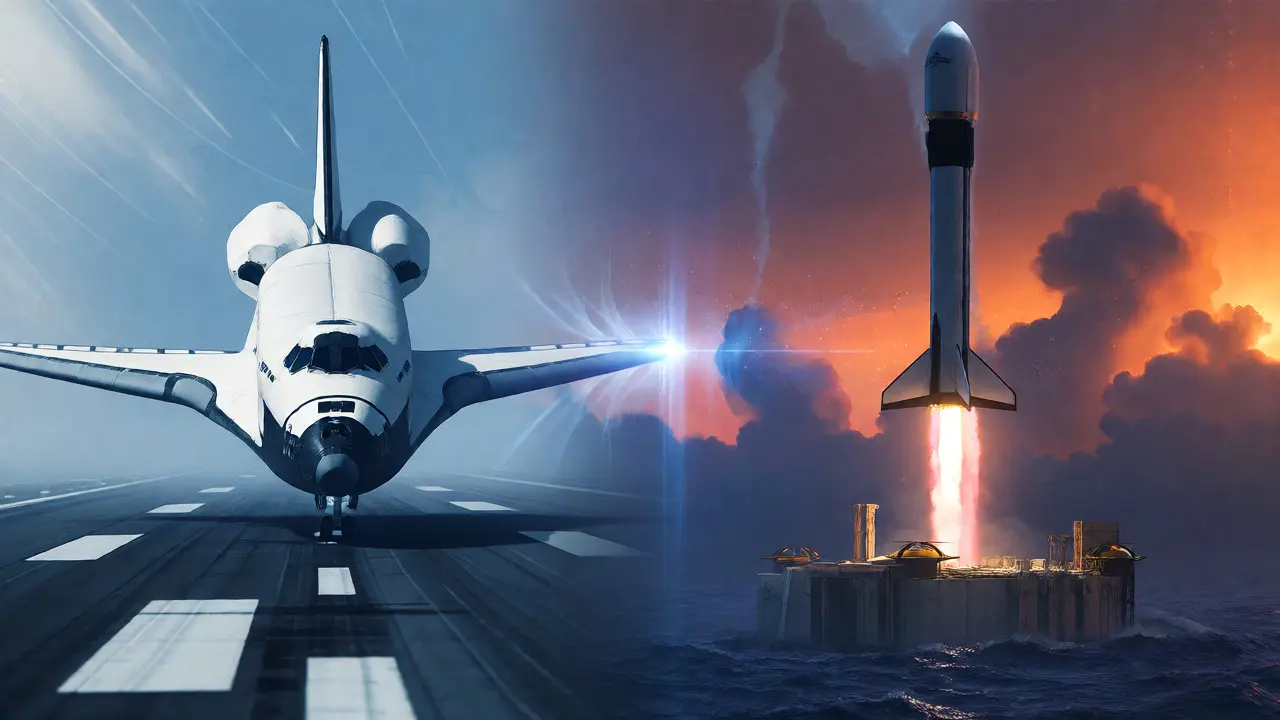
Compare the Shuttle to SpaceX’s Falcon 9. Both aim for reusability. But Falcon 9 only reuses the first stage booster. It lands vertically on drone ships or pads. It doesn’t have a fragile tile system covering the whole body. It doesn’t require a runway. It doesn’t carry humans in the same way the Shuttle did until recently with Crew Dragon, which is a capsule, not a winged orbiter.
| Feature | Space Shuttle | Falcon 9 / Crew Dragon |
|---|---|---|
| Reusability Scope | Orbiter + SRBs (Partial) | First Stage Booster (Falcon 9) |
| Landing Method | Horizontal Runway Landing | Vertical Propulsive Landing |
| Thermal Protection | Fragile Tile System | Simpler Ablative/Heat Shielding |
| Turnaround Time | Months | Days to Weeks |
| Crew Capacity | Up to 8 Astronauts | Up to 7 Astronauts (Dragon) |
SpaceX avoided the Shuttle’s pitfalls by keeping the design simpler. They didn’t try to make the entire vehicle reusable immediately. They focused on the part that mattered most for cost: the booster. And they accepted that some components, like the fairings and second stage, would be expended or recovered differently.
What We Learned
The Space Shuttle was a masterpiece of engineering, but it was also a lesson in humility. It showed us that reusability is not a magic switch for low costs. It requires a holistic approach to design, maintenance, and operations.
Key takeaways include:
- Design for Inspection: If you can’t easily check it, don’t rely on it. The tiles were hard to inspect thoroughly.
- Listen to Dissent: Engineers must feel safe raising concerns. Culture matters as much as physics.
- Realistic Expectations: Don’t plan for launch rates you can’t sustain. Complexity slows things down.
- Safety Margins: Treat anomalies as signals, not noise. What works once might not work twice.
The Shuttle opened the door to heavy-lift reusable spaceflight. It paved the way for the International Space Station and inspired a generation of engineers. While its economic model didn’t quite hit the mark, its technical achievements remain unmatched in history. It proved that humans could fly to space, do complex construction work, and return safely, mostly, to a runway. That is a legacy worth remembering.
Was the Space Shuttle fully reusable?
No, it was only partially reusable. The Orbiter and the two Solid Rocket Boosters were recovered and reused. However, the large External Tank, which held the majority of the propellant, was discarded and burned up in the atmosphere after each launch.
Why did the Space Shuttle fail to reduce costs as promised?
The Shuttle’s complex design required extensive post-flight inspections and repairs, particularly of its fragile thermal tiles and engines. The turnaround time between flights took months instead of weeks, preventing the high launch frequency needed to amortize the high fixed costs of the infrastructure and workforce.
What caused the Challenger disaster?
The Challenger disaster was caused by the failure of an O-ring seal in the right Solid Rocket Booster due to unusually cold temperatures. This allowed hot gases to escape, weaken the joint, and ultimately lead to the structural breakup of the vehicle 73 seconds after launch.
How did the Columbia accident differ from Challenger?
While Challenger failed during ascent due to a booster joint issue, Columbia failed during reentry. A piece of foam from the external tank struck the orbiter’s left wing during launch, damaging the thermal protection system. This allowed superheated air to enter the wing during atmospheric entry, destroying the vehicle.
Can we still fly the Space Shuttle today?
No, the Space Shuttle program ended in 2011. All five completed orbiters are now museum exhibits. NASA currently relies on commercial partners like SpaceX for crew transport to the International Space Station using capsules rather than winged orbiters.