
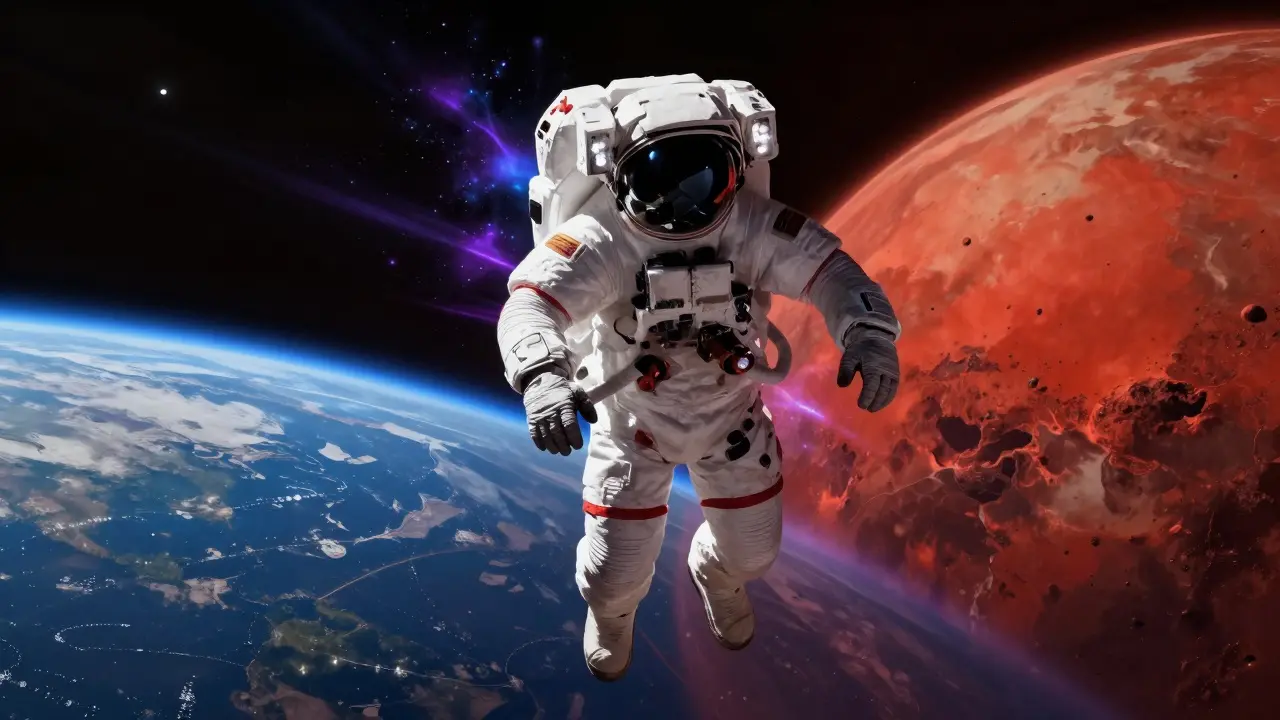
Imagine floating in the void between Earth and Mars. There is no magnetic field to shield you. High-energy particles from deep space are constantly battering your cells, breaking DNA strands, and increasing your risk of cancer or heart disease. This is the reality for astronauts on missions beyond low Earth orbit. Physical shielding helps, but it adds massive weight to spacecraft. That’s why scientists are turning to a different kind of defense: pharmaceutical radioprotectants.
These are drugs designed to mitigate cellular damage caused by ionizing radiation. As we plan for lunar bases in the 2020s and Mars missions in the 2030s, these medicines are becoming just as critical as oxygen tanks. But do they work? Are they safe enough for healthy people? And can they survive the harsh environment of deep space? Let’s break down what we know about these life-saving compounds as of mid-2026.
The Two Faces of Space Radiation
To understand the drugs, you first need to understand the threat. Space radiation isn’t one thing; it’s two distinct dangers that require different medical responses.
First, there are Solar Particle Events (SPEs). These are sudden bursts of protons from the sun. They hit hard and fast. An extreme SPE could deliver a lethal dose of radiation in hours, causing Acute Radiation Syndrome (ARS). Symptoms include nausea, vomiting, bone marrow failure, and potentially death within days. This is an emergency scenario.
Second, there are Galactic Cosmic Rays (GCRs). These are high-energy atomic nuclei from outside our solar system. They don’t cause immediate sickness, but they sneakily damage cells over time. A round-trip Mars mission might expose an astronaut to 0.6-1.0 Sieverts (Sv) of GCR. This chronic exposure increases the lifetime risk of cancer, cardiovascular disease, and neurocognitive decline. Unlike SPEs, you can’t hide from GCRs; you live with them for months or years.
This distinction dictates the drug strategy. For SPEs, we need emergency mitigators given after exposure. For GCRs, we need long-term protectors taken before or during the mission.
Amifostine: The Gold Standard Protector
If you ask a scientist for the most proven radioprotectant, they will likely say Amifostine (WR-2721, brand name Ethyol). It is currently the only small-molecule drug broadly recognized as a systemic radioprotector approved by the U.S. Food and Drug Administration (FDA) for terrestrial use in cancer patients undergoing radiotherapy.
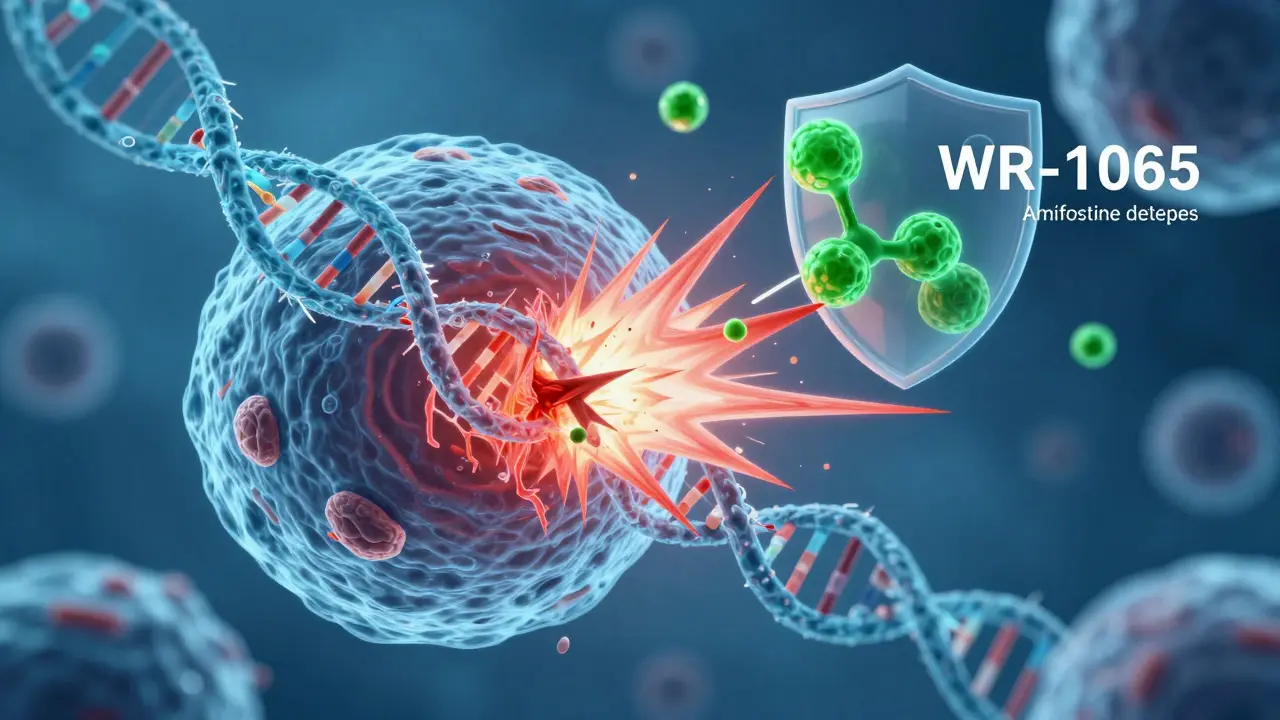
Here is how it works. Amifostine is a prodrug, meaning it’s inactive until your body converts it. In normal tissues, enzymes called alkaline phosphatases strip off a phosphate group, turning it into an active thiol compound called WR-1065. This active form is a free radical scavenger. When radiation hits your cells, it creates unstable molecules called reactive oxygen species (ROS) that shred DNA. WR-1065 neutralizes these radicals before they can cause harm. Crucially, it accumulates more in healthy tissue than in tumors, which makes it useful in cancer therapy.
In preclinical studies, giving mice low doses of amifostine (25-75 mg/kg) about 30 minutes before lethal radiation exposure significantly improved survival rates. NASA has included amifostine in medical kits for potential SPE emergencies since the Apollo era, though it was never actually administered in flight. However, using it for astronauts comes with a catch: side effects. At standard clinical doses (200-500 mg/m²), over 40% of patients experience severe nausea, vomiting, and hypotension (low blood pressure). Imagine feeling like you’re going to throw up while trying to perform a complex repair on a spacesuit. That’s the operational challenge.
Emergency Mitigators: Growth Factors
If an astronaut gets hit by a massive Solar Particle Event, amifostine might be too late if not given beforehand. In that case, we turn to mitigators-drugs given after exposure to help the body recover. The primary target here is the bone marrow, which produces blood cells and is highly sensitive to radiation.
NASA’s emergency medical kits include hematopoietic growth factors:
- Pegylated Granulocyte Colony-Stimulating Factor (PEG-G-CSF) (Neulasta): Stimulates the production of neutrophils, white blood cells that fight infection.
- Granulocyte-Macrophage CSF (GM-CSF) (Leukine): Helps boost various immune cells.
- Romiplostim (Nplate): Boosts platelet production to prevent bleeding.
In terrestrial accidents involving high-dose radiation, these drugs have reduced infection-related mortality by 20-40%. They shorten the period where an astronaut’s immune system is dangerously low. But they aren’t perfect. Side effects include bone pain, spleen enlargement, and increased risk of blood clots. You wouldn’t take these casually; they are strictly for acute emergencies.
Repurposed Drugs: The Chronic Defense
What about the slow, creeping damage from Galactic Cosmic Rays? We can’t inject astronauts every day. Instead, researchers are looking at repurposing common medications already used for heart health, diabetes, or inflammation. These agents aim to reduce long-term risks like heart disease and cognitive decline.
| Drug Class | Example | Proposed Benefit in Space | Status |
|---|---|---|---|
| Statins | Atorvastatin | Reduces endothelial dysfunction and late cardiovascular events | Preclinical/Observational |
| ACE Inhibitors | Captopril | Protects against radiation-induced kidney and lung damage | Preclinical |
| Antioxidants | N-Acetylcysteine (NAC) | Scavenges free radicals; reduces oxidative stress | Promising Candidate |
| Beta-Blockers | Propranolol | May reduce inflammatory response to radiation | Preclinical |
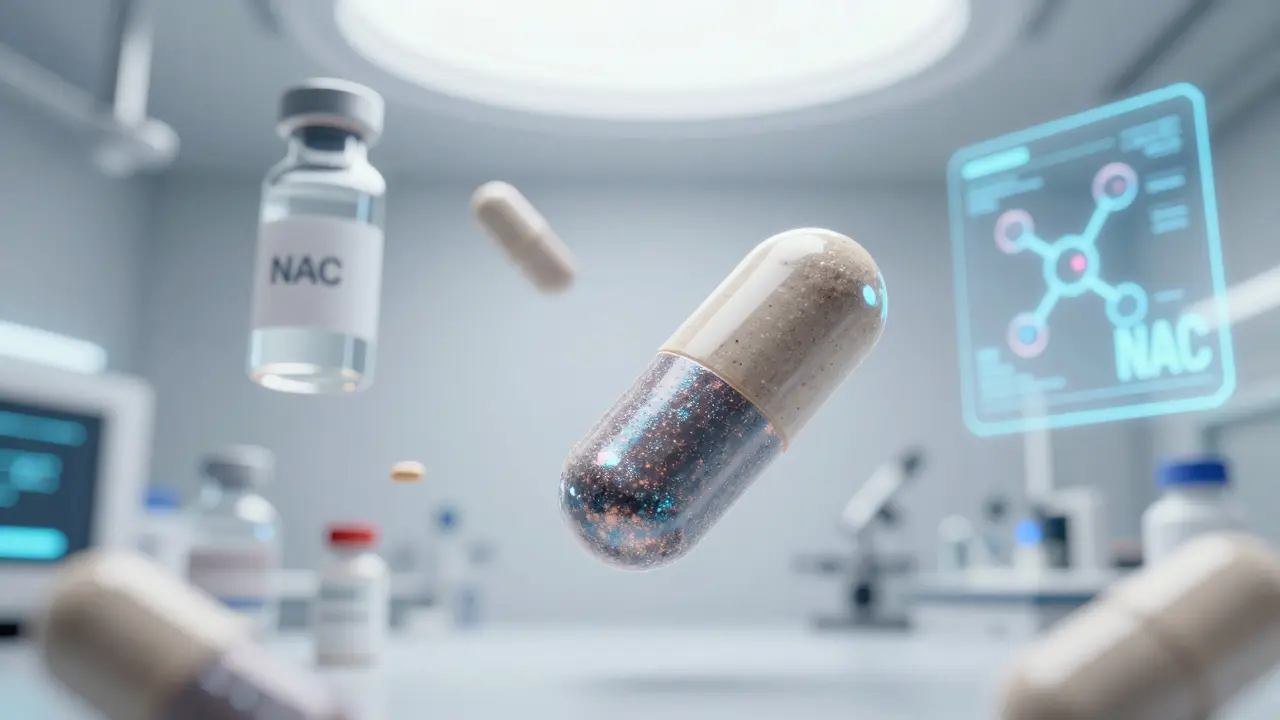
For example, statins like atorvastatin are widely used to lower cholesterol. But data from cancer patients shows they also reduce major adverse cardiac events by 15-25% after thoracic radiation. N-Acetylcysteine (NAC), often found in supplements, acts as a precursor to glutathione, the body’s master antioxidant. Studies suggest NAC can mitigate tissue fibrosis and oxidative stress with minimal side effects, making it a top candidate for long-duration missions.
New Frontiers: Nutraceuticals and Neuroprotection
The search isn’t limited to traditional pharmacy shelves. Scientists are exploring plant-derived compounds and novel biologics. One exciting area is neuroprotection. Radiation damages the brain, leading to memory loss and impaired decision-making-a deadly flaw for a pilot navigating a spacecraft.
Research led by Afshin Beheshti and Chris Mason has highlighted Kaempferol, a flavonoid found in tea and vegetables. In mouse models exposed to radiation levels similar to those on Mars missions, kaempferol protected mitochondrial function and reduced markers of cellular damage. By early 2026, clinical trials in healthy volunteers were underway to see if this protection translates to humans.
Another approach is combination therapy. Some studies show that combining amifostine with gamma-tocotrienol (a form of Vitamin E) improves survival rates in irradiated mice by over 20 percentage points compared to either drug alone. This suggests a "polypharmaceutical" strategy: hitting radiation damage from multiple angles simultaneously.
Companies like Sachi Bioworks are developing new drugs targeting specific immune molecules linked to neuronal death. Early tests on brain tissue cultures flown on the International Space Station showed promising results in preventing radiation-induced cell death.
Will the Drugs Survive the Journey?
A crucial question often overlooked: do the drugs themselves degrade in space? For years, there was concern that cosmic radiation and microgravity would alter the chemical structure of medications, rendering them ineffective or toxic.
Early data from the ISS suggested some changes in potency for certain drugs stored for 28-40 months. However, a pivotal study published in *Nature Communications* in May 2025 changed the narrative. Researchers exposed solid-state oral pharmaceuticals to cumulative radiation doses representative of a Mars mission. They found no significant effect on drug quality. Essentially, standard pills are robust enough to survive the journey.
That said, scientists are still experimenting with protective coatings. A 2024 study showed that coating ibuprofen tablets with iron oxide and certain flavoring excipients further reduced degradation. These excipients act as scavengers, absorbing radiation energy before it reaches the active ingredient. This dual-purpose approach protects both the crew and their medicine cabinet.
The Road Ahead
As of June 2026, no drug is specifically FDA-approved for chronic space radiation exposure. We are bridging the gap between animal models and human application through innovative platforms like the Clinical Trial in a Dish (CTiD). This method uses human stem-cell-derived organoids exposed to simulated cosmic rays, allowing rapid screening of hundreds of compounds without waiting decades for astronaut health data.
Pharmaceutical radioprotectants won’t replace physical shielding. You still need thick walls and water stores to block the worst of the particles. But drugs offer a lightweight, flexible layer of defense. They allow us to send humans deeper into the solar system with greater confidence that their cells will hold together against the invisible storm of space.
Is amifostine safe for astronauts to take regularly?
Currently, amifostine is considered too harsh for routine daily use due to significant side effects like severe nausea, vomiting, and low blood pressure. It is primarily reserved as an emergency countermeasure for acute Solar Particle Events rather than a daily supplement for chronic Galactic Cosmic Ray exposure.
What is the difference between a radioprotector and a mitigator?
A radioprotector is administered before radiation exposure to prevent damage (e.g., amifostine). A mitigator is given after exposure to reduce the severity of symptoms and aid recovery (e.g., growth factors like PEG-G-CSF).
Do current space drugs protect against cancer?
Not directly. Most current candidates focus on acute survival (preventing bone marrow failure) or reducing oxidative stress. While reducing DNA damage theoretically lowers cancer risk, no drug is yet approved specifically to prevent radiation-induced cancers in astronauts over a multi-year timeline.
Can over-the-counter supplements replace prescription radioprotectants?
Supplements like N-acetylcysteine (NAC) and kaempferol show promise and have better safety profiles, but they are not yet proven to provide the same level of protection as potent pharmaceuticals like amifostine in high-dose scenarios. They may serve as part of a long-term, low-dose regimen for chronic exposure.
Why is drug stability important for Mars missions?
Mars missions last nearly three years. If radiation degrades the active ingredients in medications, astronauts could end up taking ineffective or harmful doses. Recent 2025 studies suggest solid pills are stable, but ongoing research into protective coatings ensures reliability for future explorers.
12 Responses
oh man this is such a fascinating read and i really appreciate the detailed breakdown of amifostine versus the newer options because it highlights just how complex space medicine actually is, especially when you consider that we are trying to protect healthy humans from chronic low-dose exposure rather than just treating acute cancer patients on earth. the part about side effects like nausea and hypotension being a dealbreaker for routine use makes total sense since you cant have an astronaut vomiting during a critical EVA or systems check, and it reminds me of how much we still rely on brute force shielding even though drugs offer a lighter alternative. i think the repurposed drugs section is where the real hope lies because statins and NAC are already well understood in terms of safety profiles which speeds up the regulatory process significantly compared to developing entirely new compounds from scratch.
i always wonder if these radioprotectants would work for people who live in high altitude areas with more radiation exposure
the problem with your question is that you are comparing apples to oranges because the flux and energy spectrum of galactic cosmic rays in deep space are orders of magnitude higher than terrestrial background radiation even at high altitudes so extrapolating efficacy from mountain dwellers is scientifically lazy and ignores the specific mechanism of action for heavy ion damage which causes clustered DNA lesions that simple antioxidants might not fully repair without causing other cellular stress responses that could be detrimental over long term missions.
why should we care about saving astronauts when we have problems here on earth that need fixing first its typical elite science spending billions on pills for rich spacemen while hospitals are understaffed and basic healthcare is inaccessible for millions of working class people who just want to survive their own lives without worrying about radiation poisoning from a broken nuclear plant or something mundane like that
youre completely missing the point of technological advancement because every single medical breakthrough we have today from antibiotics to imaging technology came from military or space research funding so complaining about NASA budgets is like complaining about inventing the wheel because horses exist yet you still drive a car probably made with materials developed through aerospace engineering so maybe educate yourself before throwing tantrums about resource allocation in a global economy that thrives on innovation.
I absolutely LOVE the idea of using kaempferol!!! It’s just so amazing that something found in tea and vegetables could potentially save lives in deep space! I mean, can you imagine sipping a cup of green tea knowing it’s protecting your brain from cosmic rays?! It feels almost magical but also incredibly grounded in science! The fact that they are testing combination therapies too gives me so much hope! We are literally living in the future right now! And the bit about drug stability is such a relief because I was worried my favorite supplements would turn into poison by the time they reached Mars!
the pursuit of immortality through chemistry is merely a delay of the inevitable entropy that governs all biological systems whether on earth or mars the human body is fragile and our attempt to shield it with molecules is a testament to our refusal to accept mortality as a natural state of existence
one must consider the philosophical implications of altering human biology to suit an environment that is inherently hostile to life essentially we are not adapting to space but forcing space to tolerate us through pharmaceutical intervention which raises questions about what it means to be human when our survival depends on daily chemical cocktails rather than natural resilience
stop overcomplicating this with philosophy and look at the data because the Clinical Trial in a Dish platform is the only way we will get answers quickly enough to make the 2030s Mars mission viable and relying on animal models alone is outdated methodology that fails to account for human-specific metabolic pathways so we need to support these innovative screening methods instead of debating existential dread.
let's keep the conversation respectful and focused on the science because everyone has different perspectives on space exploration but the goal here is to understand how we can safely send humans further into the solar system and that requires collaboration between scientists engineers and ethicists to ensure that the benefits of these technologies are shared equitably while minimizing risks to those brave enough to go.
it is imperative to note that the distinction between radioprotectors and mitigators is not merely semantic but pharmacokinetic in nature as pre-exposure administration allows for optimal tissue distribution of the thiol scavengers whereas post-exposure interventions rely on stimulating hematopoietic recovery which is a fundamentally different biological pathway requiring distinct therapeutic windows and dosing regimens that cannot be interchanged without significant clinical risk.
nasa is hiding the real reason these drugs fail because they dont want you to know that space travel is impossible and the whole mars mission is a hoax to keep us distracted from climate change on earth while they waste money on fake science projects that will never produce results because the government knows we can never leave this planet and they are lying to us about radiation protection.