
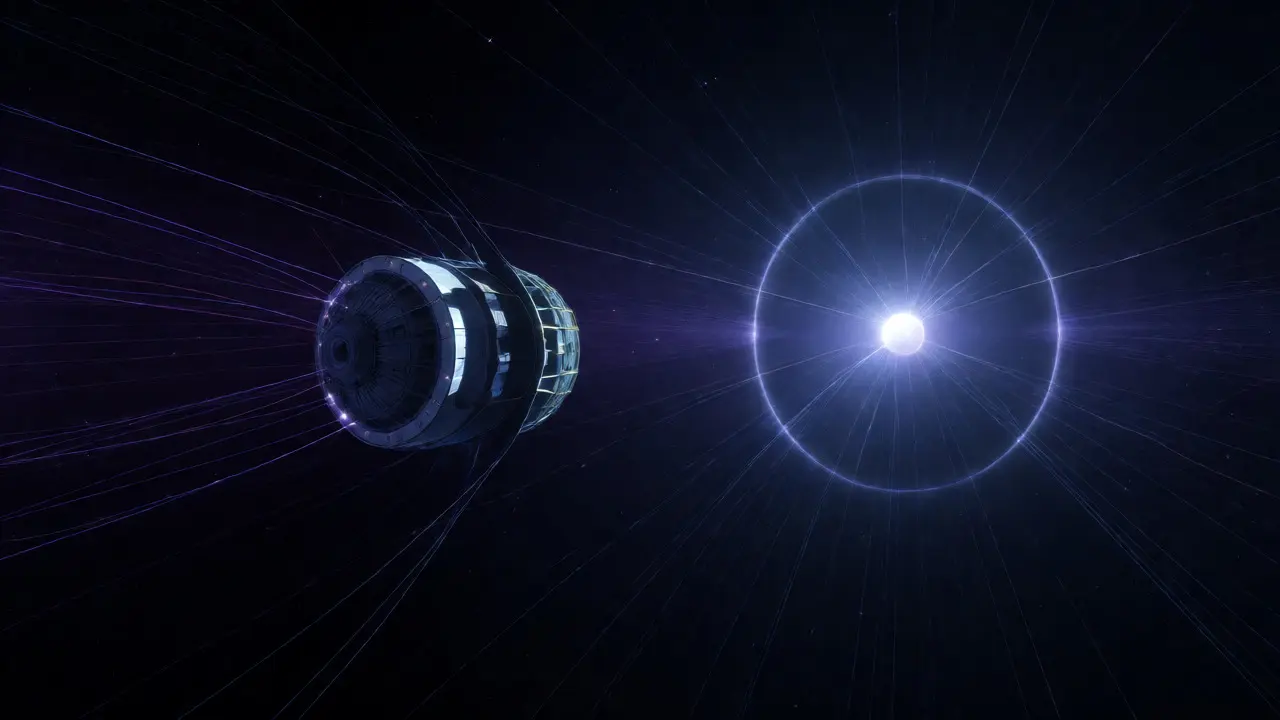
Imagine you are planning a round trip to Mars. You have your crew, your ship, and your timeline. But there is an invisible variable that could double or halve the radiation dose your astronauts receive: the Sun's mood. It sounds counterintuitive, but when the Sun is quiet, deep space gets more dangerous for chronic exposure. When the Sun is loud and active, it creates its own kind of chaos. Understanding Solar Cycle Effects on Deep Space Radiation Exposure is not just academic trivia; it is a critical input for mission survival.
The Two Faces of Space Radiation
To grasp why the solar cycle matters, you first need to distinguish between two very different types of radiation hazards. They behave in opposite ways as the Sun changes phases. The first is Galactic Cosmic Rays (GCRs). These are high-energy particles from outside our solar system, originating from supernovae and other violent events in the galaxy. They are continuous, omnidirectional, and incredibly penetrating. Think of them as a steady, low-level hum of danger that never stops.
The second hazard is Solar Energetic Particles (SEPs). These are bursts of protons and ions ejected by the Sun during flares and coronal mass ejections. Unlike GCRs, SEPs are episodic. They don't happen all the time, but when they do, they can deliver massive doses in hours or days. This distinction is vital because the solar cycle affects these two threats in completely different ways.
The Heliosphere Shield: Why Quiet Suns Are Dangerous
You might think a calm Sun means less radiation. In deep space, the opposite is true. Our solar system is wrapped in a bubble called the heliosphere, created by the solar wind and the Sun’s magnetic field. This bubble acts like a shield against incoming GCRs. During Solar Maximum, the Sun is highly active. Its magnetic field is stronger and more tangled, and the solar wind blows harder. This enhanced activity deflects more GCRs away from the inner solar system.
Conversely, during Solar Minimum, the solar wind weakens and the magnetic field relaxes. The heliospheric shield thins out, allowing more galactic cosmic rays to penetrate deep into the solar system. NASA data confirms this anticorrelation: GCR intensity is lowest at solar maximum and highest at solar minimum. For a long-duration mission, such as a trip to Mars, launching near solar maximum can significantly reduce the cumulative dose from GCRs.
| Radiation Type | Solar Maximum Conditions | Solar Minimum Conditions | Mission Impact |
|---|---|---|---|
| Galactic Cosmic Rays (GCRs) | Lower intensity due to strong heliospheric modulation. | Higher intensity due to weakened shielding. | Chronic, cumulative dose risk is higher at minimum. |
| Solar Energetic Particles (SEPs) | Higher probability of intense flare events. | Lower frequency of major SEP events. | Acute, short-term spike risk is higher at maximum. |
| Total Mission Dose | Lower chronic dose, higher acute event risk. | Higher chronic dose, lower acute event risk. | Requires balancing both factors based on duration. |
Quantifying the Difference: Mars Mission Scenarios
How big is this effect? Let’s look at real modeling data. A review of measurements from the Mars Science Laboratory’s Radiation Assessment Detector (RAD) provides concrete numbers. Under modeled solar-maximum conditions, a Hohmann-transfer mission to Mars (including transit and surface stay) resulted in a dose equivalent of approximately 0.65 ± 0.24 Sv. Under solar-minimum conditions, that same mission profile jumped to 1.59 ± 0.12 Sv.
This is more than a doubling of the radiation dose. For context, NASA career limits for astronauts are often set around 600 mSv (0.6 Sv) to minimize cancer risk, though this varies by age and gender. A 1.6 Sv dose pushes well beyond typical career limits, increasing the risk of deterministic effects like cataracts and stochastic effects like cancer. The difference isn’t marginal; it’s mission-defining.
The Catch: Solar Maximum Isn’t Perfectly Safe
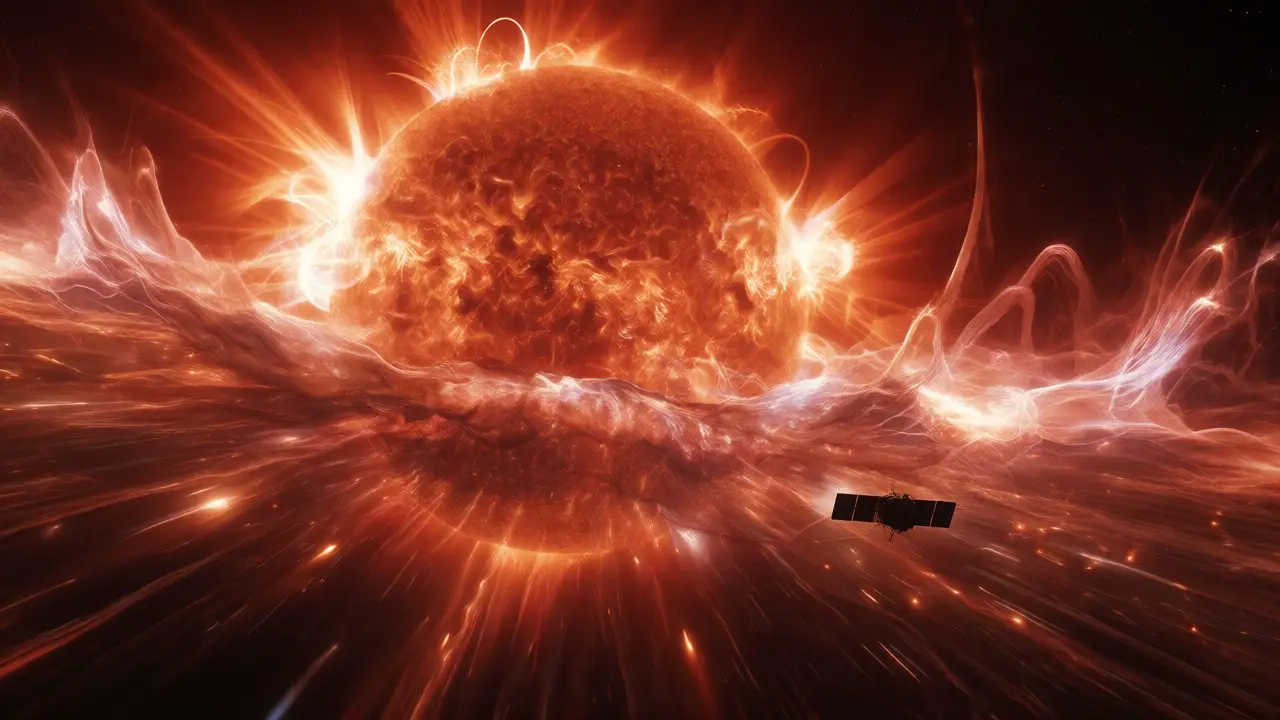
If solar maximum reduces GCRs so effectively, why not always launch then? Because of SEPs. While the background GCR level drops, the likelihood of violent solar storms increases dramatically. During an SEP event, particle flux can spike by factors of 10 to 100 compared to normal background levels. A single severe event could deliver a lethal dose if the crew is caught unshielded outside their habitat.
However, statistical models suggest that while SEP events are dangerous, they contribute a smaller fraction to the total integrated dose over a long mission compared to GCRs. In one summarized cruise exposure analysis, SEP events contributed about 5% of the total dose equivalent. But that small percentage comes with high variance. If a mission encounters a "Carrington-class" superstorm, those 5% become 50% or more instantly. Therefore, solar maximum requires robust storm shelters and reliable forecasting, whereas solar minimum requires heavier passive shielding to handle the constant GCR bombardment.
Dose Rates and Biological Impact
Astronauts in deep space face average dose-equivalent rates of approximately 1.84 mSv/day in interplanetary space. On the Martian surface, the atmosphere and soil provide some protection, reducing this to about 0.64 mSv/day. Compare this to the International Space Station (ISS), where Earth’s magnetic field shields most particles, resulting in a rate of roughly 0.647 mSv/day.
These numbers fluctuate with the solar cycle. At solar minimum, deep-space rates can climb toward the upper end of estimates, while at solar maximum, they drop. Some studies project that for a 30-year-old female astronaut, the time to reach a 3% risk of exposure-induced death in interplanetary space could be under 300 days during a deep solar minimum. That is less than a year. This highlights why timing a launch window isn't just about planetary alignment; it's about radiation safety margins.
Shielding Limitations and Secondary Radiation
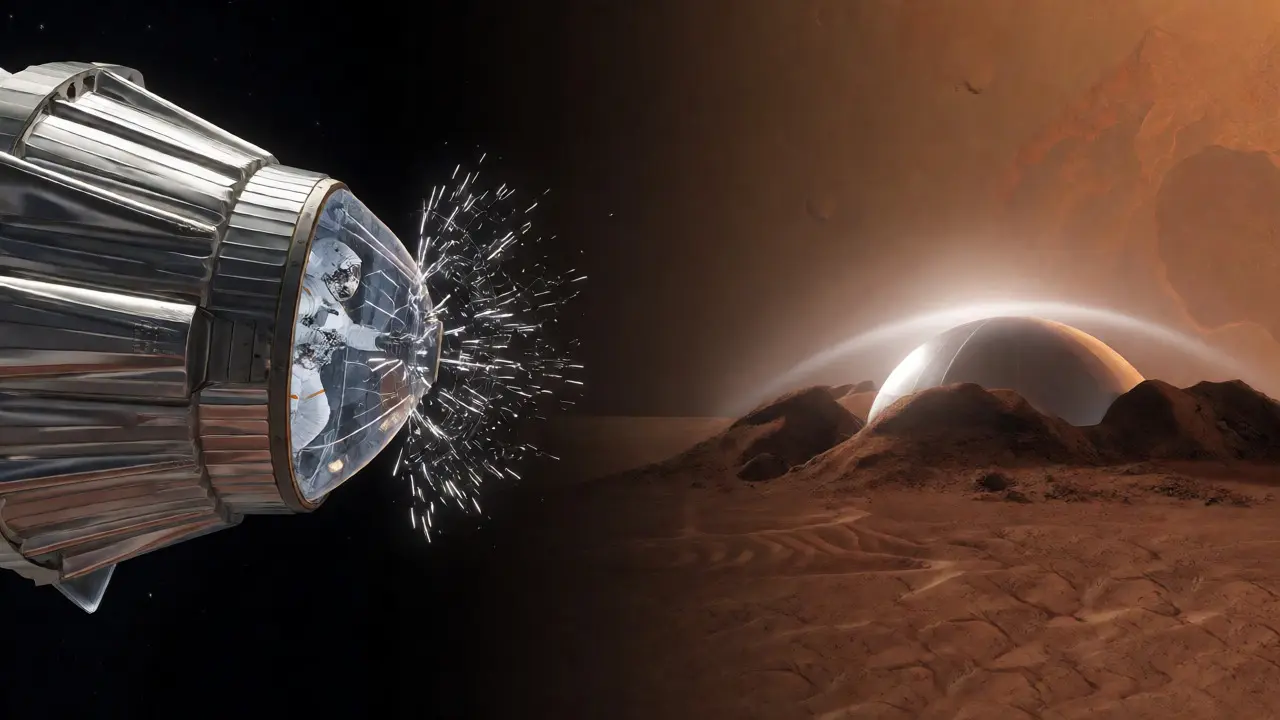
You might assume that piling on more shielding solves the problem. It’s complicated. High-energy GCRs collide with shielding material (like aluminum hulls or water walls), creating secondary particles. These secondary showers can sometimes increase the biological damage inside the spacecraft if the shielding isn't optimized. There is no simple "more is better" rule.
Planetary surfaces offer natural advantages. Mars has a thin atmosphere and regolith (soil). Studies show that living in lava tubes or using regolith-covered habitats can drastically reduce surface exposure. But during transit, you only have the ship. Advanced materials like hydrogen-rich polymers or water-based shielding are being researched because they produce fewer harmful secondary neutrons than traditional metals. Yet, even with optimal shielding, the solar cycle phase remains the dominant external variable controlling the primary particle flux.
Practical Implications for Mission Planning
So, how do engineers use this information? They treat the solar cycle as a dynamic constraint. Mission planners must model trajectories across different phases of the ~11-year cycle. They balance the reduced GCR dose of solar maximum against the increased SEP risk. They also consider mission duration. Shorter missions are less sensitive to chronic GCR accumulation but remain vulnerable to acute SEP events. Longer missions, like those involving extended stays on Mars, benefit disproportionately from launching near solar maximum to keep the chronic dose manageable.
Current forecasts suggest we are moving through the peak of Solar Cycle 25. If you were planning a Mars mission today, aiming for the declining phase of this cycle might offer a sweet spot: still relatively strong heliospheric shielding against GCRs, but with diminishing probabilities of extreme SEP events as the cycle winds down toward minimum.
Frequently Asked Questions
Does solar maximum eliminate all radiation risks?
No. While solar maximum reduces Galactic Cosmic Ray (GCR) intensity, it increases the frequency of Solar Energetic Particle (SEP) events. These sporadic storms can cause acute radiation spikes that require immediate sheltering.
Why are Galactic Cosmic Rays worse during solar minimum?
During solar minimum, the solar wind and magnetic field weaken. This reduces the heliosphere's ability to deflect incoming galactic cosmic rays, allowing more high-energy particles to penetrate the inner solar system where astronauts travel.
Can shielding protect against all solar cycle variations?
Shielding helps, but it cannot change the source intensity. Heavy shielding reduces GCR penetration but may create secondary radiation. It does not prevent SEP events from delivering high doses if the crew is exposed. Timing the mission relative to the solar cycle is a complementary strategy.
How much does the solar cycle affect total mission dose?
It can vary by more than 50%. Modeling shows Mars mission doses can range from ~0.65 Sv at solar maximum to ~1.59 Sv at solar minimum for similar mission profiles, depending on shielding and trajectory.
Is the ISS affected by the solar cycle?
Yes, but less severely than deep space. Earth's magnetosphere protects the ISS from most GCRs and SEPs. However, during extreme solar events, polar orbit exposures can increase, and dose rates do fluctuate slightly with solar activity.
8 Responses
So let me get this straight. The sun is basically a moody teenager that decides whether to protect us or roast us depending on its mood swings? And we're supposed to plan multi-year missions around its emotional stability? It's absurd really. We spend billions building ships and then hope the star at the center of our system doesn't throw a tantrum while we're halfway to Mars. It feels less like science and more like gambling with human lives based on celestial whims. I mean sure, the data is there but the implication is terrifying. We are fragile little specks floating in a sea of invisible bullets that change their density every eleven years. Why do we even bother pretending we have control over anything out there when the fundamental variable is just... solar temper tantrums? It makes the whole endeavor feel incredibly precarious and honestly kind of pointless if you think about it too hard.
The narrative presented here conveniently omits the geopolitical implications of radiation shielding technology monopolies.
It is highly suspicious that the 'sweet spot' for launch windows aligns perfectly with current funding cycles for major aerospace contractors. One must question who benefits from the fear of Solar Minimum conditions. Is it possible that the variability in Galactic Cosmic Ray intensity is being exaggerated to justify increased defense budgets under the guise of civilian exploration?
Furthermore the correlation between solar activity and SEP events seems to be used as a red herring to distract from the lack of viable long-term shielding solutions. We are told to balance risks but never given the full picture regarding secondary neutron production which remains poorly understood by the public. This article serves as propaganda for continued reliance on flawed propulsion timelines rather than presenting an objective scientific reality.
Its morally wrong to send people into that without solving shielding first.
We know the doses kill cells slowly.
Why rush it?
Its greedy.
This is exactly why timing is everything!! You can't just pick any date you need to ride the wave of the solar cycle
Think about it like surfing you wait for the right swell so you don't wipe out
If you go during max you dodge the GCRs mostly
But yeah watch out for those SEPs they hit hard
Still better odds than minimum though where the background noise is deafening
Go for the declining phase sweet spot
Let's make history safely!
American engineering handles this fine.
Other nations talk about risks.
We build shelters and go.
Simple fact.
You guys are missing the obvious point here. It is not just about the dose number it is about the type of particle. Heavy ions from GCRs cause double-strand breaks in DNA that simple protons do not. That is why cancer risk is so high even at lower doses. Everyone focuses on the total Sieverts but ignores the relative biological effectiveness. If you read actual radiobiology papers instead of pop science articles you would know that shielding against heavy ions is nearly impossible with current mass constraints. So saying 'launch at max' helps reduces chronic dose yes but it does not solve the biological damage problem entirely. You still get hit by whatever gets through. It is basic physics really. People act surprised by this every time.
Hey man i respect your take but i think ur being a bit harsh on the planners 🤷♂️
They r doing there best with limited info
Also typo prone comments annoy me lol 😅
Anyway cool post
I love seeing this level of detail! It really highlights how resilient our planning processes are becoming.
Instead of viewing the solar cycle as a barrier, we should see it as a partner in mission design. By understanding these rhythms, we empower ourselves to choose the safest paths. Yes, there are risks, but acknowledging them allows us to mitigate them effectively. We are moving forward together, learning from each phase of the Sun's activity. This isn't just about survival; it's about thriving in new environments. Keep up the great work everyone involved in these calculations. We've got this!