

Imagine trying to photograph a specific car in a parking lot from space. A traditional geostationary satellite is a large spacecraft positioned 35,786 kilometers above Earth that stays fixed over one spot might see the whole continent but can’t distinguish the license plate. Meanwhile, a swarm of SmallSats are compact spacecraft typically weighing less than 500 kilograms designed for rapid deployment and lower cost zipping around in low Earth orbit (LEO) could capture that image multiple times a day. This isn’t science fiction; it’s the current reality of the space industry. The debate between SmallSats and traditional satellites isn’t just about size-it’s about redefining what we expect from space infrastructure.
If you’re wondering whether to invest in a massive, long-lived platform or a fleet of agile, disposable units, you need to look beyond the launch price tag. The choice impacts data latency, resolution, maintenance costs, and even how quickly you can upgrade your technology. Let’s break down exactly where these two approaches diverge and where they overlap.
Defining the Contenders: Mass, Class, and History
The distinction between a "small" satellite and a "traditional" one often comes down to mass and design philosophy. Historically, satellites were giants. Communications and weather satellites launched in the 1960s and 70s weighed several tons and were built to last 15 years or more in geostationary orbit. These are the traditional heavyweights.
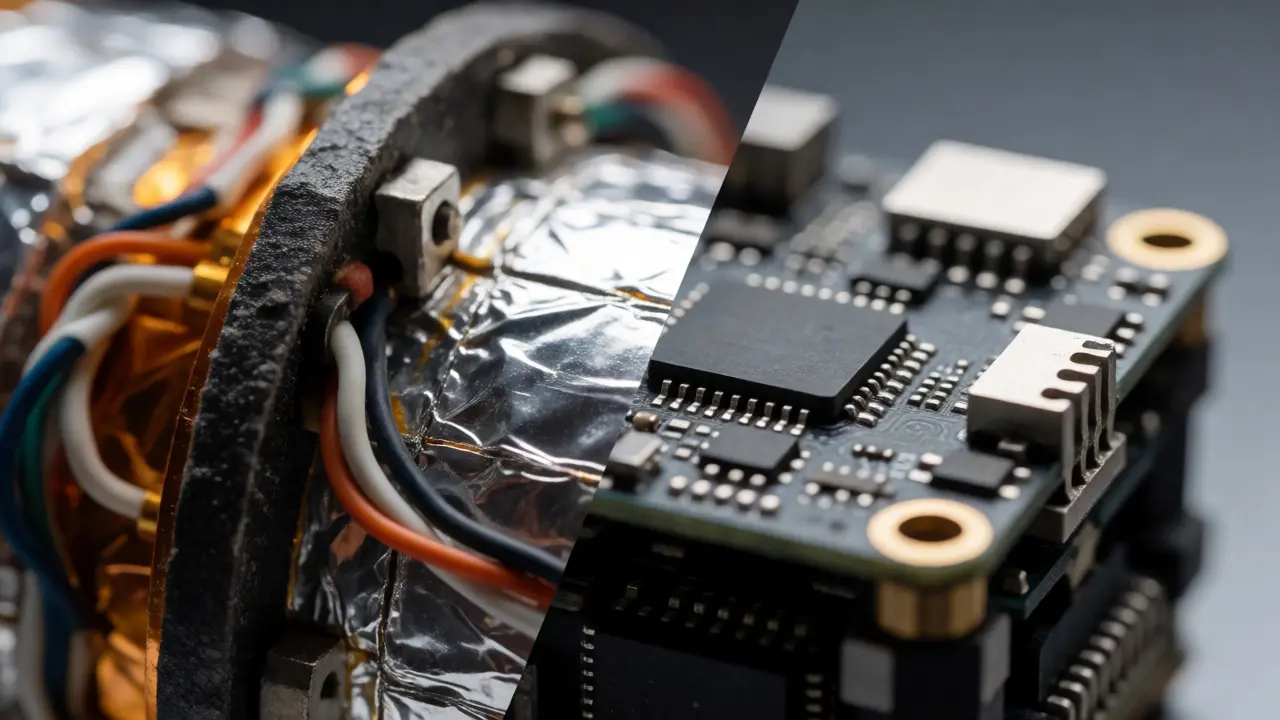
CubeSats are standardized nanosatellites with a base unit size of 10x10x10 cm and a mass of approximately 1 kilogram, originally proposed in 1999 by professors at Cal Poly and Stanford to help universities access space. Today, the term "SmallSat" covers a broader range. While definitions vary, most analysts agree that SmallSats generally weigh under 500 to 1,000 kilograms. This category includes microsatellites, minisatellites, and nanosatellites. They aren’t just smaller versions of big satellites; they are fundamentally different machines built with commercial off-the-shelf (COTS) parts rather than custom, radiation-hardened aerospace components.
| Feature | SmallSats (e.g., CubeSats) | Traditional Satellites |
|---|---|---|
| Mass | < 500-1,000 kg | > 1,000 kg (often multi-ton) |
| Lifetime | 1 month - 5 years | 15 - 20+ years |
| Development Time | Months - 2 years | 5 - 10+ years |
| Cost per Unit | $1M - $20M | $100M - $500M+ |
| Orbit Preference | Low Earth Orbit (LEO) | Geostationary (GEO), MEO, HEO |
Capability Gaps: Resolution, Power, and Bandwidth
Here is the hard truth: a single SmallSat cannot outperform a single traditional satellite in raw power. Traditional platforms have massive solar arrays generating kilowatts of power, allowing them to run high-gain antennas and powerful transponders. A typical communications satellite in GEO can deliver tens of gigabits per second of throughput continuously to a continent. In contrast, a SmallSat might generate only a few hundred watts. Its antenna is small, limiting bandwidth and signal strength.
For Earth observation, the difference is optical physics. Large telescopes on traditional satellites have bigger apertures, meaning better light gathering and higher resolution. A SmallSat carries a smaller lens. If you need to see a 30-centimeter object, a large traditional spy satellite does it easily. A standard SmallSat might struggle to resolve anything smaller than a meter without significant cost increases.
However, this is where the game changes. SmallSats win through numbers. Instead of one eye staring at the same spot, you deploy a constellation of 50 SmallSats. They cover the same area, but because they move fast in LEO, they revisit targets frequently. You trade absolute resolution for temporal resolution-how often you get new data. For tracking moving ships, forest fires, or traffic congestion, frequent revisits are often more valuable than slightly sharper static images.
The Economics of Access: Cost and Schedule
Why did the market shift? Money and time. Building a traditional satellite is like building a cathedral. It takes years, requires specialized labor, and involves rigorous testing to ensure it doesn’t fail in the vacuum of space for two decades. If it fails, you lose hundreds of millions of dollars.
Building a SmallSat is more like manufacturing cars. You use standardized buses and commercial electronics. Development cycles shrink from a decade to months or a couple of years. Launch costs have also plummeted thanks to reusable rockets like those from SpaceX. You can launch dozens of SmallSats as secondary payloads on a single rocket for a fraction of the cost of launching one large satellite. This democratization means startups, universities, and even small nations can now own space assets.
But don’t mistake cheap for free. The total cost of ownership for a constellation adds up. Managing 100 satellites requires sophisticated ground software, automated collision avoidance, and continuous replacement planning. Traditional satellites require less operational overhead once they are in orbit, but their initial capital expenditure is prohibitive for many.
Market Dynamics and Future Trajectories
The market reflects this shift. Analysts disagree on exact figures, but everyone agrees the SmallSat sector is exploding. Estimates for the global small satellite market in 2025 range from USD 5.2 billion to USD 14.21 billion. Growth rates are projected to be double-digit, with some forecasts predicting a CAGR of over 20% through 2030. By comparison, the traditional satellite market is mature and growing slowly.
Communications currently dominate the SmallSat market, holding roughly 45% of the share. Companies like Starlink (though technically mega-constellations) prove that LEO networks can provide broadband internet globally. Earth Observation is the fastest-growing segment, expected to expand at a 24.71% CAGR from 2026 to 2031. This suggests that imaging and monitoring will soon rely heavily on swarms rather than solo giants.
Traditional satellites aren’t dying. They remain essential for missions requiring extreme reliability and long life, such as GPS navigation systems, deep-space probes, and broadcast television services that need constant coverage over a specific region without handoffs. But for responsive, flexible, and iterative services, SmallSats are taking over.

Risks and Limitations: The Dark Side of Small
It’s not all sunshine and low prices. SmallSats face real risks. Because they use commercial electronics, they are more susceptible to radiation damage. Their lifetimes are short-often 1 to 5 years. This means you need a pipeline of replacements ready to go. If your supply chain breaks, your constellation gaps open up.
Space debris is another critical issue. With thousands of SmallSats being launched, low Earth orbit is getting crowded. Collision risks increase, and when a SmallSat dies, it must deorbit quickly to avoid becoming junk. Regulatory bodies are tightening rules, requiring propulsion systems for deorbiting, which adds complexity back into the "simple" SmallSat design.
Furthermore, while individual failure rates might be higher for SmallSats due to cheaper components, the system-level risk is mitigated by redundancy. If one star in a constellation of 100 goes dark, the network survives. If a single multi-million dollar traditional satellite fails, the service outage can be catastrophic.
Making the Choice: When to Go Small and When to Stay Big
So, which should you choose? It depends on your mission profile.
- Choose Traditional Satellites if: You need a 15-year lifespan, continuous coverage over a fixed area (like TV broadcasting), extremely high data throughput from a single point, or operate in harsh environments like deep space where repair is impossible.
- Choose SmallSats if: You need rapid technology updates, frequent revisit times for Earth imaging, global coverage via a mesh network, or have a limited budget and want to test concepts quickly. They are ideal for IoT connectivity, agricultural monitoring, and disaster response.
The future likely holds a hybrid approach. We are already seeing traditional operators adopt modular designs inspired by SmallSats, while SmallSat manufacturers improve component reliability to extend lifetimes. The line is blurring, but the core advantage remains: SmallSats offer agility and accessibility, while traditional satellites offer durability and peak performance.
What is the main difference between a CubeSat and a traditional satellite?
The primary differences are mass, cost, and lifetime. CubeSats are nanosatellites (typically 1-10 kg) built with commercial components for short missions (1-5 years) and low cost ($1M-$5M). Traditional satellites are much heavier (tons), use custom aerospace-grade hardware, and are designed for long lifetimes (15+ years) at significantly higher costs ($100M+).
Can SmallSats replace traditional satellites entirely?
No, not entirely. While SmallSats excel in LEO constellations for communication and imaging, traditional satellites remain superior for high-power applications, geostationary coverage, and missions requiring decades of uninterrupted service, such as GPS and deep-space exploration.
How do SmallSats handle data transmission compared to large satellites?
SmallSats have limited power and smaller antennas, resulting in lower bandwidth per satellite. To compensate, they operate in constellations. Data is aggregated from many spacecraft, allowing the collective network to achieve high total throughput, though individual links may be slower than those from a large GEO satellite.
What is the typical lifespan of a SmallSat?
Most SmallSats operate for 1 to 5 years. This is shorter than traditional satellites due to the use of non-radiation-hardened commercial electronics and limited propellant for station-keeping. However, rapid technological advancement allows operators to replace them frequently with newer models.
Why are SmallSats considered disruptive to the space industry?
They lower barriers to entry. By reducing development time from years to months and costs from hundreds of millions to millions, SmallSats allow startups, universities, and smaller governments to access space capabilities previously reserved for major agencies and large telecom corporations.