
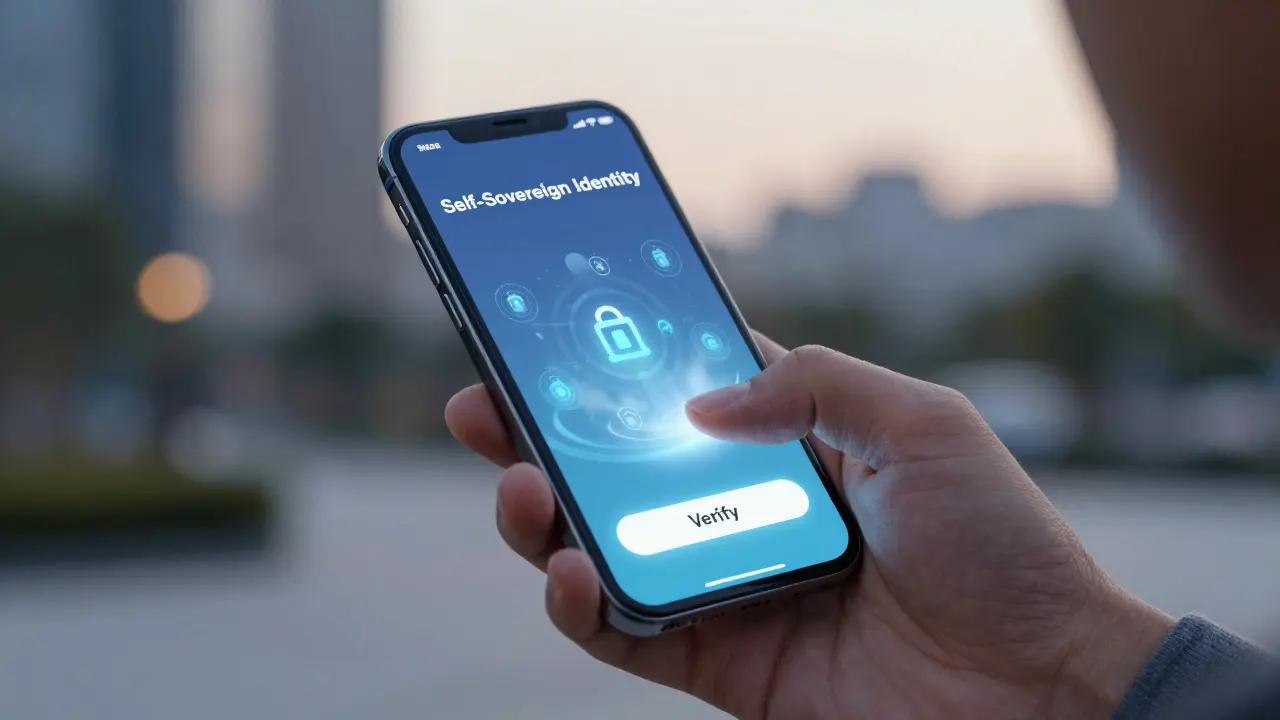
Imagine proving you are over 21 without showing your driver’s license, or verifying your university degree without calling the registrar. This is the promise of Self-Sovereign Identity (SSI), a decentralized identity model that gives individuals full control over their personal data. Instead of relying on centralized databases held by governments or tech giants, SSI puts the power back in your hands using blockchain technology.
The concept might sound futuristic, but it is already reshaping how we think about digital trust. In a world where data breaches are common and privacy concerns are at an all-time high, SSI offers a secure, private, and efficient way to manage who you are online. By 2025, predictions suggest that up to 20% of digital IDs will be based on blockchain technology, marking a significant shift from just 5% in 2020.
How Self-Sovereign Identity Works
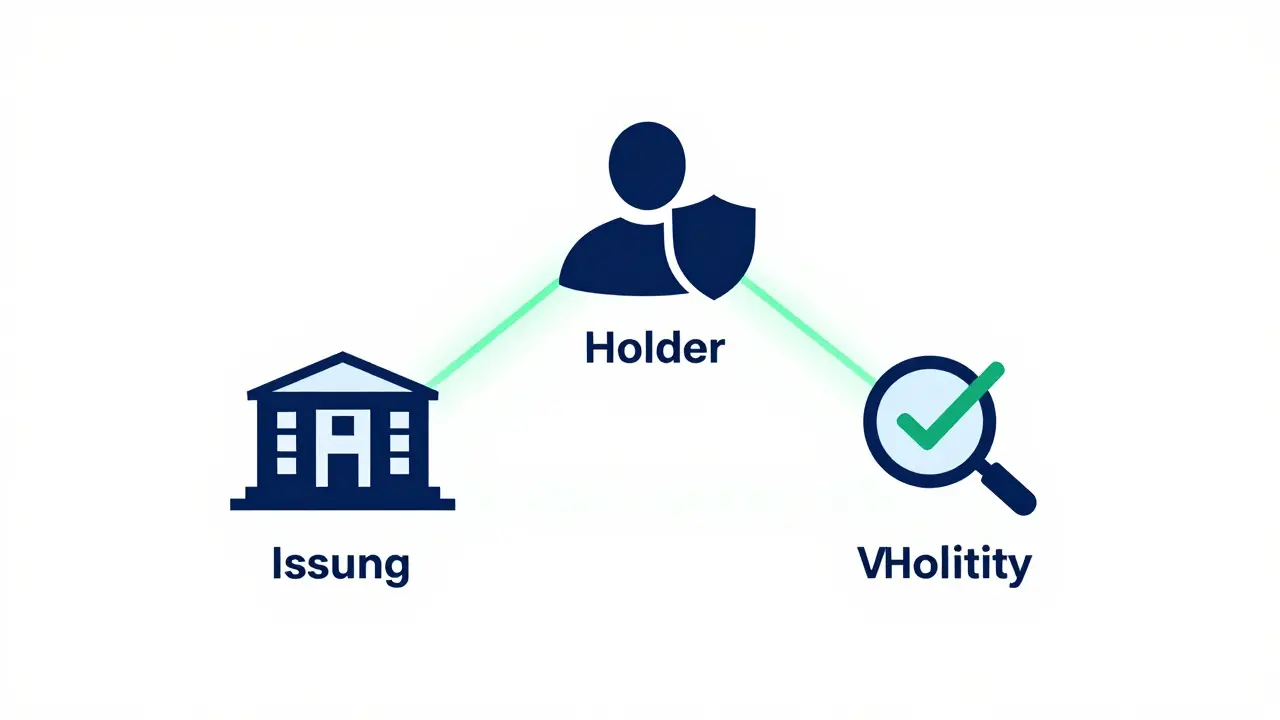
To understand why SSI is such a big deal, you first need to look at how it operates under the hood. It relies on three core components working together in what experts call the "triangle of trust." These components are the Issuer, the Holder, and the Verifier.
- The Issuer: This is a trusted entity, like a government agency, university, or bank, that creates and signs digital credentials. For example, a university issues a digital diploma.
- The Holder: This is you. You store these credentials in a digital wallet on your smartphone. You own them completely.
- The Verifier: This is anyone who needs to check your identity, like an employer checking your degree or a bar checking your age.
Connecting these actors are two critical technologies: Decentralized Identifiers (DIDs) and unique, cryptographically generated identifiers that users create and own without central authority. DIDs act as your unique address on the blockchain, ensuring no one else can impersonate you. Then there are Verifiable Credentials (VCs), which are digitally signed attestations of facts about the holder, such as age or education level. Unlike a traditional ID card, VCs are stored offline in your wallet, keeping your actual data private while still allowing verification through cryptographic proofs.
Key Use Cases in Finance and Banking
The financial sector is one of the biggest adopters of SSI because it deals with sensitive data daily. Banks spend billions on Know Your Customer (KYC) and Anti-Money Laundering (AML) compliance. Currently, every time you open a new account, you have to re-submit documents, and the bank has to verify them again. This is slow, expensive, and risky.
With SSI, this process changes dramatically. Once a bank verifies your identity, they issue you a VC for being a "verified customer." When you move to another bank, you can present this credential. The new bank can verify its authenticity instantly via the blockchain without needing to contact the original issuer. This streamlines KYC processes, reduces fraud, and enhances user privacy since you only share what is necessary.
Moreover, SSI supports "privacy by design," helping institutions comply with strict regulations like GDPR and CCPA. Since users control their data, banks are less likely to face penalties for mishandling information they never actually stored.
Transforming Healthcare and Humanitarian Aid
In healthcare, patient data is fragmented across different hospitals and clinics. SSI allows patients to own their medical records securely. A doctor can issue a VC for a vaccination or diagnosis. The patient stores this in their wallet and shares it only when needed, such as during travel or with a specialist. This ensures data integrity and prevents unauthorized access.
For humanitarian aid, SSI is a game-changer. Refugees often lose physical identification documents during displacement. With SSI, aid organizations can issue digital IDs anchored on a blockchain. These IDs remain accessible even if the issuing government collapses or goes offline. This ensures that vulnerable populations can still prove their identity to receive food, shelter, and medical care.
Education and Workforce Recruitment
Fake degrees and resumes are a growing problem for employers. Universities can issue tamper-proof digital diplomas as VCs. Job seekers can share these directly with recruiters. The recruiter verifies the credential instantly, knowing it was issued by the legitimate university. This speeds up hiring times significantly and eliminates background check costs associated with verifying educational history.
Additionally, lifelong learning platforms can issue micro-credentials for specific skills. As you complete courses, your digital wallet accumulates these VCs, creating a comprehensive, verified profile of your abilities that you control entirely.
Privacy Features: Zero-Knowledge Proofs
One of the most powerful features of SSI is selective disclosure powered by Zero-Knowledge Proofs (ZKP), a cryptographic method that allows one party to prove a statement is true without revealing any underlying information.. Imagine buying alcohol online. Instead of uploading a photo of your ID, which reveals your name, address, and date of birth, you use ZKP to prove you are over 21. The system confirms the fact without ever seeing your actual birth date.
This level of privacy is impossible with traditional systems. It minimizes the attack surface for hackers. If a database is breached, there is nothing valuable to steal because the data never left your device in the first place.
| Feature | Traditional Centralized ID | Self-Sovereign Identity (SSI) |
|---|---|---|
| Data Control | Held by third parties (banks, gov) | Held by the individual |
| Privacy | Low; full data often shared | High; selective disclosure via ZKP |
| Fraud Resistance | Moderate; susceptible to hacking | High; cryptographically signed |
| Portability | Low; siloed in separate systems | High; universal across platforms |
| Issuer Dependency | Must be online to verify | Verification works offline/issuer down |

Challenges to Adoption
Despite its potential, SSI faces hurdles. Interoperability is a major issue. Different blockchain networks and wallet providers must communicate seamlessly. Standards set by the World Wide Web Consortium (W3C) help, but widespread adoption requires cooperation among competitors. User experience is another challenge. Managing private keys can be daunting for non-tech users. If you lose your key, you lose your identity. Solutions like social recovery wallets are emerging to mitigate this risk.
Regulatory uncertainty also lingers. While frameworks like GDPR support data portability, laws regarding decentralized storage are still evolving. Governments need to recognize DIDs and VCs as legally binding equivalents to physical documents.
The Future of Digital Identity
As we move further into 2026, SSI is transitioning from pilot projects to real-world deployment. Platforms like Atala PRISM, built on the Cardano blockchain, are already testing use cases in education and health. The trend is clear: users demand more control over their digital lives. Companies that embrace SSI will not only improve security but also build deeper trust with their customers.
The shift toward self-sovereignty is not just about technology; it is about rights. It empowers individuals to exist in the digital world on their own terms, free from surveillance and data exploitation. As infrastructure matures, expect to see SSI integrated into everyday apps, making secure, private interactions the norm rather than the exception.
What is Self-Sovereign Identity (SSI)?
Self-Sovereign Identity is a decentralized model where individuals own and control their digital identities and credentials without relying on centralized authorities. It uses blockchain, Decentralized Identifiers (DIDs), and Verifiable Credentials (VCs) to ensure privacy and security.
How does SSI protect my privacy?
SSI protects privacy through selective disclosure and Zero-Knowledge Proofs (ZKP). You can prove specific facts, like being over 18, without sharing your entire ID or other personal details. Your data stays in your digital wallet, not on corporate servers.
Who are the main actors in the SSI ecosystem?
The three main actors are the Issuer (who creates credentials, e.g., a university), the Holder (the user who stores credentials in a wallet), and the Verifier (who checks the validity of credentials, e.g., an employer).
Can I use SSI if the issuer is offline?
Yes. Because Verifiable Credentials are cryptographically signed and anchored on a blockchain, they can be verified independently. The issuer does not need to be online for the verifier to confirm the credential's authenticity.
What are Decentralized Identifiers (DIDs)?
DIDs are unique, cryptographically generated strings that identify a user on a blockchain. They are created and owned by the user, independent of any central registry, ensuring long-term persistence and user control.