
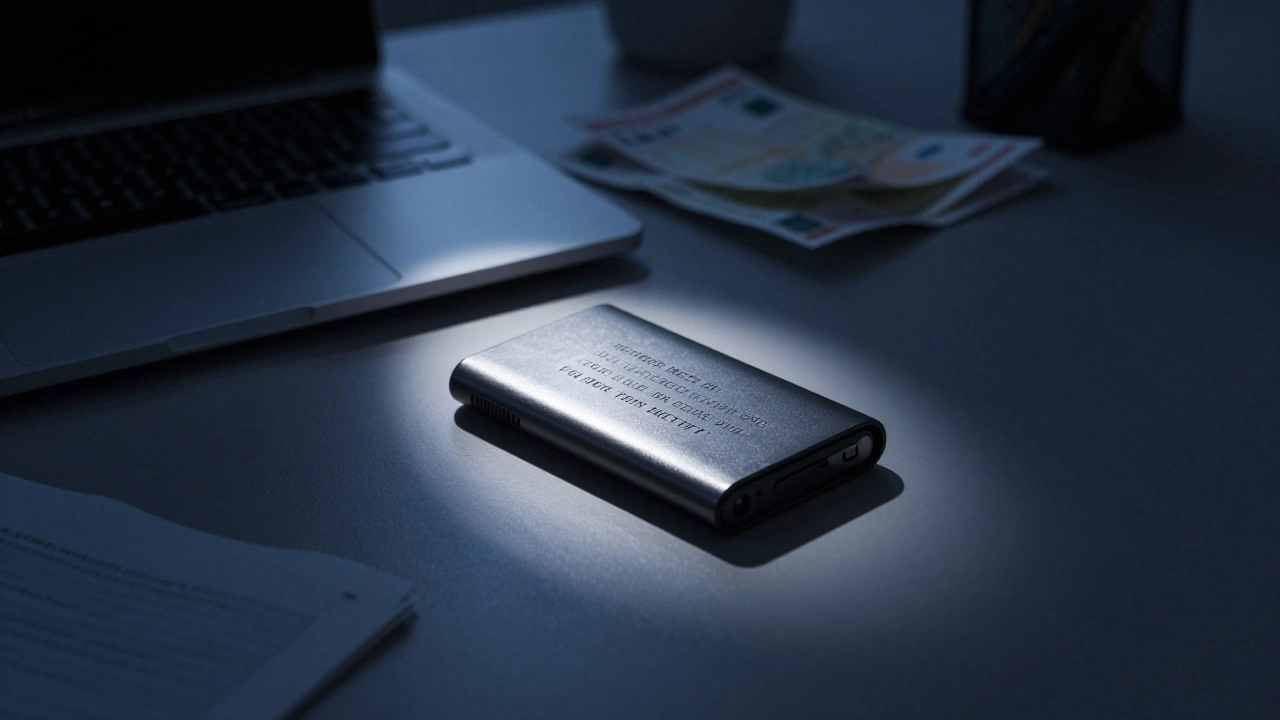
When you invest in Bitcoin or Ethereum, you’re not just buying a digital asset-you’re taking on a responsibility no traditional stock or bond ever required. There’s no broker to call if your keys are lost. No FDIC insurance if an exchange collapses. No customer service line to recover your funds after a phishing scam. Crypto custody isn’t a feature. It’s the foundation of every serious crypto portfolio. And if you’re not thinking about it first, you’re already at risk.
Why Custody Isn’t Optional in Crypto
Most people think of investing as buying low and selling high. But with crypto, the biggest threat isn’t price drops-it’s total loss. Chainalysis estimates that 3.7 million Bitcoin, worth over $220 billion, have been lost forever. Not stolen. Not hacked. Lost. Because someone mis typed a 12-word recovery phrase. Or deleted a file. Or forgot the password to a hardware wallet. These aren’t edge cases. They’re common. The volatility makes it worse. A 6% allocation to crypto can nearly double the overall risk of a growth portfolio, according to Morgan Stanley. When Bitcoin surges 40% in a month, your portfolio gets out of balance. You need to rebalance. But if your assets are locked in a wallet you don’t fully understand, you can’t. That’s not market risk. That’s operational risk. Operational risk in crypto means the chance you’ll lose your money not because the market crashed, but because you made a mistake. Or because the company you trusted failed. Or because your setup was too complex to manage. This isn’t theoretical. A January 2024 Reddit survey of 1,200 crypto holders found 68% had at least one security scare-phishing attempts, lost phrases, wrong addresses. Twelve percent lost real money. One user lost $8,500 because he entered his Ledger recovery phrase wrong. No one can help him. No refund. No appeal.The Three Custody Models: Control, Convenience, and Compromise
There are only three real ways to hold crypto: yourself, through a third party, or via an ETF. Each has trade-offs you can’t ignore. Self-custody means you hold your own private keys. Hardware wallets like Ledger Nano X ($149) or Trezor Model T ($219) are the standard. They’re air-gapped, offline, and secure-if you know how to use them. But they demand effort. Setting one up takes 15-20 hours of learning. You need to understand seed phrases, transaction fees, signing transactions, and backup procedures. There’s no undo button. If you lose your phrase, your coins are gone forever. That’s why only 32% of institutional investors use self-custody for core holdings, according to Bitwise. But for those who do-like MicroStrategy with 214,800 BTC in cold storage-it’s the only way to guarantee true ownership. Third-party custodians like Coinbase Custody and Fidelity Digital Assets take the burden off you. They store your crypto in cold storage, use multi-signature setups, and are audited monthly. Coinbase Custody charges 0.15-0.50% annually. Fidelity charges 0.50-1.00% with a $1 million minimum. But here’s the catch: you’re trusting someone else. When FTX collapsed in November 2022, $320 million in institutional assets vanished overnight. Even if the custodian is reputable, you’re exposed to their failure. That’s counterparty risk. Blockworks Research says third-party custody adds 15-25% more risk than self-custody-not because they’re unsafe, but because you’re no longer in control. Exchange-traded products (ETPs) like the ARK 21Shares Bitcoin ETF (ARKB) offer a middle ground. You buy shares on a stock exchange. The ETF holds Bitcoin in custody-usually Coinbase. You get regulatory oversight, tax simplicity, and no need to manage keys. But you lose direct ownership. During the May 2022 crash, the Grayscale Bitcoin Trust (GBTC) traded at a 53% discount to its actual Bitcoin value. You couldn’t redeem your shares for Bitcoin. You were stuck. ETPs are convenient, but they’re not crypto. They’re a financial product built on top of it.How to Match Custody to Your Strategy
You don’t need one solution for your whole portfolio. Smart investors split their holdings based on purpose. CoinShares’ 2024 framework breaks crypto into three roles:- Protection: 5% Bitcoin as a hedge against inflation. This should be in maximum-security cold storage-multi-signature, geographically dispersed, no internet access.
- Growth: 3-year Ethereum positions. These benefit from regulated ETPs. Easier to rebalance, track, and tax-report.
- Diversification: 10% across altcoins. These are risky. Use a tiered approach: 70% cold storage, 25% institutional custodian, 5% hot wallet for quick trades.

Operational Risk: The Silent Killer
The biggest danger isn’t hackers. It’s you. A Trustpilot review from March 2024 tells the story of a user who lost $22,000 trying to set up DIY cold storage. He didn’t back up his recovery phrase properly. He didn’t test the restore process. He assumed he’d remember how it worked. He didn’t. Tax reporting is another hidden trap. TokenTax found 78% of crypto investors struggle with taxes. Selling a fraction of your Bitcoin? Buying an NFT? Sending crypto to a friend? Each event triggers a taxable event. Without tools like ZenLedger ($199/year), you’ll mess it up. And the IRS doesn’t care if you didn’t know. Exchange withdrawal limits during market stress are another problem. In March 2023, when Silicon Valley Bank failed, Coinbase and Binance froze withdrawals for hours. Users couldn’t move funds to cold storage. Some lost out on price dips because they were locked in.What Works in 2025: A Realistic Setup
Here’s what a security-first portfolio looks like today:- 70% in cold storage: Multi-signature wallets using Ledger + Trezor, with phrases stored in separate, secure locations (metal plates, not cloud backups). No internet access.
- 25% in regulated custodians: Coinbase Custody or Fidelity Digital Assets. For medium-term holdings you might rebalance quarterly.
- 5% in hot wallets: For active trading. Use a hardware wallet in USB mode, never a phone app. Never keep more than you’re willing to lose.

The Future: MPC and Regulation Are Changing Everything
Multi-Party Computation (MPC) is the next leap. Instead of one private key, your wallet uses distributed signatures across multiple devices. No single point of failure. Fireblocks, which processes $4.5 trillion in transactions across 2,000 institutions, is leading this. MPC adoption grew 35% year-over-year in 2024. Regulation is catching up. The SEC’s approval of 11 Bitcoin ETFs in January 2024 forced custodians to meet strict standards: 100% cold storage, monthly proof-of-reserves, independent audits. MiCA in Europe now requires custodians to hold 120% liquid assets and pass annual security tests. The next big move? Ethereum ETFs. Expected in Q3 2024, they’ll bring another $50-75 billion into regulated custody. That means more security, more transparency, and more trust. But only if you choose the right custodian.Final Checklist: Are You Security-First?
Ask yourself these questions:- Do I know where my private keys are stored-and have I tested restoring them?
- Am I using a custodian that publishes monthly proof-of-reserves?
- Have I limited my crypto allocation to what I can afford to lose entirely?
- Do I rebalance my portfolio quarterly to stay on target?
- Have I used a tax tool like ZenLedger to track every transaction?
- Do I have a written plan for what happens if I die or become incapacitated?
Frequently Asked Questions
What’s the safest way to store Bitcoin long-term?
The safest way is multi-signature cold storage using hardware wallets like Ledger or Trezor, with recovery phrases stored on metal plates in separate secure locations. Avoid cloud backups, screenshots, or email. Test restoring your wallet once a year. Institutions like MicroStrategy use this method to hold over $13 billion in Bitcoin.
Should I use a crypto exchange to hold my coins?
Only for short-term trading. Exchanges are hot wallets-connected to the internet, vulnerable to hacks and insider fraud. The FTX collapse proved even trusted exchanges can vanish overnight. Use exchanges to buy or sell, then move the rest to cold storage or a regulated custodian within 24 hours.
How much of my portfolio should be in crypto?
Most experts recommend 1-5%. Russell Investments and Nik Bhatia advise limiting crypto to what you can afford to lose entirely. For balanced portfolios, 2% is a common benchmark. Higher allocations increase risk exponentially-not just from price swings, but from custody failures and human error.
Are Bitcoin ETFs safer than holding Bitcoin directly?
ETFs are safer for most people because they remove custody risk. You don’t manage keys, and the assets are held in SEC-approved cold storage. But you don’t own the Bitcoin-you own shares in a fund. You can’t use it for payments or DeFi. And during market stress, ETFs can trade at deep discounts to their net asset value, as GBTC did in 2022.
What’s the biggest mistake new crypto investors make?
They assume their crypto is safe because they bought it on a big exchange or stored it in a hardware wallet without learning how to use it properly. Over 68% of self-custody users report security scares. The biggest cause? Human error: lost phrases, wrong addresses, failed backups. Security isn’t a product. It’s a habit.
13 Responses
You think losing $8,500 because you typed your recovery phrase wrong is tragic? Try losing $85,000 because you trusted a 'secure' exchange. This isn't about tech. It's about humility. Most people treat crypto like a lottery ticket, not a responsibility. And that's why 68% have had a scare.
I read this whole thing and all I can think is... people still don't get it. It's not about wallets or ETFs. It's about letting go of the idea that someone else will save you. The system you're trying to escape is the same one you're begging to protect you. Wake up.
Cold storage. Check. Rebalance quarterly. Check. Don't use phone apps. Check.
Let's be real-most retail investors are just crypto gamblers pretending they're financial engineers. You think you're 'security-first' because you bought a Ledger? Please. You're one typo away from becoming a cautionary tale in a Reddit thread. And don't even get me started on your 'tax tool' subscription...
The phrase 'no undo button' is grammatically incorrect. It should be 'there is no undo button.' Also, '12-word recovery phrase' lacks hyphenation. These errors undermine the credibility of the entire piece.
We're not just storing keys. We're storing identity. Bitcoin wasn't built to make you rich. It was built to make you free. But freedom isn't a feature you enable in a wallet app. It's a daily practice. A discipline. A silent scream against the machine. And most people? They just want to feel safe while still scrolling TikTok.
You mention Morgan Stanley and Bitwise like they're gospel. But let me ask you-how many of these 'experts' actually hold crypto themselves? Or are they just selling reports to fund managers who don't understand the tech? The real risk isn't human error. It's trusting people who don't believe in the system they're monetizing.
Custody is just a word for control. Who controls the keys controls the value. The question isn't whether you can store it safely. It's whether you're willing to live with the weight of that responsibility. Most aren't. And that's okay. But don't pretend you are
I love how this post treats self-custody like some kind of warrior path. Look, I use a Ledger. I've got my seed phrase on a metal plate. I test restore every year. But I also use Coinbase Custody for 25% because I'm not a martyr. I'm just trying to not lose my life savings. There's no shame in compromise. The real sin is pretending you don't need it.
Honestly, this is the clearest guide I've read. If you're new to crypto and reading this, just start with 1% in cold storage. Don't overthink it. Don't buy five wallets. Don't join ten Discord groups. Just get one hardware wallet, write down the phrase, and leave it alone for a year. You'll be ahead of 90% of people already.
OMG I JUST LOST $32K BECAUSE I THOUGHT 'SEND TO MYSELF' MEANT MY WALLET ADDRESS BUT IT WAS A SCAM LINK AND NOW I'M CRYING IN THE BATHROOM AND MY BOYFRIEND SAID 'WELL YOU SHOULD'VE READ THE WHITEPAPER' AND I JUST WANT TO DIE WHY IS EVERYTHING SO HARD
The real innovation isn't MPC or cold storage-it's mindset. Most people treat crypto like a stock they bought on Robinhood. But it's not. It's digital gold, digital sovereignty, digital responsibility. You don't need to be a hacker. You just need to be consistent. And patient. And humble.
To achieve true security-first status, one must adopt a multi-layered, enterprise-grade approach to custody architecture, incorporating cryptographic redundancy, geographically distributed key shards, biometric authentication protocols, and quarterly third-party forensic audits. Failure to implement these measures constitutes a material breach of fiduciary duty in the digital asset ecosystem.