
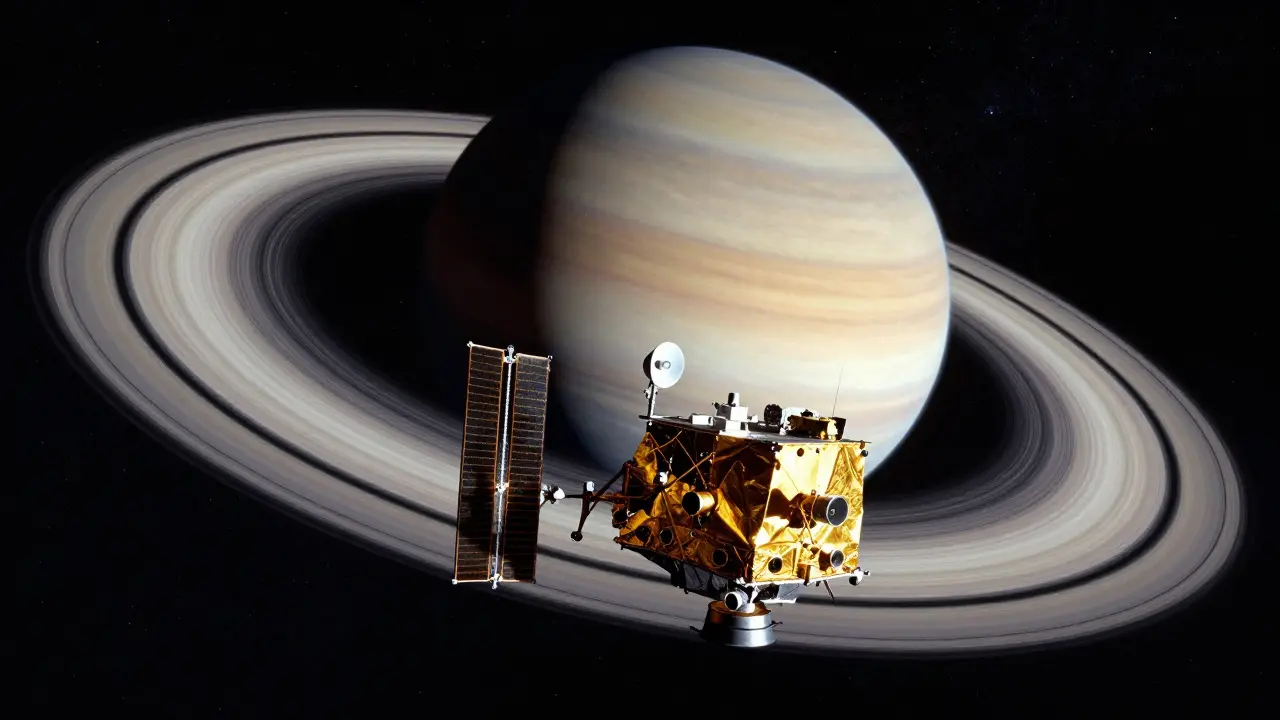
When you look up at the night sky, Saturn is the one that catches your eye. It’s not just the planet; it’s the halo of ice and dust surrounding it. For centuries, we only had telescopes to guess what was happening there. We wondered if those rings were solid disks or clouds of debris. We guessed about the moons, but we couldn't see their surfaces. Then came Cassini-Huygens, a joint effort by NASA, ESA, and ASI that changed everything. It didn't just fly by; it lived there for 13 years, orbiting the giant planet, diving into its magnetosphere, and landing on one of its moons. This article breaks down what that mission found in the rings, the moons, and why it matters for our future exploration of the solar system.
The Pioneer of Saturn Exploration
Before Cassini arrived, we knew very little. In the late 1970s and early 1980s, three spacecraft-Pioneer 11, Voyager 1, and Voyager 2-flew past Saturn. These were high-speed photo ops. They took pictures and measured magnetic fields as they zoomed by, but they couldn't stick around to watch seasons change or storms develop. Voyager 1, for instance, spent only days in the vicinity before heading toward interstellar space.
Cassini was different. Launched on October 15, 1997, it took nearly seven years to get there, using gravity assists from Venus, Earth, and Jupiter to build up speed. When it finally arrived on July 1, 2004, it fired its engines and settled into orbit. Over the next 13 years, it completed 294 orbits around Saturn and more than 120 targeted flybys of its moons. This long-term presence allowed scientists to observe dynamic changes, like seasonal shifts in Titan's atmosphere and the behavior of the ring spokes, which previous missions simply missed.
Decoding the Rings: More Than Just Ice
Saturn's rings are iconic, but what are they actually made of? Before Cassini, we thought they might be ancient leftovers from the planet's formation. Cassini proved otherwise. The data showed that the rings are composed almost entirely of water ice, with only trace amounts of rocky material. But the bigger surprise was their age.
During the "Grand Finale" phase of the mission in 2017, Cassini flew between the planet and its innermost rings. By measuring the gravitational pull of the rings, scientists calculated their total mass. The result? The rings are surprisingly light. If they were as old as Saturn (4.5 billion years), they would have been darkened by micrometeorite dust by now. Instead, they remain bright white. This suggests the rings are young-perhaps only 10 to 100 million years old. That means they formed recently in cosmic terms, possibly from the destruction of an icy moon that wandered too close to Saturn.
Cassini also revealed the vertical structure of the rings. During the 2009 equinox, when sunlight hit the rings edge-on, shadows cast by small embedded moonlets showed that parts of the rings stand up to several kilometers high. These aren't flat pancakes; they are complex, wavy structures shaped by gravity and collisions.
| Mission Phase | Duration | Key Achievement |
|---|---|---|
| Voyager Flybys | 1980-1981 | First close-up images of rings and major moons |
| Cassini Prime Mission | 2004-2008 | Huygens landing on Titan; initial ring mapping |
| Equinox Mission | 2008-2010 | Observed ring shadows and vertical structures |
| Solstice Mission | 2010-2017 | Seasonal climate studies on Titan and Saturn |
| Grand Finale | April-Sept 2017 | Ring mass measurement; direct atmospheric entry |
Titan: The Earth-Like Moon
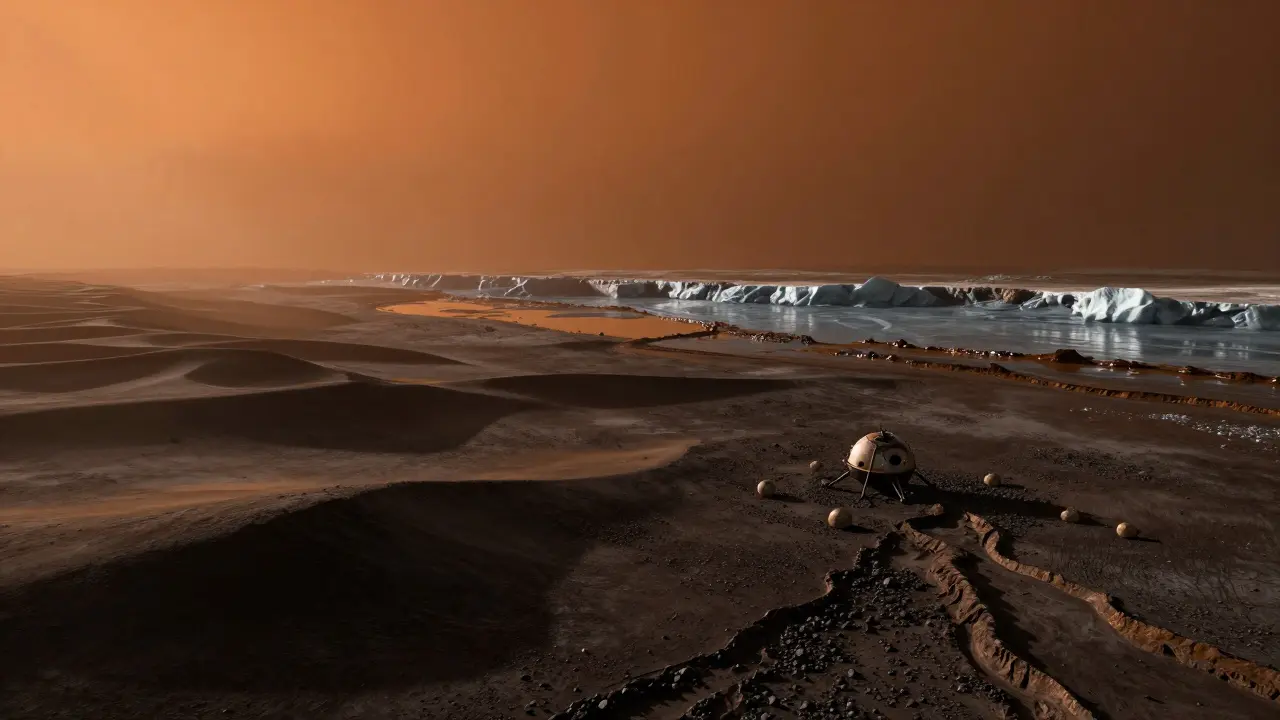
If you want to find a place in the solar system that feels like home, go to Titan. It’s Saturn’s largest moon, slightly bigger than Mercury, and it has a thick atmosphere. In fact, its surface pressure is 1.5 times that of Earth’s. But instead of oxygen and nitrogen, Titan’s air is mostly nitrogen with some methane. This creates a hazy orange sky that hides the surface from optical cameras.
To see through the haze, Cassini used radar. What it found was shocking. Titan has rivers, lakes, and seas-but they’re filled with liquid methane and ethane, not water. The northern polar region hosts massive seas like Kraken Mare and Ligeia Mare. On the equator, vast dune fields stretch for thousands of kilometers, made of organic sand particles. This active hydrological cycle, where rain falls, flows into rivers, and evaporates back into the sky, is unique outside of Earth.
The real highlight, however, was the Huygens probe. Detached from Cassini in December 2004, Huygens parachuted down through Titan’s atmosphere on January 14, 2005. It sent back images of dendritic drainage channels and rounded pebbles, proving that liquid methane had once flowed across the surface. It landed on a shore-like area, confirming that the ground was made of water ice bedrock covered in organic sludge. As of 2026, this remains the only successful landing on a body in the outer solar system.
Enceladus: The Ocean World
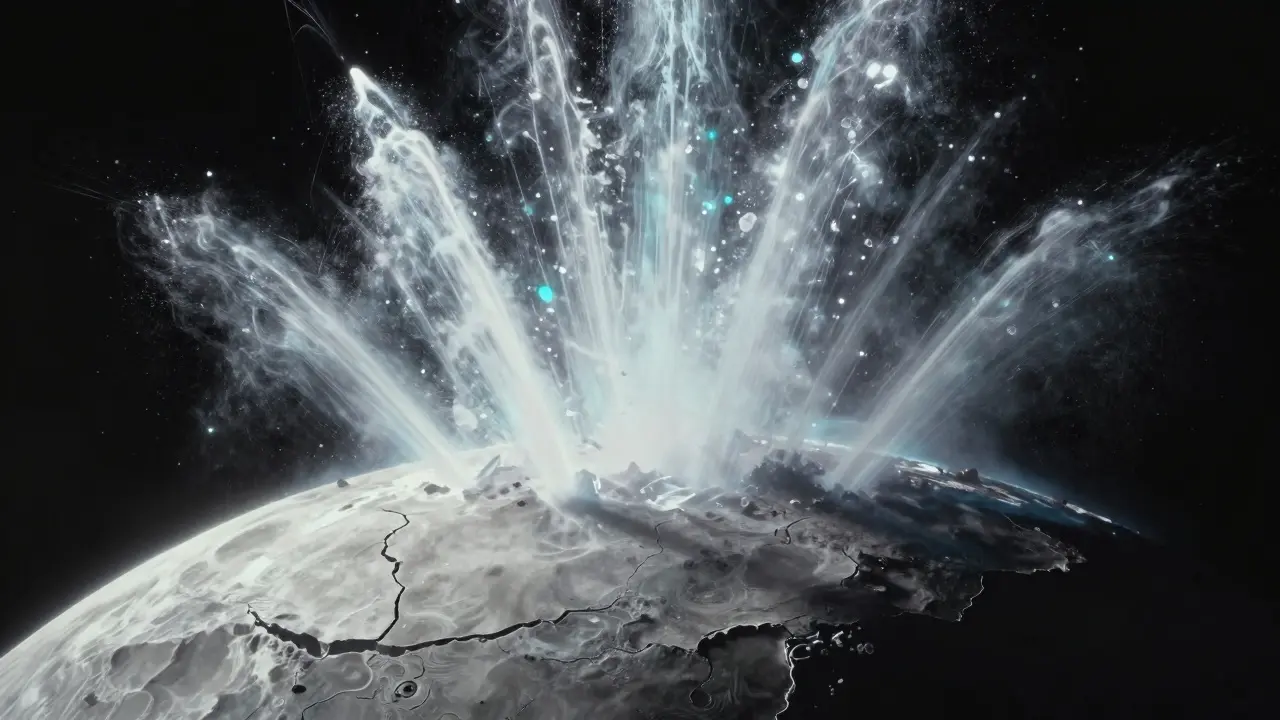
While Titan grabbed headlines for its Earth-like processes, Enceladus stole the show for astrobiology. Before Cassini, Enceladus was just another small, cratered icy moon. Then, in 2005, Cassini spotted something strange near its south pole: jets of water vapor and ice shooting into space. These geysers erupted from fractures known as "tiger stripes," powered by tidal heating from Saturn’s gravity.
Cassini flew directly through these plumes multiple times, analyzing the composition. It found water, carbon dioxide, ammonia, methane, and even complex organic molecules. This wasn’t just ice; it was evidence of a global subsurface ocean beneath the crust. Unlike Europa or Ganymede, which are buried under thick ice shells, Enceladus vents its ocean directly into space. This makes it accessible. We don’t need to drill kilometers of ice to sample it; we just need to fly through the plume.
The discovery transformed Enceladus into one of the most promising places in the solar system to search for life. The combination of liquid water, energy sources (tidal heating and hydrothermal activity), and organic chemistry checks all the boxes for habitability. Today, it is the primary target for future missions because it offers the best chance to answer whether we are alone in the universe.
The Legacy and Future of Saturn Exploration
Cassini ended its mission dramatically on September 15, 2017. To avoid contaminating Titan or Enceladus with Earth microbes, controllers guided the spacecraft into Saturn’s atmosphere, where it burned up. But its legacy lives on in the data it left behind-over 450,000 images and hundreds of gigabytes of science measurements. Scientists are still analyzing this data today, finding new details about ring dynamics and moon compositions.
The questions Cassini answered have led to new ones, driving the next generation of missions. NASA’s Dragonfly mission, approved with a budget of approximately $3.35 billion, will send a rotorcraft lander to Titan in the mid-2030s. It will fly across Titan’s surface, visiting different environments to study prebiotic chemistry. Meanwhile, both NASA and ESA are studying concepts for an Enceladus Orbilander, a mission designed to orbit the moon, sample its plumes, and potentially land on its surface to analyze the ocean material in detail.
These upcoming missions are specialized successors to Cassini’s broad survey. While Cassini gave us the big picture of the entire Saturn system, Dragonfly and the Enceladus Orbilander will dive deep into specific targets. They represent a shift from general exploration to focused investigation, driven by the compelling discoveries Cassini made two decades ago.
Why did Cassini end its mission by crashing into Saturn?
Cassini was intentionally destroyed to prevent biological contamination. The spacecraft carried Earth microbes, and scientists wanted to ensure it didn't accidentally crash onto Titan or Enceladus, which could compromise future searches for indigenous life. Crashing into Saturn ensured a safe end.
Are Saturn's rings old or young?
Recent data from Cassini's Grand Finale suggests the rings are relatively young, likely between 10 and 100 million years old. Their low mass and brightness indicate they haven't been around long enough to darken from micrometeorite impacts, contrary to earlier beliefs that they were as old as the planet itself.
What is the Dragonfly mission?
Dragonfly is a NASA mission scheduled for launch in the mid-2030s. It involves a nuclear-powered rotorcraft lander that will fly to various sites on Titan to study its organic chemistry and potential for prebiotic life. It builds directly on the discoveries made by Cassini and Huygens.
Why is Enceladus considered a prime candidate for life?
Enceladus has a global subsurface ocean that vents water vapor and organic molecules into space through geysers at its south pole. This ocean is in contact with a rocky core, providing heat and chemical energy, creating conditions that many scientists believe could support microbial life.
How did Cassini see through Titan's thick atmosphere?
Cassini used a radar instrument that could penetrate Titan's dense haze of hydrocarbons. Radar waves reflect off the surface, allowing scientists to map features like lakes, dunes, and mountains that are invisible to optical cameras. Near-infrared spectroscopy also helped identify surface materials.