
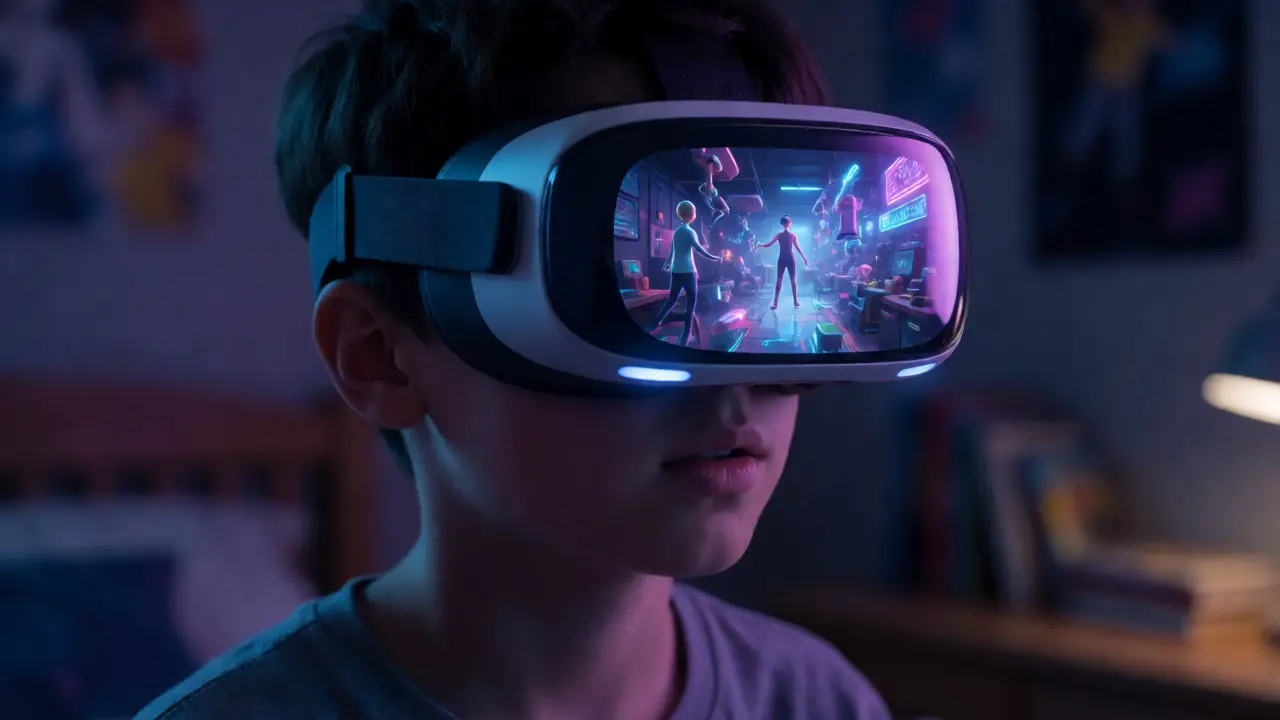
Imagine your teenager putting on a headset. They aren't just looking at a screen; they are in the room with their friends, waving hands that feel real, hearing voices from across the globe. It’s exciting, right? But here is the catch: while you see a fun game, a predator sees an isolated avatar with no physical boundaries. As of September 2026, the line between the playground and the virtual lobby has blurred completely. If you think standard web browsing rules apply to immersive spaces like the metaverse, you’re playing with outdated tools.
We need to talk about safety for kids and teens in virtual worlds. This isn't just about setting a timer for screen time anymore. It’s about understanding how biometric data is harvested, how grooming happens through spatial audio, and why a "13+" rating doesn't mean what it used to. Recent studies, including a sobering report from the University of East London in July 2025, found that zero percent of teenage participants considered fully 3D metaverse spaces safe for children. That’s not a typo. Zero. Yet, millions of kids log in daily. So, how do we keep them safe without locking them out of the future?
The New Risks: Why VR Changes the Game
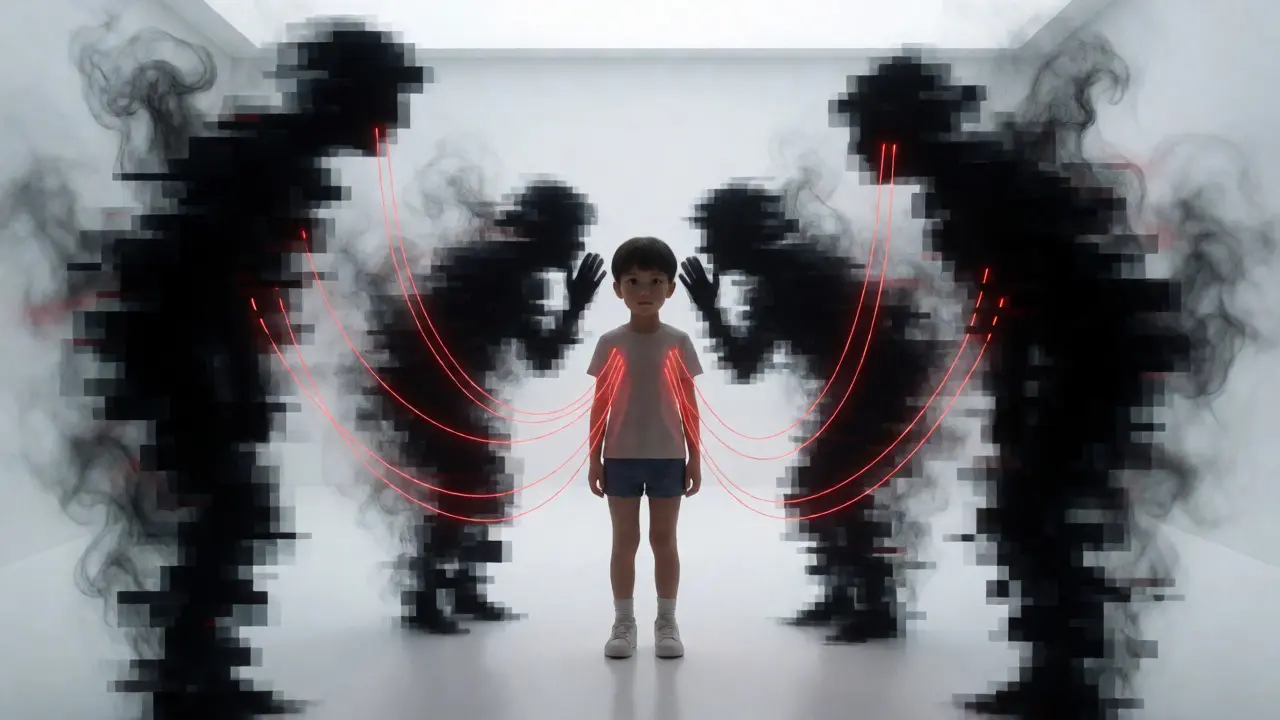
Traditional websites track clicks. Immersive platforms track movement. When a child puts on a VR headset, the system records head orientation, hand gestures, eye tracking, and even vocal tone. UNICEF’s Office of Research highlighted this back in 2023, noting that extended reality combines physical and virtual data streams. This creates a unique privacy nightmare. If a platform knows exactly where a child looks and how they react emotionally to content, it can profile them with terrifying accuracy.
Beyond privacy, the nature of interaction shifts. In a text chat, you can ignore a troll. In a virtual space, harassment is spatial. Someone can stand right next to your avatar, whisper inappropriate things, or block your path. The RAND Corporation’s June 2025 report mapped these risks clearly, pointing out that realistic avatars facilitate more convincing grooming. It’s harder to spot a fake when the voice sounds human and the body language matches. Middlesex University’s research with Childnet in 2024 confirmed this anxiety: over half of teens aged 13-18 reported experiencing harassment or exposure to harmful adult content in these environments.
| Feature | Traditional Web (2D) | Metaverse/VR (3D Immersive) |
|---|---|---|
| Data Collected | Clicks, cookies, search history | Biometrics, gaze tracking, voice patterns, movement |
| Harassment Type | Text-based, visible moderation logs | Spatial audio, proximity-based, harder to moderate |
| Grooming Risk | Medium (relies on text/voice) | High (realistic presence, persistent identity) |
| Regulatory Status | Mature frameworks (COPPA, GDPR) | Evolving (DSA enforcement began Feb 2024) |
Regulations Are Catching Up (But Slowly)
If you are in Europe, the Digital Services Act (DSA) changed the landscape significantly. Fully applicable to large platforms since February 2024, the DSA explicitly bans targeted advertising based on minors’ personal data. This is huge. It means platforms can’t just scrape every move your kid makes to sell them sneakers. However, regulation is global but enforcement is local. While the EU pushes hard on "systemic risk assessments," other regions lag behind.
The European Commission’s March 2025 update on children’s rights reiterates that privacy protection isn't optional-it's a right. But laws don't stop a bad actor in a private server. They set the baseline. Platforms like Roblox have responded by tightening defaults. By late 2026, Roblox introduced distinct account types: "Roblox Kids" for ages 5-8 and "Roblox Select" for ages 9-15. These aren't just labels; they change the underlying code. For under-13 users, direct messaging outside of specific games is now restricted by default. You have to actively opt-in to loosen those chains.
Platform Deep Dive: Roblox as a Case Study
Let’s look at Roblox, because if your child is online, they are likely there. It serves as the perfect example of how safety features evolve. Back in 2020, safety meant basic chat filters blocking swear words. Today, in 2026, it’s about granular control. Parents can link their own verified accounts to their child’s profile. This allows remote management-adjusting settings from your phone while your kid is gaming on the console.
Here is what you need to check immediately:
- Communication Restrictions: Ensure direct messages are off for under-13s unless you trust the friend list completely.
- Content Maturity: Don't rely on age ratings alone. Use the parental dashboard to whitelist or blacklist specific experiences.
- Spending Limits: Set hard caps on Robux spending to prevent impulse buys driven by social pressure.
- Screen Time: View weekly averages. If usage spikes unexpectedly, investigate. Is it a new trend? Or is something else going on?
ConnectSafely.org, which has been publishing guidance since 2010, still holds true today: technical tools fail without communication. Filters block numbers and addresses, but they miss context. A filter won't stop someone from asking, "What school do you go to?" in a way that feels friendly. That’s where you come in.

What Teens Actually Say
Don't assume your teen knows better than you. The Meta-Teen project from the University of East London revealed a stark disconnect. Teens identified grooming and doxing (maliciously revealing personal info) as top risks, yet many felt powerless to stop them. They called for better age verification and clearer protocols. They know the dangers exist; they just don't always have the tools to navigate them.
This skepticism is healthy. It means they are aware. Your job isn't to ban the metaverse; it's to equip them. Ask them: "Who did you play with today?" "Did anyone ask for your Discord?" "How did that group chat make you feel?" Treat the virtual world like a sleepover. You wouldn't let them hang out with strangers without knowing who they were. Apply the same logic to avatars.
Action Plan for Parents
You don't need to be a tech wizard. You just need to be present. Here is a practical checklist derived from current best practices and regulatory standards:
- Co-Explore First: Spend 20 minutes in the virtual world with your child. See the map, hear the chat, feel the vibe. You’ll spot red flags instantly.
- Verify Age Gates: Check if the platform uses ID verification or credit card checks for older tiers. If it’s too easy to bypass, treat all interactions as potentially anonymous adults.
- Review Privacy Settings Weekly: Platforms update frequently. What was private last month might be public after a software patch.
- Teach "Digital Stranger Danger": Never share real names, schools, or locations. Use pseudonyms. If someone insists on meeting IRL, it’s a hard no.
- Encourage Reporting: Show them how to block and report. Make sure they know reporting isn't tattling; it’s community maintenance.
Tools like CyberNinjas, a VR-based educational system emerging in 2025, show promise by teaching kids to recognize cyber harm inside the VR environment itself. But nothing replaces parental engagement. The technology is moving faster than the policy. Until universal standards emerge, you are the primary firewall.
The goal isn't to eliminate risk-that’s impossible. It’s to manage it. The metaverse offers incredible educational and social opportunities. But those benefits only flourish when the ground beneath them is stable. Keep talking, keep checking settings, and stay curious about what they are building in those digital spaces.
Is the metaverse safe for children under 13?
It depends on the platform and settings. Major platforms like Roblox now offer "Roblox Kids" accounts with strict guardrails, such as restricted chat and curated content. However, open metaverse spaces often lack robust moderation. Always use parental controls and supervise initial interactions.
How does VR data collection differ from regular websites?
VR collects biometric data, including eye tracking, head movement, and sometimes voice patterns. This provides a much richer profile of user behavior and emotional response than traditional click-stream data, raising higher privacy concerns under laws like the EU's DSA.
What is the biggest risk for teens in virtual worlds?
Grooming and sexual exploitation remain significant threats due to the immersive nature of VR, which can make predators seem more trustworthy. Additionally, cyberbullying can feel more intense because it occurs in a shared spatial environment rather than just on a text screen.
Do I need to buy a VR headset for my child?
No. Many virtual worlds like Roblox are accessible via mobile, desktop, and consoles. Headsets enhance immersion but also increase the intensity of social interactions and potential exposure to risks. Start with screen-based access to gauge comfort levels before investing in hardware.
How can parents monitor activity in the metaverse?
Use built-in parental dashboards provided by platforms. Look for features that allow you to view chat logs, manage friend lists, set time limits, and restrict communication modes. Some platforms now support linking parent accounts for remote management.