
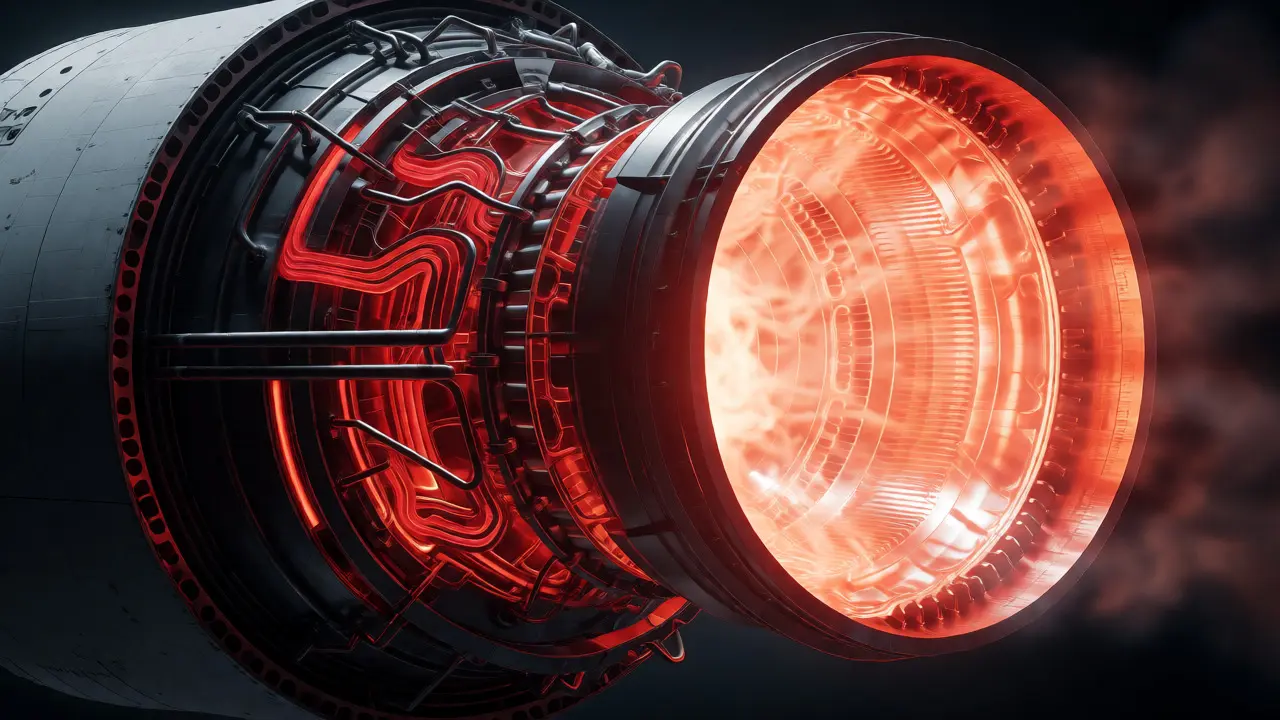
Imagine standing next to a rocket engine during launch. The gases inside the combustion chamber hit temperatures of 3,500°F (1,925°C) or higher. Steel melts at around 2,750°F. Titanium is no better. So why doesn't the engine melt instantly? It’s not magic; it’s thermodynamics. Without proper thermal management, the structural integrity of the nozzle and chamber walls fails within seconds. Engineers have developed three primary methods to keep these engines from turning into puddles of molten metal: regenerative cooling, film cooling, and ablative cooling. Each technique has its place, depending on whether you need reusability, simplicity, or raw power.
The Heat Problem in Rocket Propulsion
Before we look at solutions, let's look at the problem. Combustion in a rocket isn't just hot; it's violently energetic. The heat transfer rate to the chamber walls can exceed 100 MW/m². That’s more heat flux than a nuclear reactor core. If the wall temperature exceeds the material limit, two things happen: thermal stress cracks the metal, and oxidation eats it away. For liquid engines, the coolant is often the fuel itself. This is efficient because you’re pre-heating the fuel before it burns. But managing this heat requires precise engineering. You can’t just slap insulation on it. The heat must go somewhere. In some designs, it goes back into the cycle. In others, it’s carried away by sacrificial material. Understanding where that heat goes defines the type of cooling system used.
Regenerative Cooling: Reusing the Heat
Regenerative cooling is the workhorse of modern high-performance liquid rocket engines. Think of the Space Shuttle Main Engine or SpaceX’s Raptor. How does it work? Instead of letting the heat destroy the chamber wall, engineers pump cold fuel through channels machined directly into the wall’s exterior. The fuel absorbs the heat as it flows toward the injector plate. By the time the fuel reaches the combustion chamber, it’s hot-sometimes supercritical-which actually improves combustion efficiency.
This method is highly effective for reusable engines because it doesn’t sacrifice any material. The wall stays intact. However, it’s complex. Machining thousands of tiny channels into copper alloys or stainless steel is expensive and difficult. If those channels clog or crack, the engine fails catastrophically. Also, there’s a limit to how much heat the fuel can absorb before it decomposes chemically. For very high-temperature applications, regenerative cooling alone might not be enough, which is why it’s often paired with other techniques.
Film Cooling: A Protective Layer
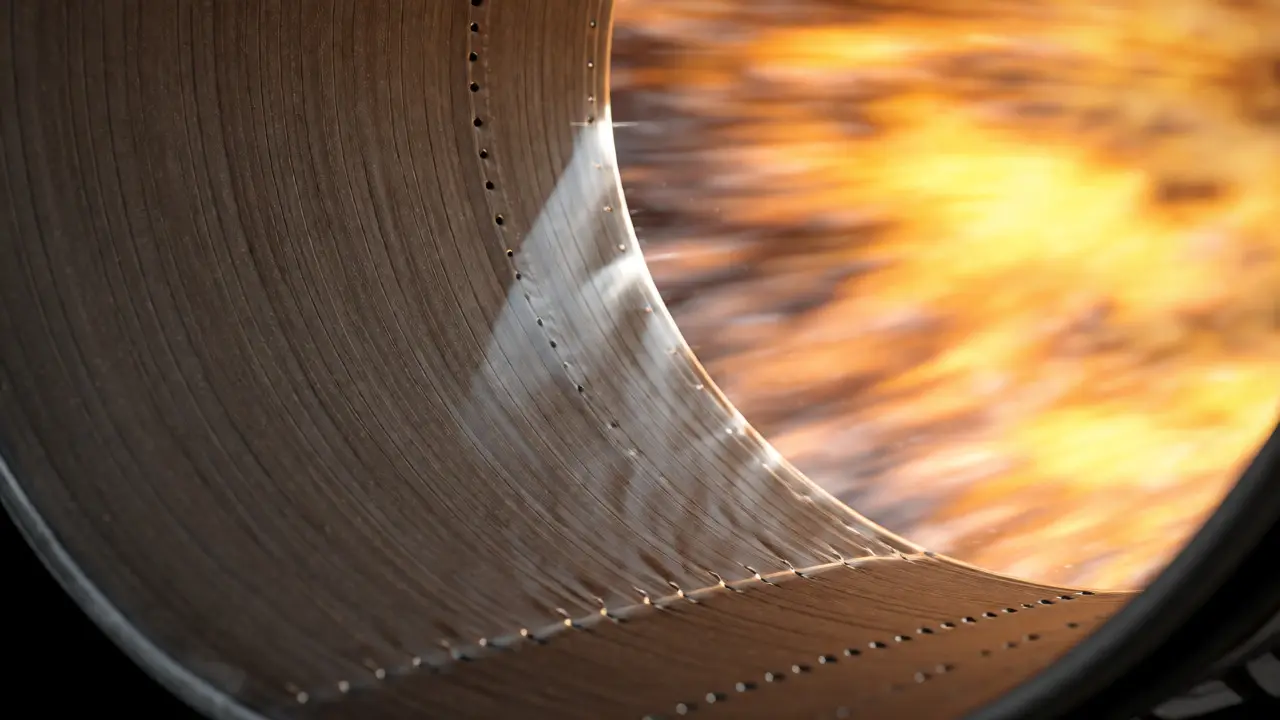
If regenerative cooling is about internal plumbing, film cooling is about external shielding. Here, a small amount of cool propellant is injected through tiny holes or slots along the inner surface of the chamber and nozzle. This creates a thin layer of cooler gas between the hot combustion products and the wall. The film acts as an insulating barrier, reducing the heat transfer rate significantly.
You don’t need complex channel machining for this. Just drill holes. But there’s a catch: you lose performance. The propellant used for film cooling doesn’t contribute fully to thrust. In the V-2 rocket, about 3% of the alcohol fuel was diverted to film cooling. While that sounds small, in rocketry, every gram matters. Film cooling is also tricky to optimize. If the film breaks up due to turbulence, the wall gets exposed to direct flame contact, leading to rapid erosion. It’s often used in conjunction with regenerative cooling. The regenerative system handles the bulk of the heat load, while film cooling protects areas where regeneration is less effective, like the throat of the nozzle where heat flux peaks.
Ablative Cooling: Sacrifice for Simplicity
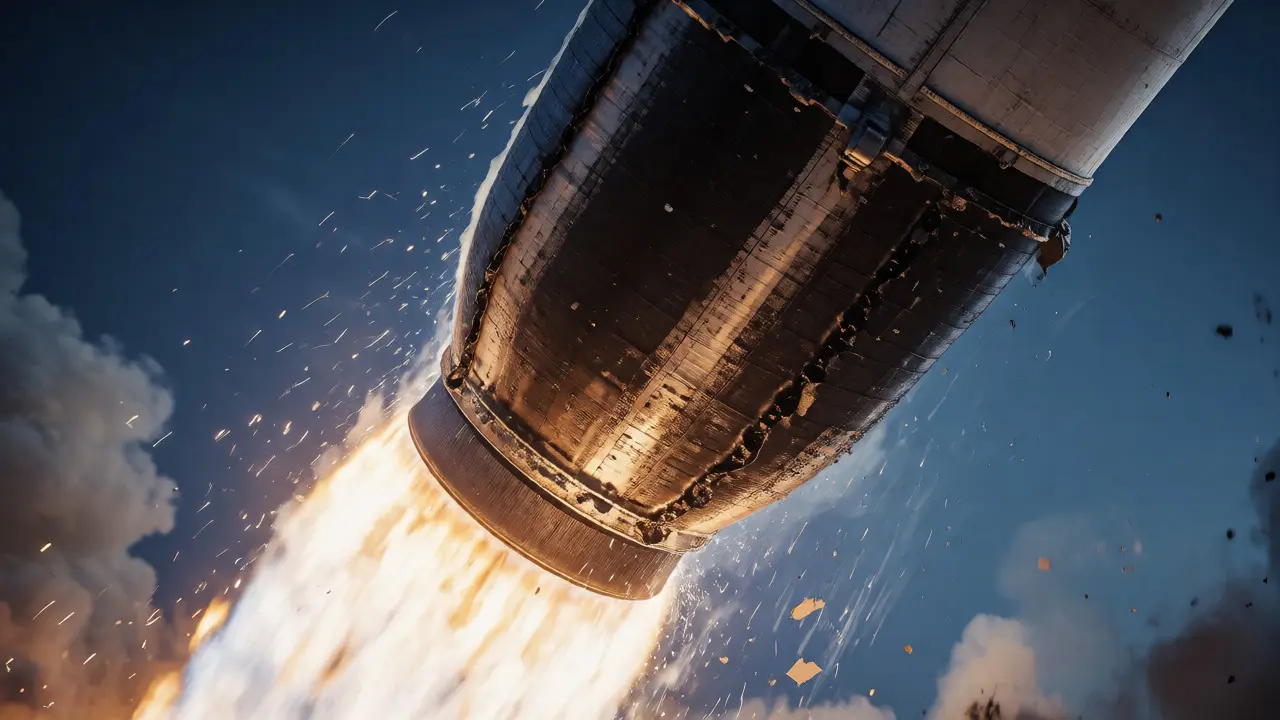
Not every engine needs to fly twice. For solid rocket boosters, upper stages, or short-duration missions, ablative cooling is king. This method uses a liner made of materials like carbon phenolic or silica-phenolic composites. As the hot gases hit the liner, the material chars, pyrolyzes, and vaporizes. This process absorbs massive amounts of energy. The vaporized material blows off into the exhaust stream, carrying the heat with it.
Why choose ablation? It’s simple and robust. There are no pumps, no pipes, and no complex manifolds to leak. The material is designed to erode predictably. Once the mission is over, the engine is discarded anyway. This makes it ideal for Solid Rocket Boosters (SRBs) like those on the Space Shuttle. The SRB nozzles were lined with ablative material. They didn’t need to survive multiple firings, so why complicate the design? The downside is obvious: you can’t reuse the component. Every launch consumes part of the structure. For a $100 million booster, that’s fine. For a reusable first stage, it’s a dealbreaker.
| Feature | Regenerative Cooling | Film Cooling | Ablative Cooling |
|---|---|---|---|
| Primary Mechanism | Coolant flow in wall channels | Coolant layer on wall surface | Material vaporization/erosion |
| Reusability | High (Wall remains intact) | Moderate (Depends on wall life) | None (Material consumed) |
| Complexity | High (Machining, pumping) | Low-Medium (Drilling, injection) | Low (Material casting) |
| Performance Cost | Low (Fuel pre-heated) | Medium (Propellant loss) | High (Mass addition to exhaust) |
| Best Use Case | Reusable main engines | Throat protection, supplemental | Solid motors, disposable stages |
Hybrid Systems: The Best of Both Worlds
Rarely do engineers pick just one method. Modern engines often blend these techniques. Take the RS-25 (the Space Shuttle Main Engine). It primarily uses regenerative cooling for the chamber and nozzle extensions. But the nozzle throat, where heat flux is most intense, relies heavily on film cooling. The fuel injects a protective layer there because regenerative channels couldn’t handle the peak temperatures without excessive pressure drops. Similarly, many solid rockets use an ablative liner but incorporate radiative cooling features in the nozzle exit cone where temperatures drop lower.
Choosing the right mix depends on your mission profile. Are you building a Starship? You want reusability, so you lean hard on regenerative cooling, even if it means heavier tanks and complex turbopumps. Are you building a cheap satellite launcher? Maybe you use ablative liners for the nozzle and skip the complex regen loops entirely. The trade-off is always mass versus complexity versus cost.
Historical Context: From V-2 to Raptor
These aren’t new ideas. The German V-2 rocket pioneered the combination of regenerative and film cooling in the 1940s. Wernher von Braun’s team circulated a water-alcohol mixture through double-walled chambers and injected alcohol films through small holes. Today’s engines, like SpaceX’s Raptor, use full-flow staged combustion with regenerative cooling for both fuel and oxidizer lines, pushing efficiencies far beyond what was possible in the 1940s. Yet the fundamental physics remain unchanged: move heat away from the wall, either by absorbing it, blocking it, or sacrificing material.
Future Trends: Additive Manufacturing and New Materials
What’s next? Additive manufacturing (3D printing) is changing the game. Traditionally, regenerative cooling channels were milled out of solid blocks, limiting their geometry. Now, companies like Relativity Space and SpaceX print entire combustion chambers with intricate, optimized channel networks that were previously impossible to machine. This allows for lighter weights and better heat distribution. Additionally, research into ceramic matrix composites (CMCs) aims to create walls that can withstand higher temperatures, potentially reducing the need for heavy cooling systems altogether. But for now, the triad of regenerative, film, and ablative cooling remains the backbone of rocket thermal management.
Why is regenerative cooling preferred for reusable rockets?
Regenerative cooling keeps the chamber walls intact by using the fuel as a coolant. Since the material isn't consumed or eroded significantly, the engine can be restarted and reused multiple times, which is essential for reducing launch costs.
Does film cooling reduce rocket performance?
Yes, slightly. The propellant used to create the cooling film bypasses the main combustion process or mixes inefficiently, meaning it contributes less specific impulse (Isp) than if it were burned completely. However, it prevents catastrophic failure in high-heat zones.
Can ablative cooling be used in liquid engines?
Yes, though it's less common in high-performance liquid engines today. It was used in early liquid engines and is still found in some upper-stage engines where simplicity and low cost outweigh the need for reusability. The liner erodes during operation.
What happens if cooling fails in a rocket engine?
If cooling fails, the chamber walls overheat rapidly. This leads to thermal expansion, structural weakening, and eventual rupture. The engine will likely explode or suffer a controlled shutdown, resulting in mission failure.
Is radiative cooling a viable option?
Radiative cooling works by emitting heat as infrared radiation. It's effective only when walls get extremely hot (over 2,000°F) and is typically used in vacuum environments or as a supplemental method. It’s too slow for high-thrust atmospheric flight compared to convective methods.