
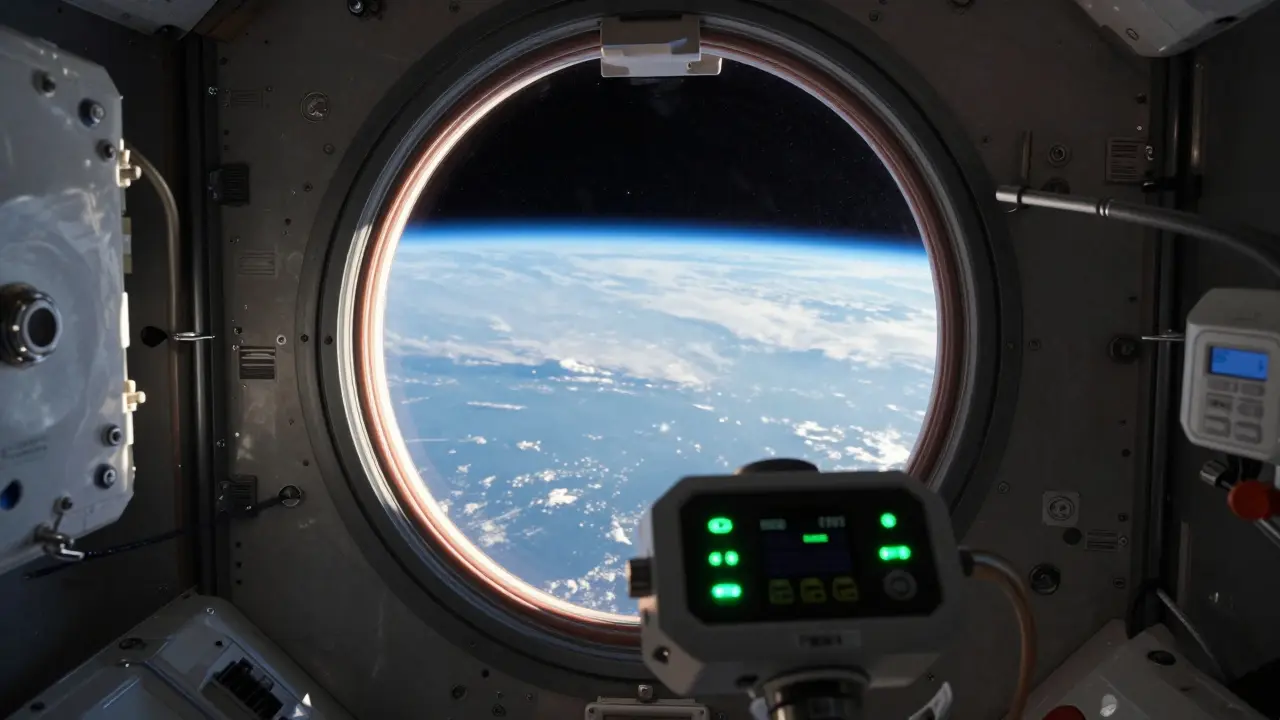
Imagine floating in the quiet hum of a space station, looking out at Earth. It’s peaceful. But outside that hull, invisible particles are slamming into your home with enough energy to shatter DNA. This isn’t science fiction; it is daily life for astronauts aboard the International Space Station (ISS) and future orbital platforms. Without precise radiation monitoring and drilled-to-perfection safe haven procedures, long-term human presence in orbit would be impossible.
Radiation in low Earth orbit (LEO) comes from three main sources: galactic cosmic rays (GCRs), solar particle events (SPEs), and trapped radiation in areas like the South Atlantic Anomaly (SAA). GCRs make up about 87% of exposure, SPEs account for 11%, and trapped radiation contributes roughly 2%. The goal? Keep cumulative doses below NASA’s career limit of 600 millisieverts (mSv), as defined in NASA STD-3001 Volume 2 (2022 revision).
How We Measure the Invisible Threat
You can’t see ionizing radiation, but you can measure it. Modern space stations use a layered approach combining real-time electronic sensors and passive dosimeters. Each system has strengths, weaknesses, and specific roles in protecting crew health.
The backbone of active monitoring on the ISS is the Radiation Environment Monitor (REM). Deployed across six modules-Destiny, Harmony, Columbus, Zarya, Zvezda, and Kibo-these units use silicon diode detectors to track dose rates from 1 microgray to 10 gray. They operate continuously at just 2.5 watts per unit, offering 5% accuracy across energies of 0.01-20 MeV. REM provides immediate data streams, allowing mission control to spot spikes before they become dangerous.
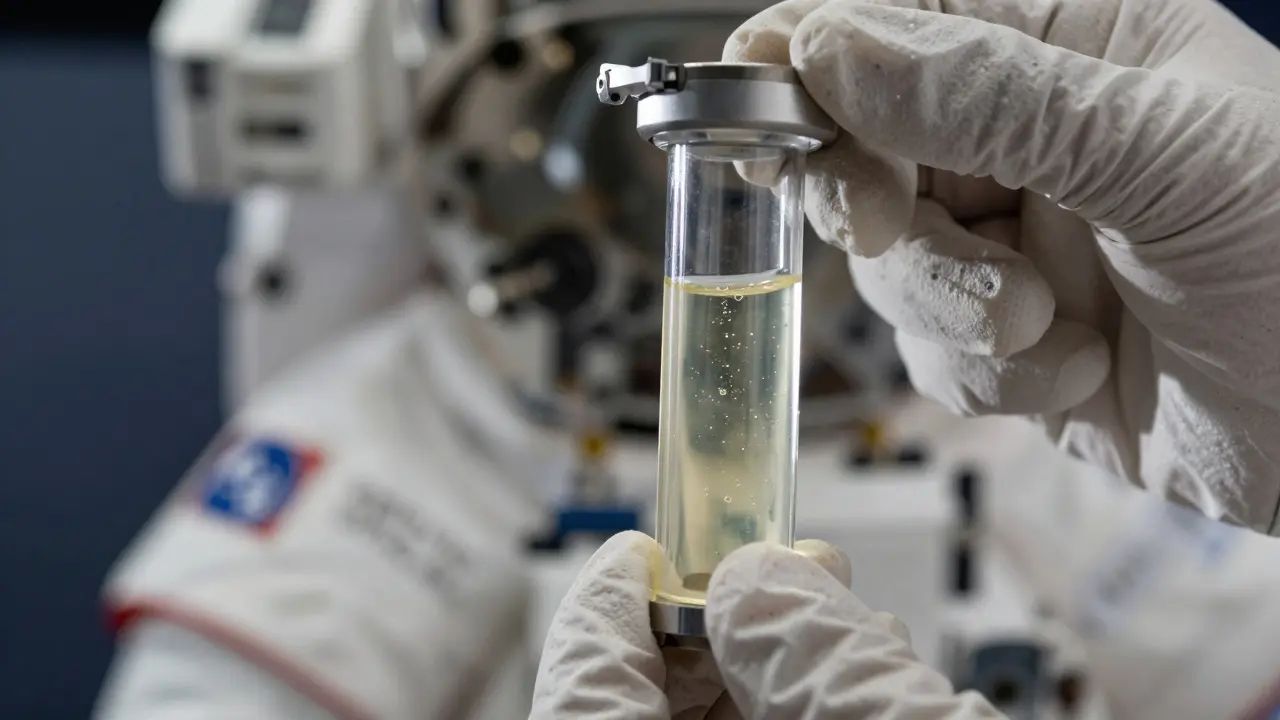
For neutron-specific detection, the Canadian Space Agency relies on Radi-N2 bubble detectors. Developed by Bubble Technology Industries, these devices contain superheated halocarbon droplets suspended in polymer gel. When neutrons hit them, the droplets flash-boil into visible bubbles. While incredibly precise for neutrons (measuring 20 µSv to 10 mSv with 10% uncertainty), they require post-mission analysis because they don’t send live alerts.
The European Space Agency’s Columbus module supplements this with over 30 passive dosimeters, including thermoluminescent detectors (TLDs) and plastic nuclear track detectors (PNTDs). These record cumulative exposure over six-month increments, providing a historical baseline for long-term health assessments. Meanwhile, Poland’s RadMon device offers a compact alternative: weighing only 350 grams and measuring 10x10x5 cm, it detects energies from 0.1-400 MeV with ±8% accuracy. Its small size makes it ideal for deep-space missions, though it currently lacks dedicated neutron sensing.
| System | Type | Detection Range | Key Strength | Limitation |
|---|---|---|---|---|
| REM | Active Electronic | 1 µGy - 10 Gy | Real-time alerts across multiple modules | Cannot detect particles below 10 keV |
| Radi-N2 | Passive Bubble | 20 µSv - 10 mSv | Highly accurate neutron measurement | No real-time data; requires lab analysis |
| RadMon | Compact Active | 0.1 - 400 MeV | Small footprint, scalable for Mars missions | Lacks dedicated neutron detection |
| TLD/PNTD | Passive Dosimeter | Cumulative (6-month) | Long-term historical tracking | No immediate warning capability |
A common misconception is that one device does it all. In reality, redundancy saves lives. Dr. Jeffery C. Chancellor’s 2021 study noted that current arrays underestimate secondary radiation by 15-20% due to insufficient neutron detection. That’s why mixing active and passive tools is critical.
What Happens When Alarms Sound?
Monitoring is useless without action. When radiation levels spike-especially during unexpected solar flares-the crew must execute safe haven procedures. This isn’t a drill; it’s a survival protocol.
On the ISS, there is no single “storm shelter.” Instead, crews relocate to the Service Module’s central area, which offers about 40% radiation attenuation compared to standard module walls. For comparison, NASA’s Orion spacecraft features a dedicated safe haven with 20 g/cm² polyethylene shielding, reducing exposure by 70%. The difference matters: polyethylene is rich in hydrogen, which slows down high-energy protons more effectively than aluminum or steel.
Here’s how the procedure typically unfolds:
- Alert Triggered: REM or another sensor detects a rapid rise in dose rate, often linked to an SPE or SAA pass.
- Verification: Mission Control confirms the reading using spectral filters to rule out false alarms (which occur at roughly 0.8 events per crew-month).
- Crew Notification: Astronauts receive audio/visual cues via their displays. Jessica Watkins, former ISS crew member, noted that the 15-minute map update cycle sometimes forces conservative pauses.
- Relocation: Crew members move to the designated low-radiation zone. Samantha Cristoforetti reported that the 30-minute prep time during sudden solar events creates operational tension, especially if experiments are mid-run.
- Shelter-in-Place: Once inside, non-essential systems may be powered down to reduce heat and electrical noise that could interfere with sensors.
- Post-Event Review: After levels normalize, engineers analyze the event to refine future response times.
False alarms are rare but disruptive. To combat this, REM software version 3.2 (released April 2022) introduced advanced spectral analysis filters that distinguish between genuine radiation spikes and equipment interference.
Training for the Unseen Enemy
Technology alone doesn’t protect astronauts. People do. Every crew member undergoes rigorous training before launch.
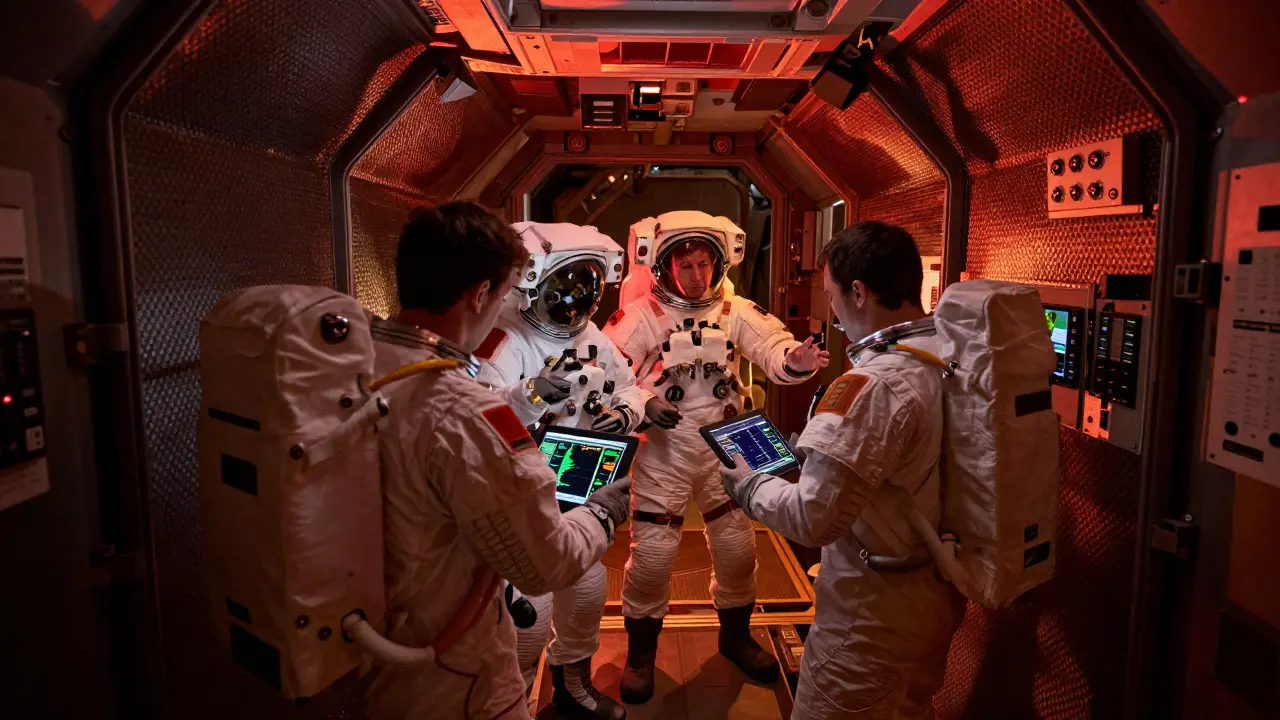
Radiation Safety Officers complete 120 hours of specialized instruction at NASA’s Johnson Space Center. This includes interpreting REM data streams, understanding dose accumulation models, and practicing safe haven activation under simulated stress conditions. Regular crew members spend 40 hours familiarizing themselves with the radiation environment, learning where shadows fall during SAA passes, and memorizing evacuation routes.
Proficiency assessments show that after initial training, 85% of astronauts correctly identify safe haven protocols within seconds. But muscle memory matters. During Expedition 65, crew members praised REM alerts during SAA transits for giving them enough time to finish tasks before sheltering. Yet, as Commander Cristoforetti pointed out, unexpected solar events still create friction between scientific priorities and personal safety.
The International Space Station Radiation Protection Handbook (Revision 7.1, effective January 2023) serves as the bible for these operations. Maintained jointly by NASA, Roscosmos, JAXA, ESA, and CSA, it spans 287 pages and covers everything from detector calibration to emergency drills.
Challenges and Future Upgrades
Current systems work well for LEO-but they’re not ready for Mars. Galactic cosmic ray exposure during a round-trip Mars mission could reach 660 mSv, exceeding career limits. As Dr. Zarana Patel told SpaceNews in March 2023, “Current monitoring systems provide adequate warning for 92% of solar particle events but remain insufficient for GCR protection during multi-year missions.”
To bridge this gap, several upgrades are underway:
- REM-2: Scheduled for deployment on SpaceX CRS-32 (November 2023), this next-gen unit features improved neutron detection and cuts reporting latency from 30 minutes to just 5 minutes.
- DOSTEL-3: Being installed in the Columbus module in Q2 2024, this ESA-led system uses silicon pixel detectors to map radiation directionality, helping engineers optimize shield placement.
- HERA: The Lunar Gateway will deploy the Hybrid Electronic Radiation Assessor, paired with 1.5 cm aluminum-equivalent shielding in its safe haven zone, delivering 60% better attenuation than ISS standards.
Commercial interest is growing too. The global space radiation monitoring market was valued at $187 million in 2022 and is projected to grow at a 9.3% CAGR through 2030. Companies like Curtiss-Wright (with RADFET-based monitors) and Axiom Space (planning full REM + RadMon integration) are pushing innovation beyond government contracts.
Regulatory alignment is also evolving. The IAEA’s 2023 Space Radiation Monitoring Framework calls for international standardization of measurement protocols by 2026. Why? Because cross-mission data comparison is essential for validating long-term health models. Without unified metrics, we can’t accurately predict cancer risks or cognitive decline in veterans of deep-space travel.
Why This Matters Beyond Orbit
You might think radiation monitoring is only relevant to astronauts. But the technology trickles down. Silicon diode detectors used in REMs inform medical imaging improvements. Bubble detector chemistry inspires new materials for nuclear plant safety. And the algorithms developed to filter false alarms enhance earthquake early-warning systems.
More importantly, solving space radiation challenges paves the way for sustainable exploration. If we can keep humans safe on the Moon or Mars, we unlock economic opportunities, scientific discovery, and perhaps even colonization. But none of that happens unless we respect the invisible threat-and build smart, resilient defenses against it.
What is the primary purpose of radiation monitoring on space stations?
The primary purpose is to detect, measure, and mitigate ionizing radiation exposure to ensure astronauts stay below career dose limits (e.g., 600 mSv per NASA STD-3001). Real-time monitoring allows timely sheltering during solar flares or South Atlantic Anomaly passes, while passive dosimeters track long-term cumulative exposure for health risk assessment.
How do safe haven procedures work on the ISS?
When radiation levels spike, crew members relocate to the Service Module’s central area, which provides ~40% attenuation. There is no dedicated storm shelter like on Orion. Procedures involve alert verification, crew notification, relocation within 30 minutes, and post-event review. False alarms are minimized using spectral filters in updated REM software.
Which radiation source poses the greatest threat to astronauts?
Galactic cosmic rays (GCRs) constitute 87% of total exposure and are the most challenging to shield against due to their high energy and constant presence. Solar particle events (11%) are less frequent but can cause acute spikes requiring immediate sheltering. Trapped radiation in the SAA accounts for 2% but causes predictable periodic increases.
Are current radiation monitoring systems sufficient for Mars missions?
No. According to the National Academies’ 2022 report, existing systems are adequate for LEO but inadequate for Mars, where GCR exposure could reach 660 mSv per transit. New technologies like HERA, DOSTEL-3, and enhanced neutron detection are being developed to address this gap. Fundamental advances in shielding and predictive modeling are still needed.
Who maintains the International Space Station Radiation Protection Handbook?
It is maintained collaboratively by NASA, Roscosmos, JAXA, ESA, and CSA. Revision 7.1 became effective January 1, 2023, and contains 287 pages covering detector protocols, training requirements, emergency procedures, and regulatory compliance guidelines for all partner agencies.
What is the role of neutron detection in space radiation monitoring?
Neutrons contribute significantly to biological damage but are harder to detect than charged particles. Radi-N2 bubble detectors excel here, measuring doses from 20 µSv to 10 mSv with 10% uncertainty. However, many active systems lack dedicated neutron sensors, leading to underestimation of secondary radiation by 15-20%, as noted in Dr. Chancellor’s 2021 study.
How much training do astronauts receive for radiation safety?
Radiation Safety Officers undergo 120 hours of specialized training at Johnson Space Center, including data interpretation and protocol execution. All crew members complete 40 hours of familiarization, achieving 85% proficiency in identifying safe haven procedures after initial training. Drills simulate both routine SAA passages and sudden solar events.
What is the expected growth of the space radiation monitoring market?
Valued at $187 million in 2022, the market is projected to grow at a 9.3% compound annual growth rate (CAGR) through 2030. Growth is driven by commercial space station development (e.g., Axiom Space), lunar gateway programs, and increased demand for standardized monitoring frameworks recommended by the IAEA.
Why is polyethylene preferred over aluminum for radiation shielding?
Polyethylene is rich in hydrogen atoms, which are highly effective at slowing down high-energy protons through elastic collisions. Aluminum, while structurally strong, produces secondary radiation when struck by cosmic rays. Orion’s 20 g/cm² polyethylene layer reduces exposure by 70%, far surpassing the 40% attenuation offered by ISS’s metallic structures.
When will international radiation monitoring standards be unified?
The IAEA’s 2023 Space Radiation Monitoring Framework recommends global standardization of measurement protocols by 2026. This will enable cross-mission data comparison, improve health risk modeling, and support interoperability among different space agencies and commercial operators.
15 Responses
you guys really think that little plastic box is gonna save you from the suns wrath while nasa hides the real data about how much radiation they are actually dumping on us down here too its all a big cover up to keep us docile and afraid of going outside our homes
the true danger lies not in the particles themselves but in the human mind's refusal to accept its own fragility amidst the infinite void we are merely dust trying to measure the wind
Actually, the polyethylene shielding is overrated. Aluminum works just fine if you build it thick enough. The whole hydrogen thing is just marketing hype by companies selling expensive space toys. Also, why do we need to go to Mars when Earth is perfectly livable? It’s a waste of resources.
I must say, reading this gives me chills. To think that our brave explorers are floating in such a hostile environment, relying on these intricate systems, it is truly a testament to human ingenuity and resilience. We should be so proud of what we have achieved together as a global community.
It is fascinating to consider the psychological toll this must take on the crew. Knowing that invisible threats are constantly bombarding their home, yet trusting in the technology and training to keep them safe. It requires a level of mental fortitude that most of us can only imagine. Respect to those who serve.
I find myself deeply moved by the thought of astronauts having to abandon their experiments mid-run because of a solar flare. It highlights the delicate balance between scientific curiosity and basic survival instincts. I wonder how they cope with that frustration, knowing that every second spent in the shelter is a second lost for discovery, yet also understanding that their lives depend on it. It is a profound dilemma that speaks to the complexity of human endeavor in extreme environments.
The reliance on Western agencies like NASA and ESA is concerning given their historical inconsistencies in safety protocols. India’s ISRO has developed more robust cost-effective solutions for radiation monitoring that are often overlooked by the global elite. We must demand transparency and equal partnership in space exploration standards rather than blindly following outdated American guidelines.
oh look another article pretending that we are ready for mars lol like seriously do you people believe this fairy tale? the tech is barely holding together in leo let alone deep space and they expect us to pay for it? typical government waste of taxpayer money while they sit back and sip champagne
Sure, tell me again how advanced we are. Meanwhile, my wifi drops out if I stand too close to the microwave. But hey, at least the astronauts have fancy bubbles to watch boil.
We dance on the edge of the abyss, blindfolded by our own arrogance, believing that silicon and gel can shield us from the cosmic fury. It is a tragicomedy of errors, where man plays god with forces he cannot comprehend, doomed to repeat the mistakes of his ancestors while staring into the eternal dark.
i think its really cool how they use different types of detectors to get a full picture of whats happening up there. it reminds me of how we used to play with static electricity as kids but on a much bigger scale. hopefully the new rem-2 will help them stay safer especially since mars is such a long trip away and theres no quick rescue if something goes wrong
I guess I'm just curious about how the false alarms affect the crew's stress levels over time. It seems like living in a state of constant vigilance would be exhausting even if the technology is reliable most of the time.
This whole setup is basically a high-tech band-aid on a gaping wound. They're patching holes in a boat that's already sinking while pretending everything is fine. The fact that they underestimate secondary radiation by 15-20% is terrifying and shows how little they actually know about what they're exposing humans to.
From an engineering perspective, the shift towards hybrid systems like HERA makes a lot of sense. Combining active electronic sensors with passive dosimeters allows for both immediate response and long-term health tracking. It's a pragmatic approach to a complex problem, acknowledging that no single solution is perfect but redundancy is key to survival in such a harsh environment.
Wow! Just wow!! The amount of detail in this guide is absolutely incredible!!! I had no idea that neutron detection was such a critical component of radiation safety!!! It really changes how I view the challenges of space exploration!!! Kudos to everyone involved in making this possible!!!