
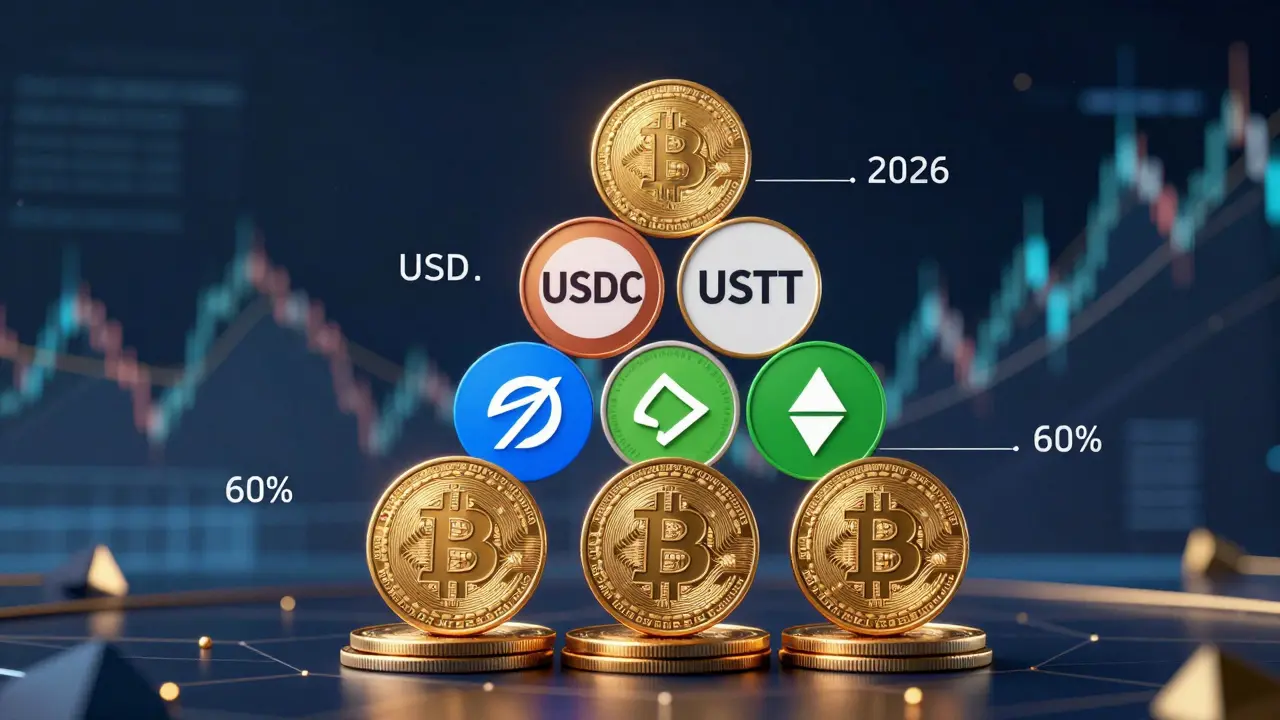
When you first jump into crypto, it’s easy to get sucked in by the hype. One coin goes up 500% in a month, and suddenly you’re putting all your money into the next ‘next big thing.’ But then the market turns. Prices crash. And if you’re holding just one or two coins? You’re in deep trouble. That’s where portfolio diversification in crypto stops being optional - and starts being survival.
Crypto isn’t like stocks or bonds. It’s wilder. On any given day, a coin can swing 10%, 20%, even 50%. In 2024 alone, over 35% of trading days saw price moves over 10% across major cryptocurrencies, according to CoinGecko. If you’re holding only Bitcoin, you’re still exposed to massive volatility. If you’re holding only a memecoin? You’re gambling. Diversification doesn’t mean you’ll never lose money. It means you won’t lose everything when the next crash hits.
Why Diversification Works in Crypto (Even When It Feels Like It Doesn’t)
Some people say crypto assets all move together - and they’re right, during panic. When FTX collapsed in late 2022, nearly every coin dropped. But here’s the thing: those crashes are rare. Most of the time, different parts of crypto move on their own. DeFi tokens surged in 2023 while Bitcoin was flat. NFTs had a mini-bull run in early 2024. Layer-2 networks like Arbitrum and Base gained traction as Ethereum fees stayed high. If you only owned Bitcoin, you missed all of it.
Backtesting from CoinMetro in 2024 shows that a well-diversified crypto portfolio - one spread across Bitcoin, Ethereum, DeFi, infrastructure, and stablecoins - lost 45% less during bear markets than a single-coin portfolio. And during bull runs, it captured 70% of Bitcoin’s upside, plus extra gains from altcoins. That’s the goal: reduce the pain when things go wrong, without giving up the upside when they go right.
The 60-30-10 Framework: What Works in 2026
Most professionals - from Kraken to Morgan Stanley - now use a version of the 60-30-10 model. It’s simple, tested, and built for real market cycles.
- 60% Core Blue-Chips: 40% Bitcoin, 20% Ethereum. These aren’t flashy, but they’re the foundation. Together, they make up over 60% of the entire crypto market cap. Bitcoin is digital gold. Ethereum is the backbone of DeFi, NFTs, and smart contracts. If crypto survives, these two will be at the center.
- 30% Satellite Diversifiers: This is where you chase growth. Pick 5-8 assets across different sectors: Solana or Cardano for speed and scalability, Uniswap and Aave for DeFi, Chainlink for oracles, Polygon for Layer-2 scaling. Don’t go overboard. Holding 20+ coins doesn’t make you safer - it just makes your portfolio harder to track. TokenMetrics found that portfolios with more than 15 assets had lower returns and higher management stress.
- 10% Stablecoins: USDC, USDT, or DAI. These aren’t for profit. They’re for armor. When everything else crashes, you hold cash. You can wait out the storm, then buy the dip without selling your core holdings. In 2024, stablecoins helped investors avoid forced liquidations during three separate de-pegging events.
This isn’t set in stone. If you’re younger and can handle risk, you might shift to 50-40-10. If you’re nearing retirement? Try 70-20-10. But the structure stays: core, growth, safety.
Sector-Based Diversification: Don’t Just Pick Coins, Pick Categories
It’s not enough to say, “I own 10 coins.” You need to know why you own them. Crypto isn’t one market - it’s five big ones.
- Decentralized Finance (DeFi): Tokens like UNI, AAVE, MKR. These let you lend, borrow, trade - without banks. In 2024, DeFi protocols generated $1.2 billion in revenue. That’s real value, not speculation.
- Infrastructure: LINK, ATOM, FIL. These are the plumbing of crypto. Oracles, cross-chain bridges, storage. They don’t make headlines, but if they fail, everything else breaks.
- NFTs & Metaverse: AXS, SAND, MANA. This sector is volatile, but it’s still growing. NFT transaction volume hit $34.7 billion in 2024. Some projects are dead. Others are building real utility - think ticketing, gaming, digital ownership.
- Privacy Coins: XMR, ZEC. Controversial, but important. They offer true anonymity. Even if you don’t use them, their existence keeps the ecosystem honest.
- Memecoins: DOGE, SHIB. Treat these like lottery tickets. Put 1-2% of your portfolio here. If one explodes? Great. If they all crash? You won’t care.
By spreading your satellite allocation across these five areas, you’re not betting on one coin. You’re betting on the whole ecosystem evolving.

Rebalancing: The Secret Weapon Most People Ignore
Diversification isn’t a set-it-and-forget-it strategy. Markets change. Bitcoin might double in a year. Your 40% allocation becomes 60%. Now you’re overexposed again.
Rebalancing brings you back to target. Do it quarterly. That’s the sweet spot. XBTO’s data shows quarterly rebalancing boosted returns by 12.7% over four years compared to annual rebalancing. Monthly? Too expensive. Transaction fees eat up 3-5% of your gains. Yearly? You’re letting risk build up.
How to do it: Every three months, check your portfolio. If Bitcoin is now 50% instead of 40%, sell 10% of your Bitcoin and buy more of whatever’s underweight - maybe Solana or a DeFi token. It’s automatic discipline. No emotion. No panic. Just math.
What Not to Do
Here are the three biggest mistakes people make:
- Chasing the hottest coin: If you see a 10x memecoin on Reddit, don’t dump your ETH for it. You’re not investing - you’re gambling.
- Ignoring stablecoins: Holding 100% crypto is like driving without brakes. Stablecoins are your emergency brake.
- Over-diversifying: Holding 20+ coins sounds smart. It’s not. You dilute your returns. You can’t track them all. You end up doing nothing.
And don’t listen to people who say “crypto is too correlated to diversify.” Yes, during panic, everything falls. But that’s why you have stablecoins. And why you rebalance. And why you keep your core in Bitcoin and Ethereum - the two assets that have survived every crash so far.

Tools and Resources to Get Started
You don’t need to be a quant to build a smart portfolio. Here’s what works:
- Exchange tools: Coinbase and Kraken both offer free portfolio trackers and rebalancing alerts.
- Index funds: The Bitwise 10 Crypto Index Fund (BITW) gives you instant exposure to the top 10 coins, automatically rebalanced. It’s like an ETF for crypto.
- Education: AvaTrade’s 8-hour Crypto Portfolio Management course is free and practical. Investors who took it saw 22% higher risk-adjusted returns.
- Community: Reddit threads like “My 2024 Diversification Strategy That Survived the Bear Market” (over 2,800 upvotes) show real, tested approaches - not hype.
Start simple. 70% BTC/ETH, 20% altcoins, 10% stablecoins. Rebalance every three months. Add one new sector every six months. That’s it.
What’s Next? Tokenized Assets and AI Portfolios
The future of crypto diversification is getting smarter. BlackRock predicts $16 trillion in tokenized real-world assets - think stocks, bonds, and real estate - will be on blockchains by 2030. That means your crypto portfolio could soon include exposure to global markets, not just coins.
AI-driven tools are already here. ARK Invest says machine learning portfolios will outperform static ones by 15-25% by 2027. They’ll automatically shift weight based on volatility, news, and market trends. You won’t need to rebalance manually - the system will do it for you.
But even with AI, the core rules won’t change: protect your capital. Spread your risk. Stay disciplined. Crypto is still young. The best investors aren’t the ones who predicted the next moonshot. They’re the ones who survived the crash.
Is crypto diversification really effective, or do all coins crash together?
Crypto assets do move together during extreme panic - like during the FTX collapse in 2022, when 95% of top coins dropped over 50%. But that’s rare. Most of the time, different sectors move independently. DeFi tokens outperformed Bitcoin in 2023. NFTs surged in early 2024. Infrastructure coins like Chainlink rose while memecoins fell. Diversification reduces your exposure to any single failure. Stablecoins act as a buffer during systemic drops. The goal isn’t to avoid all losses - it’s to avoid catastrophic ones.
How much of my portfolio should be in crypto at all?
Most financial advisors recommend allocating 1-5% of your total net worth to crypto, especially if you’re new. For accredited investors, Morgan Stanley suggests 1-5% within your overall portfolio, with 50% of that in Bitcoin, 30% in Ethereum, and 20% in diversified altcoins. This keeps crypto exposure limited but meaningful. Never invest money you can’t afford to lose. Crypto is high-risk - even with diversification.
Should I use crypto ETFs or buy coins directly?
Both have pros and cons. ETFs like the Bitwise 10 Crypto Index Fund (BITW) or spot Bitcoin ETFs give you instant diversification, no wallet management, and are traded on traditional exchanges. But they charge fees (0.15-0.95% annually). Buying coins directly gives you full control, lower long-term costs, and access to DeFi and staking. Beginners should start with ETFs. Experienced investors should mix both - use ETFs for core holdings, direct coins for altcoins and DeFi exposure.
How often should I rebalance my crypto portfolio?
Quarterly is the sweet spot. Rebalancing every three months keeps your allocations on track without triggering high transaction fees. XBTO’s data shows quarterly rebalancers outperformed annual ones by 12.7% between 2021 and 2024. Monthly rebalancing increases costs by 3-5% annually and often leads to emotional trading. If a coin moves more than 15% from your target allocation, that’s a signal to rebalance - even if it’s not time yet.
Are stablecoins really safe in a crypto crash?
Most stablecoins are pegged to the U.S. dollar and backed by cash or short-term bonds. But they’re not risk-free. In 2022 and 2023, USDT and USDC briefly de-pegged during market panics - dropping to $0.95 or rising to $1.03. That’s why it’s smart to hold multiple stablecoins (USDC, USDT, DAI) and keep only 10% of your portfolio in them. They’re not for profit. They’re for liquidity and safety. If you need to buy the dip, you won’t have to sell your Bitcoin at a loss.
13 Responses
Bro, just buy BTC and HODL. Why complicate it with all this 60-30-10 nonsense? You think some fancy spreadsheet is gonna save you when the next FTX happens? Lol.
I get where you're coming from, but diversification isn't about avoiding loss-it's about avoiding despair. Crypto's wild, yeah, but throwing everything into one basket is like driving blindfolded and hoping the road doesn't end. The 60-30-10 model? It's not magic, it's mindfulness.
Stablecoins aren't sexy, but they're the quiet hero when everything else is screaming. And rebalancing? That's the discipline that turns speculation into strategy.
Love this breakdown. I started with just ETH and SOL and got wrecked in 2022. Learned the hard way. Now I stick to the 60-30-10 like gospel. Stablecoins saved me during the USDT de-peg. I didn’t panic sell. Just waited. And bought more when it dipped to $0.97.
Also, don’t sleep on Chainlink. It’s not flashy, but it’s the backbone of half the DeFi apps you use. Infrastructure coins are the unsung heroes.
Why are we even talking about this? America needs to ban crypto and get back to real assets-gold, land, oil. These tokens are digital fantasy land run by Chinese bots and Reddit degens. If you’re not holding Bitcoin and gold, you’re already losing.
Yo, the 60-30-10 is the only sane framework left in this circus. I’ve seen too many guys blow up their bags chasing memecoins. One day you’re up 200%, next day you’re crying over a 98% dump.
Rebalancing quarterly? Absolute must. I use Kraken’s auto-rebalance. Set it, forget it. No emotional trades. No FOMO. Just math. And yeah, stablecoins are your seatbelt-don’t skip it.
Also, if you’re not using Bitwise 10 for your core, you’re doing it wrong. Automated diversification + low fees = lazy billionaire mode.
Thank you for this exceptionally well-reasoned and structured exposition on crypto portfolio management. Your adherence to evidence-based allocation frameworks, particularly the 60-30-10 model, reflects a maturity of thought that is increasingly rare in this space.
The emphasis on rebalancing discipline, combined with the prudent use of stablecoins as liquidity buffers, demonstrates a profound understanding of risk mitigation principles. I commend your inclusion of empirical data from XBTO and CoinMetro-it elevates this from opinion to actionable insight.
I’m curious-how do you factor in macroeconomic shifts? Like if the Fed hikes rates again, or the dollar surges, how does that affect your altcoin allocation? I’ve noticed DeFi tends to underperform during strong USD cycles, even if the crypto market is flat.
Also, have you tested this framework against inflation-adjusted returns? Not just nominal gains, but real purchasing power over time?
You wrote 'memecoins' as one word. It should be 'memes coins'-no, wait, actually, it's 'memecoin' as a compound noun. But you're missing the hyphen in 'set-it-and-forget-it.' It's 'set-it-and-forget-it,' not 'set it and forget it.' Small things matter.
Also, 'USDT' is not a stablecoin. It's a tokenized fiat instrument. DAI is the only true decentralized stablecoin. Please correct your terminology.
Great post. I’m from India, and here most people just buy Dogecoin because Elon tweeted it. I told my cousin to follow your 60-30-10. He laughed. Now he’s holding BTC, ETH, and USDC. He says he sleeps better. Small wins.
OMG YES!!! I literally did the 70-20-10 last year and it saved me!!! 😭 I was gonna sell everything after the FTX crash but then I remembered my 10% USDC and I was like... WAIT... I can buy more ETH at a discount!!! 🙌🙌🙌 You guys are geniuses!!!
Okay, but who even wrote this? Some finance bro who got fired from Morgan Stanley and now writes Reddit posts to feel relevant? 60-30-10? Please. The only thing that matters is HODLing Bitcoin and ignoring everything else. All this ‘sector diversification’ is just noise from people who can’t handle volatility.
And don’t even get me started on stablecoins. USDC is a SEC puppet. DAI is a scam. USDT is the only one that matters-and even then, you’re trusting Tether, not blockchain.
This whole post feels like a Goldman Sachs ad disguised as advice.
Wow. You actually mentioned Chainlink and didn’t call it a ‘shitcoin’? I’m impressed. Most people here act like infrastructure tokens are invisible. You’re right-they’re the plumbing. No one notices until the toilet explodes.
And I hate how people say ‘crypto is too correlated.’ Bullshit. Correlation isn’t perfect. It’s 0.75, not 1.0. That’s still room to breathe. And stablecoins? They’re not just armor-they’re oxygen. Without them, you suffocate during a crash.
lol i just bought 3 coins and called it a day. btc, eth, and shiba. i dont even know what layer 2 means but my portfolio went up 2x so im good 😎