
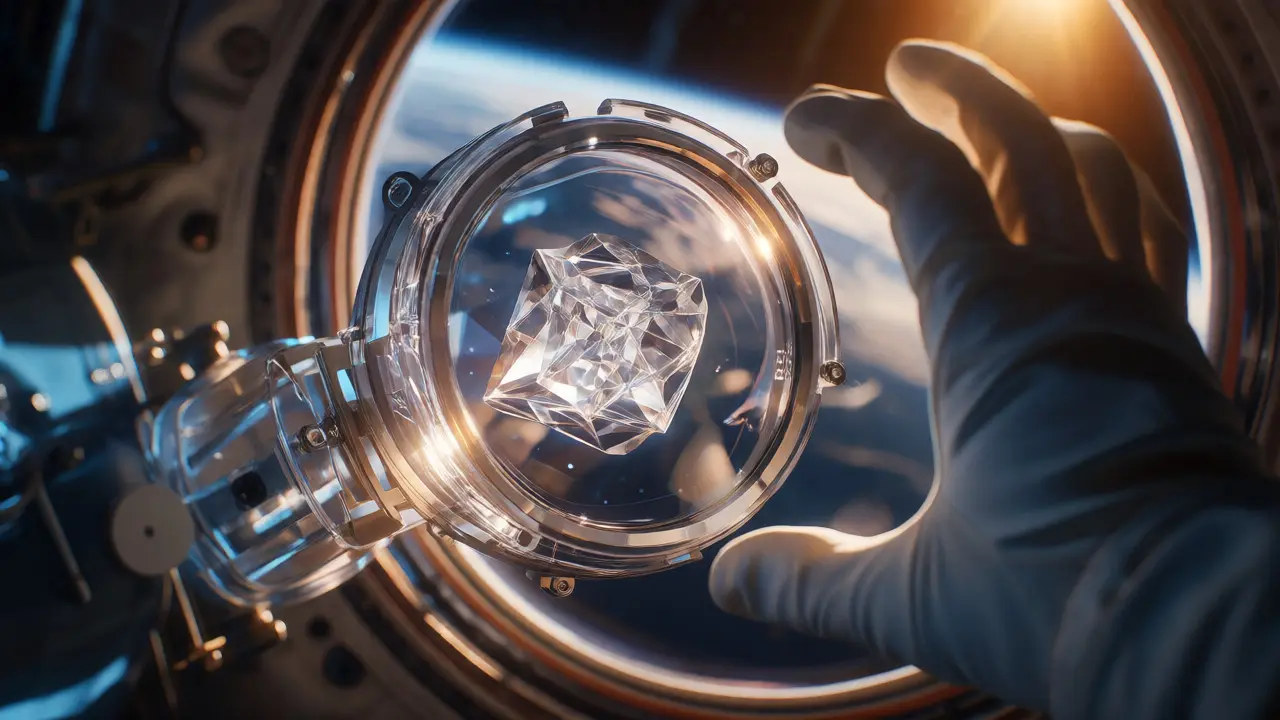
Imagine trying to build a house of cards on Earth. Gravity pulls the top cards down, causing them to wobble, tilt, or collapse before they’re perfectly aligned. Now imagine doing it in deep space, where that downward pull vanishes. The cards settle gently into place, forming a structure that is stronger, more uniform, and less prone to defects. This is essentially what happens when we manufacture pharmaceuticals in microgravity. While the idea of making drugs in orbit sounds like science fiction, it is becoming a tangible reality with profound implications for drug efficacy and purity.
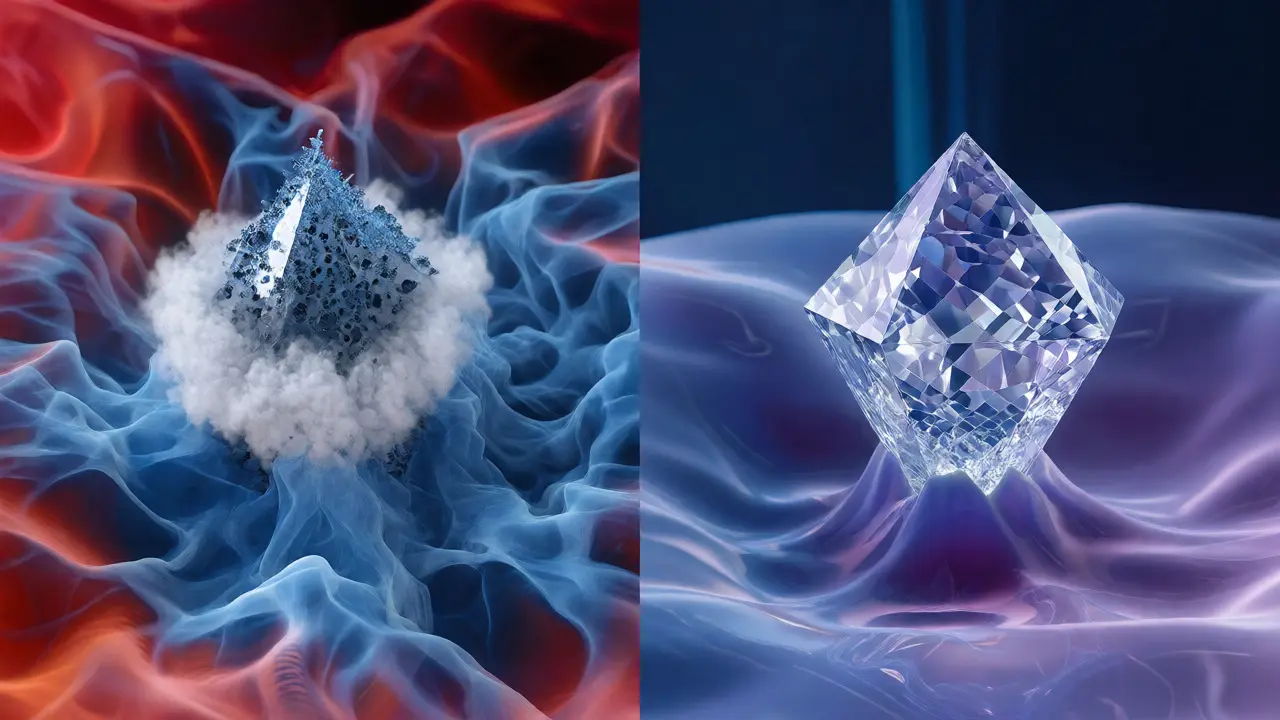
The core promise here isn't just about novelty; it's about yield. Specifically, it’s about the improved yields of high-quality molecular crystals that are critical for modern medicine. On Earth, gravity-driven convection-the movement of fluids caused by density differences-creates turbulence during crystallization. This turbulence incorporates impurities into the growing crystal lattice and creates structural defects. In space, without buoyancy, transport becomes diffusion-dominated. The result? Crystals that are larger, clearer, and structurally superior. For pharmaceutical companies, this means higher success rates in drug development and potentially better therapeutic outcomes for patients.
Why Gravity Ruins Perfect Crystals
To understand why space helps, you have to look at how crystals grow. A crystal forms when molecules arrange themselves into a repeating pattern. On Earth, as these molecules attach to the crystal surface, they release heat and change the local concentration of the solution. Because heavier, cooler fluid sinks and lighter, warmer fluid rises, convection currents form. These currents disrupt the delicate balance needed for perfect growth.
Buoyancy-driven convection is the enemy of high-purity crystals. It causes sedimentation (particles settling) and hydrostatic pressure gradients, both of which introduce stress into the crystal structure. In microgravity environments, such as those aboard the International Space Station (ISS), these forces are effectively neutralized. Mass transport relies solely on slow, steady diffusion. This allows molecules to find their optimal position in the lattice with minimal interference, leading to fewer defects and higher internal order.
A 2022 study published in npj Microgravity confirmed that protein transport in space is dominated by mass-dependent diffusion rather than convection. This shift significantly reduces the incorporation of impurities into the crystal. When impurities stay out, the crystal grows cleaner. Cleaner crystals mean better data for scientists designing new drugs, and ultimately, purer medicines for consumers.
Quantifying the Yield Improvement
It’s one thing to say crystals are "better" in space; it’s another to measure it. Pharmaceutical manufacturers care about specific metrics: size, morphology (shape), mosaicity (structural uniformity), and diffraction resolution. If a crystal doesn’t diffract X-rays well, you can’t see its atomic structure clearly. That makes it useless for structure-based drug design.
Retrospective analyses of decades of space experiments show consistent improvements. Compared to ground controls, microgravity-grown protein crystals typically exhibit:
- Larger volume and more uniform shape.
- Superior mosaicity values (lower is better).
- Improved diffraction resolution limits.
Specifically, studies have reported an average improvement in diffraction resolution of 0.23-0.30 Å (Angstroms). While that number might seem small, in crystallography, it is massive. It translates directly into sharper electron density maps, allowing researchers to see exactly where drug molecules bind to proteins. Furthermore, mosaicity-a measure of crystal disorder-has been shown to decrease by 0.030-0.093 degrees. Lower mosaicity indicates a more perfect crystal lattice.
| Metric | Earth-Based Growth (1 g) | Microgravity Growth (µg) | Impact on Yield |
|---|---|---|---|
| Convection | High (buoyancy-driven) | Negligible (diffusion-dominated) | Reduces impurity trapping |
| Sedimentation | Present | Absent | Prevents particle aggregation |
| Resolution Limit | Baseline | Improved by ~0.25 Å | Better structural data |
| Mosaicity | Higher (more disordered) | Lower (more ordered) | Higher usable fraction |
| Defect Rate | Common cracks/dislocations | Rare defects | Increased batch consistency |
These aren't marginal gains. For complex targets like membrane proteins, which are notoriously difficult to crystallize on Earth, the difference between a failed experiment and a successful one often lies in these quality metrics. By increasing the proportion of crystals that meet strict quality criteria, microgravity effectively boosts the "usable yield" of any given batch.
The Role of Hardware and Process Control
You can’t just throw a beaker of protein solution into space and expect magic. Success depends on specialized hardware designed to exploit the microgravity environment while maintaining sterility and control. NASA’s Light Microscopy Module (LMM) and commercial systems like the PIL-BOX FC use sealed reaction chambers to prevent contamination and control temperature gradients precisely.
JAXA’s research highlights a critical threshold: the ratio of the diffusion coefficient (D) to the growth rate (β). When D/β is less than 3 mm, microgravity benefits are most pronounced. About 70% of tested proteins showed improved quality under these conditions. To achieve this, engineers use viscous crystallization solutions and highly homogeneous samples. This slows down the growth rate, allowing the slow diffusion process in space to keep up, resulting in stable depletion zones around the crystal. These zones act as buffers, keeping impurities away from the growing face.
The PIL-BOX FC system, used in recent commercial demonstrations, exemplifies this approach. Its closed chambers eliminate sedimentation and convective mixing entirely. Observations showed crystals with clear faces and sharp edges, devoid of the cracks and defects common in ground-grown counterparts. This hardware reliability is crucial for scaling up from experimental batches to industrial production.

Commercial Players and Regulatory Landscapes
The transition from lab curiosity to commercial reality is underway, driven by companies like Varda Space Industries. Varda is developing return-capable spacecraft specifically for on-orbit drug crystallization. Their business model hinges on the value proposition that microgravity-enhanced purity and uniformity justify the cost of space access. They target high-value, low-volume therapeutics where quality differentiators are paramount.
Regulators are taking notice too. The European Medicines Agency (EMA) has begun horizon scanning for "pharma in space," recognizing that microgravity-enabled steps must fit within existing Good Manufacturing Practice (GMP) frameworks. The challenge isn't just scientific; it's logistical. How do you certify a facility that orbits at 28,000 km/h? Traceability of space-based steps and robust quality assurance across the Earth-space supply chain are active areas of regulatory development.
Currently, explicit pricing models remain proprietary. However, the focus is clearly on differentiation. Early adopters aren't looking to replace generic aspirin production; they are targeting biologics, precision therapeutics, and novel crystal forms that simply cannot exist on Earth. The ISS National Lab’s Microgravity Molecular Crystal Growth (MMCG) program facilitates this by offering public-private partnerships, allowing pharmaceutical firms to test their hypotheses in orbit.
Limitations and Future Outlook
Is microgravity a silver bullet? Not quite. It doesn't benefit every protein system equally. Systems with fast growth rates or high viscosity requirements may not see significant advantages. Moreover, the cost of launch and return remains a barrier for bulk commodities. We aren't going to make Tylenol in space anytime soon.
However, for the right applications, the yield improvement is undeniable. As launch costs decrease with reusable rockets and automation improves, the economic viability expands. We are moving toward a hybrid industry model: Earth handles the bulk, while space provides the premium quality. This specialization allows pharmaceutical manufacturers to push the boundaries of what is chemically possible, turning previously uncrystallizable proteins into viable drug candidates.
The convergence of quantitative data, regulatory interest, and commercial investment suggests that microgravity manufacturing is no longer a distant dream. It is a specialized tool in the pharmaceutical arsenal, poised to unlock higher yields of the highest quality medicines for the most challenging diseases.
Does microgravity actually increase the quantity of crystals produced?
Not necessarily the total mass, but the "usable yield." Microgravity primarily improves the quality-size, order, and purity-of the crystals. This means a higher percentage of the crystals grown meet the stringent quality standards required for pharmaceutical development, effectively increasing the yield of viable product per experiment.
Why do crystals grow better in space than on Earth?
On Earth, gravity causes convection currents and sedimentation, which disturb the fluid around the growing crystal. This leads to impurities being trapped inside and structural defects. In microgravity, these forces are absent, so molecules move via slow diffusion. This calm environment allows the crystal lattice to form more perfectly and uniformly.
What kind of drugs benefit most from space manufacturing?
Complex biologics, protein therapeutics, and small-molecule drugs with difficult-to-crystallize structures benefit the most. These include membrane proteins and large complexes that require high-resolution structural data for drug design. High-value, low-volume therapies are currently the primary focus due to the high cost of space access.
Is there a company already selling drugs made in space?
As of 2026, widespread commercial sales of finished drugs manufactured entirely in space are still emerging. Companies like Varda Space Industries are conducting pilot missions and developing infrastructure. The current phase involves producing high-quality crystals for R&D and early-stage clinical trials, with full commercial distribution expected as logistics mature.
Can we simulate microgravity effects on Earth?
Partially. Technologies like magnetic levitation and rotating wall vessels can reduce some gravity effects. However, they cannot fully eliminate buoyancy-driven convection and hydrostatic pressure gradients. True microgravity offers superior results for many protein systems, though Earth-based surrogates are useful for preliminary screening.
15 Responses
Bro this is actually insane. I’ve been reading about crystallography for a while and the convection issue on Earth has always been such a headache. The idea that you can just remove gravity and get perfect lattices is mind blowing. We need to push for more funding in this area immediately because the potential for drug efficacy is huge
American innovation leading the way again. While other countries play catch up we are literally building factories in orbit. This is how you maintain dominance in global health markets. No one else is doing it at this scale.
Actually, if you look at the diffusion coefficients properly, the benefit isn't universal. You're ignoring the viscosity constraints mentioned in the JAXA data. Most people don't understand that D/beta ratio matters more than just 'no gravity'. It's not magic it's physics. And frankly most of these proteins still fail clinical trials regardless of crystal quality so stop hyping it.
I appreciate the detailed breakdown here. For those newer to the field, think of it like growing sugar crystals. On Earth, the water moves around too much and makes them messy. In space, they grow slowly and neatly. It’s a great example of how removing environmental noise helps precision manufacturing. Keep exploring this!
Boring. Just another tech hype cycle. We've heard this before with every new material science breakthrough. Until they show me a pill that cures cancer better than the ground version I'm not impressed. Waste of tax dollars sending beakers to space.
Wait wait wait... why do we trust the ISS data? Who controls the return capsules? If big pharma is making drugs in space who checks the purity? They probably add extra stuff during launch or return that messes it up. Also why is India excluded from the main partnerships? Smells like a cartel thing to me. Keep your eyes open folks.
The tragedy of human limitation is that we must rely on the heavens to fix what our own world breaks. Gravity is the jailer of perfection, holding down the beautiful chaos of creation until we escape its grasp. But will escaping gravity save us from ourselves? Or will we simply find new ways to corrupt the pure? It is a poignant dance between nature and ambition.
This gives me hope for patients with rare diseases. Better crystals mean better understanding of protein structures which means faster development of targeted therapies. Thank you for sharing this positive news.
Great post! 🌟 Just a small correction on the hardware part: PIL-BOX FC is indeed used but LMM is mostly for observation. The key takeaway is definitely the mosaicity improvement. 😊 It really helps with X-ray diffraction data quality. Let me know if you want links to the specific papers! 👍
Look, I love America too but let's be real. Varda is cool but Europe is catching up fast with their EMA regulations. We can't just assume we win by default. Need to watch the competition closely. ;)
It is highly probable that the regulatory frameworks being developed by the EMA are designed specifically to create non-tariff barriers against American manufacturers. By complicating the GMP certification process for orbital facilities, European entities may seek to protect their domestic pharmaceutical industries from superior US-made products. One must consider the geopolitical implications of supply chain sovereignty in this context.
What a fascinating intersection of physics and medicine! It’s wonderful to see how removing one variable-gravity-can unlock such complex molecular behaviors. For my students back home, this is a perfect example of interdisciplinary thinking. Bravo to the researchers for pushing boundaries.
Space drugs sound expensive. Who pays for this? Regular folks cant afford premium biologics anyway. Its all for rich people getting richer. Typical.
Oh please!!! Stop pretending this is simple!!! The cost analysis alone destroys this argument!!! You cannot ignore the logistics!!! Every single failure in orbit costs millions!!! This is a bubble waiting to burst!!! Wake up!!!
Honestly though, the imagery of cards settling gently in space is pretty poetic. It makes the hard science feel accessible. Cool read.