

You cannot manage what you do not measure. In the world of on-chain stablecoin analytics, which is the practice of deriving insights from blockchain transaction data to monitor stablecoin activity across distributed ledger networks, this rule is more critical than ever. Stablecoins are no longer just a niche tool for traders; they are becoming the plumbing of the global digital economy. But with billions of dollars moving silently between wallets, exchanges, and protocols, how do you know if the system is healthy? How do you spot a crash before it happens?
The answer lies in looking under the hood. By tracking supply dynamics, circulation velocity, and holder behavior, we can move beyond price charts and see the actual economic reality. This guide breaks down the three pillars of stablecoin intelligence so you can understand where the money is going, who holds it, and why it matters.
1. Understanding Supply Metrics: The Total Picture
Supply is the foundation. It tells you how much liquidity exists in the ecosystem. But here is the catch: stablecoins live on many different blockchains. You have USDC on Ethereum, TRC-20 USDT on Tron, and native implementations on Base or Arbitrum. If you only look at one chain, you are missing half the story.
Aggregated Stablecoin Metrics solve this problem. Platforms like Coin Metrics Network Data Pro consolidate network-specific data into unified tickers. Instead of running separate queries for Ethereum, Solana, and Polygon, you get a single view of total circulating supply. This metric is tracked at hourly or daily granularity, giving you real-time visibility into issuance and redemption trends.
- Total Circulating Supply: The sum of all minted stablecoins minus those burned or locked in reserves. A rising supply often indicates inflows from traditional finance or new user adoption.
- Exchange Reserves: This is a crucial subset of supply. When exchange reserves decline, coins are moving into private storage (cold wallets), reducing immediate sell pressure. When reserves spike, it often signals that users are cashing out to buy other assets, creating potential downward pressure on the market.
- Cross-Chain Distribution: Tracking where supply lives helps identify dominant networks. For example, if USDC supply shifts heavily from Ethereum to Base, it suggests lower fees are driving retail adoption on Layer 2 solutions.
For issuers, tracking historical balances across all chains is vital for compliance and reserve management. It ensures that every digital dollar has a real-world counterpart, maintaining the 1:1 peg that makes stablecoins useful.
2. Decoding Velocity: The Speed of Money
Money sitting in a wallet is dead weight. Money moving through the economy creates value. This is where velocity indicators come in. Velocity measures how frequently stablecoins change hands within a specific timeframe. High velocity means high economic activity; low velocity suggests hoarding or stagnation.
To calculate meaningful velocity, analysts look at several key performance indicators (KPIs):
- Daily Transactions: The raw count of transfers. A sudden spike in daily transactions might indicate a viral trend, a new protocol launch, or panic selling.
- Active Addresses: The number of unique wallets sending or receiving funds. Unlike transaction volume, this metric filters out bots and wash trading to some extent, showing genuine user engagement.
- Average Transaction Size: Large transfers suggest institutional movement or whale activity. Small, frequent transfers point to retail usage for payments or micro-trading.
Consider this scenario: You notice stablecoin prices are dropping, but velocity is increasing. What does that mean? It likely means short-term holders are panicking and selling off their positions quickly. Conversely, if prices are stable but velocity drops, long-term holders may be accumulating, betting on future growth. Tools like Space and Time enable sophisticated SQL queries to compare these metrics across multiple stablecoins simultaneously, revealing which tokens are actually being used versus which are just being parked.
3. Holder Analysis: Who Is Behind the Wallet?
Not all holders are created equal. A wallet holding $1 million in USDC behaves differently than one holding $10. On-chain analytics allows us to segment holders by behavior and size, providing deep insights into market sentiment.
| Holder Type | Typical Behavior | Market Signal |
|---|---|---|
| Whales | Large accumulation during dips; distribution during peaks. | Accumulation = Confidence; Distribution = Profit-taking/Caution. |
| Short-Term Traders | Frequent small trades; sensitive to price volatility. | High realized losses often mark "panic bottoms" where sentiment shifts. |
| Long-Term Holders | Infrequent movements; hold for yield or strategic reasons. | Selling by LTH is a strong bearish signal as it reduces available supply significantly. |
| Exchanges | Passive holding; balances fluctuate with user deposits/withdrawals. | Rising reserves = Sell pressure incoming; Falling reserves = Buy pressure/Hoarding. |
Tools like IntoTheBlock simplify this by providing pre-calculated metrics such as "Concentration of Whale Activity." If you see whales dumping stablecoins onto exchanges, prepare for volatility. If they are pulling them back to cold storage, the market may stabilize. Additionally, analyzing the age of coins being spent helps distinguish between old, dormant funds waking up and fresh capital entering the ecosystem.

4. Building Your Analytics Dashboard
You don't need to be a data scientist to benefit from these insights, but you do need the right setup. Building a comprehensive dashboard involves aggregating data from various sources and visualizing it effectively.
Here is a practical workflow using platforms like Dune Analytics or Space and Time:
- Select Your Data Source: Choose an indexer that covers your target chains. For ERC-20 tokens, ensure the provider indexes from the genesis block to capture full history.
- Define Key Queries: Write SQL queries to extract transfer events. Filter by token address (e.g., USDC contract) and time range.
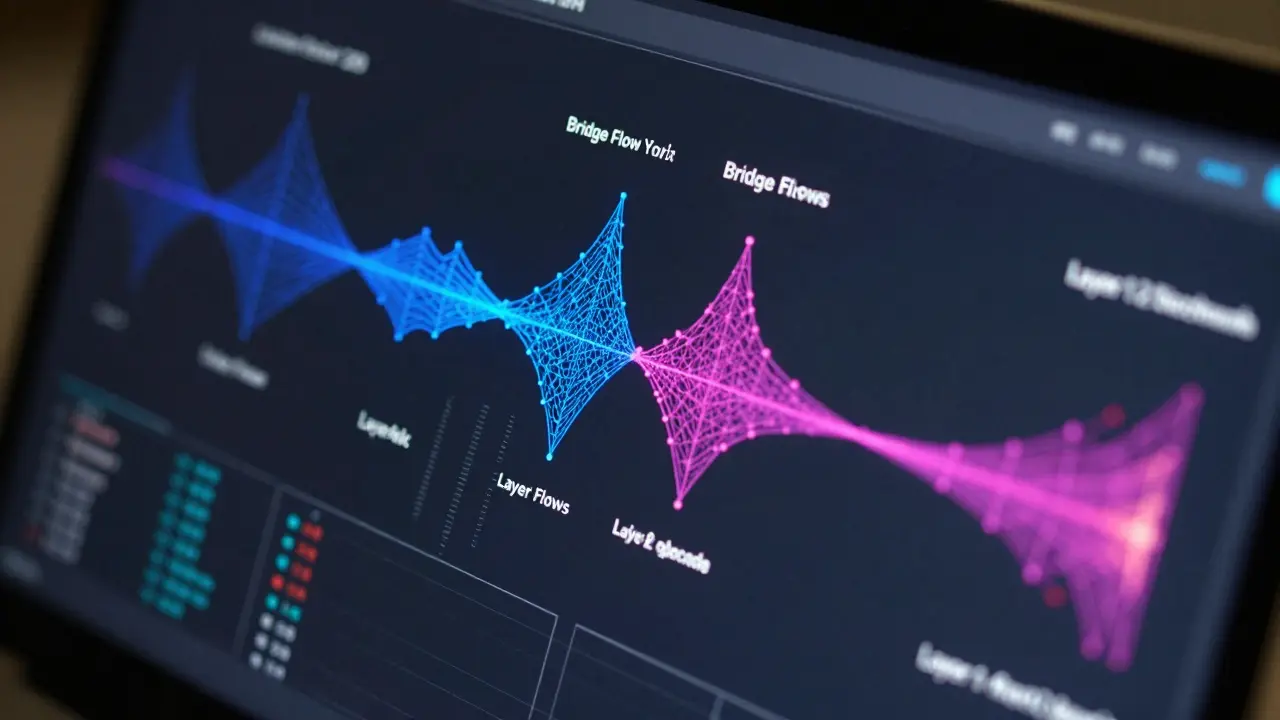
- Visualize Flows: Use Sankey diagrams to show bridge flows. For instance, visualize how much USDC moves from Ethereum to Arbitrum daily. This predicts liquidity availability on Layer 2s.
- Track Protocol Distribution: Monitor Total Value Locked (TVL) in DeFi protocols. If TVL in a lending protocol rises while stablecoin supply stays flat, it means existing holders are leveraging their assets rather than new users joining.
Institutional players like Visa use similar dashboards to identify gaps in adoption and assess real economic activity. Their focus is less on price speculation and more on understanding where stablecoins are solving real-world payment problems.
5. Interpreting Cross-Chain Dynamics
The fragmentation of liquidity across chains is both a challenge and an opportunity. A stablecoin might be highly active on Tron due to low fees for remittances, while another dominates on Ethereum for institutional DeFi. Comparing these ecosystems requires cross-chain comparison analysis.
Look for migration patterns. Are users leaving expensive mainnets for cheaper Layer 2s? Yes, and the data shows it. When transaction costs on Ethereum spike, stablecoin velocity often shifts to Base or Optimism. By monitoring these shifts, you can anticipate where demand for gas tokens will rise and which protocols will gain users.
Furthermore, assessing network health metrics-such as transaction fees and hash rate of the underlying blockchain-provides context. A stablecoin might show high volume, but if the network is congested and expensive, that volume might be unsustainable for average users.
6. Practical Applications for Traders and Investors
How do you use this information tomorrow morning? Here are three actionable strategies:
Spotting Panic Bottoms: Monitor the realized profits and losses of short-term holders. When heavy realized losses coincide with a price dip, it often marks a capitulation event. Historically, this is where smart money begins accumulating. On-chain data reveals this pain before it reflects in broader market sentiment.
Predicting Liquidity Crises: Watch exchange reserves closely. If major exchanges see a massive outflow of stablecoins without a corresponding drop in price, it could indicate a large buyer absorbing supply. Conversely, if reserves swell rapidly, expect increased selling pressure as traders convert stablecoins to altcoins or Bitcoin.
Evaluating Protocol Health: Don't just look at TVL. Look at active addresses relative to TVL. A protocol with high TVL but declining active addresses is losing relevance, even if the numbers look good on paper. Healthy markets show rising activity aligned with price increases and growing holder bases.
7. Future Trends in Stablecoin Intelligence
The field is evolving rapidly. We are moving from descriptive analytics (what happened?) to predictive modeling (what will happen?). Future developments will likely emphasize:
- Predictive Supply Shifts: Using machine learning to forecast where stablecoins will migrate based on fee structures and regulatory news.
- Integration with Off-Chain Data: Combining on-chain flows with macroeconomic indicators like interest rates and inflation data to provide a holistic view of stablecoin demand.
- Real-Time Compliance Monitoring: As regulations tighten, issuers will rely more on granular holder analysis to ensure sanctions compliance and prevent illicit flows.
Standardization is also key. The industry is recognizing that fragmented analysis limits insights. Unified approaches, like those pioneered by Coin Metrics, allow for apples-to-apples comparisons across the entire crypto landscape.
What is the most important metric in stablecoin analytics?
There is no single "best" metric, but velocity combined with exchange reserves provides the clearest picture of market sentiment. Velocity shows usage, while reserves show intent to trade. Together, they reveal whether stablecoins are being used for spending or held as dry powder for buying other assets.
How can I track stablecoin flows between chains?
You can use platforms like Dune Analytics or Space and Time to create dashboards that visualize bridge flows. Look for tools that offer cross-chain aggregation, allowing you to see transfers from Ethereum to Layer 2s like Base or Arbitrum in real-time. These visualizations help predict liquidity shifts and emerging adoption trends.
Why do exchange reserves matter for price prediction?
Exchange reserves act as a supply gauge. When reserves increase, it means users are depositing stablecoins, often to sell them for other cryptocurrencies, creating sell pressure. When reserves decrease, users are withdrawing to cold storage, reducing immediate sell pressure and potentially signaling confidence or long-term holding.
What is the difference between active addresses and transaction volume?
Transaction volume measures the total value moved, which can be skewed by a few large whale transactions. Active addresses count the number of unique wallets participating in transactions. Active addresses are a better indicator of broad user adoption and network health, as they reflect individual participation rather than just capital movement.
Can on-chain analytics predict market crashes?
While no tool can predict the future with certainty, on-chain analytics can identify warning signs. For example, a sudden spike in whale distributions combined with rising exchange reserves and heavy realized losses among short-term holders often precedes market downturns. These signals provide early warnings that price charts alone might miss.