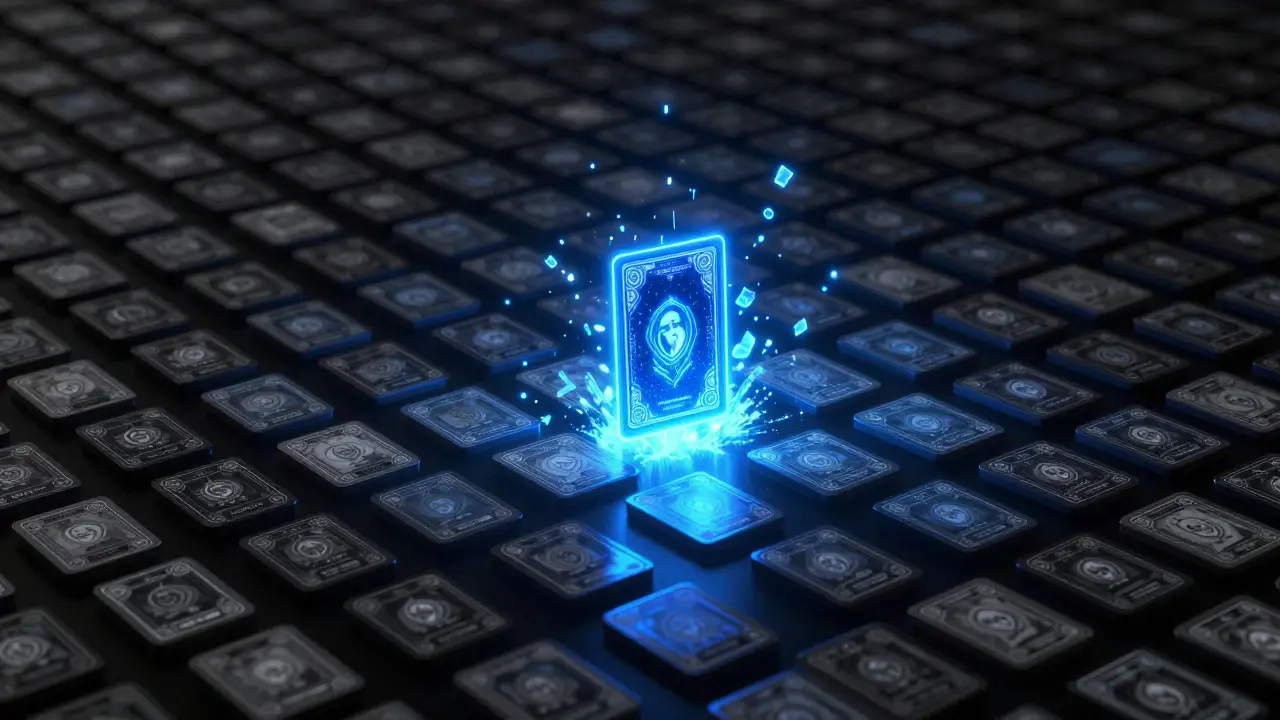
Imagine buying a digital trading card only to find out later that thousands of others have the exact same design. It's a letdown, right? In the world of digital art, the difference between a piece that sells for $10 and one that fetches $100,000 often comes down to a single concept: NFT rarity. But rarity isn't just about having "something rare"; it's a calculated game of math, community desire, and creator intent.
If you've ever wondered why one pixelated ape is worth a mansion while another is barely worth a lunch, you're looking at the impact of rarity scores. Understanding this allows you to stop guessing and start analyzing the actual data behind a collection's value.
Key Takeaways for NFT Collectors
- Rarity is Relative: An NFT isn't rare in a vacuum; it's rare compared to every other piece in its specific collection.
- Traits Drive Value: Visual attributes (hats, colors, accessories) are the primary building blocks of a rarity score.
- Math Matters: Different tools use different formulas (Average, Statistical, or Score models) to rank tokens.
- Community is King: Mathematical rarity doesn't always equal market value; a "common" trait can become expensive if the community loves it.
The Anatomy of NFT Rarity
At its core, NFT rarity is a metric used to determine how unique or scarce a specific token's attributes are within a larger collection. Think of it like a deck of cards. Every card is unique in its position, but only four Aces exist. The "Ace" attribute is what makes that card rare.
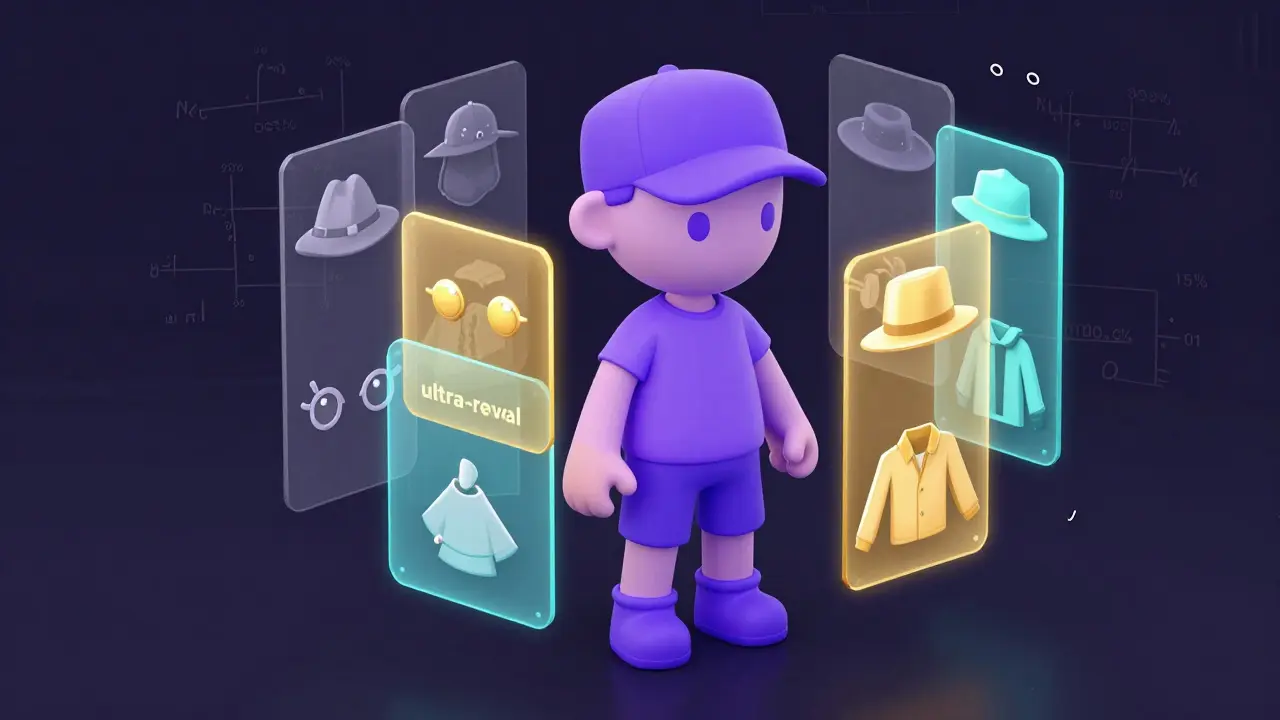
In most profile picture (PFP) projects, rarity comes from traits. These are the individual layers used to generate the art. For example, if a project has 10,000 characters, the creators might decide that 9,000 characters have "Brown Hair" (common), while only 10 have "Neon Blue Hair" (ultra-rare). The neon hair becomes a high-value attribute because it's a limited resource.
Creators often use different levels of exclusivity to build this value:
- Trait Groups: Broad categories like "Eyes" or "Clothing."
- Sub-traits: Specific versions within a group, like "Sunglasses" under the "Eyes" category.
- 1/1 Traits: Attributes that appear on exactly one single NFT in the entire collection, creating the ultimate level of scarcity.
How the Math Actually Works
You can't just look at a picture and know its rank. You need a formula. Depending on which tool you use, the math changes. Here are the three most common ways the industry calculates rarity.
The Average Trait Rarity Method
This is the simplest approach. It takes the rarity percentage of each trait and averages them. If your NFT has three traits with rarity scores of 5%, 8%, and 15%, the math is (5+8+15) / 3 = 9.33%. The lower the average percentage, the rarer the NFT is generally considered.
The Statistical Rarity Method
This method is more aggressive. Instead of adding, it multiplies the percentages. Using the same example, (0.05 × 0.08 × 0.15) = 0.0006, or 0.06%. This highlights how incredibly unlikely it is to find a token with that specific combination of rare traits.
The Rarity Score Model
Widely regarded as the gold standard, this model assigns a score to each trait based on its frequency. The formula is: 1 / (number of items with that trait / total items in collection). The total score for the NFT is the sum of all its individual trait scores. This prevents a single common trait from "watering down" the value of an ultra-rare one.
| Method | Calculation Logic | Best For... | Sensitivity |
|---|---|---|---|
| Average Trait | Sum of % / Number of Traits | Quick snapshots | Low |
| Statistical | Multiplication of % | Finding "One-of-a-Kind" combos | High |
| Rarity Score Model | Sum of (1 / trait frequency) | Accurate market valuation | Balanced |
The Role of Rarity Tools and Verification
Manually counting traits across 10,000 images is impossible for a human. That's where Rarity Tools are specialized software and databases that scan blockchain records to rank NFTs automatically.
Platforms like OpenRarity or Rarity.tools act as search engines for collectors. They don't just look at the art; they pull data from blockchain explorers to verify that the traits listed are authentic. These tools often include additional data like trading volume and ownership history to help you see if a "rare" item is actually being bought or if it's just mathematically rare but unwanted.
Real-World Examples: BAYC and CryptoPunks
To see this in action, look at the Bored Ape Yacht Club (BAYC), a massive NFT collection of 10,000 unique apes known for their high cultural value. In BAYC, the number of traits an ape has is itself a trait. Most apes have between four and seven traits. However, only 254 apes have exactly four traits. Because this is so uncommon, "low trait count" apes often command a higher price, regardless of whether the individual traits are flashy or plain.
Then there are CryptoPunks, one of the earliest and most iconic NFT collections on the Ethereum blockchain. In this community, rarity takes a psychological turn. Sometimes, the absence of a trait (like a punk with no hat or glasses) is seen as more valuable than having a rare accessory. Similarly, "matching" traits-like a red shirt paired with red pants-create a visual harmony that collectors prize, even if the math doesn't label it as "ultra-rare." This proves that human perception often overrides the algorithm.
Does Rarity Always Equal Value?
Here is the hard truth: a high rarity score does not guarantee a high price. There is a big difference between mathematical rarity and perceived value.
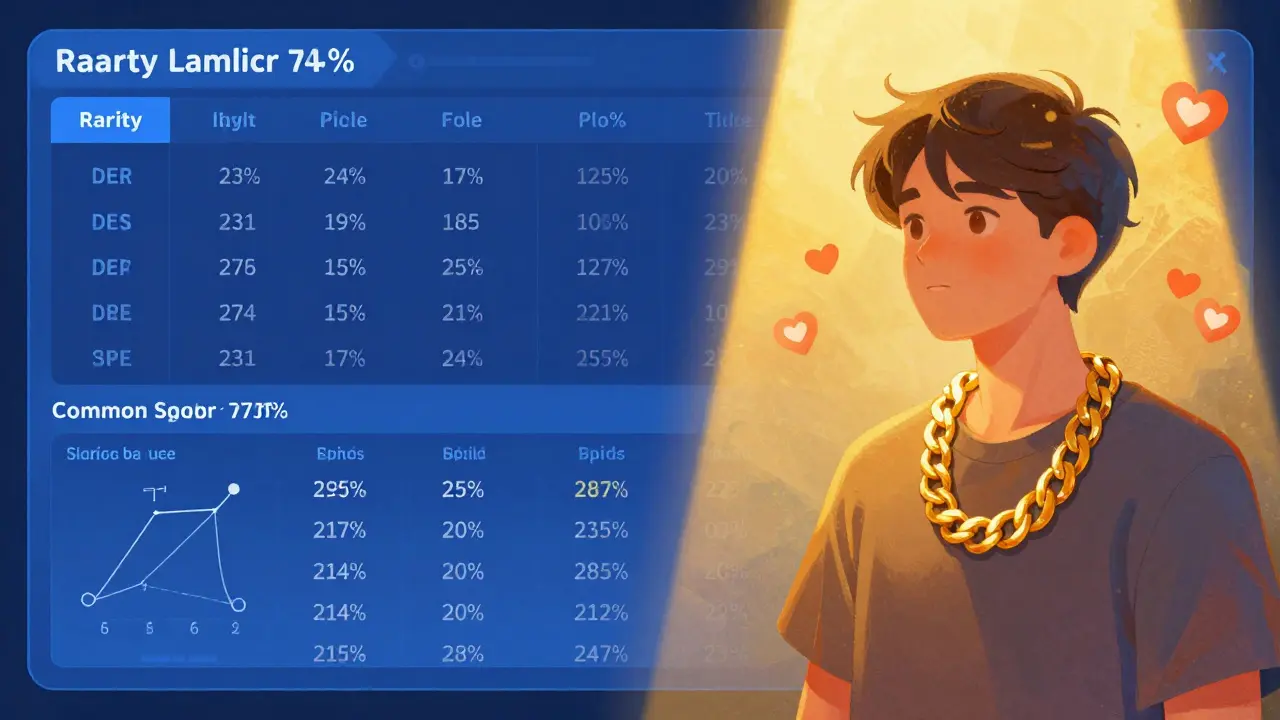
Imagine an NFT with a "Green Nose" trait that only 1% of the collection has. Mathematically, it's rare. But if the community thinks green noses look ugly, no one will pay a premium for it. Conversely, a "Gold Chain" might be owned by 10% of the collection (making it common), but because everyone wants a gold chain, the price stays high.
When assessing value, look at these factors beyond the score:
- Aesthetics: Does the NFT actually look good?
- Utility: Does owning a rare token grant you access to a private club or physical merchandise?
- Creator Reputation: Is the artist well-known or do they have a history of supporting their projects?
- Liquidity: How often are items with these specific traits actually selling?
What is a rarity score in NFTs?
A rarity score is a numerical value assigned to an NFT based on how uncommon its traits are compared to the rest of the collection. A lower percentage usually indicates a rarer item, while a higher total score (in the Rarity Score Model) indicates a more unique asset.
Can an NFT be rare but have low value?
Yes. This happens when a trait is mathematically rare but aesthetically unappealing or unwanted by the community. Market demand is the final arbiter of price, not the rarity algorithm.
How do I check the rarity of my NFT?
You can use dedicated rarity tools like Rarity.tools or OpenRarity. You simply enter your token ID or connect your wallet, and the tool will scan the blockchain to tell you your rank and which specific traits are the rarest.
What are "1/1 traits"?
1/1 traits are attributes that appear on only one single NFT in an entire collection. These are the rarest possible elements and typically drive the highest prices in a project.
Does the total supply of a collection affect rarity?
Absolutely. The total supply is the denominator in almost every rarity formula. A trait that appears 10 times in a collection of 100 is common (10%), but the same trait in a collection of 10,000 is incredibly rare (0.1%).
Next Steps for New Collectors
If you're just starting, don't buy based on the rarity rank alone. Start by picking a project you actually like. Once you're interested, use a rarity tool to find the "floor" (the cheapest items) and compare them to the "rare" items. Look at the recent sales history on the marketplace to see if people are actually paying more for those rare traits. If the gap between a common and rare NFT is small, the rarity might not be a strong value driver for that specific community.