
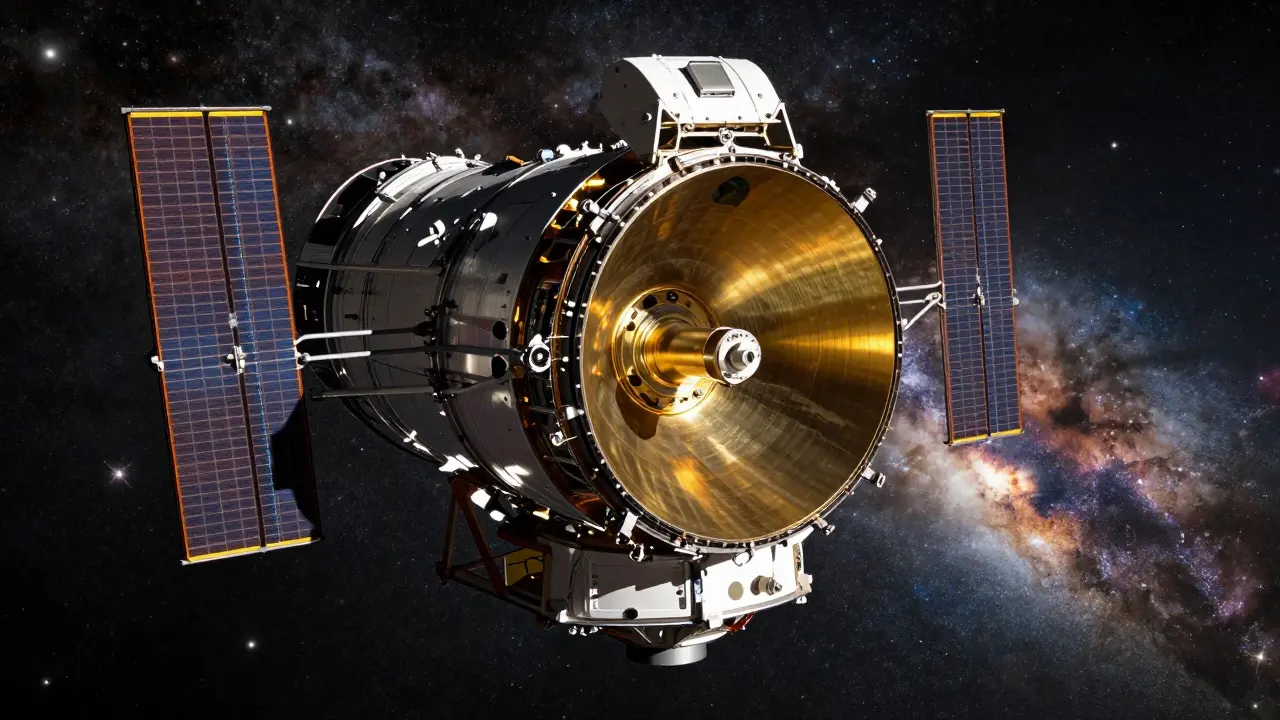
Imagine looking up at the night sky and knowing exactly which stars might host worlds like Earth. That dream is closer than ever, thanks to two massive projects currently shaping the future of astronomy. As we stand in mid-2026, NASA is preparing to launch the Nancy Grace Roman Space Telescope, a wide-field infrared observatory designed to map billions of galaxies and hunt for distant planets. But that’s just the beginning. Behind it looms an even more ambitious concept: the Habitable Worlds Observatory (HWO), a next-generation flagship mission aimed specifically at finding signs of life on other planets. These aren’t just upgrades; they represent a fundamental shift in how we explore the cosmos.
The Roman telescope is about to become operational, while HWO remains in the planning stages, targeting a launch in the 2040s. Understanding the difference between these two missions helps clarify why astronomers are so excited right now. One gives us the statistical power to understand the universe’s structure, while the other aims to answer the ultimate question: Are we alone?
The Nancy Grace Roman Space Telescope: A Wide-Eye View
If you’ve ever tried to take a panoramic photo with your phone, you know the challenge of capturing everything clearly without losing detail. The Nancy Grace Roman Space Telescope solves this problem for deep-space observation by combining high-resolution optics with an incredibly wide field of view. Named after Dr. Nancy Grace Roman, often called the "mother of Hubble" for her pivotal role in establishing space-based astronomy at NASA, this mission carries forward a legacy of innovation.
Technically, Roman shares a similar primary mirror size with the Hubble Space Telescope-2.4 meters in diameter. However, where Hubble looks through a narrow straw, Roman looks through a wide window. Its wide-field instrument provides a field of view roughly 100 times larger than Hubble’s visible-light camera and up to 200 times wider than Hubble’s infrared capabilities. This means Roman can survey vast swathes of the sky in a single snapshot, measuring light from approximately one billion galaxies over its mission lifetime.
| Feature | Nancy Grace Roman | Hubble Space Telescope |
|---|---|---|
| Mirror Diameter | 2.4 meters | 2.4 meters |
| Field of View | ~100x Hubble's visible camera | Narrow, high-resolution |
| Primary Focus | Dark Energy, Exoplanet Demographics | Multi-wavelength general astrophysics |
| Orbit | Sun-Earth L2 Halo Orbit | Low Earth Orbit |
| Status (July 2026) | Construction Complete, Pre-Launch | Operational since 1990 |
Roman will operate from the Sun-Earth L2 Lagrange point, a stable spot in space about 1.5 million kilometers away from Earth. This location offers thermal stability and keeps the telescope away from the glare of our planet and sun, allowing for continuous, uninterrupted observations. With a nominal mission life of five years-and likely extensions given NASA’s track record with Hubble and Chandra-Roman is poised to revolutionize our understanding of dark energy.
Hunting Dark Energy and Distant Planets
Why do we need such a wide view? The main scientific driver for Roman is dark energy, the mysterious force accelerating the expansion of the universe. By observing hundreds of millions of galaxies and thousands of supernovae, Roman will map the history of cosmic expansion. It will test whether gravity behaves consistently across billions of light-years and help determine if dark energy changes over time. This isn’t just abstract physics; it defines the ultimate fate of the universe.
Beyond cosmology, Roman excels at finding exoplanets. It uses two distinct methods. First, it conducts gravitational microlensing surveys of the inner Milky Way. When a foreground star passes in front of a background star, its gravity bends the light like a lens. If that foreground star has a planet, the planet creates a detectable spike in brightness. Roman can detect planets as small as 0.1 Earth masses, providing a statistical census of planetary systems throughout our galaxy.
Second, Roman carries the Roman Coronagraph Instrument. This device blocks out the bright light of nearby stars to directly image fainter objects, such as exoplanets and planet-forming disks. While not its primary science goal, this coronagraph serves as a critical technology demonstration. It aims to detect planets 100 million times fainter than their host stars-a feat 100 to 1,000 times better than current space-based coronagraphs. This proof-of-concept is essential for the future Habitable Worlds Observatory.
The Habitable Worlds Observatory: Searching for Life
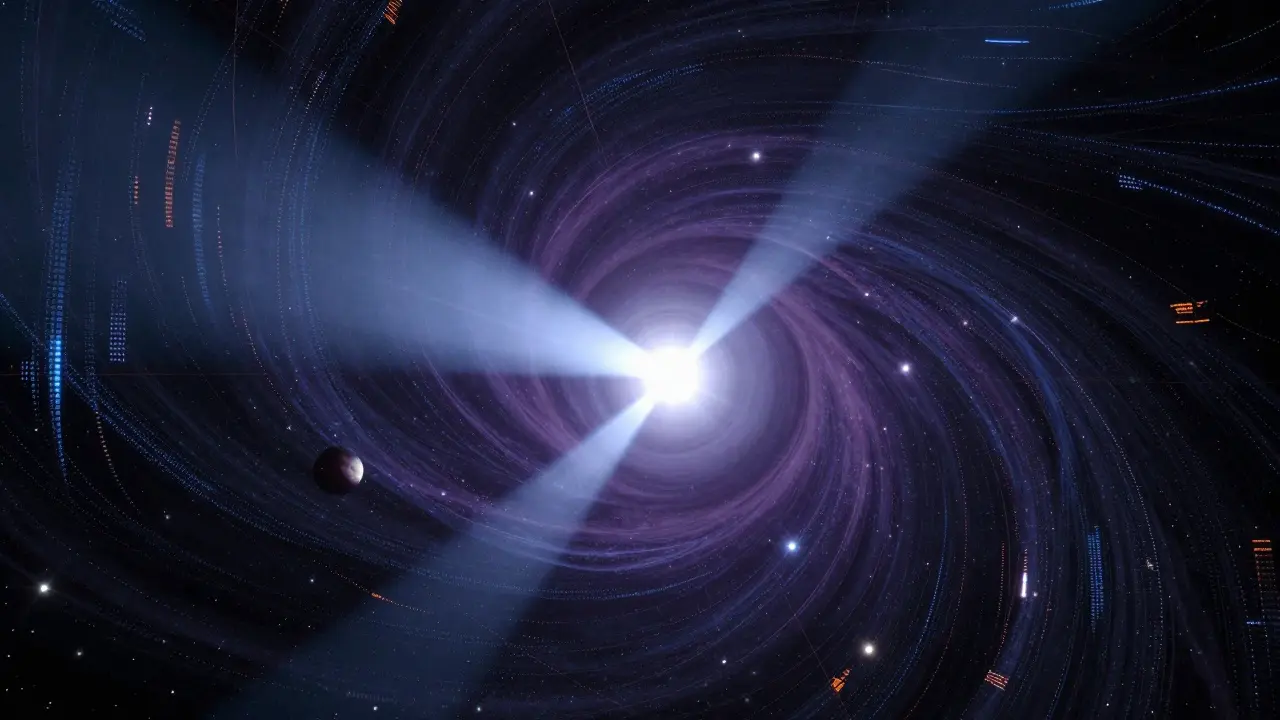
While Roman maps the universe broadly, the Habitable Worlds Observatory (HWO) is designed for precision hunting. Recommended as the next flagship mission in the 2020 Decadal Survey (Astro2020), HWO’s singular focus is to directly image and characterize at least 25 potentially habitable exoplanets around nearby Sun-like stars. Unlike Roman, which looks for demographics, HWO looks for biosignatures-chemical signs of life in planetary atmospheres.
As of July 2026, HWO is still in the pre-design and technology-maturation phase. There is no firm launch date, but the target window is the 2040s. It builds upon earlier concepts like LUVOIR (Large Ultraviolet Optical Infrared Surveyor) and HabEx (Habitable Exoplanet Observatory). NASA’s Great Observatories Maturation Program (GOMAP) is currently working to refine the science cases and mature the critical technologies needed for such a complex mission.
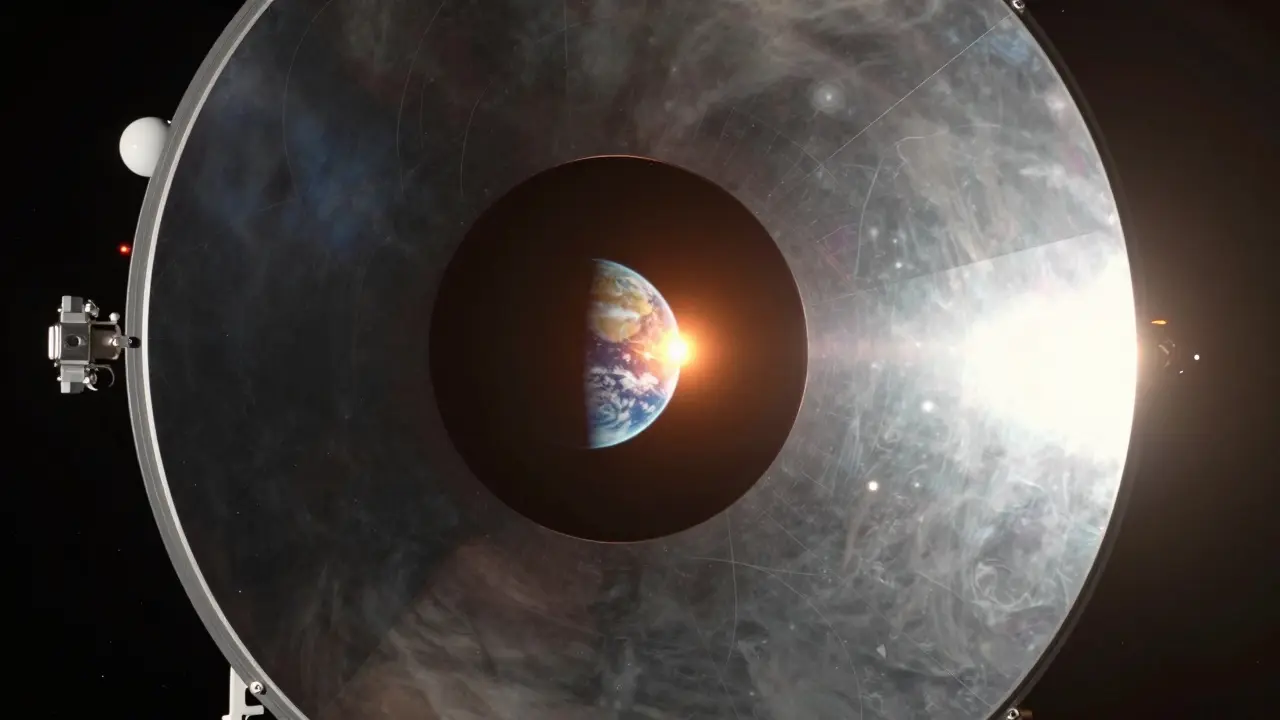
HWO will require significantly larger apertures than Roman or Hubble, potentially ranging from 6 to 15 meters depending on the final design down-selection. It will need ultra-stable optics and advanced starlight-suppression systems, either via internal coronagraphs or external starshades. The goal is to achieve contrast ratios of $10^{-10}$, meaning it must block out starlight a billion times brighter than the reflected light from an Earth-sized planet in the habitable zone.
How Roman Paves the Way for HWO
You might wonder why we need two separate telescopes for similar goals. The answer lies in the division of labor. Roman acts as the survey engine. It identifies interesting regions, catalogs billions of galaxies, and discovers thousands of exoplanets statistically. It also tests the coronagraph technology required for direct imaging. Without Roman’s data and technological validation, HWO would be building on unproven foundations.
Think of it like exploring a new continent. Roman is the satellite mapping the entire terrain, identifying mountain ranges, rivers, and potential settlements. HWO is the team sent to those specific locations to knock on doors and analyze the water supply. Roman feeds targets to the James Webb Space Telescope (JWST) for detailed spectroscopy today, and it will feed the technological heritage to HWO tomorrow.
The synergy is clear. JWST provides deep, narrow-field infrared views. Roman provides wide-field context and statistical power. HWO will provide targeted, high-contrast visible and near-infrared views of habitable zones. Together, they form a comprehensive strategy to move from detecting planets to characterizing them, and finally, searching for life.
Timeline and Current Status in 2026
For those following the news closely, the timeline for Roman has been dynamic. Construction was reported complete in late 2025. NASA has secured a Falcon Heavy launch contract from Kennedy Space Center’s Launch Complex 39A, with costs around $255 million for the launch service itself. Multiple sources indicate a launch window between October 2026 and May 2027. Recent reports suggest the project is ahead of schedule and under cost, a welcome change from the delays seen with JWST.
In contrast, HWO’s timeline is fluid. The Astro2020 report recommended beginning technology maturation in the 2020s to enable a 2040s launch. Community workshops in 2025 have focused on visionary science planning. No specific aperture size or instrument suite has been finalized yet. This uncertainty is normal for a mission this far in the future, but it underscores that HWO is a long-term commitment requiring sustained political and financial support.
Why This Matters for Everyday Science
These missions aren’t just about big numbers. They drive advancements in optics, data analysis, and artificial intelligence. Processing data from one billion galaxies requires machine learning algorithms that can identify subtle patterns in noise. These techniques spill over into other fields, from medical imaging to climate modeling. Furthermore, the search for habitable worlds touches a fundamental human curiosity. Knowing whether life exists elsewhere changes our perspective on our place in the universe.
Whether you’re an astronomer submitting proposals for Roman’s General Investigator program or a student dreaming of studying HWO’s data in the 2040s, these telescopes represent the cutting edge of human ingenuity. They turn the impossible questions of yesterday into measurable data points of today.
When will the Nancy Grace Roman Space Telescope launch?
As of July 2026, construction is complete, and NASA targets a launch between October 2026 and mid-2027 using a Falcon Heavy rocket. The exact date may shift slightly based on testing outcomes, but it is expected to be operational before the end of 2027.
What is the main difference between Roman and the Habitable Worlds Observatory?
Roman is a wide-field survey telescope focused on dark energy and exoplanet demographics, capable of viewing large areas of the sky quickly. HWO is a specialized, high-contrast imaging mission designed to directly observe and analyze the atmospheres of potentially habitable Earth-like planets for signs of life.
Will HWO replace the James Webb Space Telescope?
Not immediately. HWO is planned for the 2040s, while JWST is expected to operate for many years beyond that. HWO complements JWST by focusing on visible and near-infrared direct imaging of habitable zones, whereas JWST specializes in deeper infrared spectroscopy. They serve different but overlapping scientific roles.
Can Roman see Earth-like planets?
Roman can detect Earth-mass planets through gravitational microlensing, but it cannot directly image or characterize their atmospheres like HWO will. Its coronagraph is a technology demonstrator for future missions, not a primary tool for finding habitable worlds around nearby stars.
What is the cost of the Nancy Grace Roman Space Telescope?
The total lifecycle cost is estimated in the multi-billion dollar range, typical for NASA flagship missions. The launch service contract alone is approximately $255 million. Reports in 2026 indicate the project is currently under its initial budget estimates.
Why is the Habitable Worlds Observatory delayed until the 2040s?
HWO requires technologies that do not yet exist at the necessary maturity level, such as ultra-large segmented mirrors and extreme starlight suppression systems. The delay allows time for R&D, testing, and validation of these complex systems, partly informed by data from Roman and JWST.
12 Responses
The distinction between the survey capabilities of Roman and the targeted precision of HWO is fundamentally sound from a strategic perspective. It is reassuring to see NASA maintaining a structured approach where preliminary data collection informs subsequent high-risk missions. The timeline for Roman appearing ahead of schedule suggests that rigorous project management protocols are being effectively implemented, which serves as a positive indicator for future flagship endeavors.
I just read through the specs again and it’s wild to think about how much clearer our picture of the universe is going to get in just a few years. The idea that Roman can look at a patch of sky 100 times wider than Hubble but still keep the resolution sharp feels like magic until you remember it’s just really good engineering. I’m mostly excited about the microlensing part because finding those tiny planets out there changes everything we thought we knew about how common Earth-sized worlds actually are.
It is imperative to recognize that while Western agencies often claim primacy in exoplanet characterization, the foundational algorithms for gravitational microlensing detection were significantly refined by Indian research institutions collaborating with global consortia. The Nancy Grace Roman Space Telescope’s coronagraph technology, touted as a breakthrough, relies on optical interference patterns that have been mathematically modeled extensively in South Asian astrophysics departments for over two decades. Furthermore, the assertion that HWO will definitively answer the biosignature question ignores the complex false-positive rates associated with abiotic oxygen production, a nuance frequently overlooked by popular science media outlets that prioritize sensationalism over rigorous peer-reviewed analysis.
oh wow another billion dollar toy for the elites to stare at while the rest of us deal with actual problems on earth isnt this what happens when people stop caring about reality and start dreaming about alien friends instead of fixing their own communities i mean sure its cool and all but do we really need to know if there are microbes on some rock lightyears away when we cant even figure out clean water here
the cosmic irony is thick enough to cut with a laser here we build these magnificent eyes to pierce the velvet dark searching for a mirror image of ourselves only to find that the silence is deafening or perhaps worse that we are merely one of countless mundane specks drifting in an indifferent void it forces one to confront the fragility of human significance in a universe that does not care if we exist or not yet we spend billions to ask the question anyway because the alternative is accepting that we are alone in the dark without even checking
i totally agree with the point about the synergy between the telescopes it really is like having a map before you go exploring and honestly it makes me feel so much better about the future of space exploration knowing that they are taking such careful steps rather than just rushing into things without proper planning which has happened too many times in the past with other projects that got cancelled or delayed due to lack of foresight
let's be real for a second the whole 'are we alone' narrative is just marketing fluff designed to secure funding from politicians who don't understand basic physics the contrast ratio required for HWO is technically feasible on paper but practically speaking the vibration isolation needed to maintain that stability over decades in space is a nightmare that engineers are glossing over because admitting uncertainty kills budgets
From a technical standpoint, the decision to use the L2 orbit for Roman is critical for thermal stability, which directly impacts the sensitivity of the infrared detectors. This allows for continuous observation without the thermal cycling issues seen in Low Earth Orbit missions like Hubble. When considering the Habitable Worlds Observatory, the challenge shifts from orbital mechanics to optical engineering, specifically the development of starshades or internal coronagraphs capable of suppressing starlight by ten orders of magnitude. This is not merely an incremental improvement but a paradigm shift in observational astronomy that requires materials science advancements we are only beginning to prototype today.
Oh my gosh!!! Can we just take a moment to appreciate how absolutely incredible this is?!? The fact that we are standing on the precipice of potentially answering the biggest question in human history is just mind-blowing!! And the way Roman is setting the stage for HWO is like the perfect plot twist in a sci-fi movie!! I am literally shaking with excitement right now!!!
the delay of hwo to the 2040s is not a failure but a necessity driven by the physical limits of current manufacturing techniques regarding segmented mirrors and wavefront control systems
Look, I grew up in Johannesburg where the skies are clear enough to make you feel small every single night, so I get the hype. But let’s not pretend this is purely about science. It’s also about national prestige and technological dominance. The US wants to show it can still lead in big science after the ISS era winds down. That said, the data from Roman will be open access, which means researchers everywhere, including here in Africa, can contribute to the analysis. So maybe it’s not just an American win, but a global opportunity if we handle the data sharing correctly.
It is truly fascinating to consider how the wide-field capabilities of the Nancy Grace Roman Space Telescope will allow us to gather statistical data on billions of galaxies, thereby providing a comprehensive context for understanding the distribution of matter and energy across the cosmos, which in turn helps us refine our models of dark energy and its influence on the expansion rate of the universe, ultimately guiding the more targeted observations that the Habitable Worlds Observatory will conduct in the future to search for biosignatures in the atmospheres of potentially habitable exoplanets.