
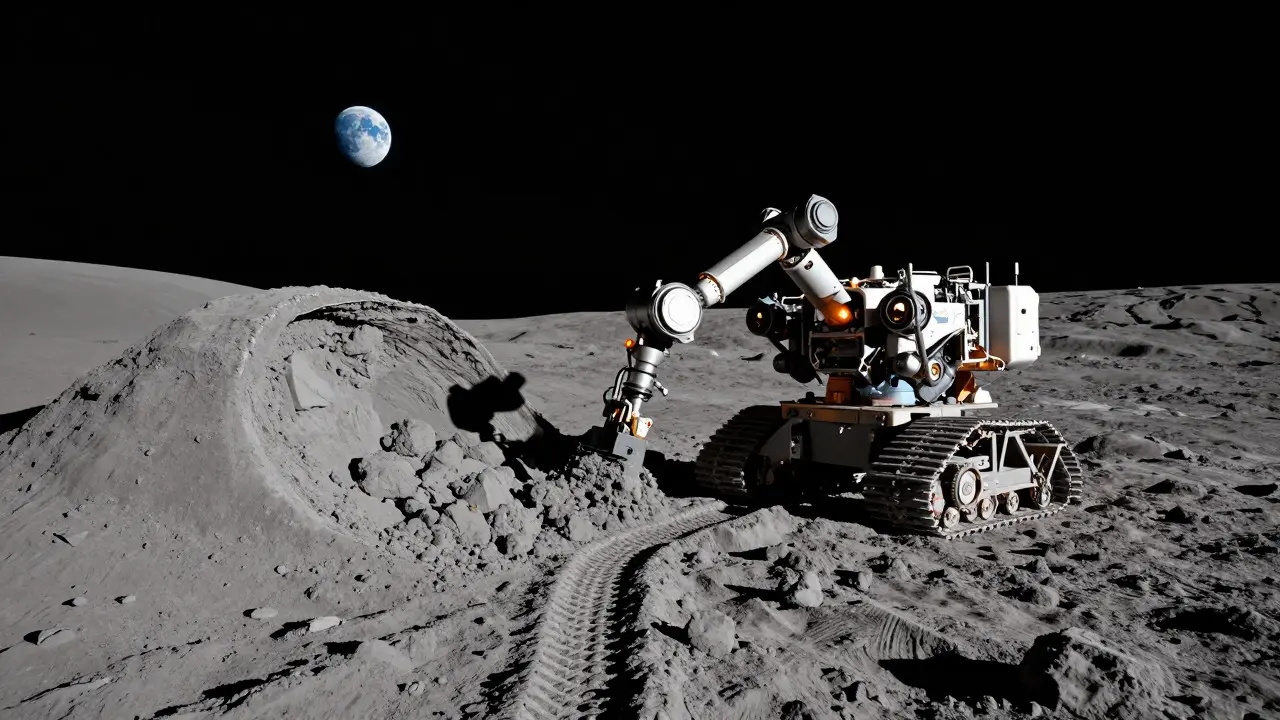
Imagine walking across the lunar surface and seeing a habitat that wasn't shipped from Earth. Instead, it was built right there, using the gray dust under your boots. This isn't science fiction anymore; it is the core strategy for sustainable lunar exploration. By turning regolith into structural material through additive manufacturing, we can drastically reduce the weight of launches and create infrastructure that lasts for decades.
The idea sounds simple, but executing it in low gravity and extreme vacuum is a massive engineering challenge. Agencies like NASA and ESA are racing to solve this, with recent milestones showing that we are closer than ever to building permanent bases on the Moon. Here is how the technology works, who is leading the charge, and what hurdles remain before we see our first printed lunar home.
Why Build With Lunar Dust?
Launching materials to the Moon is incredibly expensive. Every kilogram sent up costs thousands of dollars. If we want to build large habitats, landing pads, or radiation shields, bringing concrete and steel from Earth is not viable. The solution is In-Situ Resource Utilization, or ISRU. This approach uses local materials to do the work.
Lunar regolith is abundant. It covers almost the entire surface of the Moon. While it looks like sand, it is actually finely crushed rock dust, rich in silicon, oxygen, and iron. By processing this dust into bricks or walls, we turn a hazard (dust) into a resource. This method allows us to build structures that shield astronauts from cosmic radiation and micrometeoroids without needing to pack those protective layers into rockets.
How 3D Printing Works on the Moon
There isn't just one way to print with moon dust. Different agencies are testing various methods, each with its own strengths and weaknesses. The main approaches include solar sintering, binder jetting, and extrusion-based printing.
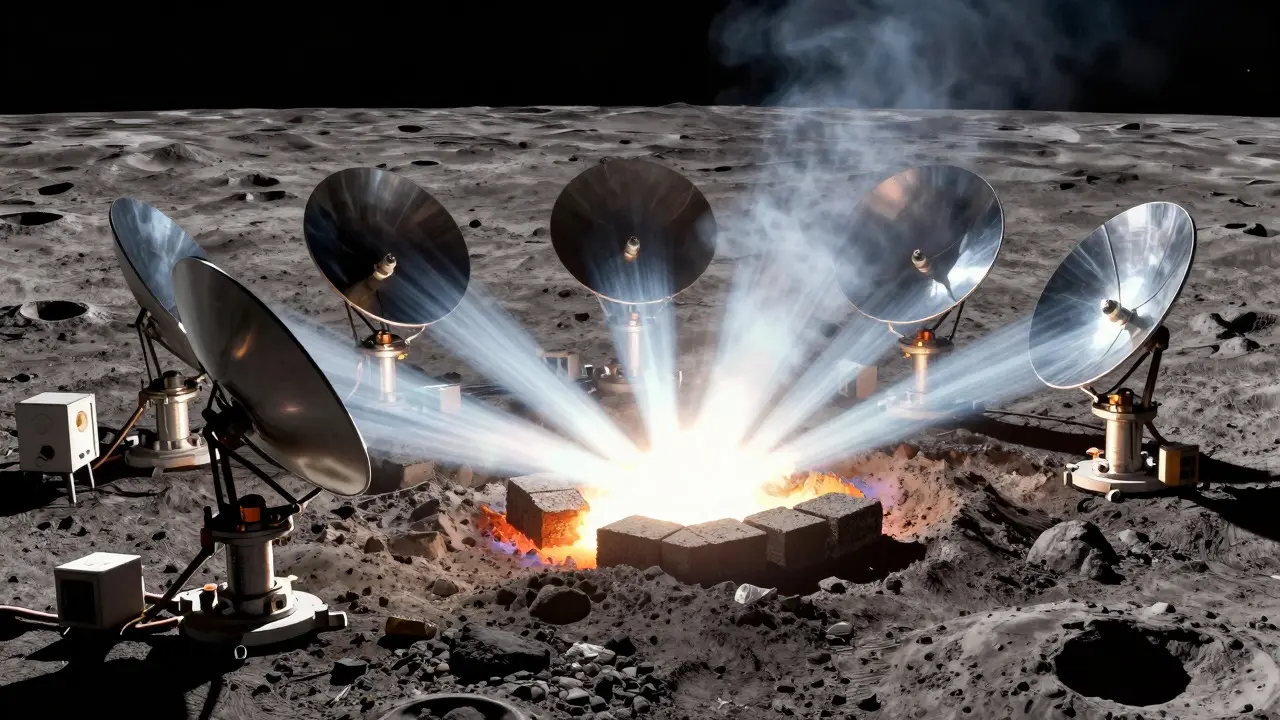
- Solar Sintering: This method uses concentrated sunlight to melt and fuse regolith particles together. No glue or cement is needed. The heat comes directly from the sun via mirror arrays. It’s clean and efficient, but it requires clear skies and precise optical alignment.
- Binder Jetting: A liquid binder is sprayed onto layers of regolith. The binder hardens, holding the dust together. This allows for complex shapes and lower temperatures, but you have to bring the binder from Earth or make it locally, which adds complexity.
- Extrusion Printing: Similar to how we print houses on Earth with concrete, this method mixes regolith with a binding agent and squeezes it out layer by layer through a nozzle. It’s great for large, continuous walls and domes.
Key Players: ESA vs. NASA-ICON
Two major initiatives stand out in this field. The European Space Agency (ESA) has been experimenting with smaller-scale bricks and solar energy, while NASA, in partnership with the company ICON, is focusing on full-scale habitat printing.
| Feature | ESA (DLR / Spaceship EAC) | NASA / ICON (Olympus System) |
|---|---|---|
| Primary Method | Solar Sintering & Binder Jetting | Extrusion-Based Printing |
| Material Focus | Regolith Simulants & Meteorite Dust | Lunar Regolith & Apollo Samples |
| Scale | Bricks & Small Components | Full Habitats & Structural Walls |
| Energy Source | Concentrated Sunlight / Furnaces | Electrical (for mixing/extrusion) |
| Status (2026) | Prototype Bricks & Outreach Models | Phase III SBIR Development |
ESA’s work at the German Aerospace Center (DLR) in Cologne produced the first solar-sintered bricks in 2017. These bricks were made by focusing sunlight through 147 mirrors onto a bed of regolith simulant, heating it to 1,000 degrees Celsius. Each brick took about five hours to complete. While strong enough for demonstration, they were only as robust as gypsum, meaning they aren’t yet ready for heavy loads.
On the other side, NASA awarded ICON a six-year contract worth $57 million in 2022 to develop the Olympus system. ICON, known for printing concrete homes in Texas, is adapting their technology for space. They are currently printing wall sections using regolith simulants at Marshall Space Flight Center. The goal is to create a robotic printer that can traverse the lunar surface and build habitats autonomously.
The Challenge of Strength and Durability
The biggest hurdle isn't just printing the shape; it's making sure the structure doesn't crumble. Current regolith bricks are weaker than standard concrete. On Earth, we rely on rebar and high-grade cement. On the Moon, we have neither.
Researchers are looking at additives to improve strength. ESA’s Spaceship EAC team is experimenting with different mixtures of regolith and stabilizing agents to create a material that behaves more like concrete. They are also studying how temperature cycling affects these materials. On the Moon, temperatures swing from -173°C at night to 127°C during the day. Any material must survive this thermal shock without cracking.
Vacuum is another factor. On Earth, air helps cool and cure materials. In a vacuum, heat transfer is different, and chemical reactions behave differently. We don't fully understand how regolith cures in space conditions yet, which is why most tests still happen in labs on Earth.
From LEGO Bricks to Lunar Bases
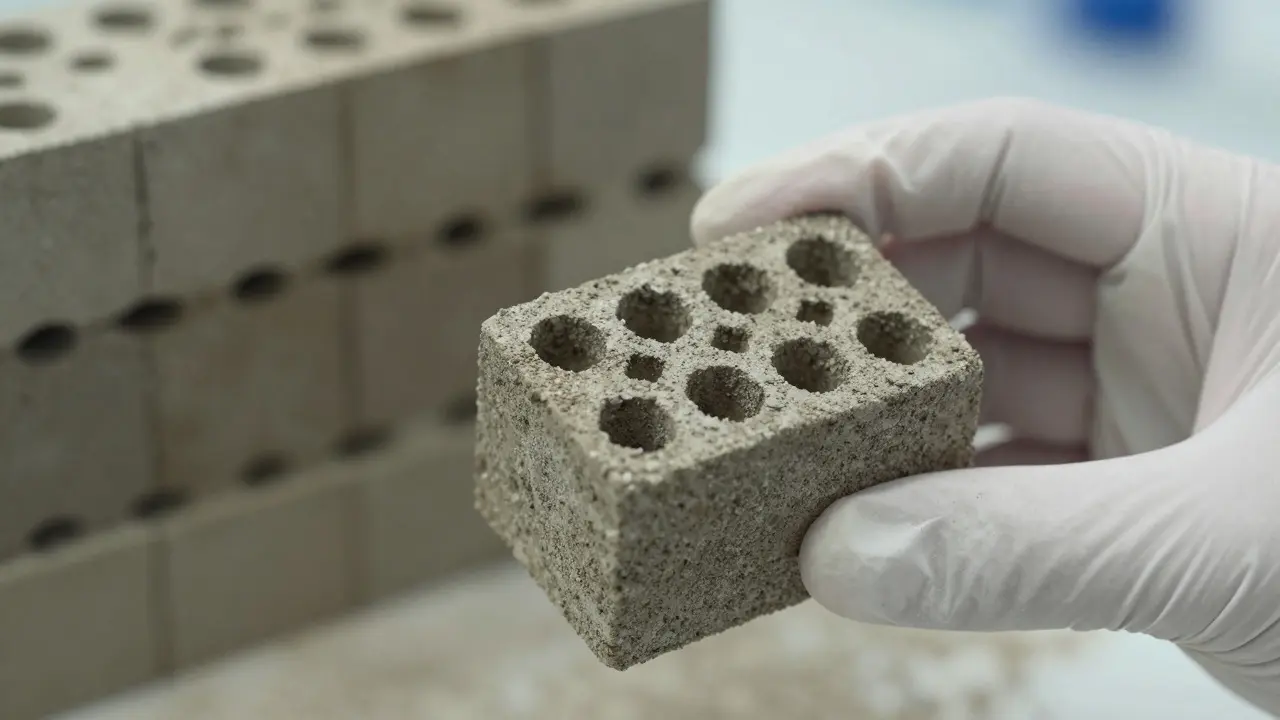
You might have seen images of ESA scientists playing with LEGO-style bricks made from moon dust. While these look like toys, they serve an important purpose. They demonstrate modular assembly. If we can print standardized interlocking blocks, we can build walls quickly without complex joints. This modularity could be key for emergency repairs or expanding habitats over time.
These "space bricks" are often made from a mixture of regolith simulant and dust from a 4.5-billion-year-old meteorite. Using actual meteorite dust helps researchers understand how real extraterrestrial materials behave compared to terrestrial volcanic ash, which is often used as a stand-in for lunar soil.
What Does the Future Look Like?
We are not there yet. As of mid-2026, all major regolith brick efforts are still in the prototype phase on Earth. However, the trajectory is clear. NASA aims to deploy early versions of these systems in the late 2020s or early 2030s, aligning with the Artemis program goals.
The future lunar base will likely use a hybrid approach. Solar sintering might produce small tiles or components where precision is needed. Extrusion printers like Olympus will handle the large structural shells. And binder jetting could create intricate internal parts or connectors. Together, these technologies will allow us to build a self-sustaining presence on the Moon, one printed layer at a time.
Frequently Asked Questions
Can we really build houses on the Moon with dust?
Yes, theoretically. Lunar regolith contains silica and other minerals that can be fused or bound together to form solid structures. While current prototypes are weak, ongoing research into additives and better printing techniques aims to create materials as strong as concrete.
What is the difference between solar sintering and extrusion printing?
Solar sintering uses focused sunlight to melt and fuse regolith particles without adding any binders. It is ideal for small, dense parts. Extrusion printing mixes regolith with a binder and pushes the mixture through a nozzle to build larger structures layer by layer, similar to how we print concrete buildings on Earth.
How much does it cost to send building materials to the Moon?
The cost varies, but it generally runs into thousands of dollars per kilogram. This is why ISRU is so critical. By using local regolith, we eliminate the need to launch heavy structural materials, saving billions of dollars and allowing for larger, more complex habitats.
When will we see the first 3D-printed lunar habitat?
While no exact date is set, NASA and ICON aim to have demonstrator systems ready for deployment in the late 2020s or early 2030s. These initial structures will likely be small test modules or landing pads rather than full crewed habitats.
Is lunar regolith safe for humans to breathe?
Not naturally. Lunar dust is abrasive and can stick to suits and equipment. However, when processed into bricks or walls, it becomes inert and safe. The main concern is handling raw dust during construction, which will require sealed environments or specialized robotics to prevent contamination.