
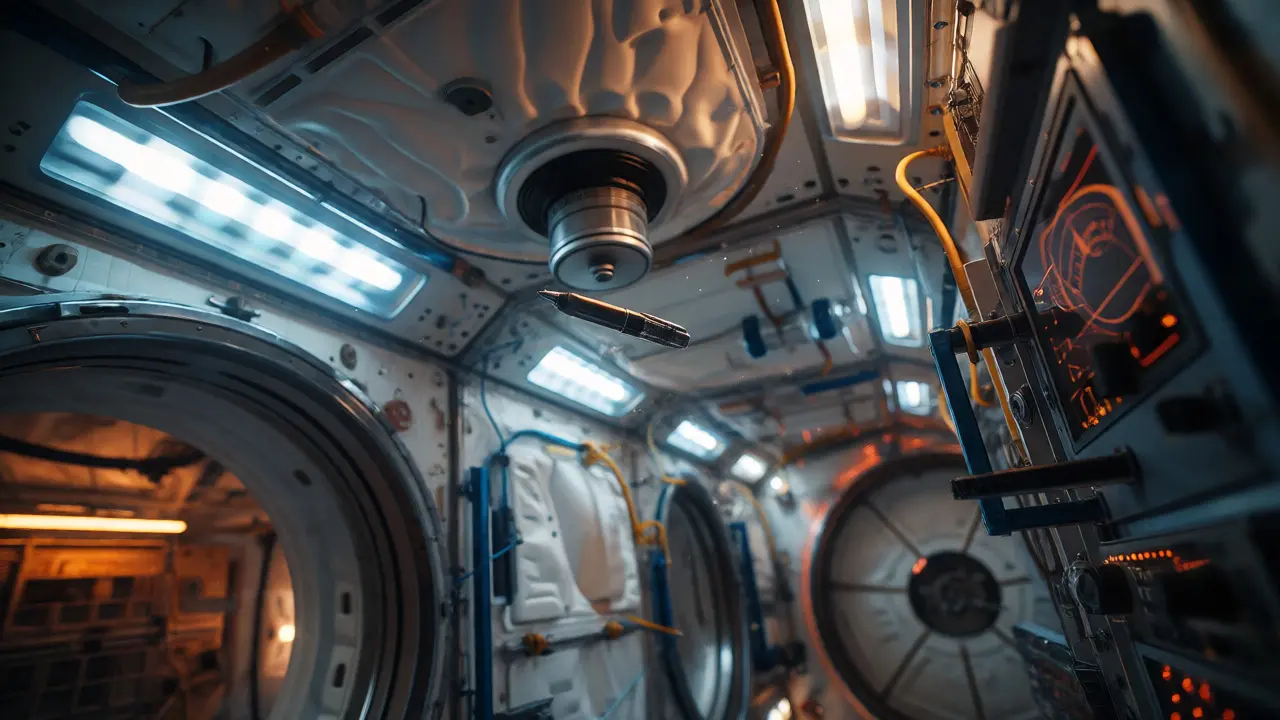
You drop a pen on Earth. It hits the floor. You pick it up. Simple. Now do that on the International Space Station (ISS). The pen doesn't hit the floor. It drifts. It might bump into a sensor, block a camera, or worse, get sucked into an air vent. This isn't just an inconvenience; it's a fundamental engineering challenge. Experimental Design for Microgravity is the discipline of creating systems that account for this lack of weight. It’s about ensuring that when you release a sample, a tool, or even a single droplet of water, it stays exactly where you need it to be-or goes exactly where you want it to go-without becoming a hazard.
If you're designing an experiment for space, you can't just bolt your hardware together and hope for the best. You have to think in three dimensions, with no "down" to anchor your assumptions. This article breaks down how engineers and scientists solve the problem of floating objects, from tiny biological samples to large-scale fluid dynamics tests.
The Physics of No Weight
On Earth, gravity does most of the heavy lifting. It keeps liquids in cups, solids on tables, and dust on the ground. In microgravity, effective acceleration drops to around $10^{-6}$ g. That sounds incredibly small, but it changes everything. Without gravity pulling things down, other forces take over. Airflow from ventilation fans can push a loose screw across a module. The vibration from a centrifuge can send a delicate glass vial spinning out of control. Crew movement creates currents that drag unsecured items along.
This environment demands a shift in mindset. You aren't just fighting gravity; you're managing inertia and residual accelerations. A study by the National Academies highlights that even these tiny forces can disrupt sensitive measurements. If your experiment involves observing how a liquid forms a sphere, a stray breeze from a crew member walking past could distort the shape before you even press record. Therefore, the first rule of microgravity design is: assume everything will float unless you explicitly stop it.
Containment Strategies: From Canisters to Gloveboxes
How do you keep things contained? There are three main approaches, each suited to different types of experiments. Choosing the right one depends on whether you need to interact with the object, how hazardous it is, and how precise your measurements need to be.
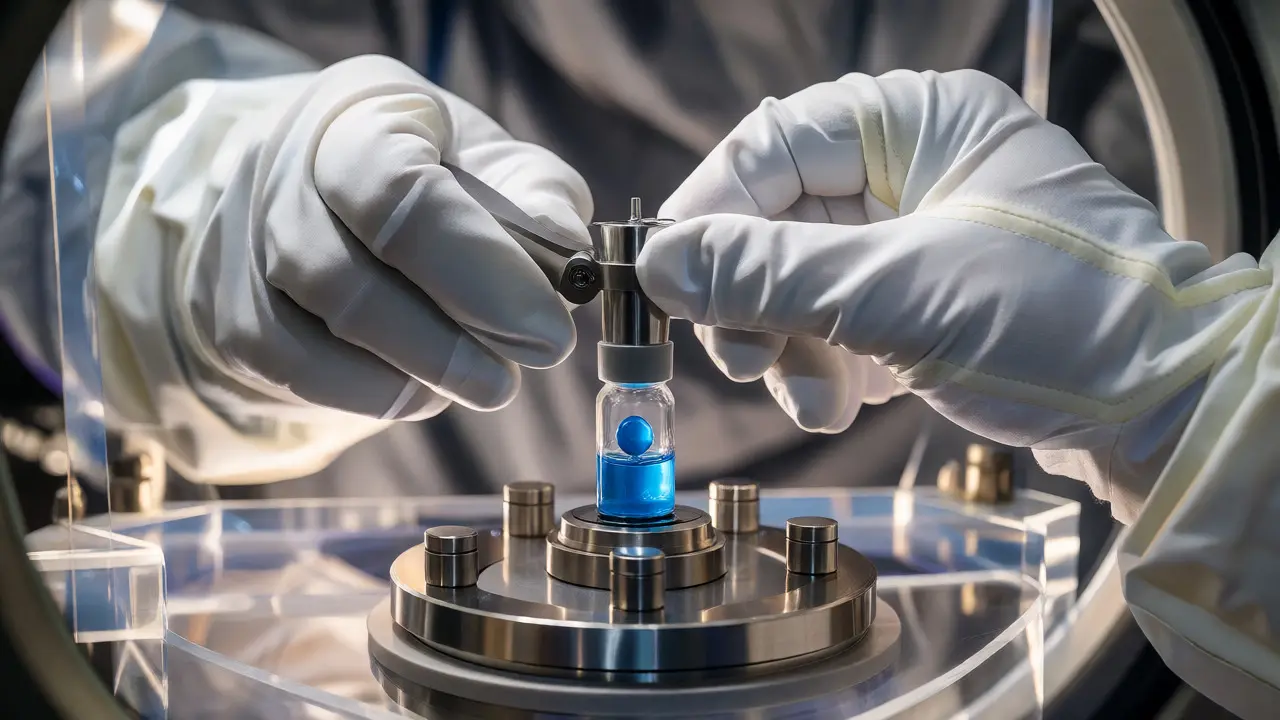
Gloveboxes, like the Microgravity Science Glovebox (MSG), are workhorses for interactive experiments. They provide a sealed volume where astronauts can manipulate objects using built-in gloves. The MSG is particularly useful because it offers power, vacuum, and nitrogen lines directly inside the box. This allows researchers to handle hazardous materials or volatile fluids without risking contamination of the station. However, gloveboxes are limited by human ergonomics. Astronauts wear bulky suits or gloves, which reduces dexterity. NASA’s human factors reports recommend flexible arm holes and adjustable foot restraints to help crew members stabilize themselves while working. If the astronaut can’t hold their position steady, they can’t hold the experiment steady either.
Canister Systems take a different approach. Instead of allowing direct interaction, they seal the experiment away. Take the Biological Research in Canisters (BRIC) system. It uses a triple-containment architecture. First, the sample sits in a culture chamber. Second, that chamber goes into a sealed aluminum cylinder. Third, the cylinder fits into a larger facility rack. This layered defense ensures that if a seal fails at one level, the next level catches the leak. BRIC is ideal for biological specimens, spores, or cells where cross-contamination is a major risk. It’s less flexible than a glovebox, but far safer for messy or dangerous materials.
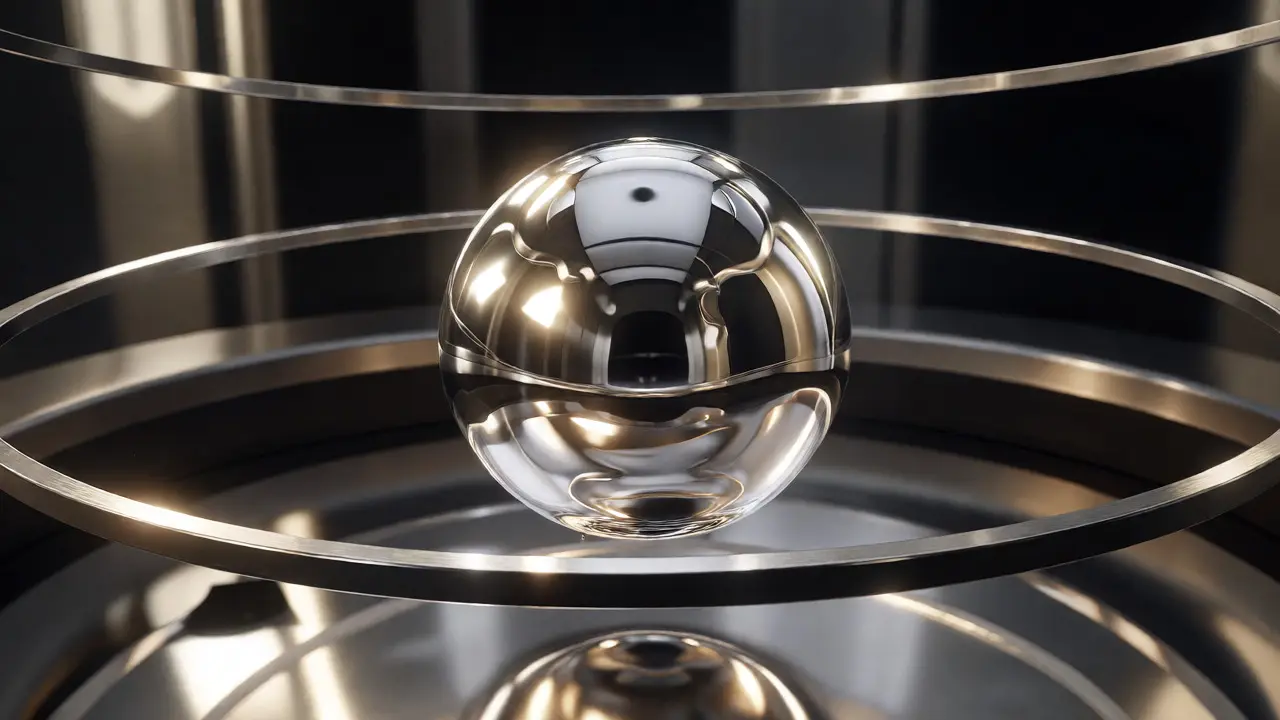
Containerless Experimentation flips the script. Sometimes, the container itself interferes with the science. Walls can cause unwanted chemical reactions or disrupt fluid flow. Facilities like the Ring Sheared Drop (RSD) create a liquid sphere pinned between two contact rings. The liquid floats freely, but the rings keep it in place. This eliminates buoyancy-driven convection, allowing scientists to study pure material properties. Similarly, laser-welded hermetic containers, used in experiments like Ga-MOTR, ensure that molten metals don’t leak or oxidize, even though they are technically floating within a sealed shell.
| Method | Best For | Crew Interaction | Risk Level |
|---|---|---|---|
| Glovebox (e.g., MSG) | Fluids, hazardous materials, real-time manipulation | High (via gloves) | Moderate (requires ergonomic care) |
| Canister (e.g., BRIC) | Biology, chemistry, long-duration storage | Low (pre/post flight only) | Low (multi-layer sealing) |
| Containerless (e.g., RSD) | Pure fluid dynamics, crystal growth | None (automated/pinned) | High (complex stabilization needed) |
Ergonomics and Human Factors
Designing for microgravity isn't just about physics; it's about people. Astronauts are busy, tired, and wearing restrictive gear. If your experiment requires them to fiddle with tiny screws for ten minutes, they will likely make mistakes. And in space, mistakes mean lost time and potential damage.
NASA’s guidelines for the Micro-g NExT program emphasize that prototypes must be operable with thick EVA gloves. This means no small toggles, sharp edges, or tight clearances. If a tool has a hole big enough to trap a finger, it’s a safety hazard. If it’s too light, it might fly away when the astronaut lets go. Engineers must design for "kickloads"-the force generated when an astronaut pushes off a surface to move. If your experiment isn't anchored properly, that push could send it drifting into another rack.
Foot restraints are critical. You can’t brace yourself against the floor because there’s no friction holding you down. Adjustable foot restraints allow crew members to lock their feet in place, freeing their hands to work. But these restraints must be easy to adjust. NASA recommends limiting adjustments to fewer than five operations so astronauts can set up quickly. Viewing windows also matter. If the window angle doesn't match the arm port height, the astronaut ends up in an awkward posture, increasing fatigue and the chance of dropping something.
Tracking and Recovery
What happens if an object escapes its intended path? In some experiments, like ESA’s free-floating rotating spheres, escape is part of the data. Spheres with uneven mass distributions spin and wobble in complex ways when released. To track these movements, experiments use high-speed cameras and vision systems. But tracking isn't passive. You need to know where the object is going to predict collisions.
For educational analogs, like classroom drop towers, the principles remain the same. Students learn that if they release a bottle containing a falling "astronaut," the astronaut appears to float relative to the bottle. This simple demonstration teaches the core concept: in free fall, internal objects move independently of the container unless constrained. Real-world space missions add layers of complexity, such as magnetic capture mechanisms or netted retrieval systems for loose tools.
Future Trends and Educational Applications
The field is evolving. As commercial space stations rise, the demand for standardized, compact containment solutions grows. Companies like BioServe continue to refine hardware that supports gas exchange and media replenishment while keeping samples secure. Meanwhile, educational programs are scaling up. The Micro-g NExT challenge requires student teams to submit detailed bills of materials and manufacturing timelines, mirroring professional aerospace standards. This ensures that the next generation of engineers understands that in space, every gram and every millimeter counts.
Looking ahead, we’ll see more automated systems reducing the need for manual intervention. Robotic arms may handle sample transfer, eliminating human error. Laser welding and advanced sealing techniques will become standard for hermetic containers, minimizing the risk of leaks. But the core principle remains unchanged: respect the absence of gravity. Plan for every object to float, and design your experiment accordingly.
Why is microgravity considered $10^{-6}$ g?
While gravity still exists in orbit (it’s what keeps the ISS in orbit), the station is in constant free fall. The remaining $10^{-6}$ g represents residual accelerations from air resistance, crew movement, and equipment vibrations, not the absence of gravitational pull.
What is the difference between a glovebox and a canister in space research?
A glovebox allows astronauts to physically manipulate items inside a sealed environment using built-in gloves, suitable for interactive tasks. A canister seals the experiment completely, preventing any physical interaction during the experiment, which is better for long-duration studies or hazardous materials requiring multiple containment layers.
How do scientists prevent liquids from floating away in microgravity?
They use capillary action, surface tension, and physical constraints. Facilities like the Ring Sheared Drop pin liquid spheres between rings, while canisters use sealed volumes. Surface tension causes liquids to form spheres rather than spreading out, making them easier to contain with minimal barriers.
Why are foot restraints important in microgravity experiments?
Without gravity, pushing against an object pushes the astronaut backward. Foot restraints anchor the astronaut to the wall or floor, allowing them to apply force to the experiment without drifting away themselves. This stability is crucial for precise manipulation.
What is the 'triple containment' concept?
Triple containment involves three independent barriers to prevent leakage or escape. For example, a biological sample might be in a Petri dish (level 1), placed in a sealed cylinder (level 2), and housed within a larger rack enclosure (level 3). If one barrier fails, the others maintain safety.
10 Responses
it is fascinating how we treat gravity as a given but in space it becomes the enemy of precision
i wonder if the psychological toll on astronauts managing these tiny forces adds another layer to the 'no down' concept that engineers often overlook
oh great another article telling us that air vents are scary. shocker.
dude i tried this with my coffee cup once and it was a disaster lol 😂
the part about kickloads is so real though you push off and suddenly you're the projectile not the tool
my buddy who went up said he spent half his day chasing floating pens which sounds like hell honestly
The analysis of containment strategies is superficial at best. The distinction between gloveboxes and canisters is presented without sufficient technical rigor regarding material compatibility under long-duration microgravity exposure. Furthermore, the assertion that educational analogs perfectly mirror professional aerospace standards ignores the significant variance in funding and oversight that defines actual mission success rates. It is a lazy simplification of complex engineering constraints.
excuse me but did anyone else notice the complete lack of focus on the human element here? we are talking about people living in a tin can and all we get is hardware specs.
this feels like it was written by someone who has never actually had to clean up a spilled fluid in zero g while trying not to cry because their hair is floating in their face.
it is dismissive really.
the absence of gravity isn't just a physical state it's a philosophical shift in how we perceive control
on earth we assume stability is natural but in orbit we realize stability is an active construction requiring constant energy input
every loose screw is a reminder that chaos is the default state of the universe and order is merely a temporary local phenomenon maintained by our desperate need for structure
they tell you its about physics but have you ever noticed how much money flows through these containment contracts?
i bet the triple containment systems are designed to fail just enough to justify more funding for next year
keep your eyes open folks nothing in space is free or accidental especially when billions are on the line
I love seeing how much thought goes into keeping things safe up there! It’s such a testament to human ingenuity that we’ve figured out ways to handle even the tiniest droplets of water.
The ergonomic adjustments mentioned for foot restraints are super important too because comfort leads to better science outcomes.
We should celebrate these small victories in engineering because they pave the way for longer missions to Mars where every gram counts even more.
It gives me hope that we are learning to live harmoniously with the environment rather than fighting it constantly.
Kudos to the teams working on these solutions they are doing amazing work.
One must appreciate the sheer audacity of attempting to impose terrestrial order upon the celestial void.
The notion of 'kickloads' serves as a delightful metaphor for the precarious balance of power in orbital mechanics.
It is quite poetic, really, how a mere push can unravel the delicate tapestry of a carefully curated experiment.
Perhaps we should view these floating objects not as hazards but as dancers performing an unintended ballet in the vacuum.
Though I suppose the janitorial staff might disagree with my romanticized perspective on the matter.
This is exactly why America leads in space exploration 🇺🇸
Other countries try to copy our designs but they don't understand the grit required to manage these risks
We built the ISS and we know how to keep it clean and functional unlike some other programs that barely function
Proud of our engineers for solving these problems first and foremost
God bless the USA for pushing humanity forward despite the odds