
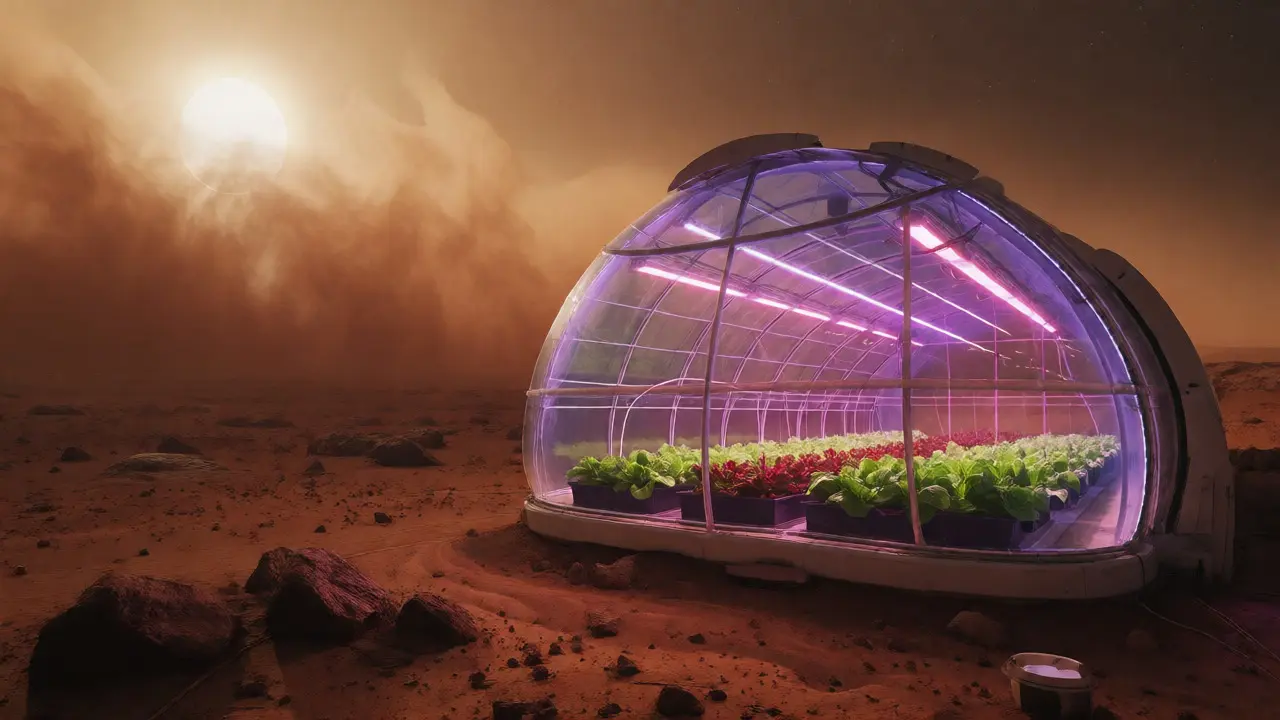
Imagine trying to grow a salad on a planet where the air is toxic, the temperature drops to -100°C at night, and the soil contains bleach-like salts. That’s the reality for Mars greenhouses, which aren't just glass domes but complex life-support systems designed to keep plants alive in one of the harshest environments in our solar system. We don’t have a working farm on Mars yet, but engineers and biologists are testing prototypes here on Earth to figure out how to manage three critical resources: light, water, and nutrients. It’s not as simple as planting a seed; it’s an engineering puzzle where every drop of water and every photon of light must be accounted for.
The Lighting Dilemma: Sunlight vs. Electricity
Mars gets significantly less sunlight than Earth-about 43% of what we receive here. While that sounds bad, it’s actually manageable if you design the structure right. However, dust storms can block out most of that light for weeks, and the thin atmosphere doesn’t filter harmful UV radiation well enough for unprotected plants. This creates a trade-off. Do you build a transparent dome to use free sunlight, or do you go underground with electric lights?
NASA researchers found that relying solely on natural light is risky. A pressurized, insulated structure that lets enough light in while keeping heat in is incredibly hard to build. Instead, many concepts lean toward LED lighting. LEDs allow precise control over the light spectrum and duration, which can boost crop yields. But there’s a catch: electricity. One study estimated that powering LEDs for a single-person wheat farm could require up to 14.4 kW continuously. That’s a lot of power when you’re generating it from solar panels on a dusty planet.
- Natural Light: Saves energy but requires heavy shielding against radiation and dust. Risky during sandstorms.
- Artificial Light (LEDs): Reliable and controllable, but demands significant electrical power and heat management.
- Hybrid Approach: Use sunlight when available, supplement with LEDs during low-light periods to maintain consistent growth rates.
Water: The Most Precious Resource
Liquid water doesn’t stay liquid on the surface of Mars for long due to the low pressure. It either freezes or boils away. So, where does the water come from? Likely from subsurface ice deposits, particularly in the northern hemisphere. Extracting this ice is possible, but purifying it is another story. Martian water sources might contain perchlorates-toxic salts that can harm human thyroid function and kill plants.
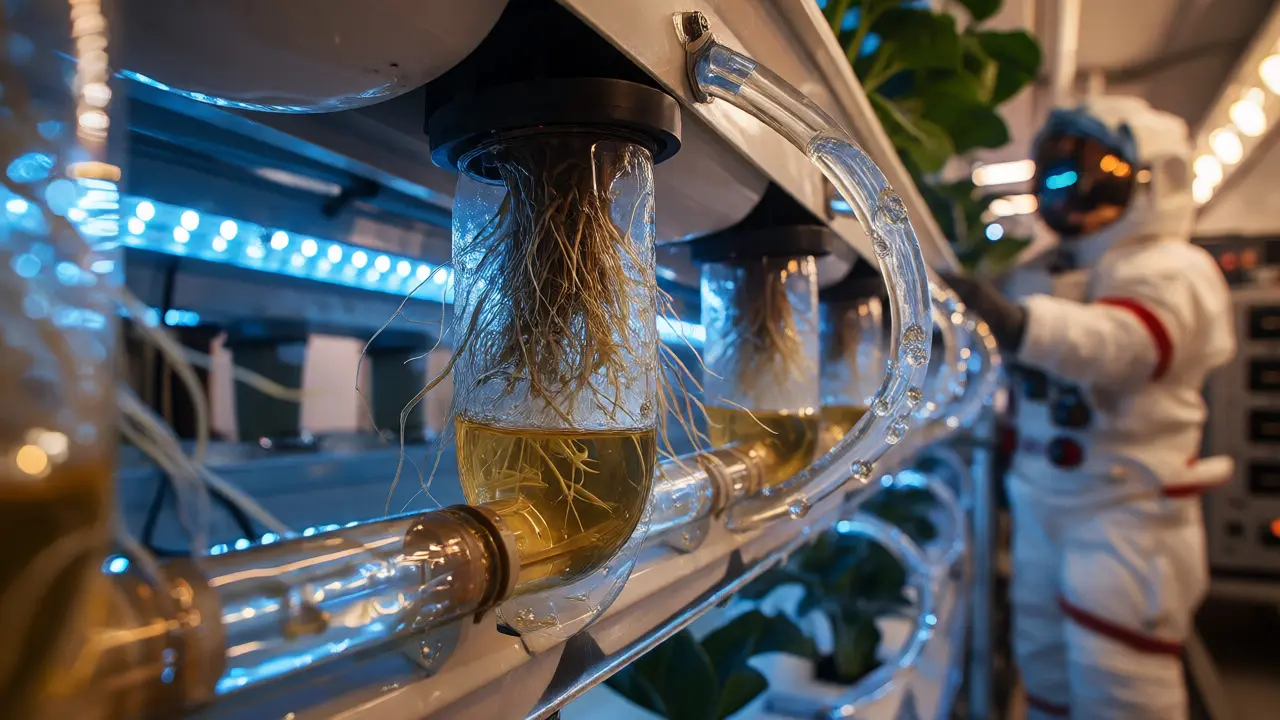
In a closed-loop system like a Mars greenhouse, nothing gets wasted. Plants release water vapor through transpiration, and any unused irrigation water must be captured and recycled. NASA’s prototypes describe a nutrient-bearing water cycle where water is oxygenated, circulated over roots, and returned to storage. If you lose water, you lose mass, and launching water from Earth costs roughly $10,000 per pound. Recycling isn’t just efficient; it’s essential for survival.
Recent experiments have shown promise in treating briny water. Researchers used cyanobacteria to desalinate simulated Martian brine, making it safe for crops. This biological approach could reduce the energy needed for mechanical filtration, offering a clever solution to a persistent problem.
Nutrients and the Problem with Martian Soil
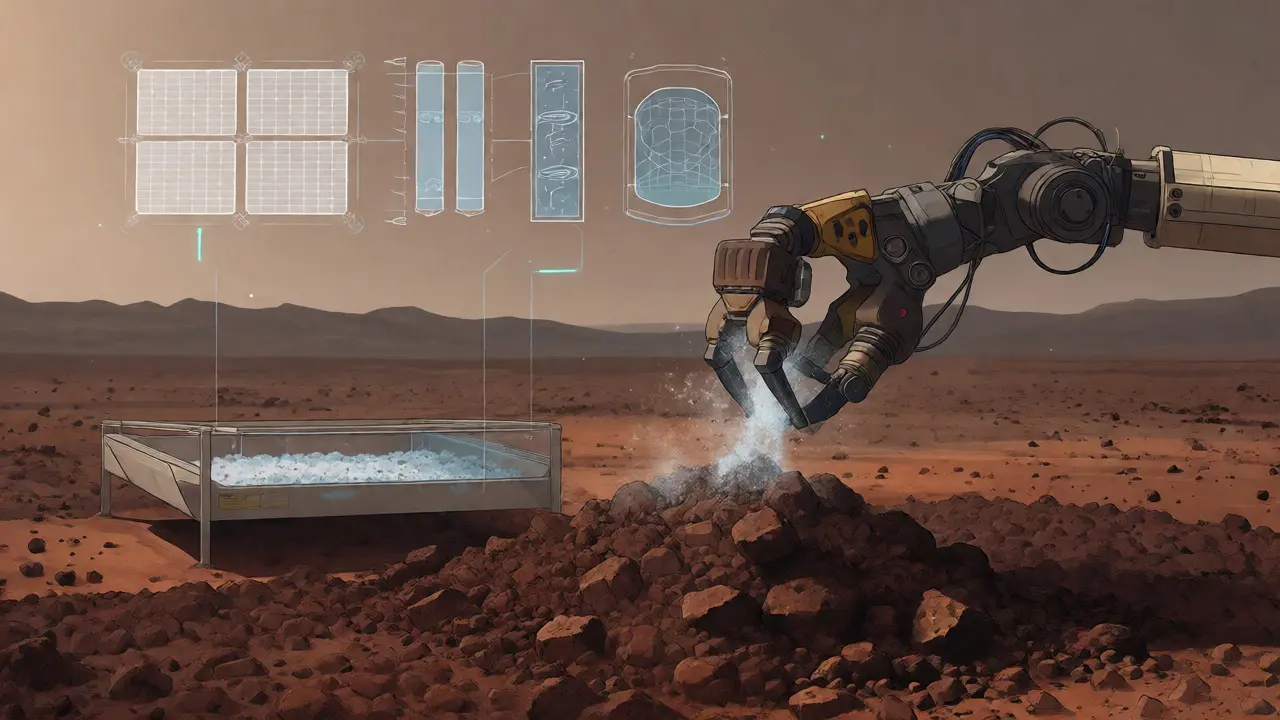
You can’t just dig up dirt from Mars and start farming. Martian regolith is crushed rock and dust, lacking the organic matter and microbes that make Earth soil fertile. Worse, it often contains perchlorates, which are toxic to most plants at concentrations as low as 0.5%. To use local soil, you’d need to wash it extensively, consuming precious water and creating contaminated waste.
This is why hydroponics is favored by many mission planners. Hydroponics grows plants in nutrient-rich water solutions rather than soil. It allows for precise control over nutrient delivery and uses up to 90% less water than traditional farming because the solution is recirculated. Another option is aeroponics, where roots hang in the air and are misted with nutrients. Both methods avoid the risks associated with untreated regolith.
| Method | Pros | Cons |
|---|---|---|
| Hydroponics | High water efficiency; precise nutrient control; no soil handling. | Requires reliable pumps; vulnerable to power failures; needs imported nutrients initially. |
| Aeroponics | Even higher water efficiency; excellent oxygenation for roots. | Nozzles clog easily; high maintenance; sensitive to pump failure. |
| Amended Regolith | Uses local bulk material; provides structural support for roots. | Must remove toxic perchlorates; slow nutrient release; heavy to handle. |
Crop Selection: What Can Actually Grow?
Not all crops are created equal for space travel. You want plants that grow fast, produce high calories, and tolerate stress. Leafy greens like lettuce and radishes are popular candidates because they mature quickly and don’t need much space. But for long-term missions, you need calorie-dense staples like potatoes, wheat, or rice.
Experiments using Mars simulant soil have had mixed success. Alfalfa showed potential as a "biofertilizer" crop-it fixes nitrogen from the air, improving soil quality for other plants like turnips and radishes. Intercropping, or growing different plants together, also showed promise in improving resource use efficiency, provided the substrate was treated correctly. However, these results come from controlled lab chambers on Earth. Real Mars conditions include lower gravity (38% of Earth’s) and higher radiation, which can stunt growth. Studies show that radiation exposure can reduce biomass by nearly 50% in some species, highlighting the need for effective shielding.
System Reliability and Maintenance
A greenhouse on Mars isn’t something you can fix with a trip to the hardware store. If a pump fails, your plants die within hours. Therefore, redundancy is key. Systems must be autonomous, with sensors monitoring pH, dissolved oxygen, temperature, and humidity. NASA’s designs emphasize automated conditioning of water and nutrients, including microfiltration and UV-C treatment to kill pathogens.
Maintenance will be a daily task. Crews will need to clean filters, check for biofilm buildup in pipes, and prune plants. The complexity of the system directly impacts crew workload. Simpler systems like passive wicking might save power but offer less control. Complex active systems offer better yields but demand more attention. Finding the balance between automation and manual oversight is one of the biggest hurdles in current research.
Why can't we just use Martian soil for farming?
Martian soil, or regolith, lacks organic matter and beneficial microbes found in Earth soil. More critically, it often contains perchlorate salts, which are toxic to plants and humans. Using it requires extensive washing and nutrient amendment, which consumes water and adds complexity compared to hydroponic systems.
How much water does a Mars greenhouse need?
While exact figures vary by design, hydroponic systems are highly efficient, recycling up to 90% of their water. A small prototype targeting four crew members aimed for 100% atmospheric and water recycling. The goal is to minimize loss, as transporting water from Earth is prohibitively expensive.
Is natural sunlight sufficient for Mars crops?
Natural sunlight on Mars is about 43% as intense as on Earth and varies greatly due to dust storms and seasons. Most engineering studies suggest that artificial LED lighting is necessary to ensure consistent growth rates and to compensate for periods of low visibility, despite the high energy cost.
What crops are best suited for Mars?
Fast-growing leafy greens like lettuce, radishes, and kale are top candidates due to their short lifecycle and low resource demands. For caloric density, potatoes, wheat, and rice are being tested, though they require more light and time. Legumes like alfalfa are valuable for fixing nitrogen in amended soils.
How is radiation managed in a Mars greenhouse?
Radiation poses a significant threat to plant DNA and growth. Strategies include burying the greenhouse under regolith for shielding, using thick walls made of local materials, or designing structures with water-filled layers that absorb radiation. Some studies show biomass reduction of up to 50% without adequate shielding.